Artwork
Portrait of Actor as Apollo
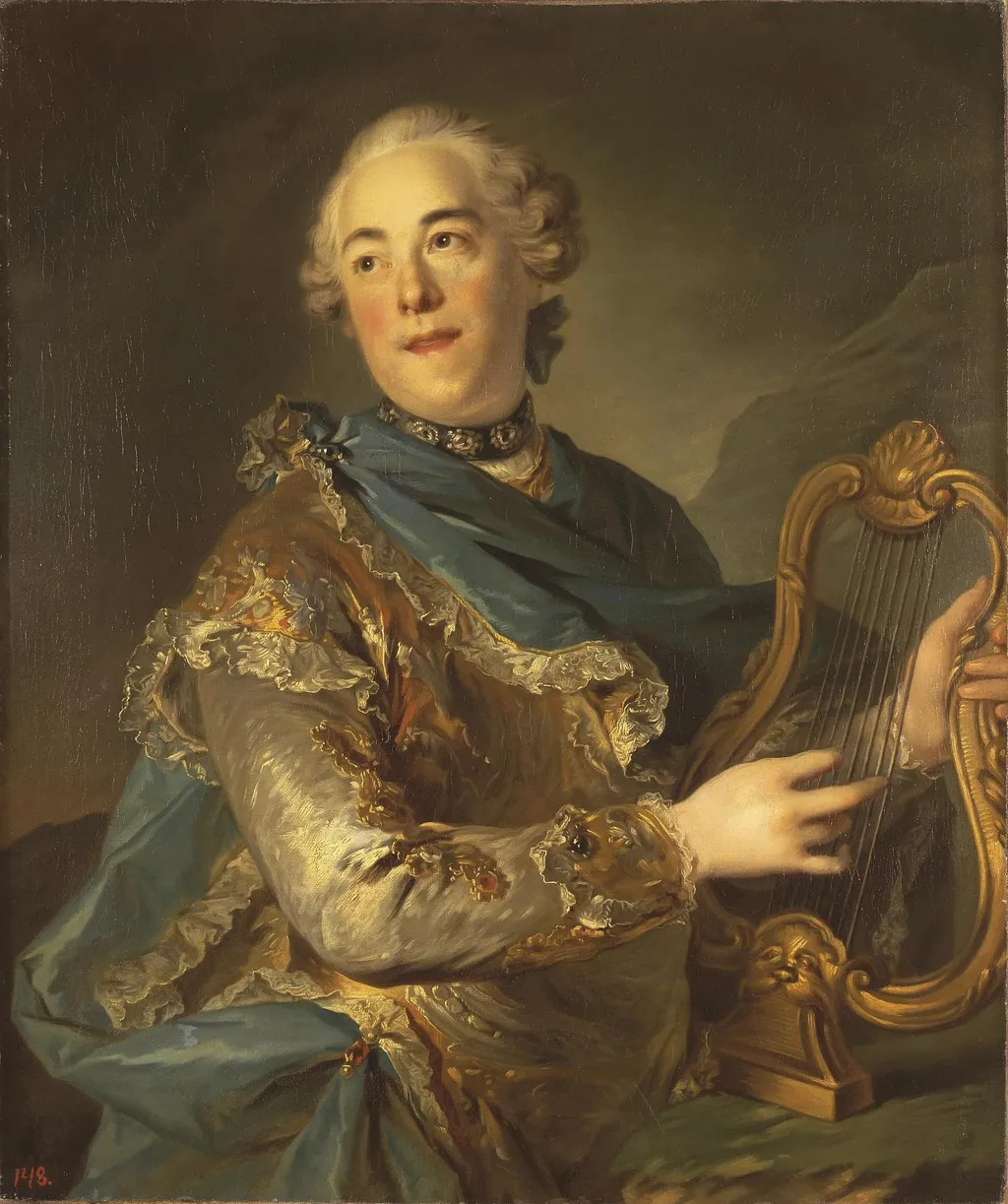
Portrait of Actor as Apollo is an oil painting by the Rococo painting artist Louis Tocqué. It dates from 1755 and is held in the collection of the Hermitage Museum.
About this work
Overview
The painting is held in the collection of the Hermitage Museum in Saint Petersburg, Russia, where it remains today.
Portrait of Actor as Apollo is an oil on canvas painting by the French portraitist Louis Tocqué, dated 1755. Measuring 82 by 72 centimetres, the work depicts the celebrated French singer and actor Pierre Jélyotte in the guise of Apollo, the Greek god of music and poetry. The painting is held in the collection of the Hermitage Museum in Saint Petersburg, Russia, where it remains today. This portrait exemplifies the theatrical and mythological strain in mid-eighteenth-century French portraiture, as well as Tocqué's particular skill in blending naturalistic likeness with allegorical role-playing. It also marks a significant moment in the artist's career, exhibited at the Paris Salon of 1755, during a period when his reputation was reaching its height before his departure for Russia in 1757.
Subject & Meaning
The sitter, Pierre Jélyotte (1713-1797), was a leading French singer of his generation, celebrated for his performances in opera and at the French court. Tocqué portrays him not as himself but in the guise of Apollo, the Olympian deity associated with music, poetry, and the arts. The iconography centres on the golden lyre that Jélyotte holds, the god's principal attribute, which the figure grasps with both hands in a pose of active musicianship. The pale blue sash draped across the shoulder and waist, the gold and cream garment trimmed with lace at the collar and sleeves, and the powdered and curled hair tied back with a dark ribbon all contribute to an elaborate theatrical costume rather than everyday dress. The upward and leftward gaze, away from the viewer, suggests inspiration or divine rapture, fitting for a performer embodying a god. This kind of mythological role-portrait was not uncommon in French art of the period, though Tocqué generally avoided the overt mythological emphasis of his teacher and father-in-law, Jean-Marc Nattier. The choice of Apollo specifically acknowledges Jélyotte's musical pre-eminence while elevating his social and artistic standing through association with divine patronage of the arts.
Technique & Style
The painting is executed in oil on canvas, measuring 82 by 72 centimetres. Visually, the composition presents a half-length figure turned slightly toward the right, set against a dark, undefined background with a suggestion of draped fabric in the upper right. The lighting is strongly directional, falling from the left and illuminating the face, hands, and the metallic sheen of the lyre to create dramatic contrast with the deep browns and grays of the background. The palette consists of warm golds, soft blues, and creamy whites. In handling, Tocqué employs smooth brushwork on the skin, with pink tones on the cheeks, while reserving more textured, visible strokes for the lace and gold embroidery of the costume. This differentiation of surface treatment, smooth flesh against elaborate textile, is characteristic of his technique. A red inventory number, "148," appears in the lower left corner, indicating its place in a later collection. The overall effect combines the formal conventions of state portraiture with the particular demands of theatrical representation, the sitter's own features remaining recognisable beneath the mythological disguise.
History & Provenance
The painting was exhibited at the Salon of 1755 under the title "le chanteur Jélyotte en Apollon," as recorded in the French Wikipedia source, marking its first public appearance. The work was created in France in 1755, during the mature phase of Tocqué's Parisian career, before his departure for the Russian Empire in 1757 at the invitation of Empress Elizabeth Petrovna. How and when the painting entered the Hermitage collection is not specified in the available sources, though Tocqué's later Russian sojourn and the presence of other works by him in the Hermitage suggest possible channels of acquisition. The painting is now held by the Hermitage Museum in Saint Petersburg, with its accession details not provided in the sources. The red number "148" visible in the lower left likely reflects an early inventory or catalogue number from a previous collection. Exhibition history beyond the 1755 Salon is not documented in the provided sources.
Context
Louis Tocqué (1696-1772) was among the most successful French portraitists of the eighteenth century. Orphaned young, he entered the studio of Jean-Marc Nattier, whose daughter he married in 1747, and he also studied with Nicolas Bertin and Hyacinthe Rigaud. From 1737 to 1759, he exhibited regularly at the Paris Salon, the official exhibition of the Académie des Beaux-Arts, and received commissions from the French royal family, including portraits of Louis XV and Marie Leszczyńska. The Jélyotte portrait belongs to a small group of works in which Tocqué departed from his usual straightforward portraiture to depict sitters in mythological or allegorical roles, a mode more associated with Nattier's practice. The French source notes that Tocqué generally avoided his teacher's "fantasies and emphasis," but made exceptions, including this 1755 Salon exhibit and an earlier 1742 portrait of Madame Fumeron as a Muse. Contemporary critical reception was positive; Grimm wrote in 1753 of "M. Tocqué, whose portraits have such a great reputation." The painting thus represents both a concession to fashionable allegorical portraiture and a demonstration of Tocqué's broader range at a moment when his career was about to take an international turn with the Russian commission.
Legacy
The Portrait of Actor as Apollo remains in the Hermitage Museum, where it forms part of the permanent collection alongside Tocqué's later ceremonial portraits of Russian royalty. The work's afterlife is bound up with the broader reputation of Tocqué, whose career trajectory, from Parisian society painter to international court artist, exemplifies the mobility of eighteenth-century European art and artists. The painting documents the cultural prestige of opera and its performers in mid-century France, as well as the convention of elevating public figures through mythological association. Within Tocqué's oeuvre, it stands as a rare example of his engagement with allegorical portraiture, a reminder that even artists known for naturalistic likeness occasionally adopted more elevated modes. The work has not achieved the same prominence as some of Tocqué's royal commissions, but it preserves a specific moment in the intersection of theatrical and visual culture, when a leading singer could be presented as a god and a leading painter would so present him. The painting's presence in the Hermitage also reflects the broader pattern of French artistic influence at the Russian court during the reign of Elizabeth Petrovna, a context that would soon include Tocqué's own direct participation.
Own this work as a print
Artist & collection
Artist
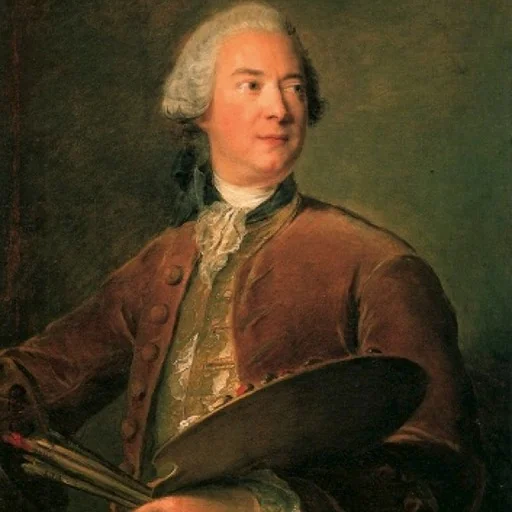
Jean Louis Tocqué (French pronunciation:; 19 November 1696 – 10 February 1772) was a French painter. He specialized in portrait painting.

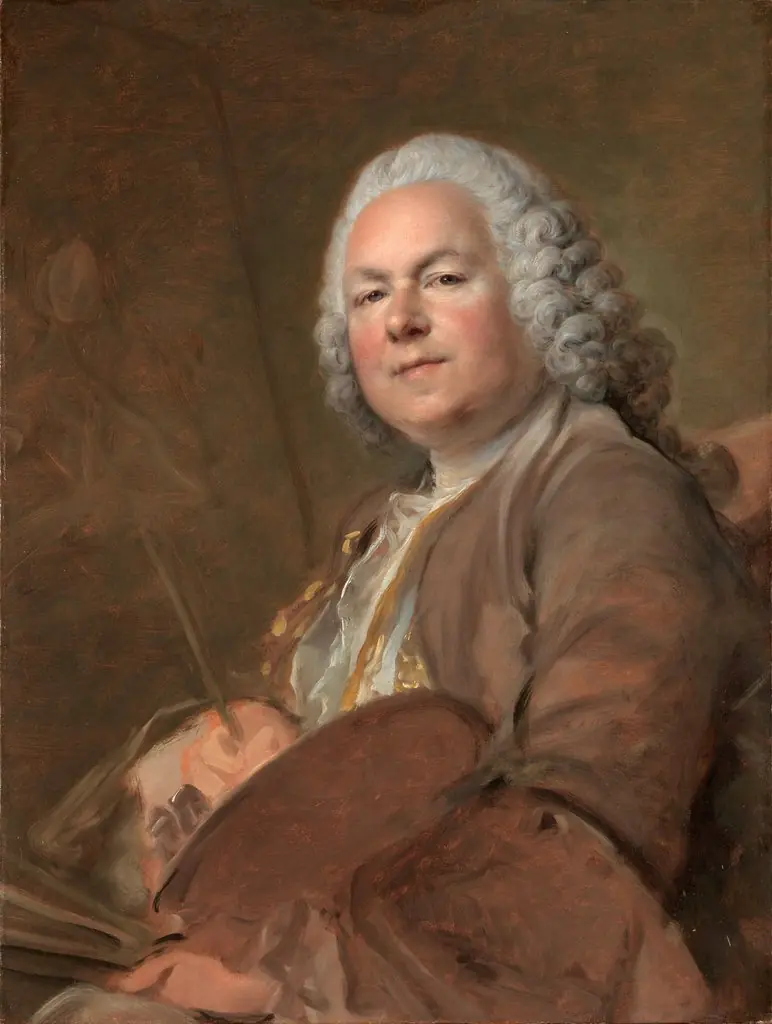
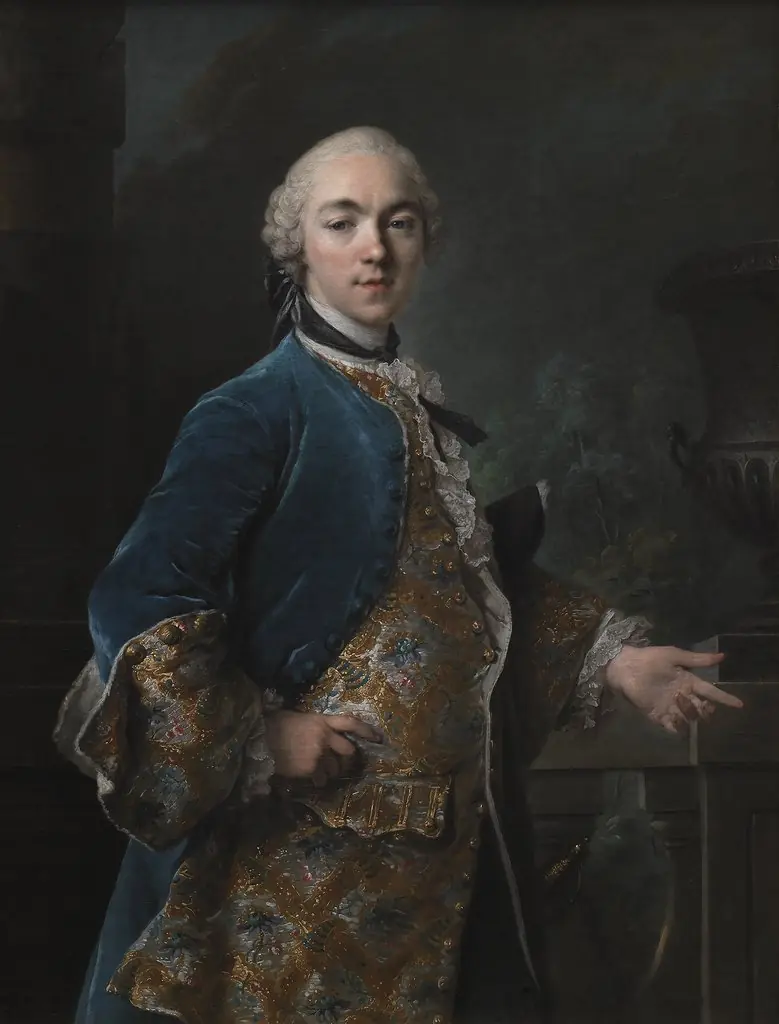 Portrait of Frederik Christian Krag (1726-1763)
 Portrait of Frederik Christian Krag (1726-1763)
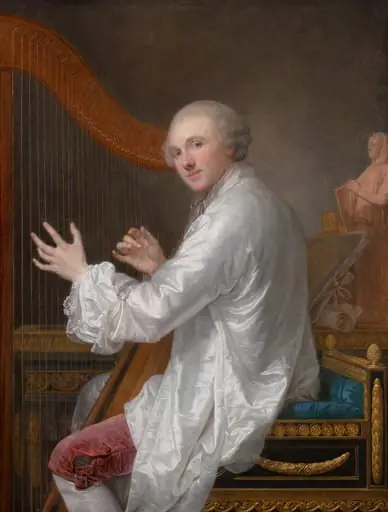 Ange Laurent de La Live de Jully
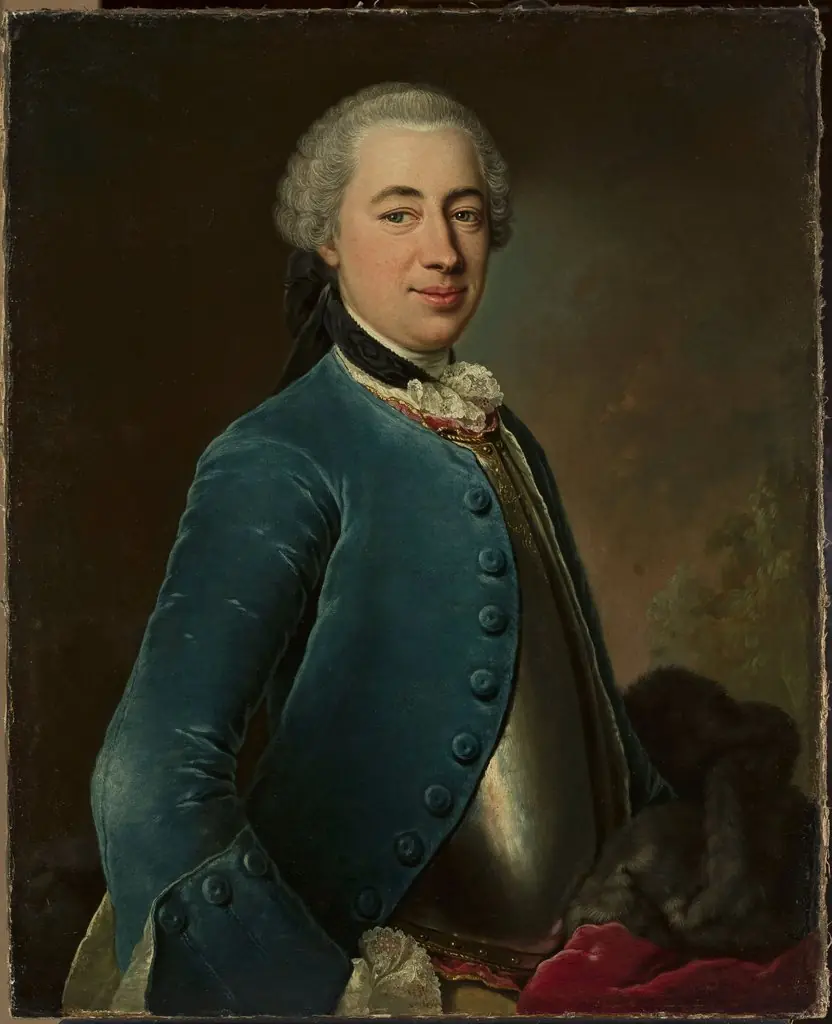 Portrait of a man in armour
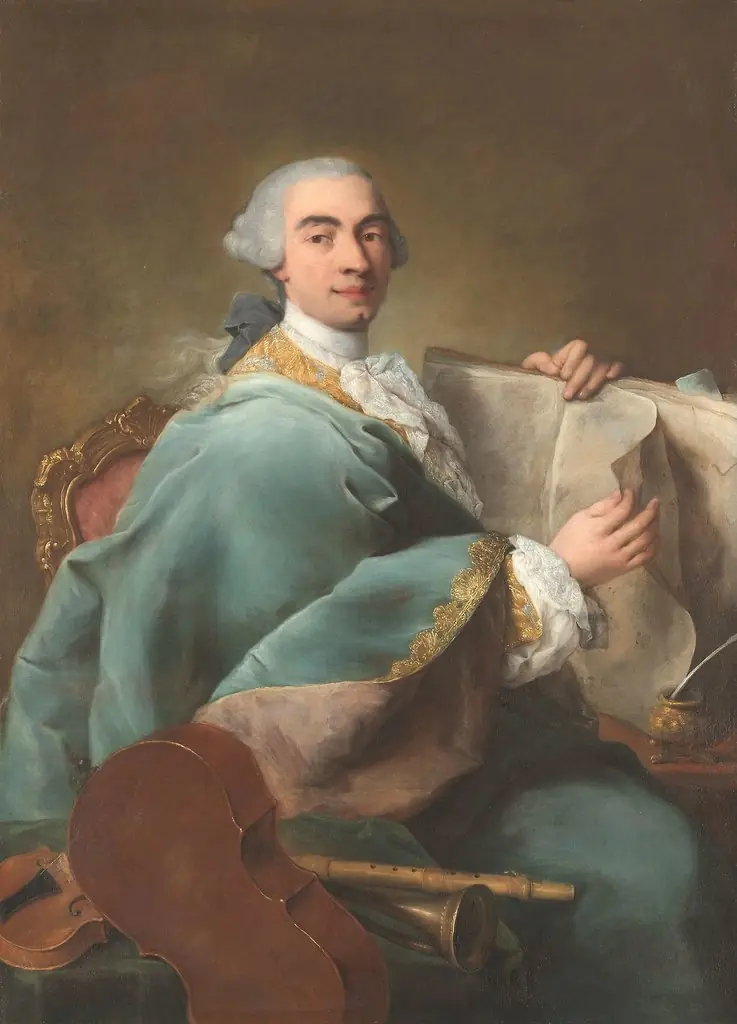 Portrait of a Musician
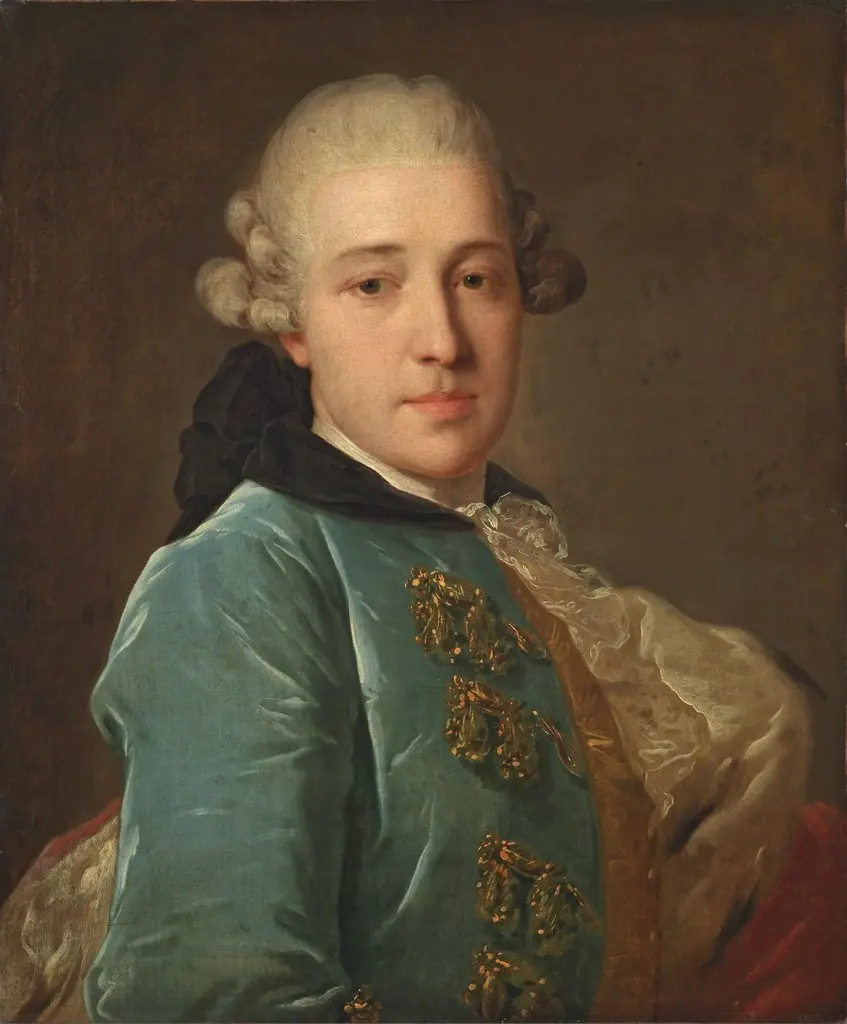 Portrait of Prince Dmitry Mikhailovich Golitsyn
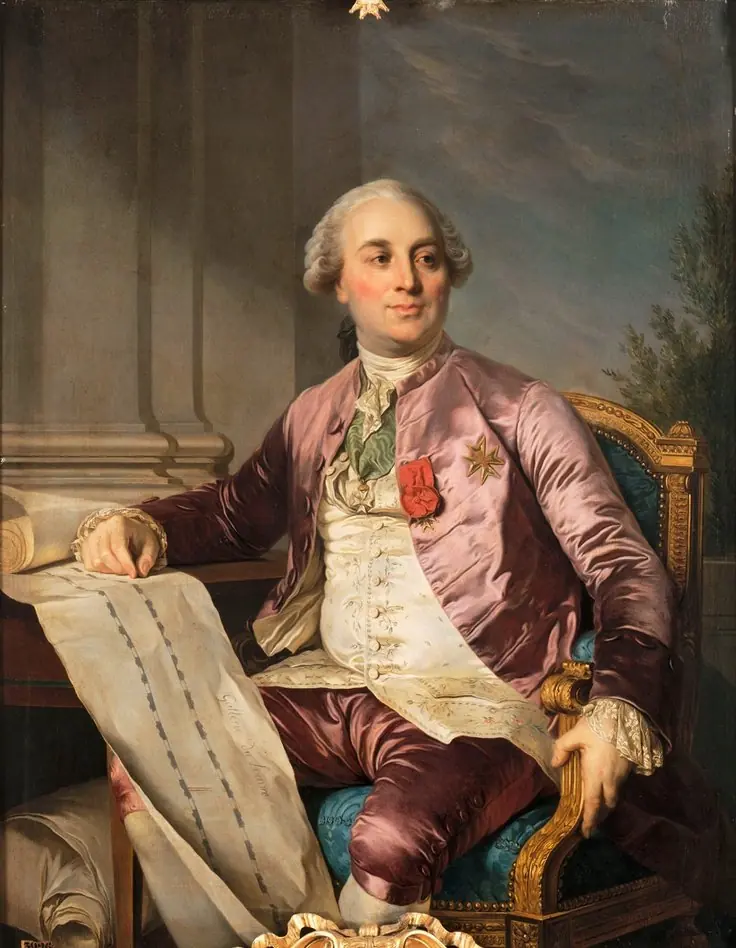 Charles-Claude Flahaut de la Billaderie
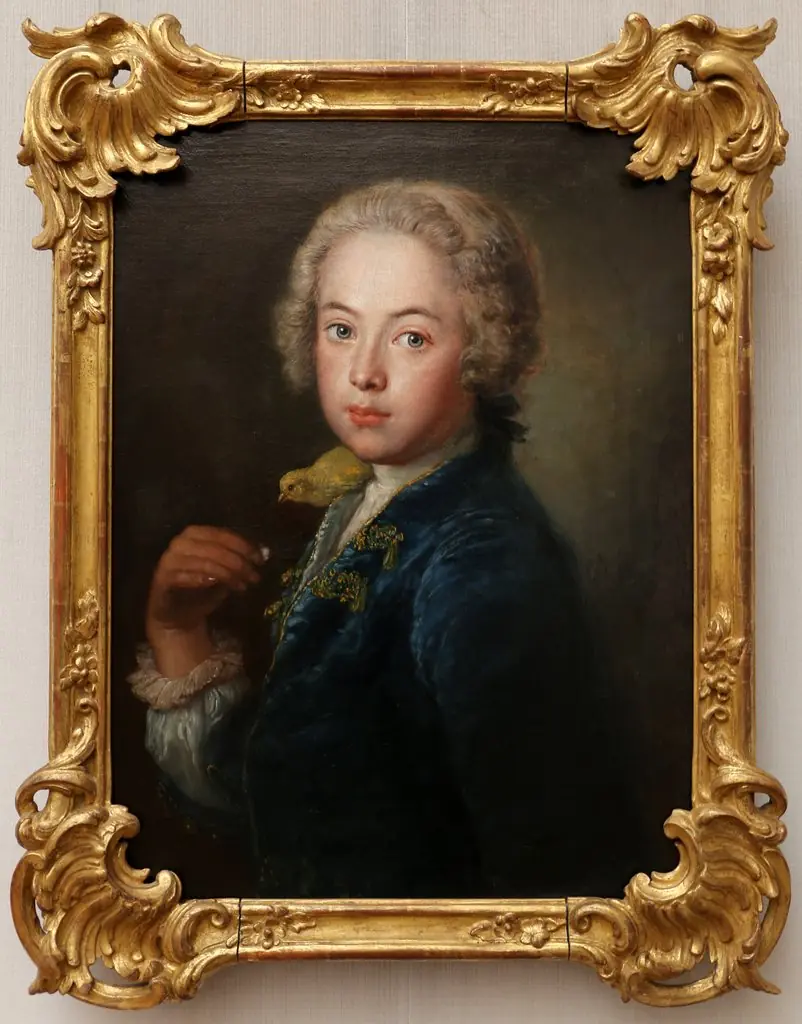 Georg Vollrath de Rège, grandson of the artist
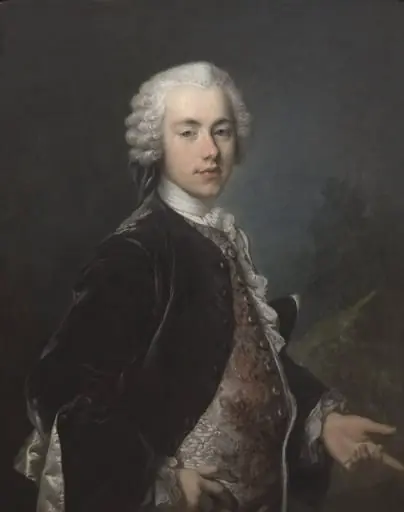 Portrait of Frederik Berregaard
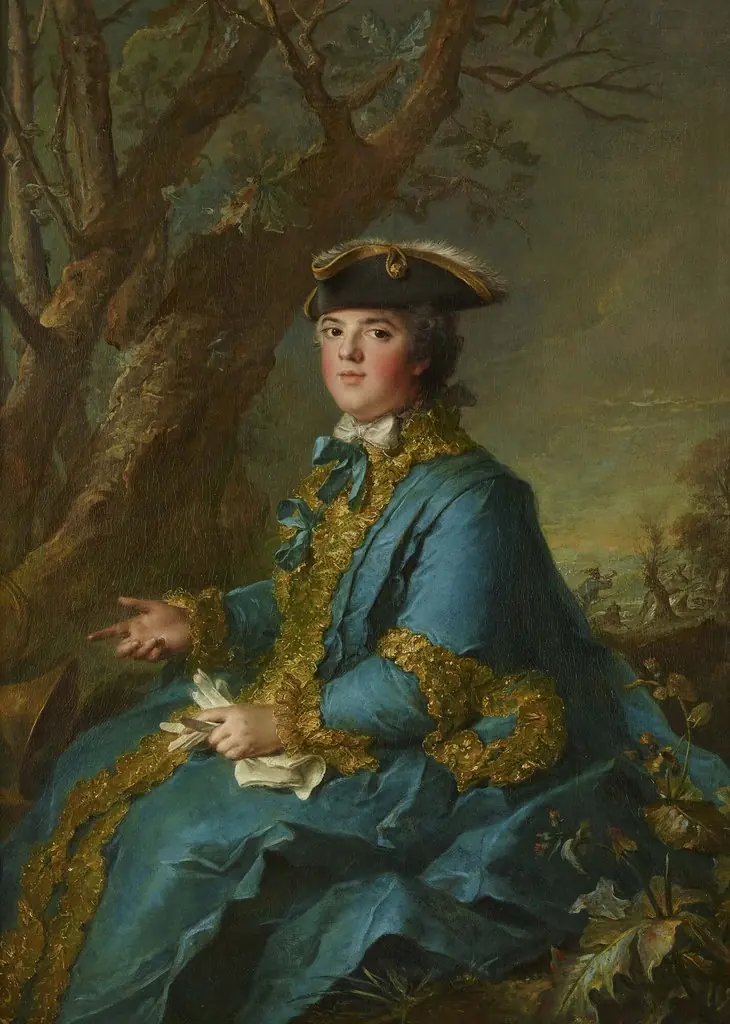 Posthumous portrait of Louise-Élisabeth de France, Duchess of Parma
 Portrait of Abel-François Poisson, marquis de Marigny