Artwork
Ange Laurent de La Live de Jully
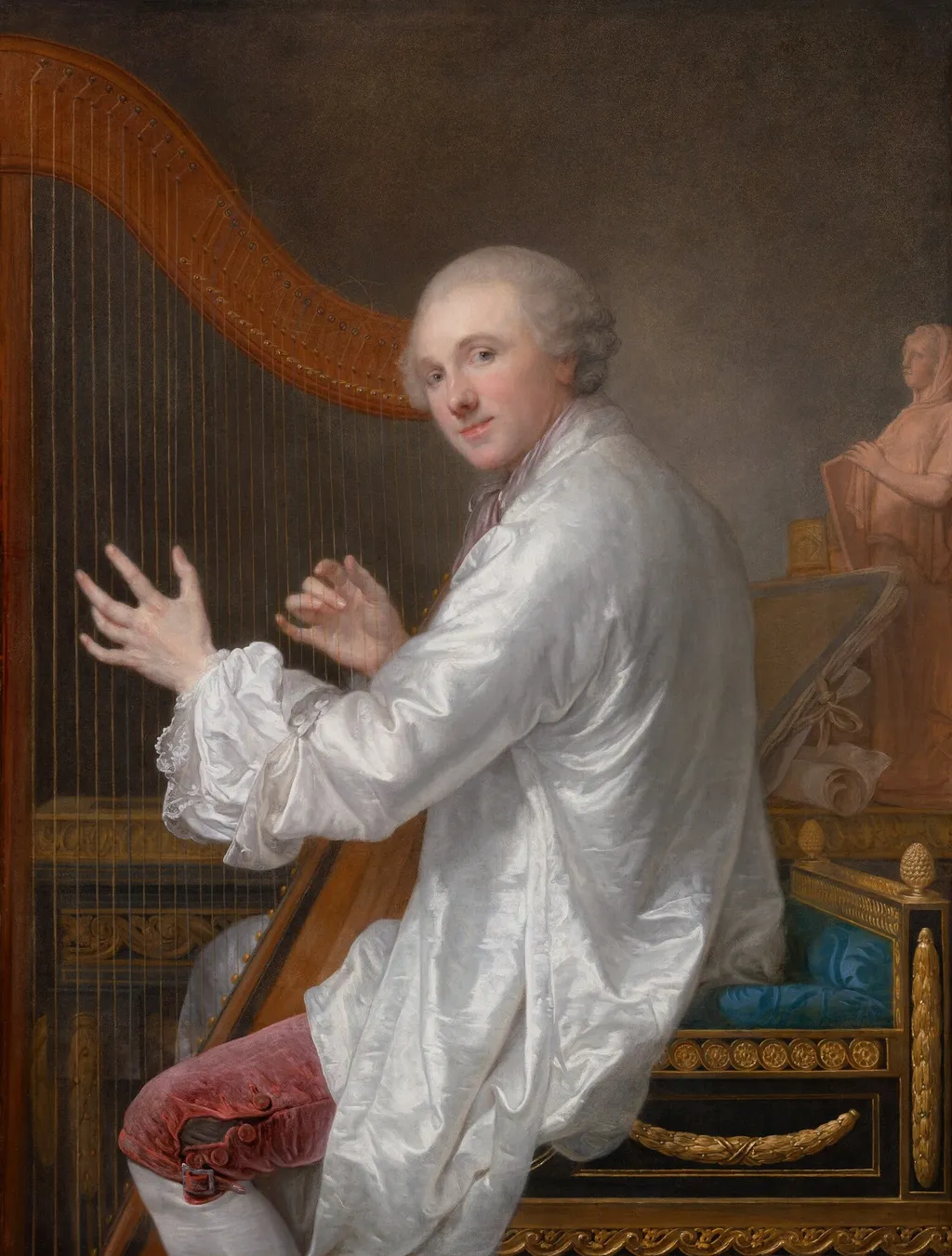
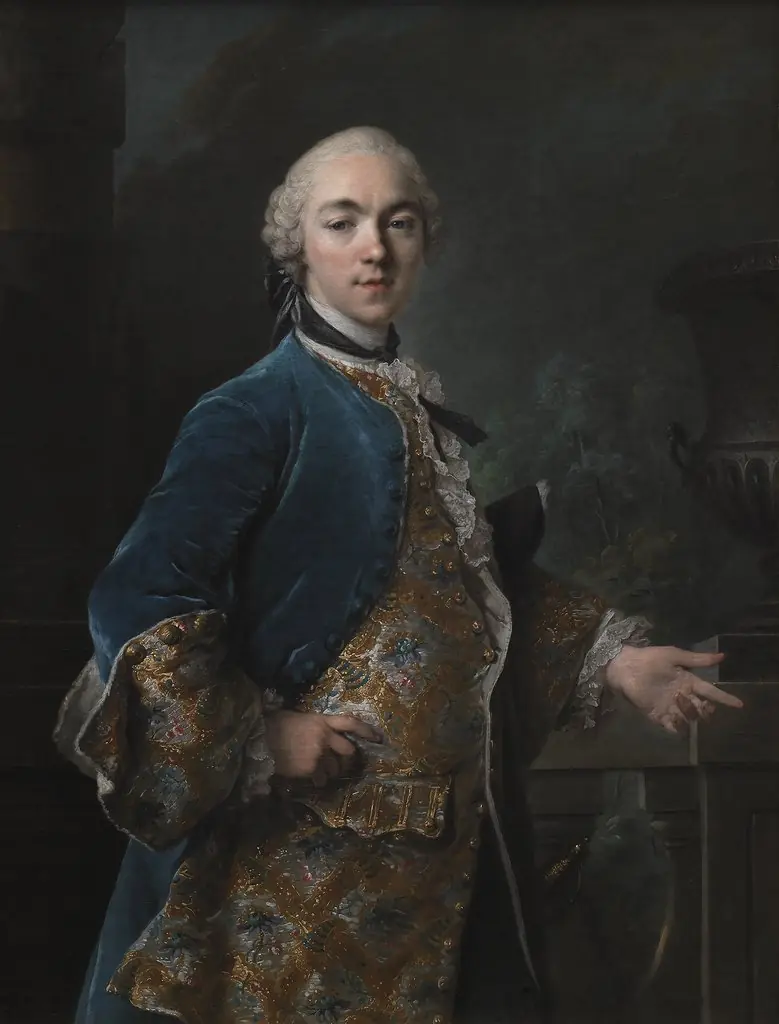
Ange Laurent de La Live de Jully is an oil painting by the Rococo painting artist Jean-Baptiste Greuze. It dates from 1759 and is held in the collection of the National Gallery of Art.
About this work
Subject & Meaning
The canvas portrays Ange Laurent Lalive de Jully, an 18th‑century French nobleman, as a dignified individual whose attire and posture signal aristocratic rank.
The canvas portrays Ange Laurent Lalive de Jully, an 18th‑century French nobleman, as a dignified individual whose attire and posture signal aristocratic rank. As a portrait produced by Jean‑Baptiste Greuze in 1759, the work functions as a visual record of the sitter’s social identity and familial heritage, reflecting the importance of lineage and inheritance in pre‑revolutionary French society. The painting’s provenance, passing through successive descendants of the sitter before entering the National Gallery of Art, underscores its role as a material link to the family’s historical narrative.
Consequently, the image represents both an individual likeness and a broader emblem of noble status within the cultural context of mid‑18th‑century France.
Technique & Style
Executed in 1759 by Jean-Baptiste Greuze, this portrait utilizes oil paint applied to a canvas support. The work measures 117 centimeters in height and 88.5 centimeters in width. Classified as a portrait, the painting depicts Ange Laurent de La Live de Jully.
While the specific handling of the brushwork and the current physical condition of the surface are not detailed in the available records, the medium and dimensions establish the work's formal presence as a substantial, life-sized representation typical of mid-eighteenth-century French portraiture.
History & Provenance
Painted in 1759 by Jean-Baptiste Greuze, the portrait depicts Ange Laurent de La Live de Jully. After the sitter’s death in 1779, the work passed by inheritance to his second daughter, Louise de La Live, comtesse de Fezensac, then to her son, Raymond Aimery de Montesquiou, duc de Montesquiou-Fezensac. It descended within the family to Oriane Henriette de Montesquiou, vicomtesse de Goyon, who owned it by 1874 and lent it to exhibitions in Paris in 1874 and 1885.
By 1927 it belonged to Alexandre Léon Joseph, comte de Laborde, and by January 1937 was with Duveen Brothers. The Samuel H. Kress Foundation acquired it in 1942 and donated it to the National Gallery of Art, Washington, in 1946.
The painting Ange Laurent de La Live de Jully, an oil on canvas portrait by Jean‑Baptiste Greuze completed in 1759, is presently in the collection of the National Gallery of Art in Washington, D.C., where it is part of the Samuel H. Kress Collection. Its provenance traces from the sitter to his daughter and grandson, then through several French aristocratic owners to the vicomtesse Charles de Goyon, who exhibited it in Paris in 1874 and again in 1885. The work was sold to Duveen Brothers in 1937, acquired by the Samuel H. Kress Foundation in 1942, and gifted to the National Gallery of Art in 1946.
Context
Ange Laurent de La Live de Jully (1759) is a portrait by Jean‑Baptiste Greuze that exemplifies mid‑18th‑century French portraiture, a genre in which the artist combined Rococo elegance with Enlightenment moralism. The work remained in the sitter’s family until the late 19th century, was shown at the 1874 Paris exhibition of the vicomtesse de Goyon and later lent to the 1885 Salon, signaling renewed interest in Greuze’s oeuvre. Documentation of its provenance follows a documented chain from the sitter to his descendants, through Duveen Brothers to the Samuel H. Kress Foundation, and finally to the National Gallery of Art (NGA) in 1946.
Scholars such as Munhall have traced this lineage, situating the painting within Greuze’s broader corpus of aristocratic portraiture.
Legacy
After leaving the family of its original sitter, the portrait remained in private hands until its acquisition by the Samuel H. Kress Foundation in 1942, which donated it to the National Gallery of Art in 1946, cementing its status as a recognized work of Jean‑Baptiste Greuze. Its earlier provenance, traced through the descendants of Ange Laurent de La Live de Jully and a series of Parisian exhibitions in 1874 and 1885, demonstrated sustained public interest. The painting’s inclusion in major institutional collections and scholarly catalogues, such as those by Munhall and Eisler, has contributed to a reevaluation of Greuze’s portraiture within the broader context of 18th‑century French art.
Overview
Jean-Baptiste Greuze created this oil on canvas portrait, Ange Laurent de La Live de Jully, around 1759. The painting exemplifies the Rococo movement, a prevalent artistic style of the era. It captures a specific individual, presenting him in a manner characteristic of Greuze's refined approach to portraiture.
Own this work as a print
Artist & collection
Artist
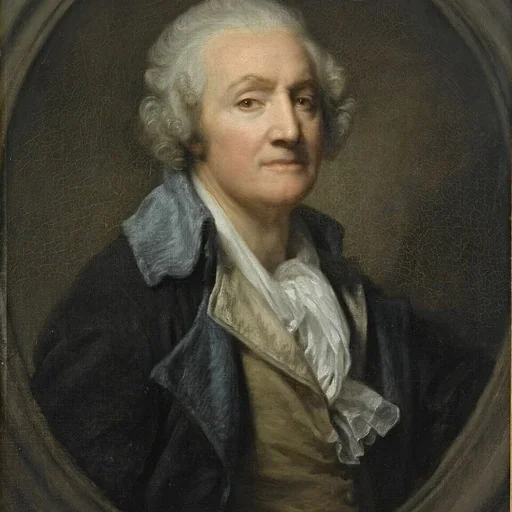
Jean-Baptiste Greuze (French pronunciation: 21 August 1725 – 4 March 1805) was a French painter of portraits, genre scenes, and history painting.

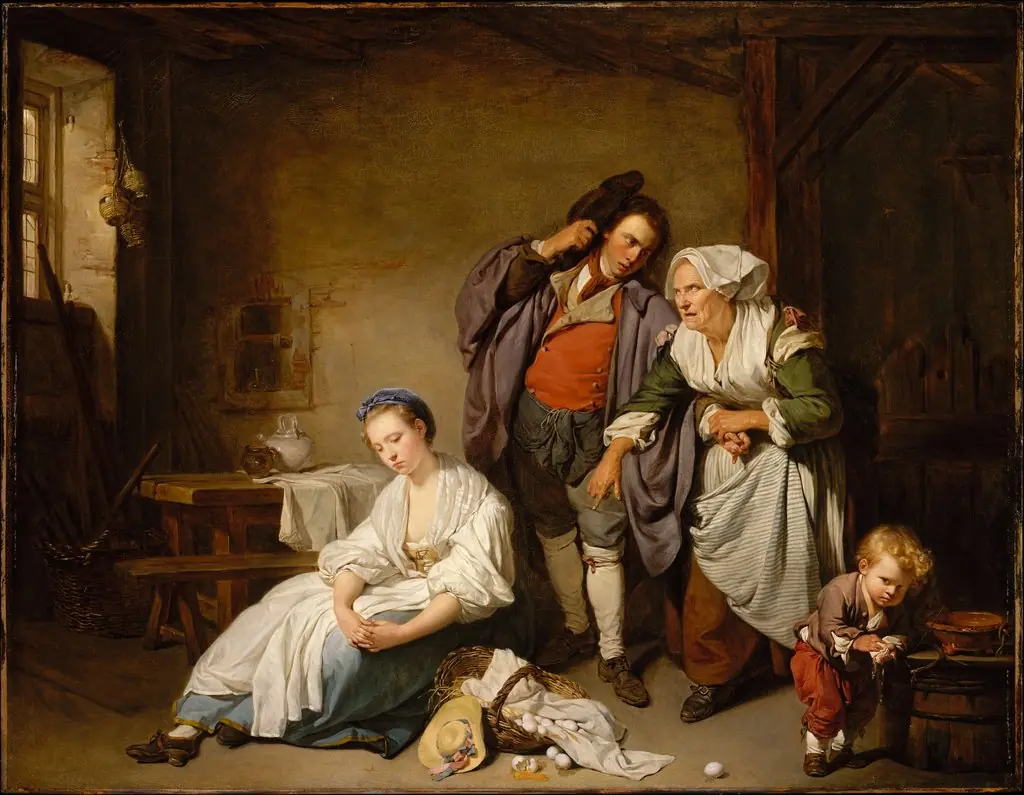 Broken Eggs
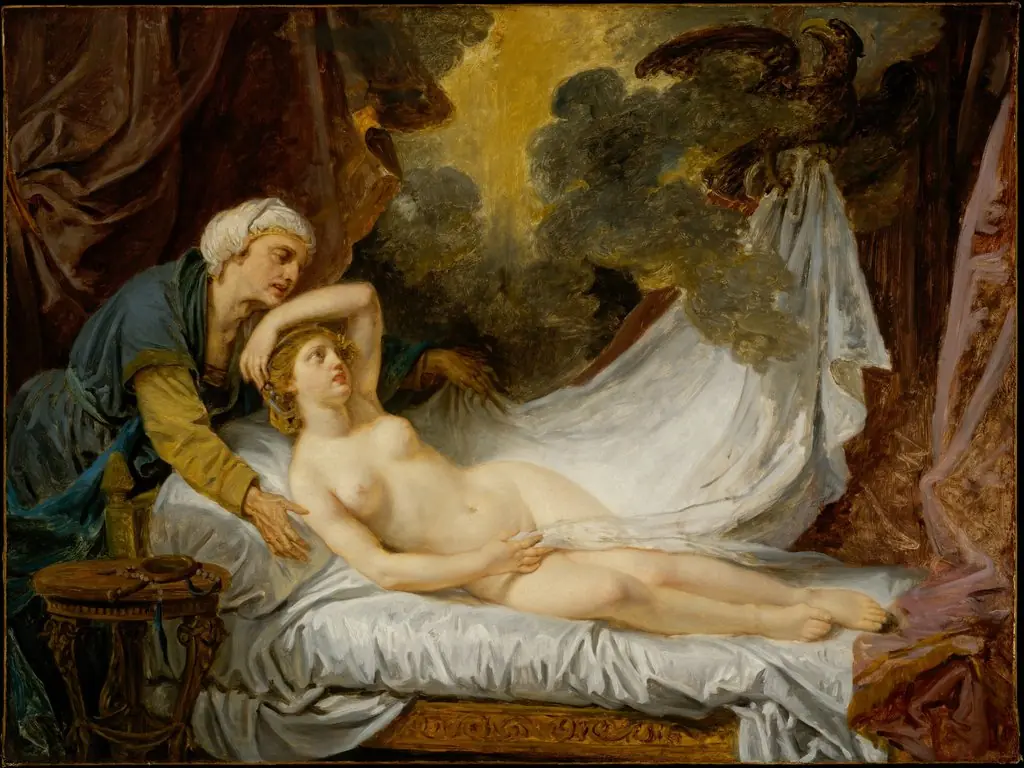 Aegina Visited by Jupiter
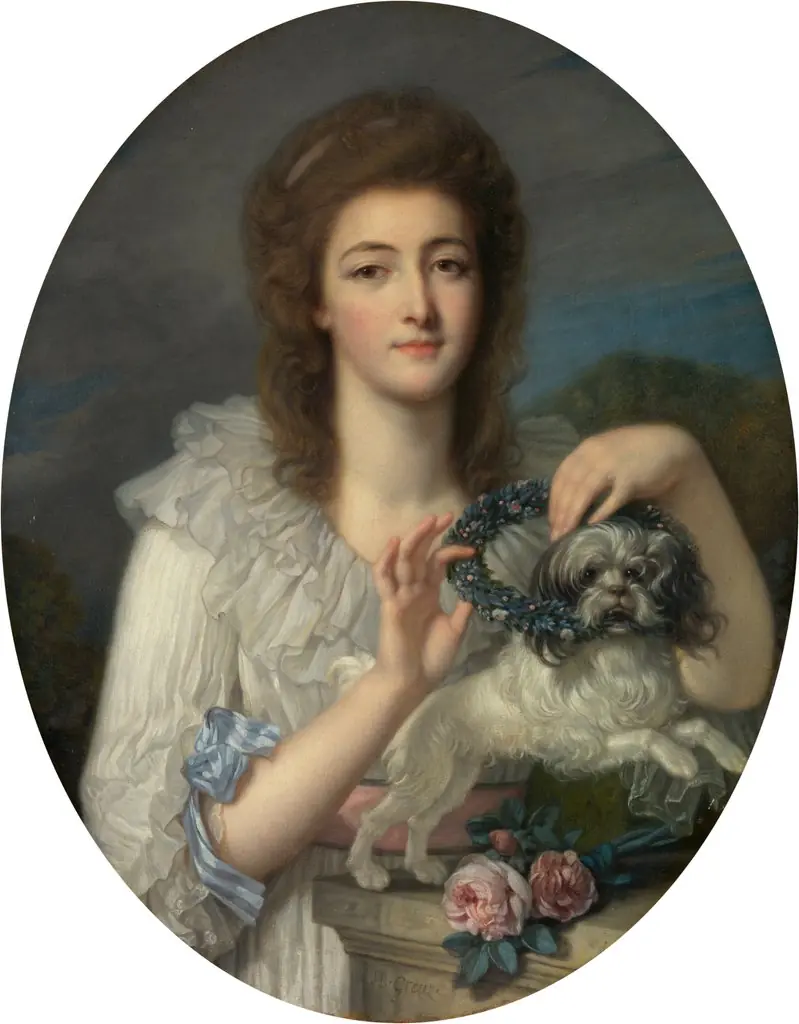 Princess Varvara Nikolaevna Gagarina (1762–1802)
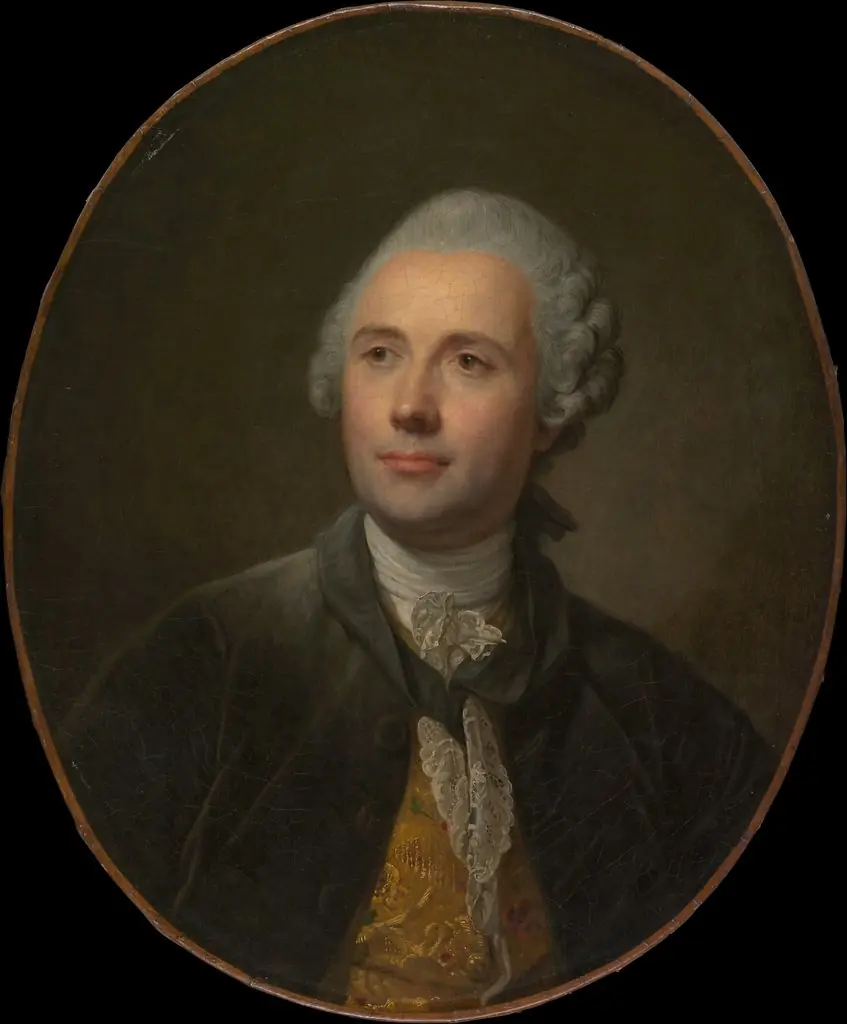 Jean Jacques Caffieri (1725–1792)
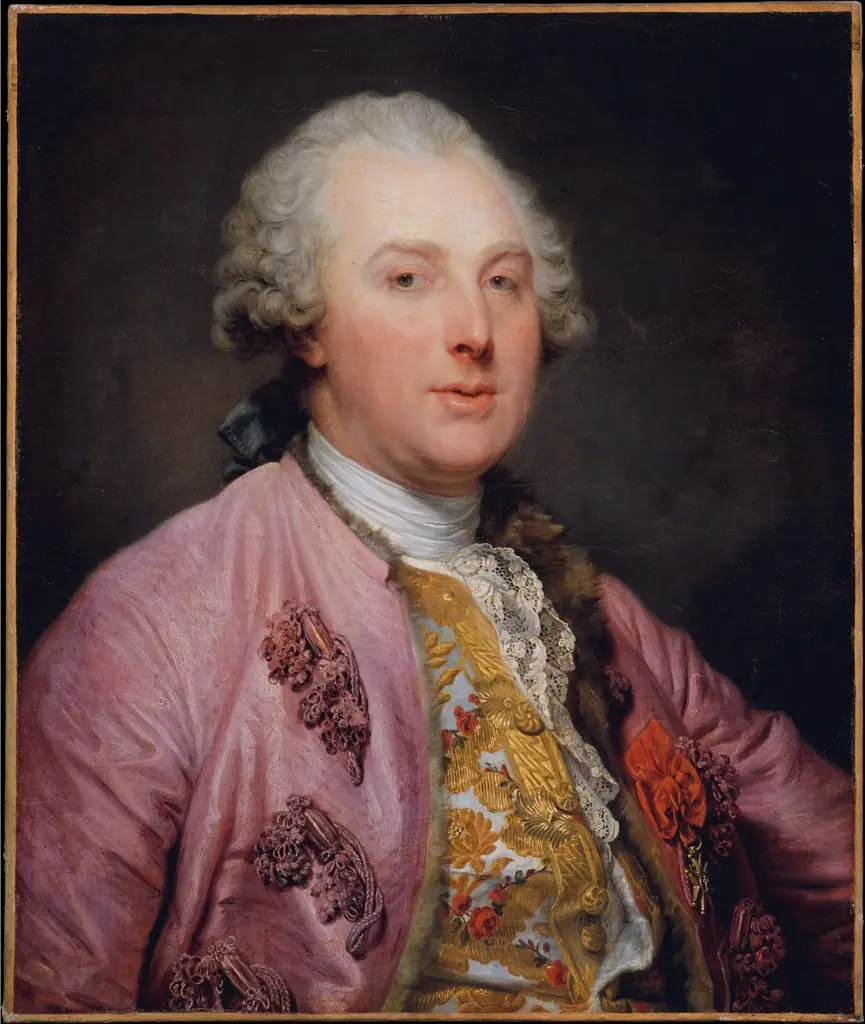 Portrait of Charles Claude de Flahaut de La Billarderie (Comte d'Angiviller)
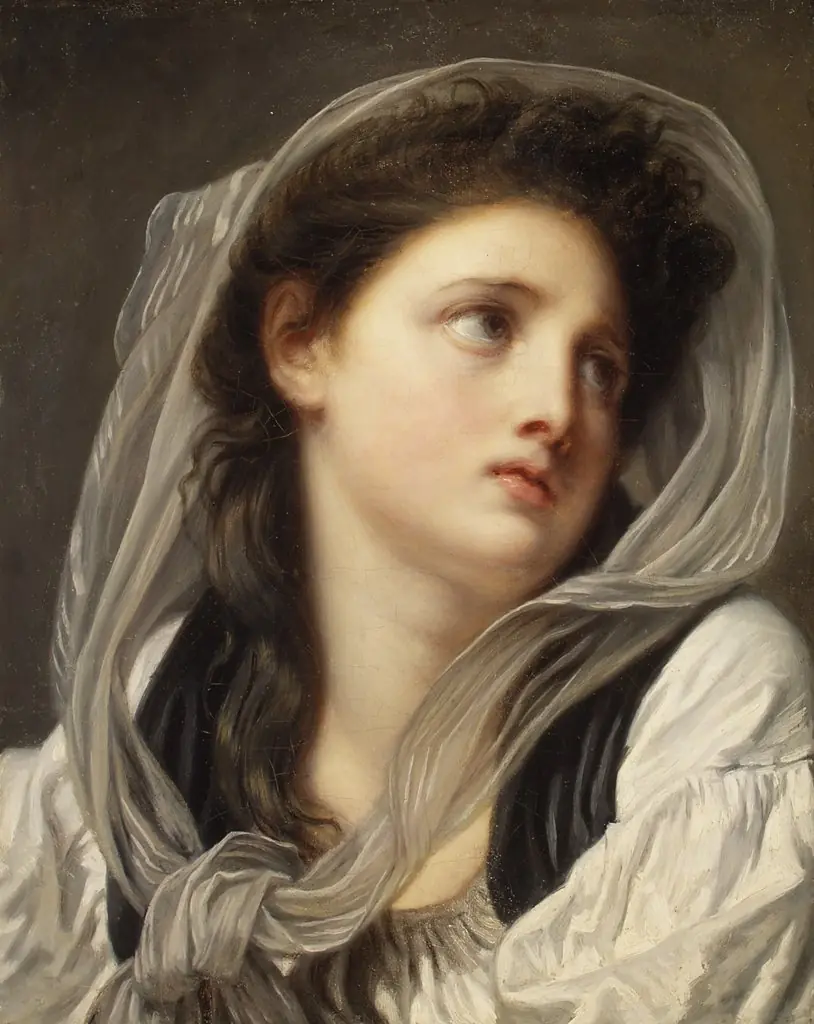 Head of a Young Woman
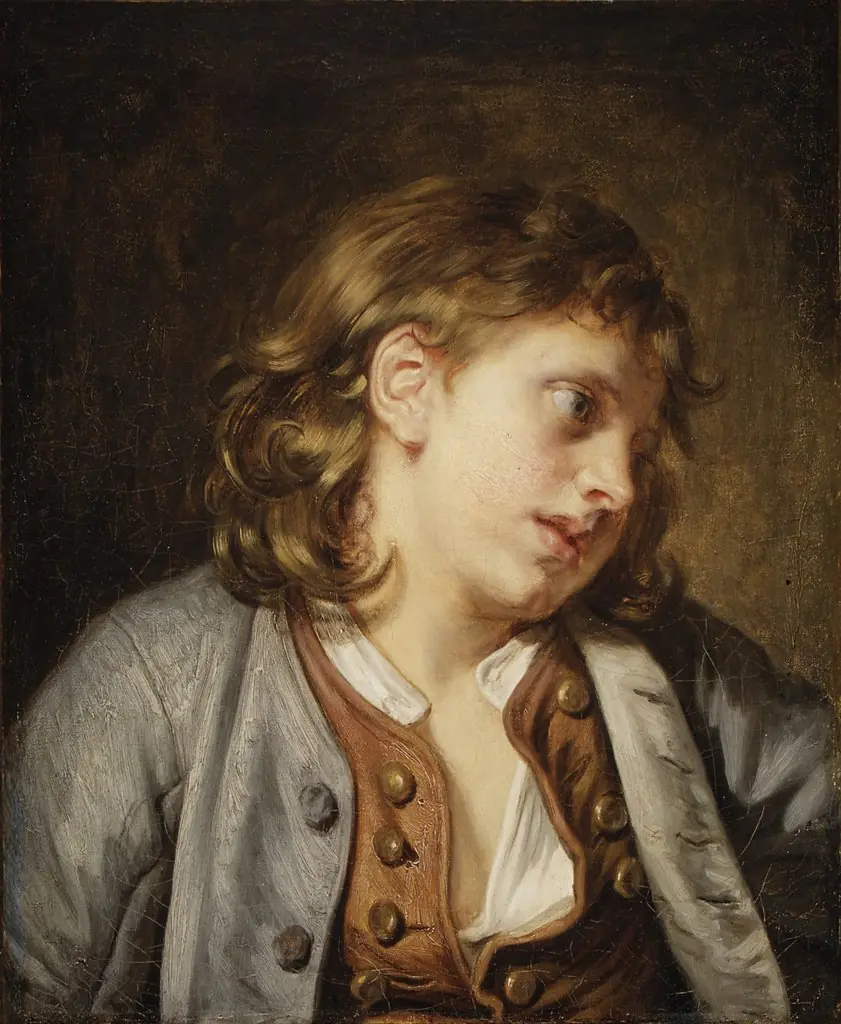 Head of a Young Boy
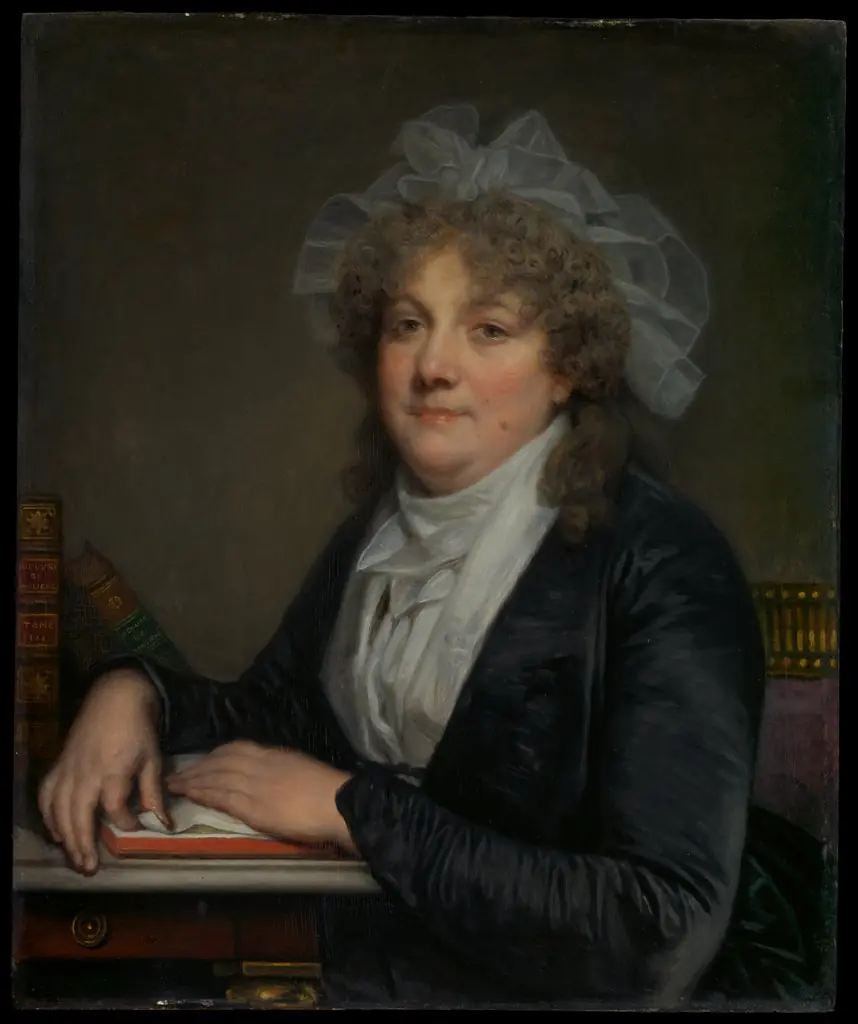 Madame Jean-Baptiste Nicolet (Anne Antoinette Desmoulins, 1743–1817)
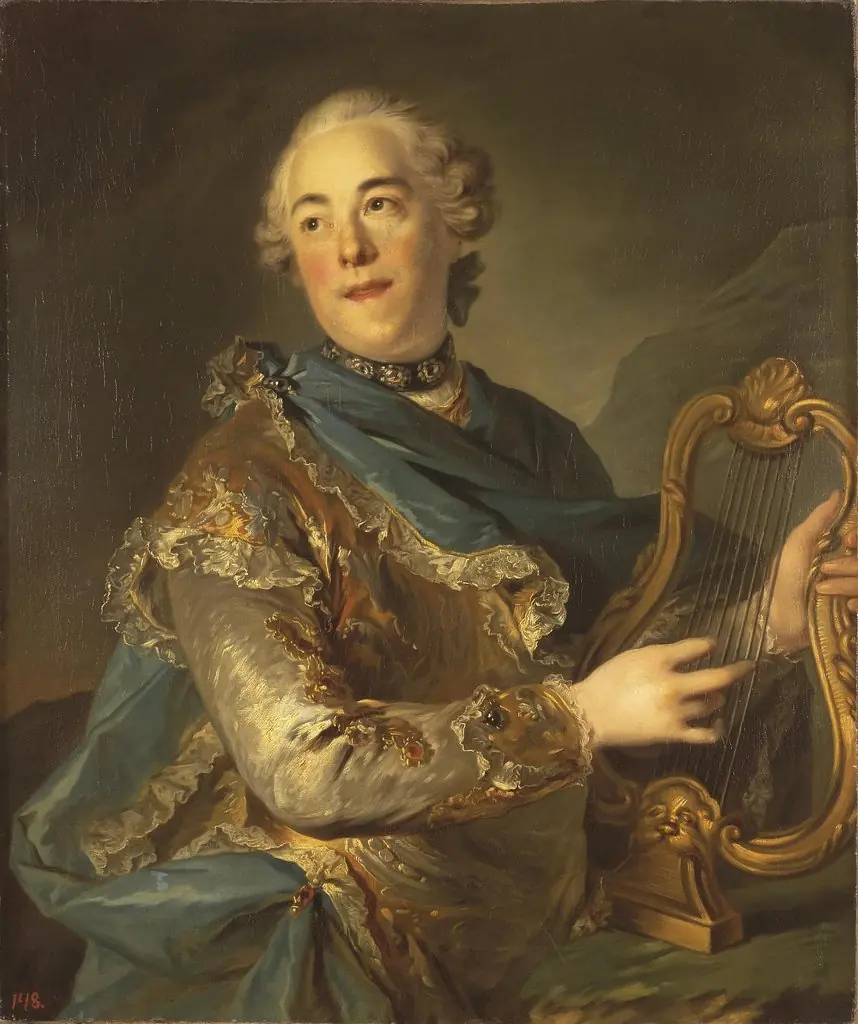 Portrait of Actor as Apollo
 Self-Portrait with a Harp
 Portrait of a Musician
 Élisabeth of France seated at her Harp
 Portrait of Isaac van Rijneveld
 Joseph Bonnier de la Mosson
 Chamber Councilor Joachim Ulrich Giese
 Portrait of a Man
 Huilunsoittaja
 Portrait of Frederik Christian Krag (1726-1763)
 Madame Desroches
- Ange Laurent de Lalive de Jully