Artwork
Notre-Dame de Paris
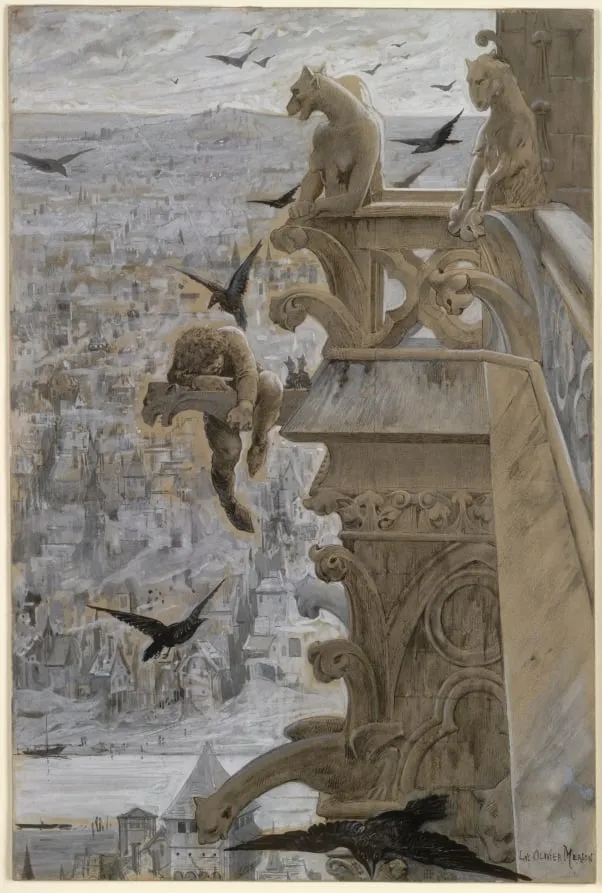
Notre-Dame de Paris is a drawing by the Impressionist artist Luc-Olivier Merson. It dates from 1881 and is held in the collection of the Cleveland Museum of Art.
- Accession no.
- 2008.359
- Credit line
- Bequest of Muriel Butkin
About this work
Overview
Created for a commemorative publication honoring Victor Hugo in 1881, it translates the novel’s emotional tone into visual form.
This drawing by Luc-Olivier Merson depicts Notre-Dame Cathedral at night, rendered in quiet, shadow-drenched detail. Created for a commemorative publication honoring Victor Hugo in 1881, it translates the novel’s emotional tone into visual form. The absence of human figures and the dominance of architectural mass evoke a contemplative, solitary atmosphere, aligning with Hugo’s literary vision of the cathedral as a silent witness to history.
Subject & Meaning
The cathedral stands as the sole subject, its Gothic form rendered with solemnity and scale. Merson’s choice to omit crowds or activity transforms the structure into a symbolic presence, echoing Hugo’s portrayal of Notre-Dame not merely as a building, but as a living entity shaped by time, faith, and marginal lives. The stillness suggests memory, isolation, and the enduring weight of the past.
Technique & Style
Merson employs deep chiaroscuro to model the cathedral’s surfaces, emphasizing texture and volume through stark contrasts between shadow and faintly lit stone. Fine, controlled linework defines tracery and buttresses, while the surrounding square dissolves into near-total darkness. The technique avoids ornamentation, favoring atmospheric depth over detail, reinforcing the mood of quiet reverence.
History & Provenance
The drawing was produced specifically for an 1881 illustrated tribute to Victor Hugo, published nearly fifty years after the release of his novel. It was later reproduced as a wood engraving, ensuring wider circulation. Its creation reflects the enduring cultural resonance of Hugo’s work and the 19th-century revival of interest in medieval architecture as a subject of artistic and literary contemplation.
Context
In the late 19th century, Gothic architecture was increasingly viewed through a romantic, nostalgic lens, partly shaped by Hugo’s novel. Merson’s image aligns with broader efforts to reframe medieval monuments as embodiments of national identity and spiritual depth. The drawing responds to a cultural moment when restoration and literary homage converged in public consciousness.
Legacy
Merson’s image contributed to a visual language that associated Notre-Dame with melancholy grandeur, influencing later depictions in illustration and photography. Its restrained tone helped cement the cathedral’s identity beyond religious function, positioning it as a poetic symbol of endurance and quiet history in the French cultural imagination.
Artist & collection
Artist
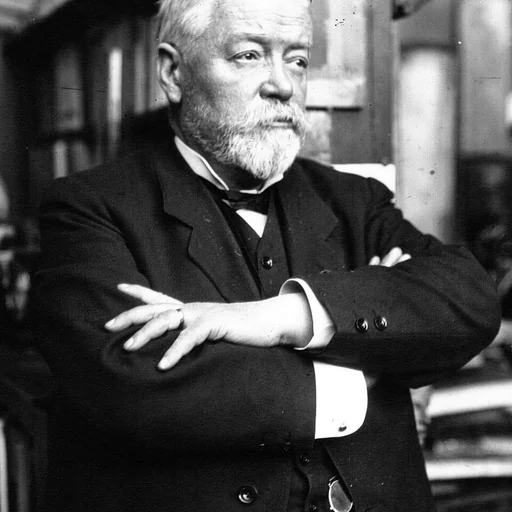
Luc-Olivier Merson (21 May 1846 - 13 November 1920) was a French academic painter and illustrator. He was also known for his postage stamp and currency designs.

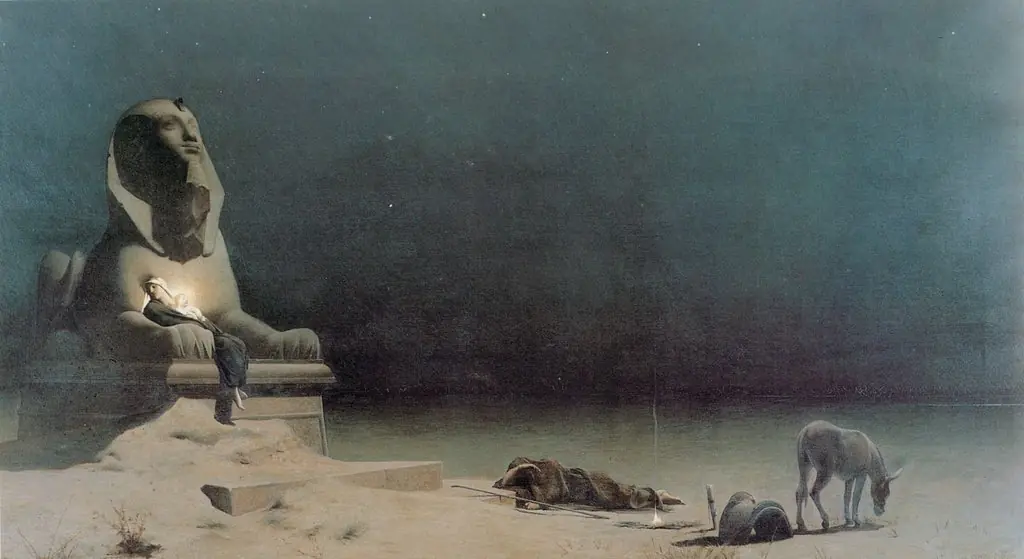
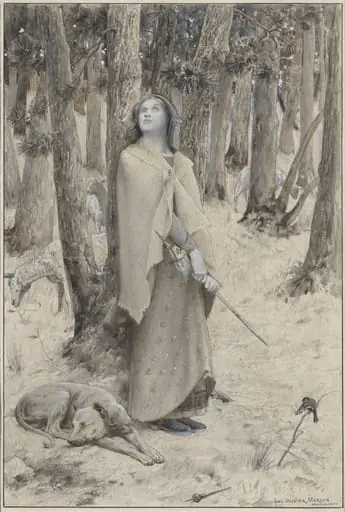
![Sketch of a Sphinx [?] (verso), by Luc-Olivier Merson](https://artifactworldgallery.com/img/luc-olivier-merson--sketch-of-a-sphinx-verso--01aae5545d384a57-w320.webp)
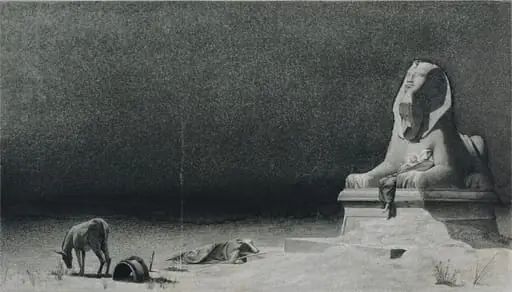
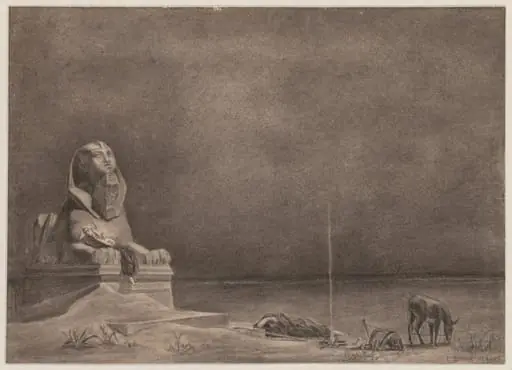
![The Rest on the Flight into Egypt (recto); Sketch of a Sphinx [?] (verso), by Luc-Olivier Merson](https://artifactworldgallery.com/img/luc-olivier-merson--the-rest-on-the-flight-into-egypt-recto-sketch-of-a-sphinx-v--25f9a663b49091e6-w320.webp)
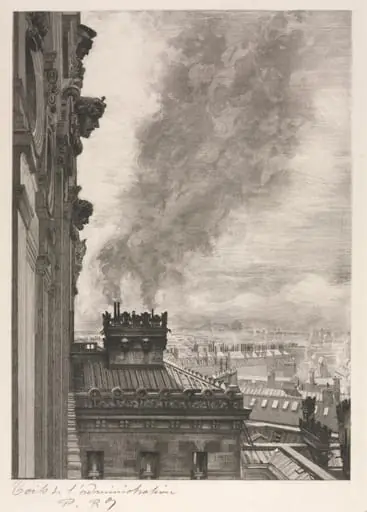 Rooftops of the Administration Building
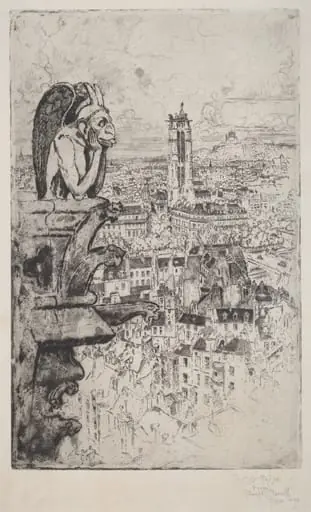 Le Stryge
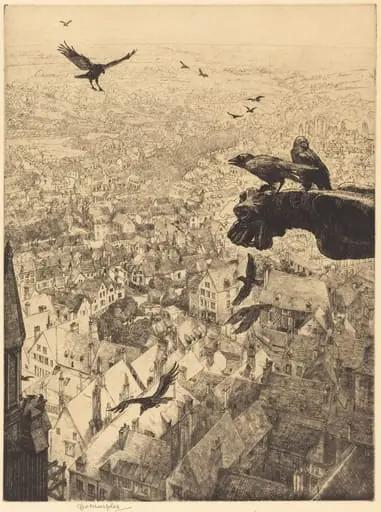 Jackdaws of Chartres
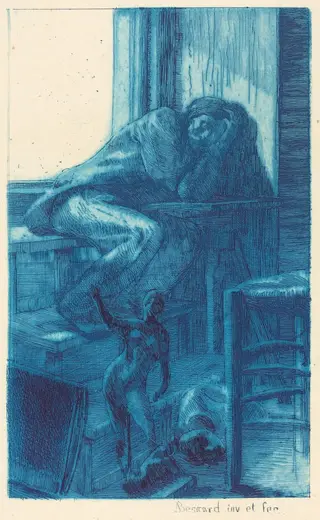 The Roman Studio (L'Atelier de Rome)
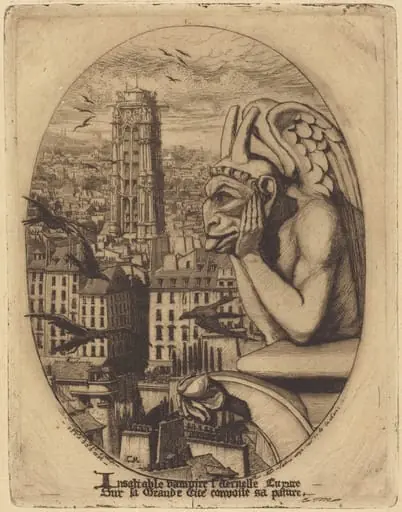 Le stryge (The Vampire)
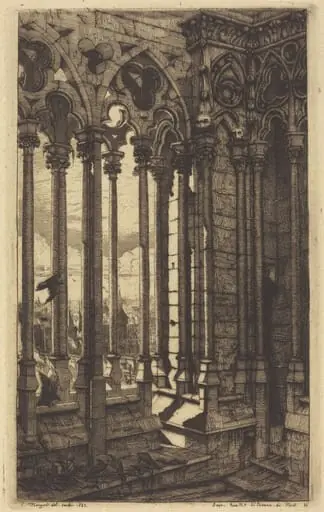 La galerie Notre-Dame, Paris (The Gallery of Notre Dame, Paris)
 Untitled
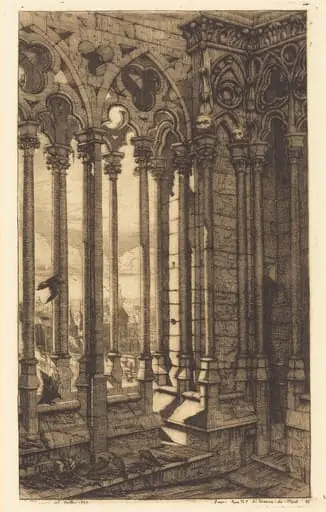 La galerie Notre-Dame, Paris (The Gallery of Notre Dame, Paris)
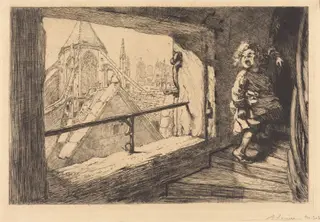 Les toits de Saint-Severin
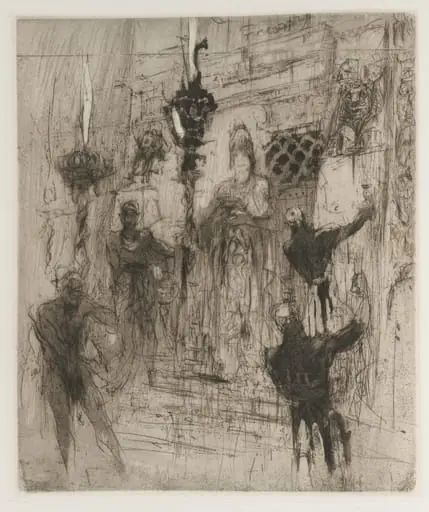 Herodias
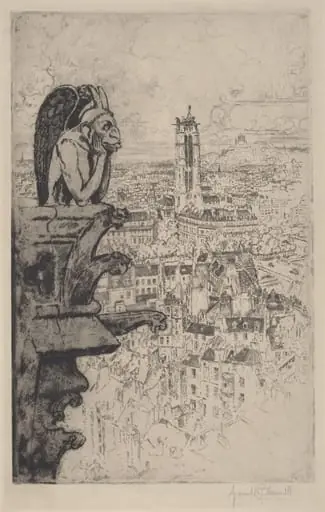 Le Stryge
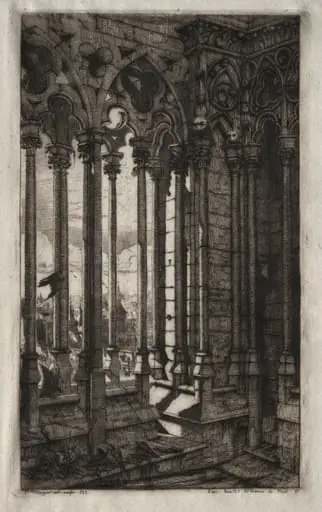
- The Etchings of Paris: The Gallery of Notre Dame