Artwork
Death of Saint Joseph
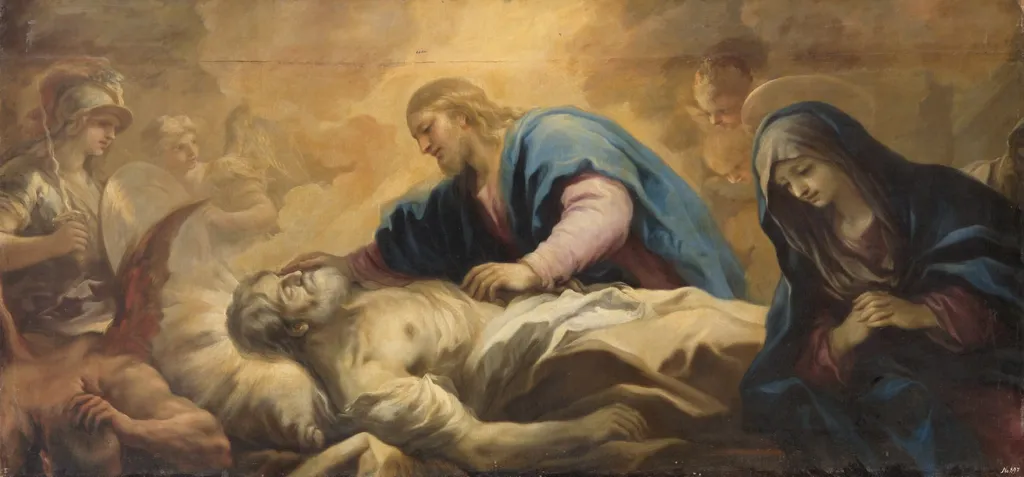
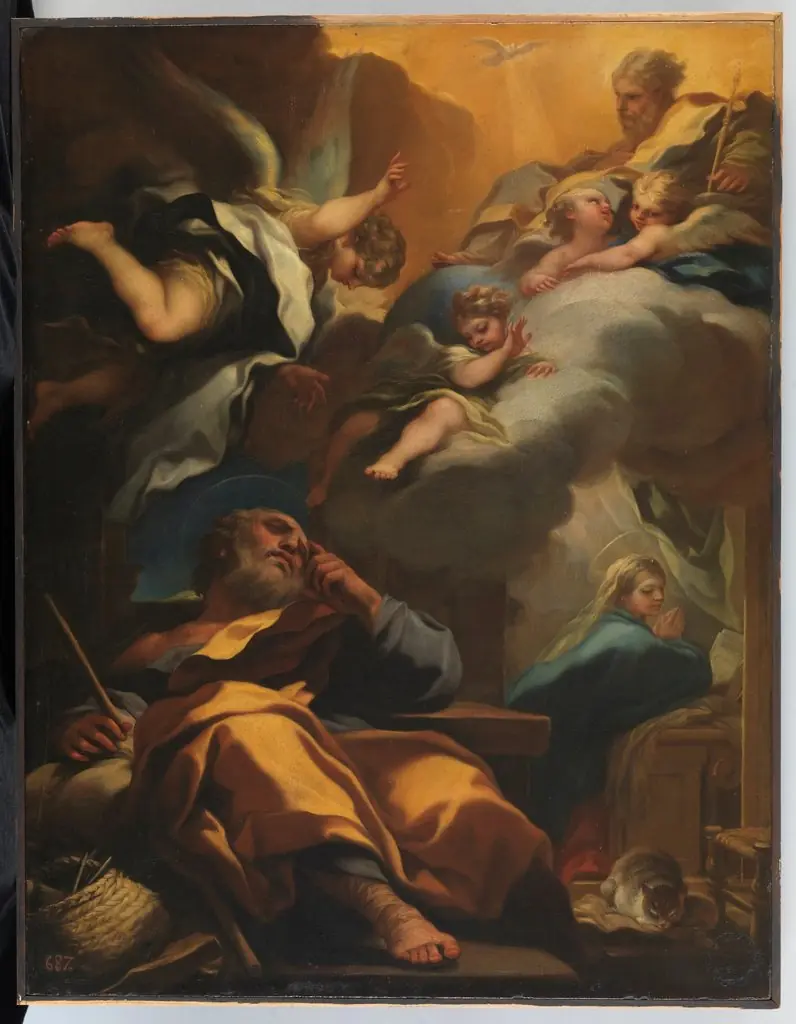
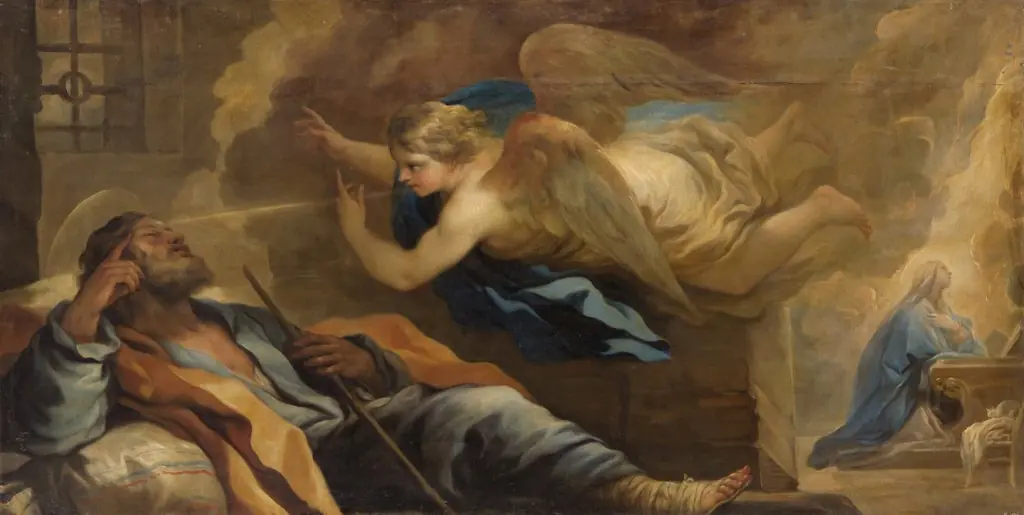
Death of Saint Joseph is an unspecified painting by the Early Baroque Italian artist Luca Giordano. It dates from 1698 and is held in the collection of the Kunsthistorisches Museum.
About this work
Subject & Meaning
By including Jesus and Mary in the scene, the painting visualizes the sacred family bond and the transmission of grace at the threshold of death.
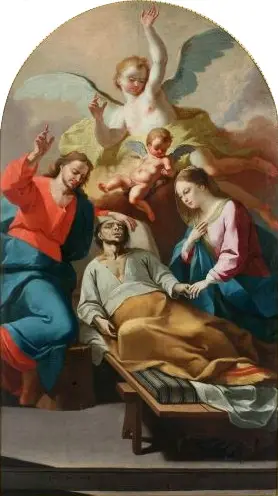
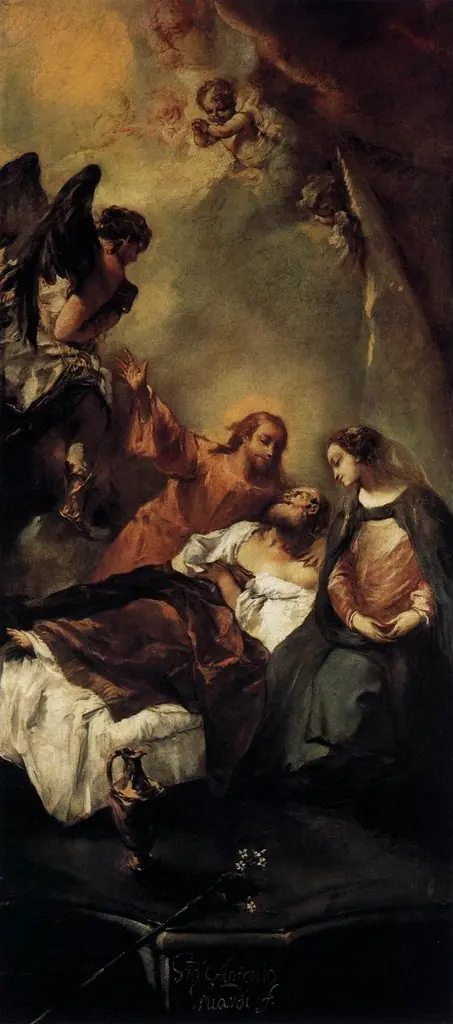
The painting depicts the death of Saint Joseph, a subject drawn from Christian tradition in which Joseph, the earthly father of Jesus and husband of Mary, dies surrounded by his family. In Giordano’s composition, Joseph appears on his deathbed in the final moments of life, while Jesus and the Virgin Mary gather at his side to offer comfort and witness his passing. The scene emphasizes Joseph’s pious end and his role as a model of a holy death, underscoring themes of family devotion and divine ordination within Catholic iconography.
The work’s iconography aligns with Counter-Reformation devotional imagery, portraying Joseph as an exemplar of righteousness and humility. By including Jesus and Mary in the scene, the painting visualizes the sacred family bond and the transmission of grace at the threshold of death.
Technique & Style
Executed in oil on canvas in 1696, the painting measures 93 by 193 cm. Giordano’s handling is fluent and rapid, characteristic of his late Baroque idiom, with swiftly modeled forms and a luminous palette that heightens the devotional mood. The composition arranges the deathbed scene along a diagonal, drawing attention to Saint Joseph’s prone body while Mary and the Christ Child flank him in tender attitudes of mourning. The brushwork blends glazes and opaque passages to articulate textures, from the crisp folds of drapery to the soft modeling of flesh, while a warm, golden light suffuses the interior, reinforcing the sanctity of the moment.
History & Provenance
The painting was created in 1696 by Luca Giordano for an unknown patron, reflecting the Baroque emphasis on dramatic religious narratives. Its provenance traces directly to the Kunsthistorisches Museum in Vienna, where it remains part of the permanent collection and is displayed in the gallery dedicated to 17th‑century Italian masters. The work measures 193 cm by 93 cm and depicts the moment of Saint Joseph's death, a subject that underscores the artist’s late‑period devotional focus.
The painting is held in the collection of the Kunsthistorisches Museum in Vienna, where it is inventoried as accession 1087.
It was exhibited in the exhibition “Luca Giordano: Barock zwischen Neapel und Europa” held at the Kunsthistorisches Museum from 18 October 2001 to 27 January 2002.
Overview
Luca Giordano’s 1698 canvas ‘Death of Saint Joseph’ presents a solemn tableau of the holy family at the moment of Joseph’s passing. Executed in the late Baroque period, the work resides in Vienna’s Kunsthistorisches Museum, where it remains a notable example of devotional imagery from the artist’s prolific output.
Context
Created during Giordano’s mature phase, the work aligns with Counter‑Reformation commissions that emphasized pious narratives. The depiction of Joseph’s death, a relatively rare subject, reflects contemporary theological interest in the saint’s role as protector of the Holy Family and model of humble obedience.
Artist & collection

Artist
Luca Giordano was an Italian late-Baroque painter and printmaker in etching. Giordano was one of the most celebrated artists of the Neapolitan Baroque, whose vast output included altarpieces, mythological paintings and…