Artwork
Self-portrait
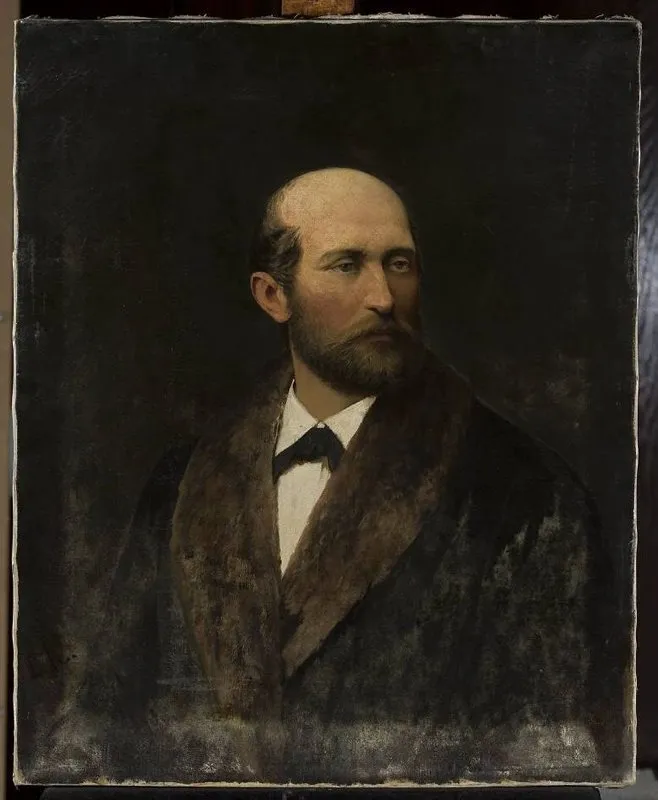
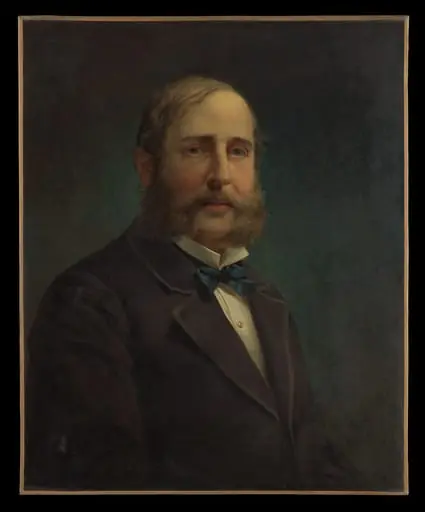
Self-portrait is an oil painting by the Post-Impressionist artist Ludwik Kurella. It dates from 1896 and is held in the collection of the National Museum in Warsaw.
About this work
Overview
The painting belongs to the mature period of Kurella's career, when he was already an established figure within the Polish artistic colony in Munich.
Self-portrait is an oil painting on canvas by the Polish artist Ludwik Kurella, executed in 1891. Measuring 82 by 67 centimetres, the work is held in the collection of the National Museum in Warsaw. The painting belongs to the mature period of Kurella's career, when he was already an established figure within the Polish artistic colony in Munich. As a self-portrait produced by an artist chiefly celebrated for landscape and religious painting, the work offers significant insight into how Kurella wished to present himself professionally and occupies an important place within both his own oeuvre and the broader tradition of Polish self-portraiture in the nineteenth century.
Subject & Meaning
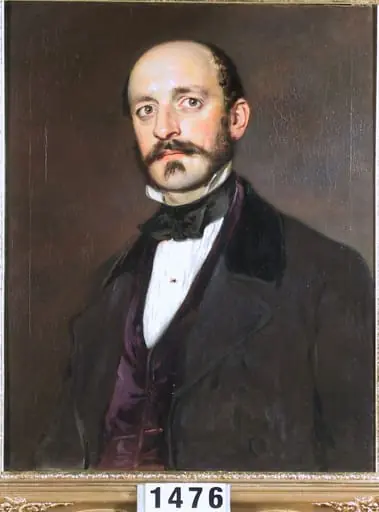
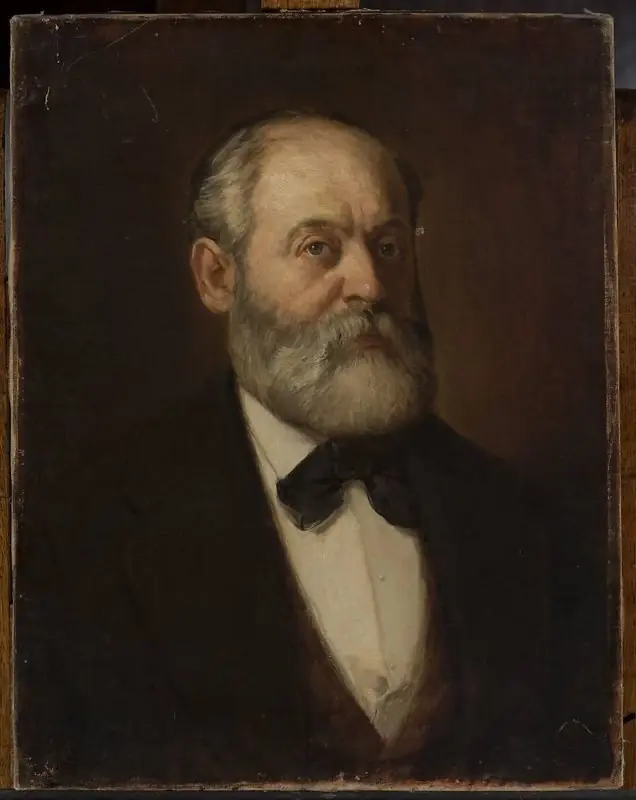
The painting presents the artist from the chest up, positioned centrally against a dark, nearly black background. Kurella faces slightly to the right while turning his head toward the viewer, establishing direct engagement with the audience. He appears as a bearded man with receding hair, dressed in a dark coat with a wide, textured fur collar, a white shirt, and a dark bow tie. The restrained palette of deep browns and blacks, warmed by tones in the fur and cooled by highlights on the forehead and cheekbones, conveys sobriety and professional dignity. The absence of any objects, setting details, or attributes of the artist's trade shifts attention entirely onto the figure himself, suggesting a presentation of personal rather than professional identity. The lighting from the upper left, illuminating the left side of the face and fur collar while allowing the right side to recede into shadow, creates a subtle modelling that emphasizes psychological presence over narrative content.
Technique & Style
Kurella executed the work in oil paint on canvas, a medium and support standard for formal portraiture of the period. The handling reveals distinct technical approaches for different areas: smooth, blended brushwork on the face produces a refined, almost enamelled surface appropriate to likeness, while looser, more visible strokes in the coat and background suggest a more painterly, less finished treatment of secondary elements. The matte finish and areas of thin paint, particularly at the bottom edge where the ground shows through, indicate either deliberate economical application or the effects of age and wear. The visible edges of the canvas and slight wear at the perimeter confirm the work's physical history. This combination of polished facial rendering with freer handling elsewhere aligns with academic training and the conventions of Munich-school portraiture, within which Kurella had developed his practice.
History & Provenance
The painting was created in 1891, when Kurella was fifty-seven years old and had been resident in Munich for three decades, having settled there in 1861 after studies at the Dresden Academy under Julius Schnorr von Carolsfeld and subsequently at the Munich Academy with Wilhelm von Kaulbach, Claudius Schraudolph, Arthur von Ramberg, and Johann Schraudolph. The work entered the collection of the National Museum in Warsaw, where it remains today. Specific details of the commission, immediate recipient, or earlier ownership chain are not recorded in the available sources. The painting's presence in Poland's premier national collection indicates its recognition as a significant example of the artist's work and of Polish nineteenth-century painting more generally.
Context
Kurella belonged to the so-called Munich school, a circle of Polish artists who trained and worked in the Bavarian capital and maintained strong connections to their homeland while participating in German artistic institutions. He was regarded by critics as one of the more distinguished members of this colony, maintaining friendships with Józef Brandt, Józef Chełmoński, and the Gierymski brothers. While primarily known for landscapes of the Polish countryside, Italian views, and religious compositions, Kurella also produced portraits. The self-portrait of 1891 emerges from a career trajectory that began with sacred themes, moved through landscape and literary subjects inspired by Adam Mickiewicz, and returned toward religious work in the artist's final years. The painting thus represents a moment of self-reflection within a career largely devoted to external subjects. Self-portraiture as a genre had long served artists for self-promotion, technical demonstration, and personal statement; Kurella's contribution fits within this tradition while reflecting the particular circumstances of the Polish diaspora artist maintaining professional standing in a foreign centre.
Legacy
Kurella's reputation during his lifetime rested chiefly on his landscapes and religious paintings, which commanded high prices from German and American collectors known as Kunsthandler. His self-portrait, preserved in the National Museum in Warsaw, has outlived this commercial context to become a document of the artist's appearance and self-conception. The work contributes to understanding of the Polish Munich school, a group that significantly shaped nineteenth-century Polish painting despite working outside the partitioned homeland. Following Kurella's return to Warsaw around 1900 and his death in 1902, his work has been subject to the shifting fortunes of academic painting in twentieth-century art history. The self-portrait remains accessible as a tangible connection to an artist whose career embodied the transnational character of Polish culture under partition, and whose paintings decorated Polish churches including Poznań Cathedral. The painting's continued presence in the National Museum collection ensures its role in ongoing scholarship on Polish art of the period.
Artist & collection