Artwork
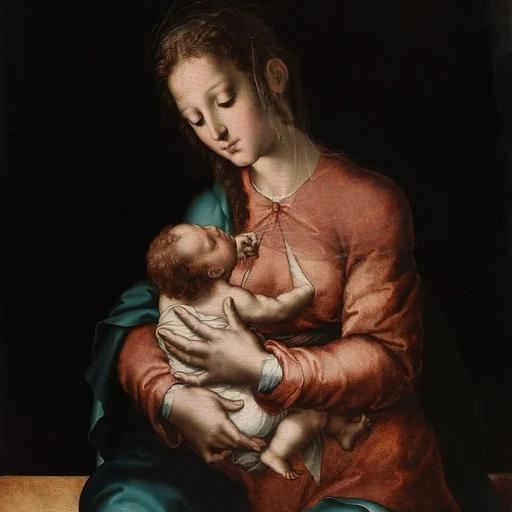
The Virgin and Child with a Spindle
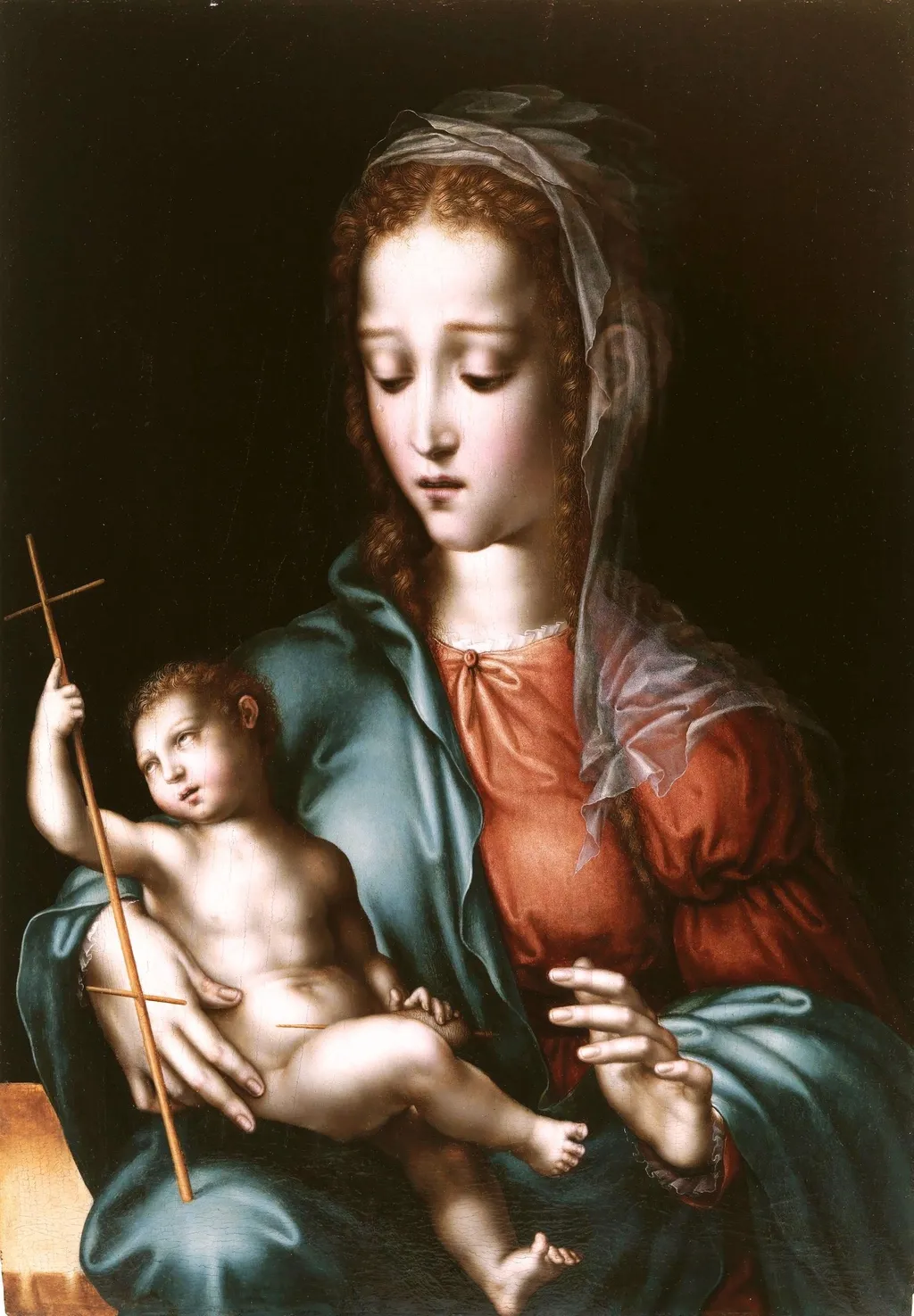
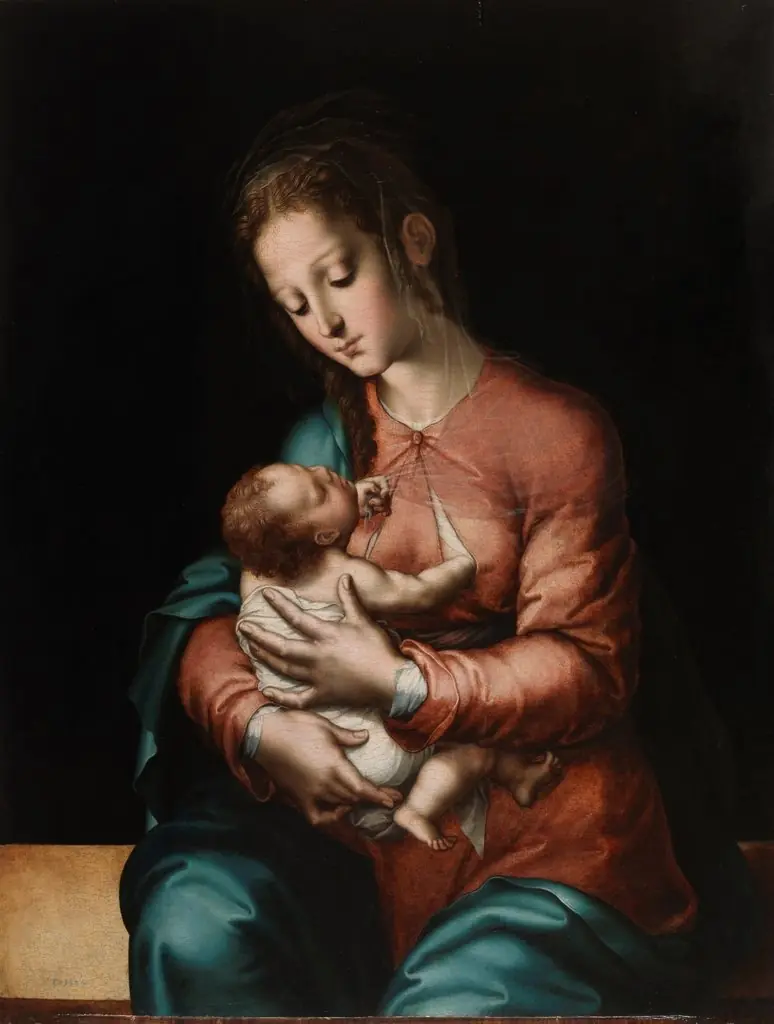
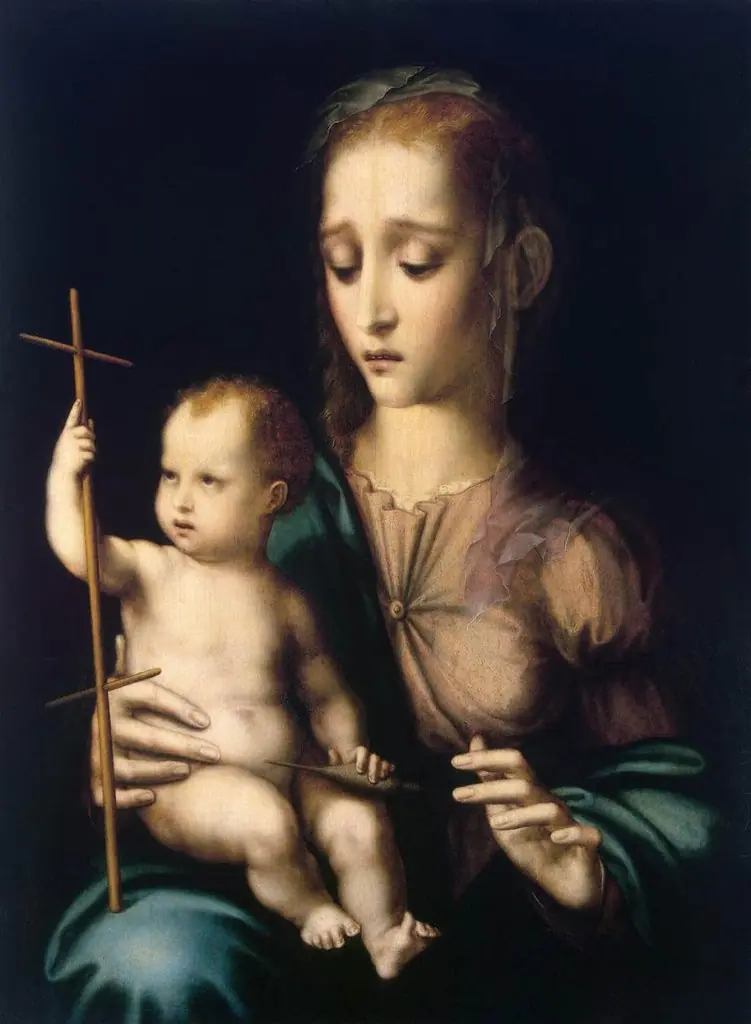
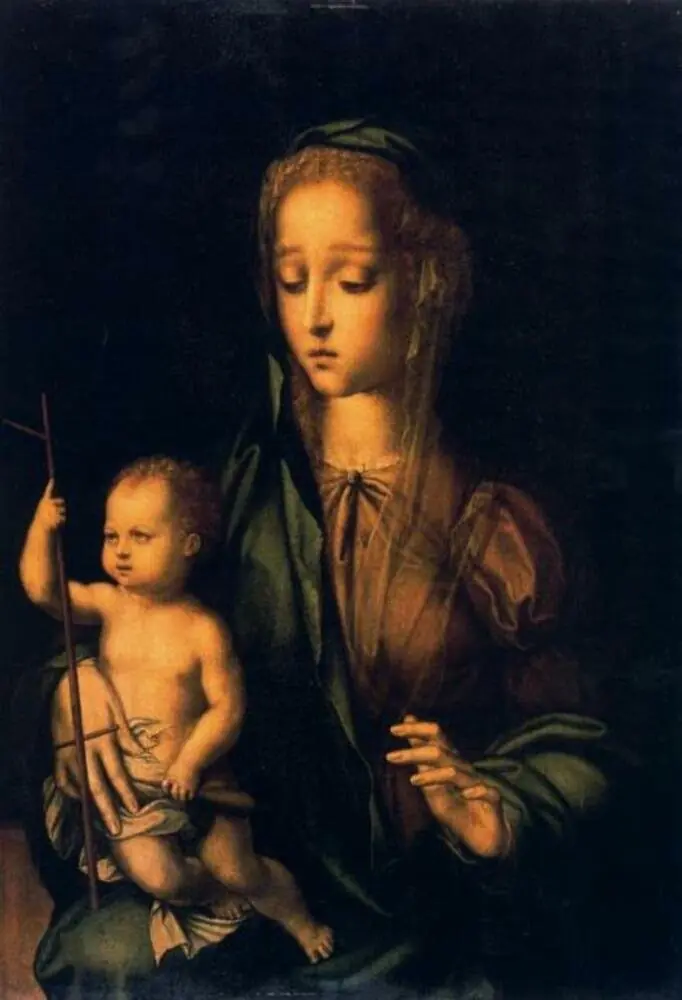
The Virgin and Child with a Spindle is an oil painting by the Mannerist artist Luis de Morales. It dates from 1566 and is held in the collection of the Museo del Prado.
About this work
Subject & Meaning
The panel depicts the Virgin Mary seated with the Christ Child on her lap, together holding a spindle and wool, an iconographic motif known as the Virgin of the Spindle. In Christian exegesis, the spindle and wool symbolize Mary’s role as the weaver of Christ’s humanity in her womb and, more broadly, the Incarnation and the Church’s spiritual weaving of salvation history. The intimate, tender interaction between mother and child underscores themes of divine maternity and human tenderness, consistent with Counter-Reformation devotional imagery aimed at fostering affective piety.
The work’s religious genre and the figures’ serene expressions align with Morales’s characteristic style, which emphasized gentle modeling and subdued palette to heighten contemplative engagement with sacred subjects.
Technique & Style
Created in 1566, The Virgin and Child with a Spindle by Luis de Morales is executed in oil paint on a wooden panel support.
Created in 1566, The Virgin and Child with a Spindle by Luis de Morales is executed in oil paint on a wooden panel support. The work measures 64.5 cm in height and 45 cm in width. As a religious painting, it depicts the Virgin Mary and the Christ Child, adhering to the devotional styles characteristic of the artist's output during the mid-sixteenth century.
The medium of oil on panel was a standard technical choice for Spanish Renaissance religious works of this period, allowing for the detailed rendering of figures and textures.
History & Provenance
The Virgin and Child with a Spindle was created in 1566 by the Spanish artist Luis de Morales. Executed in oil paint on a wooden panel, the work measures 64.5 cm in height and 45 cm in width. The painting is currently held in the collection of the Museo del Prado in Madrid, where it is categorized as a piece of religious art depicting the Virgin Mary and the Christ Child.
No specific details regarding the original commission or the intermediate ownership history prior to its arrival at the museum are provided in the available records.
The Virgin and Child with a Spindle has been held in the collection of the Museo del Prado in Madrid, where it is recorded as part of the museum's holdings of Luis de Morales's work.
No accession number, acquisition date, or exhibition history is documented in the available sources.
Context
The Virgin and Child with a Spindle (1566) by Luis de Morales reflects Counter-Reformation emphasis on Marian devotion through its intimate domestic grouping, contrasting with typical portrayals of the Holy Family. Scholarship highlights the work's technical mastery of oil on panel and its role within Morales' broader oeuvre of Spanish religious painting, particularly his exploration of mystical themes in late Renaissance Spain. The painting's composition, featuring the Christ Child engaged with a spindle, carries symbolic weight related to domestic virtue and Christ's humanity, positioning it within the artist's documented stylistic evolution toward heightened emotional realism.
Its placement in the Museo del Prado's collection underscores its significance within institutional assessments of 16th-century Iberian art.
Overview
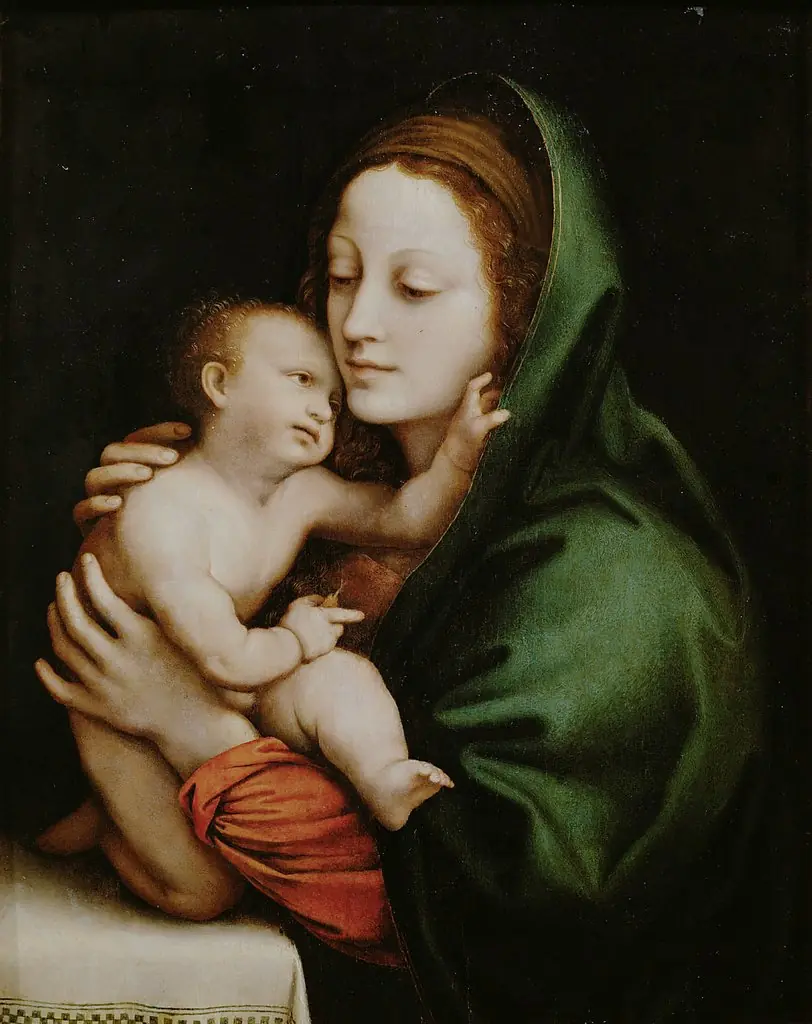
Luis de Morales, a 16th‑century Spanish painter known as “El Divino,” completed The Virgin and Child with a Spindle in 1566. Executed in oil, the work presents a seated Virgin Mary cradling the infant Christ, whose right hand grasps a spindle. The composition is set against a deep, dark background that isolates the figures and emphasizes their solemn interaction.
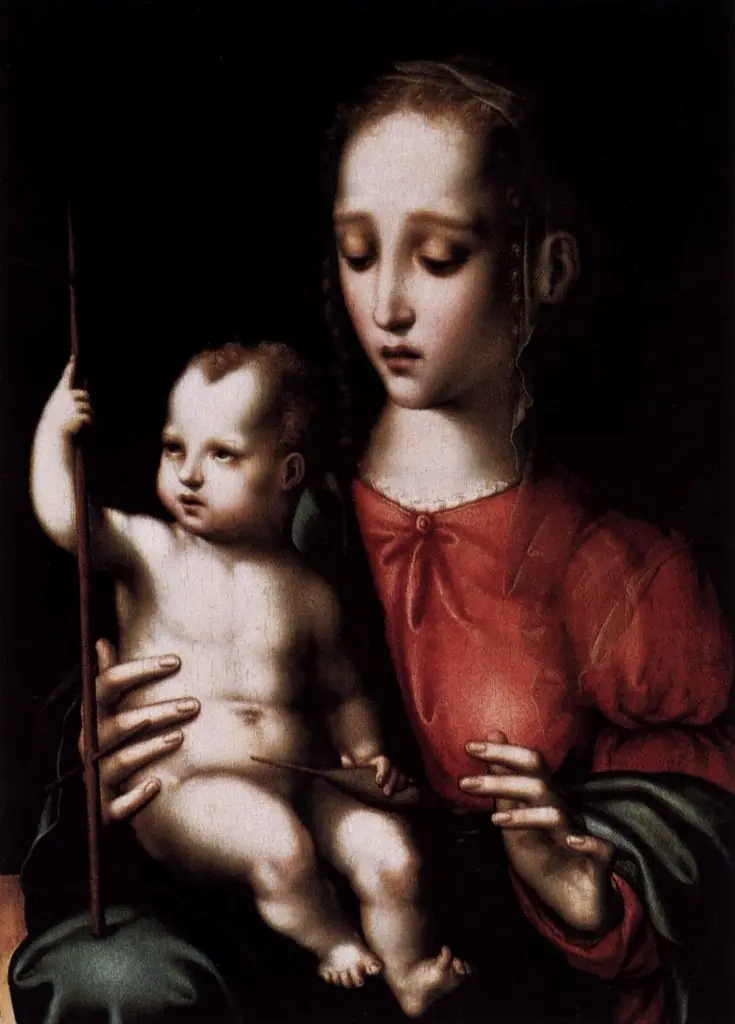
Own this work as a print
Artist & collection
Artist
Luis de Morales (1509 – 9 May 1586) was a Spanish painter active during the Spanish Renaissance in the 16th century.