Artwork
Still Life with Box of Jelly Bread Salver with Glass and Cooler
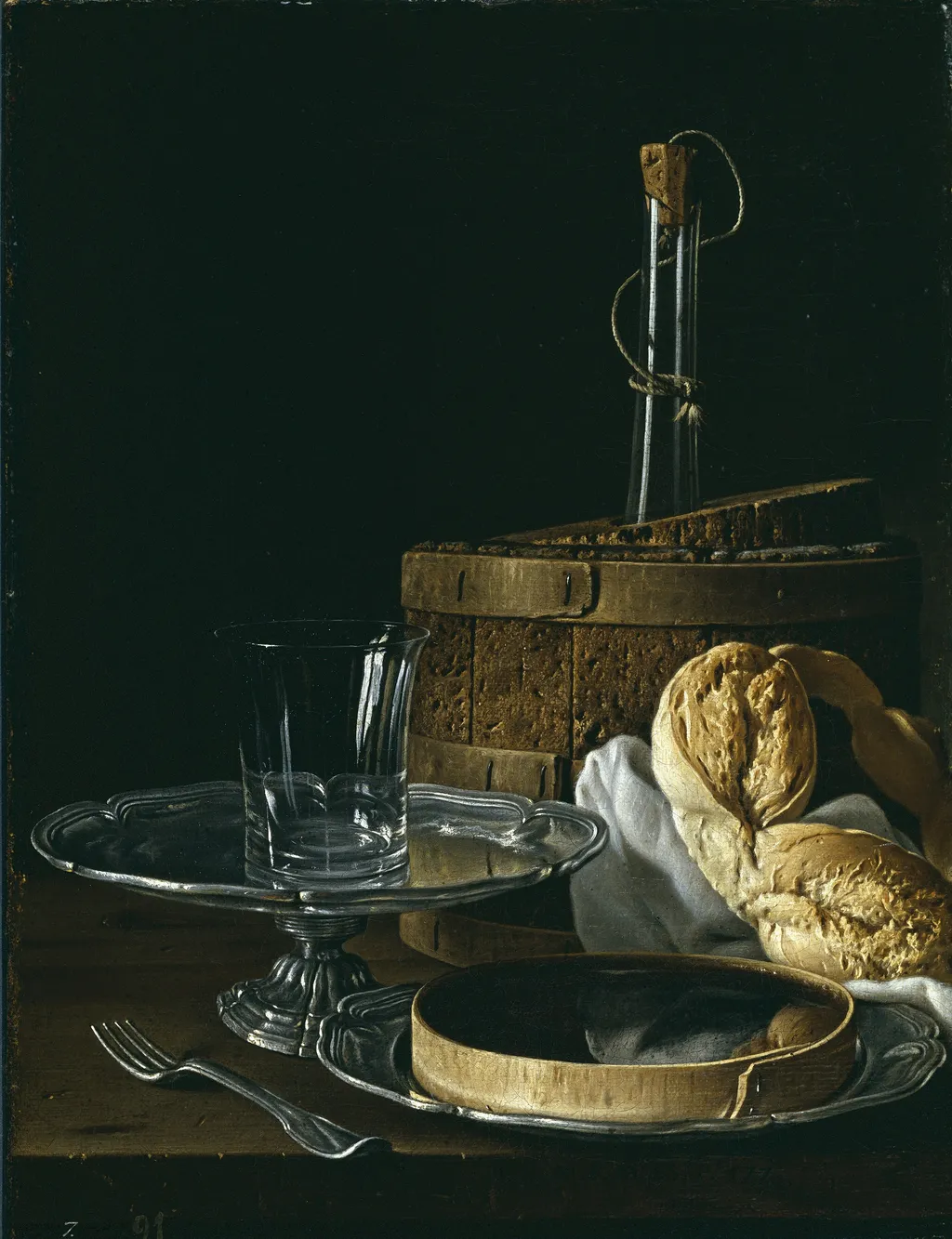
Still Life with Box of Jelly Bread Salver with Glass and Cooler is an oil painting by the Rococo painting artist Luis Egidio Meléndez. It dates from 1770 and is held in the collection of the Museo del Prado. Luis Egidio Meléndaz painted Still Life with Box of Jelly Bread, Salver with Glass and Cooler in 1770.
About this work
Subject & Meaning
The composition centers on simple, everyday sustenance and tableware.
The work is a still life depicting an arrangement of domestic objects, including bread, a fork, and a salver (salvilla), presented alongside a glass and a cooler. The composition centers on simple, everyday sustenance and tableware. The careful inclusion of the bread salver highlights the artist's focus on the precise representation of common household goods, characteristic of the Spanish bodegón tradition.
Technique & Style
Executed in 1770, this still life by Luis Egidio Meléndez is an oil painting on canvas. The work measures 49.5 cm in height and 37 cm in width. The composition focuses on a restrained arrangement of everyday objects, bread, a fork, and serving dishes (salvillas).
The artist's handling of the oil medium allows for a detailed representation of these domestic items, characteristic of the genre. The painting is held in the collection of the Museo del Prado, and belongs to the series of still lifes Meléndez produced for the Spanish royal collection.
History & Provenance
The painting was created in 1770 by Luis Egidio Meléndez as part of the series of still lifes made for the Spanish royal collection, commissioned for the future Charles IV, then Prince of Asturias, and intended for a cabinet at the Royal Palace of Aranjuez. It later passed into the holdings of the Museo del Prado, which records the work's location at the Royal Palace of Aranjuez. Created in oil on canvas, it measures 49.5 cm in height and 37 cm in width. The available sources do not list a specific inventory number or detailed exhibition history for this piece.
Context
The painting, created by Luis Egidio Meléndez in 1770, exemplifies the Spanish still-life (bodegón) tradition through its meticulous rendering of everyday objects such as bread, a glass, and a cooler. It belongs to the series of still lifes the artist produced for the Spanish crown, for the future Charles IV, then Prince of Asturias, and is preserved in the Museo del Prado. Scholarship highlights its technical precision and Meléndez's role in advancing still life as a genre of both visual and social significance in 18th-century Spain.
Legacy
The painting's legacy rests on its representation of the 18th-century Spanish still-life tradition and its origin within the Spanish royal collection, which helped preserve Meléndez's work and brought it ultimately to the Museo del Prado. Its detailed depiction of humble domestic objects exemplifies the artist's elevation of everyday subjects. The Prado records the work's location at the Royal Palace of Aranjuez, where it contributes to the narrative of Spanish artistic heritage.
Overview
Luis Egidio Meléndaz painted Still Life with Box of Jelly Bread, Salver with Glass and Cooler in 1770. Executed in oil on canvas, the work presents a modest arrangement of everyday foodstuffs and tableware rendered with meticulous attention to surface and light. It belongs to the late‑Baroque, Rococo‑influenced period of Spanish art and is presently in the Museo del Prado’s collection.
Own this work as a print
Artist & collection
Artist
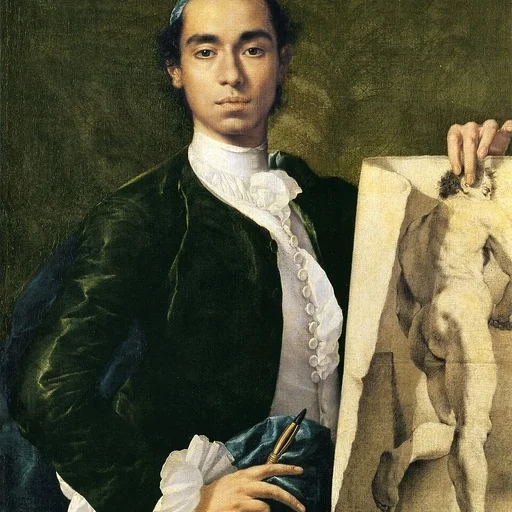
Luis Egidio Meléndez (1716–1780) was a Spanish painter. Though he received little acclaim during his lifetime and died in poverty, Meléndez is recognized as one of the greatest Spanish still-life painters of the 18th…

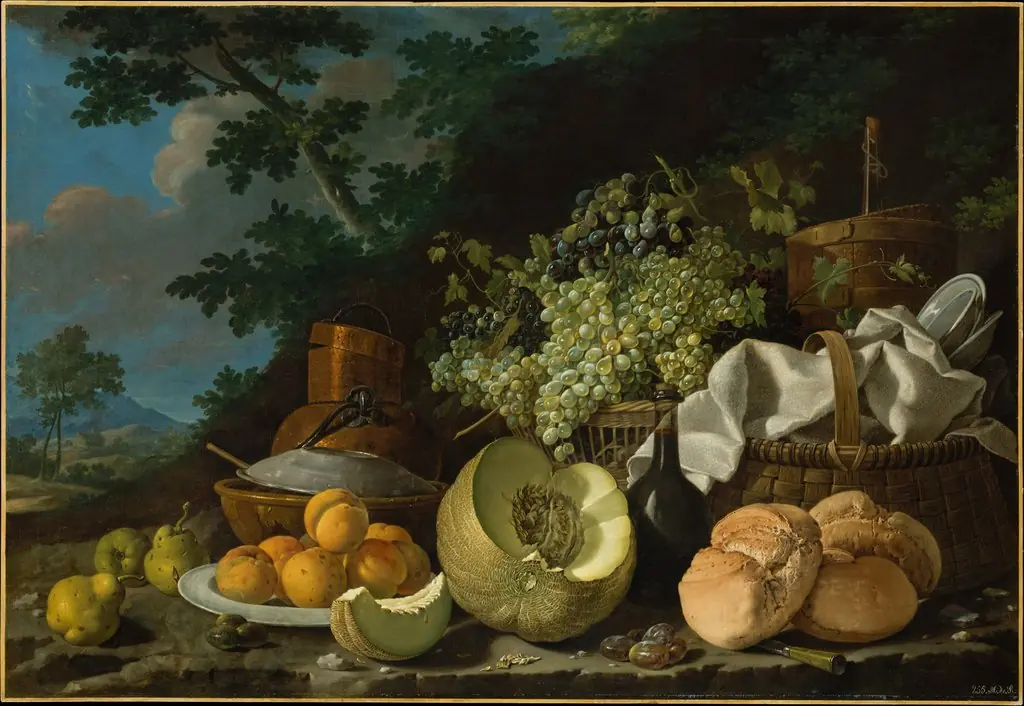 The Afternoon Meal (La Merienda)
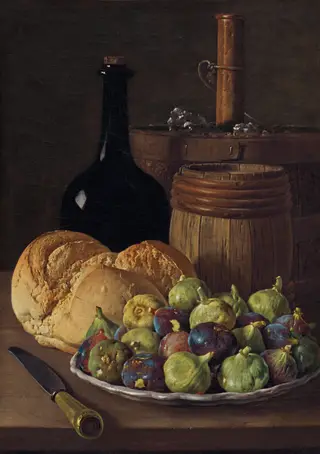 Still Life with Figs and Bread
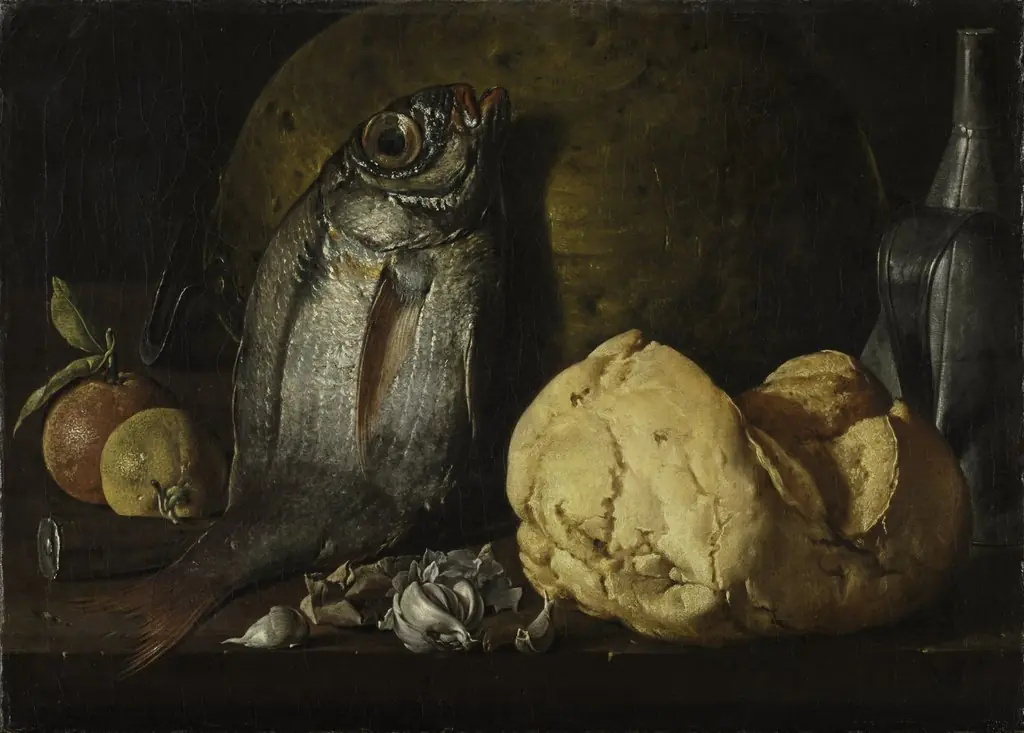 Still Life with Fish, Bread, and Kettle
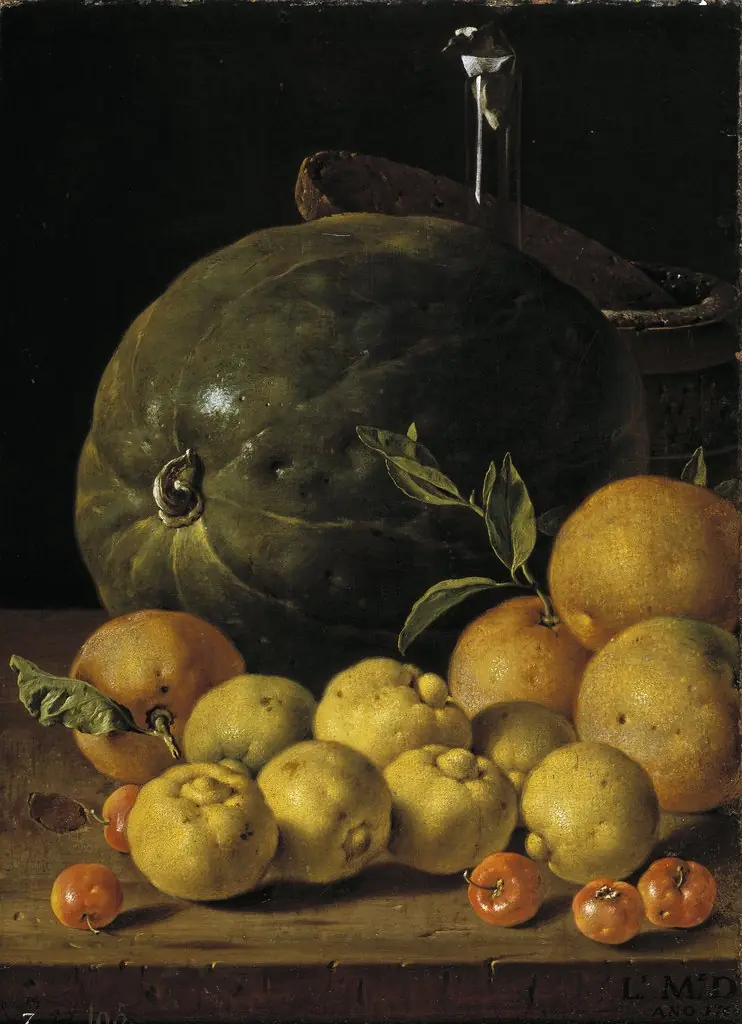 Still Life with Limes Oranges Haw Berries and Watermelon
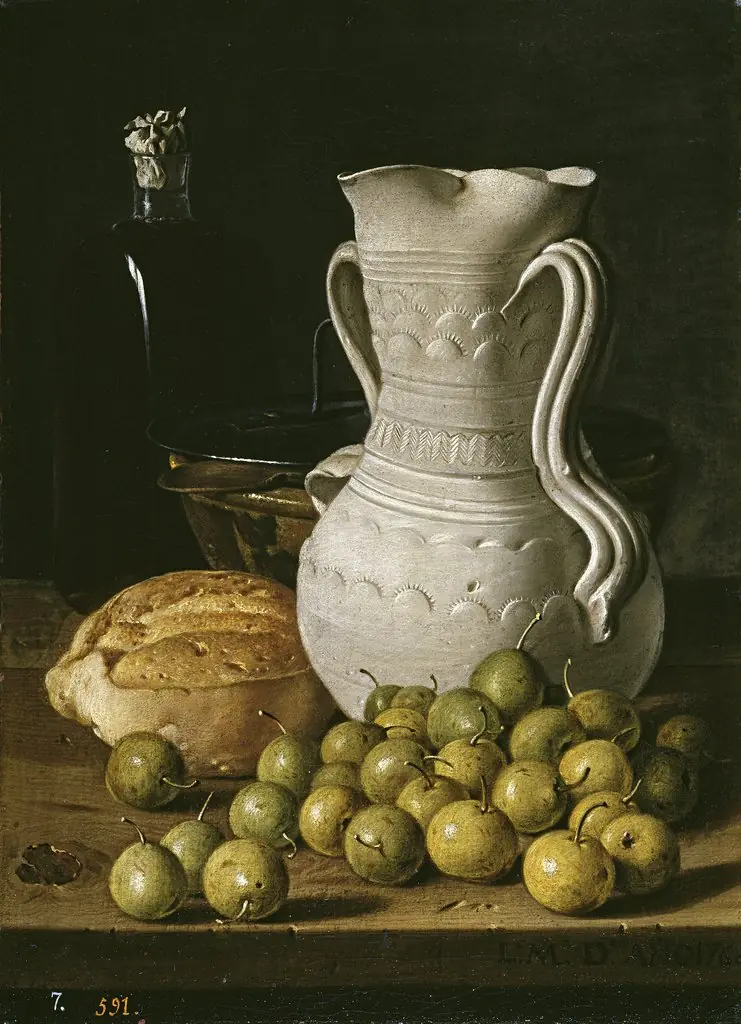 Still Life with Small Pears Bread Flask Bowl and Dry Leaves
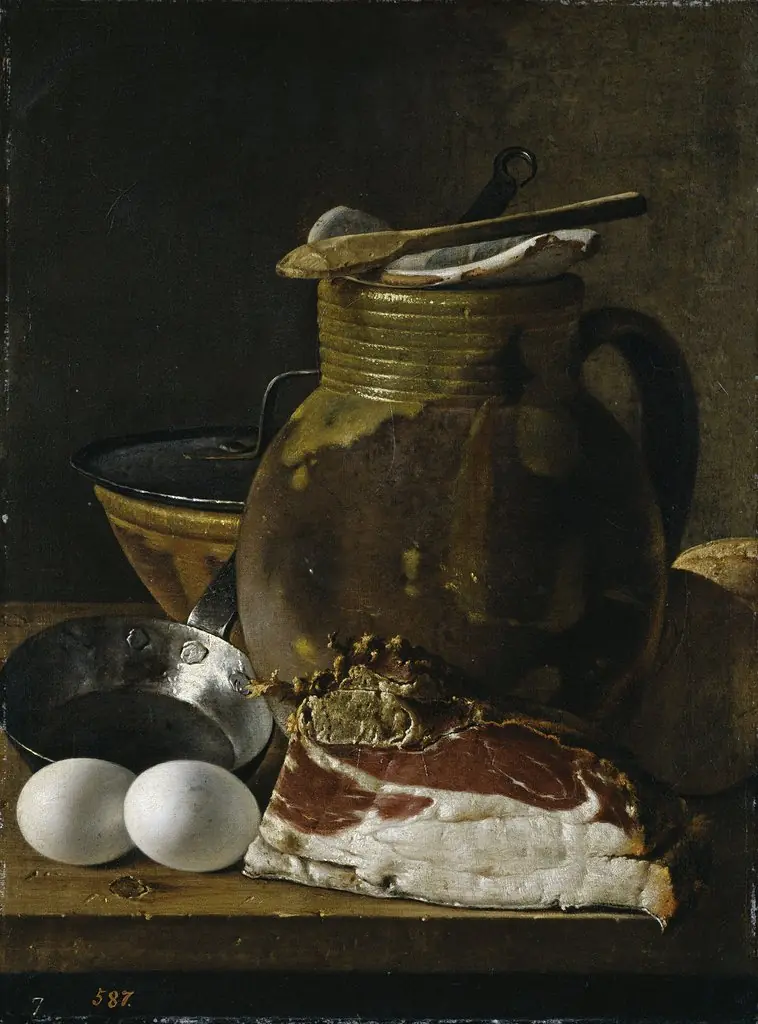 Still Life with Ham Eggs and Vessels
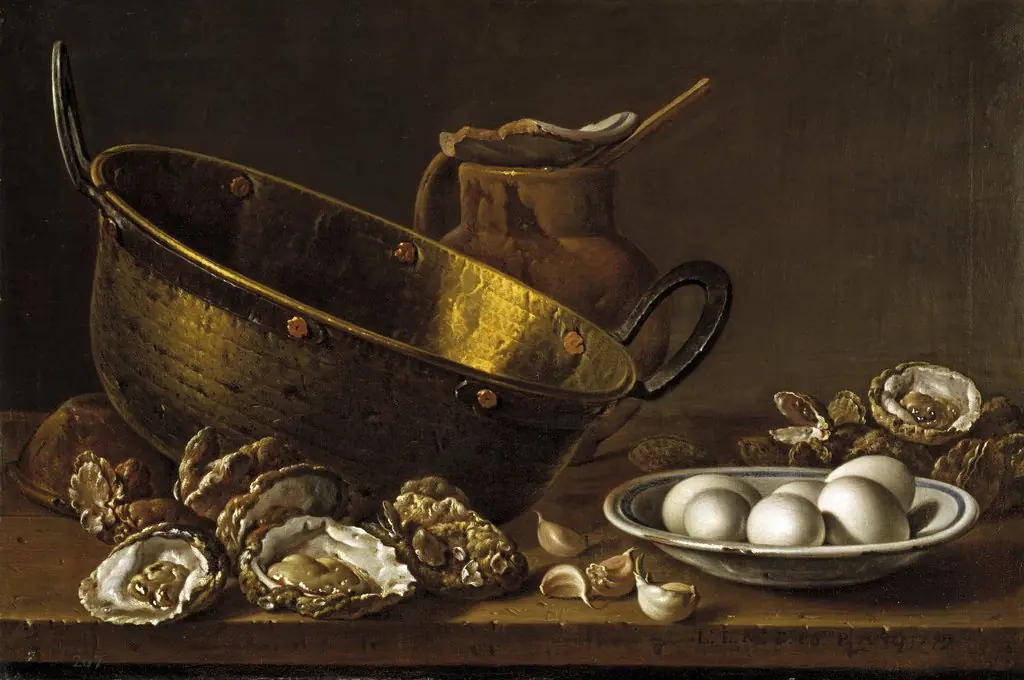 Still Life with Oysters Garlic Eggs Pot and Pan
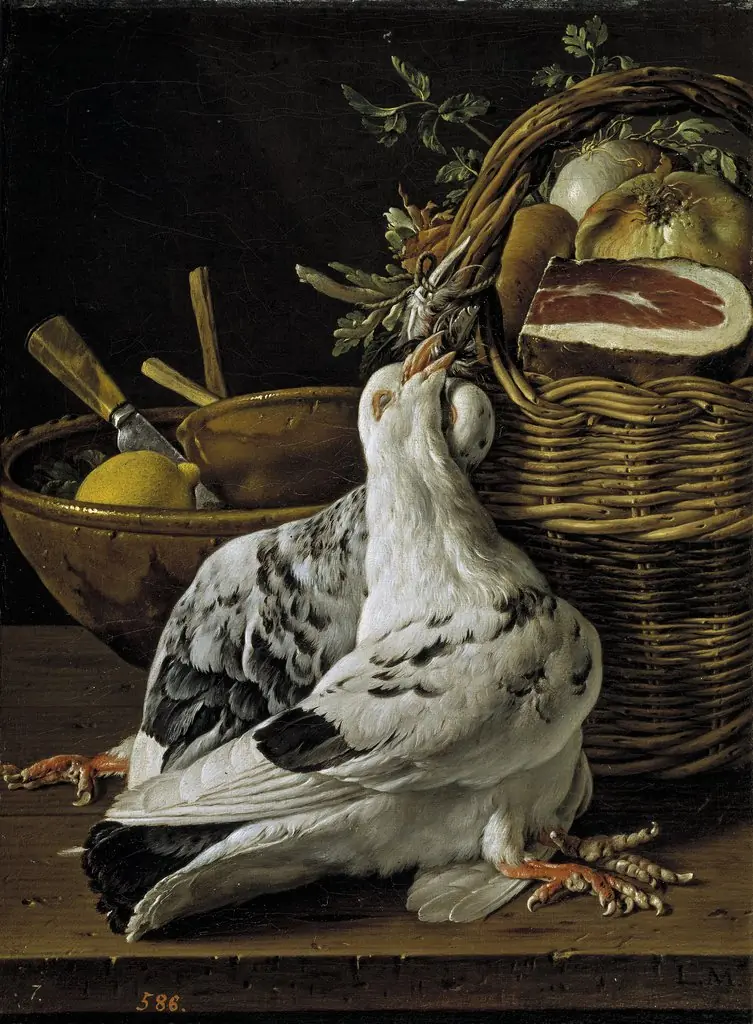 Bodegón con pichones cesta de comida y cuencos
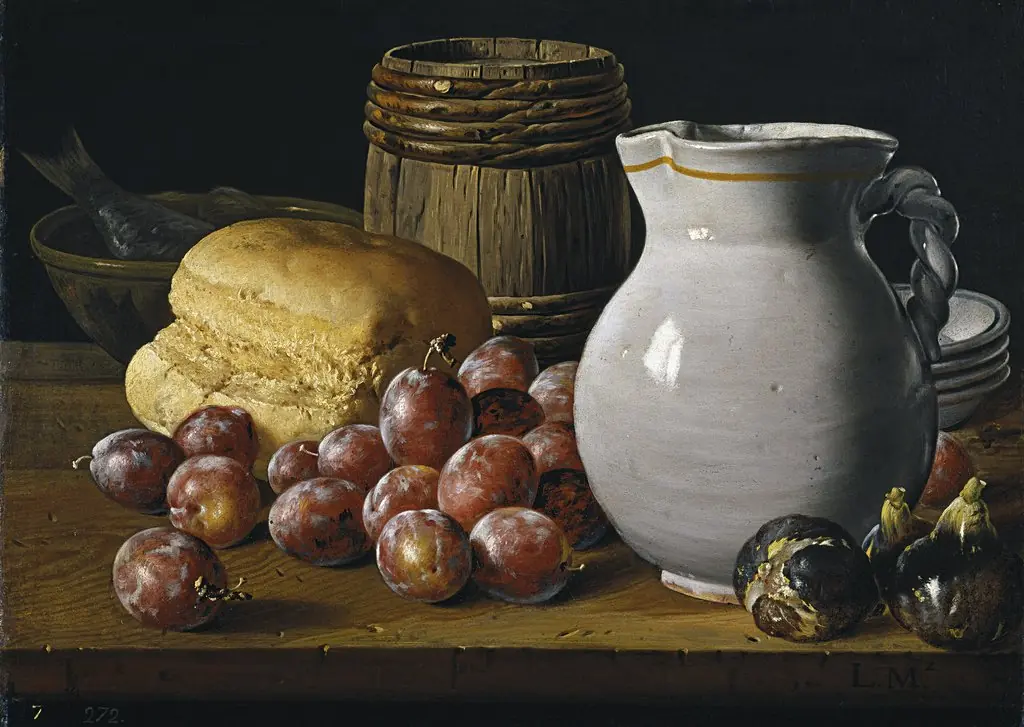
- Still Life with Plums Figs Bread Barrel Jug and Other Vessels
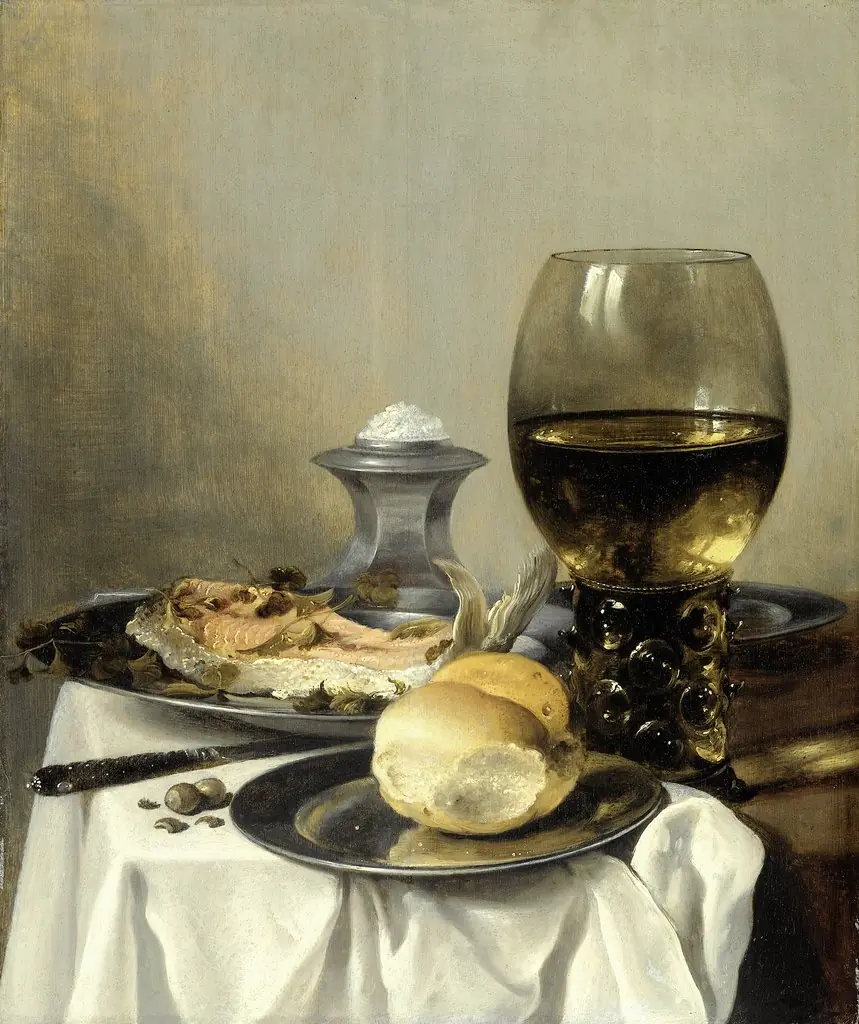 Still life with a salt cellar
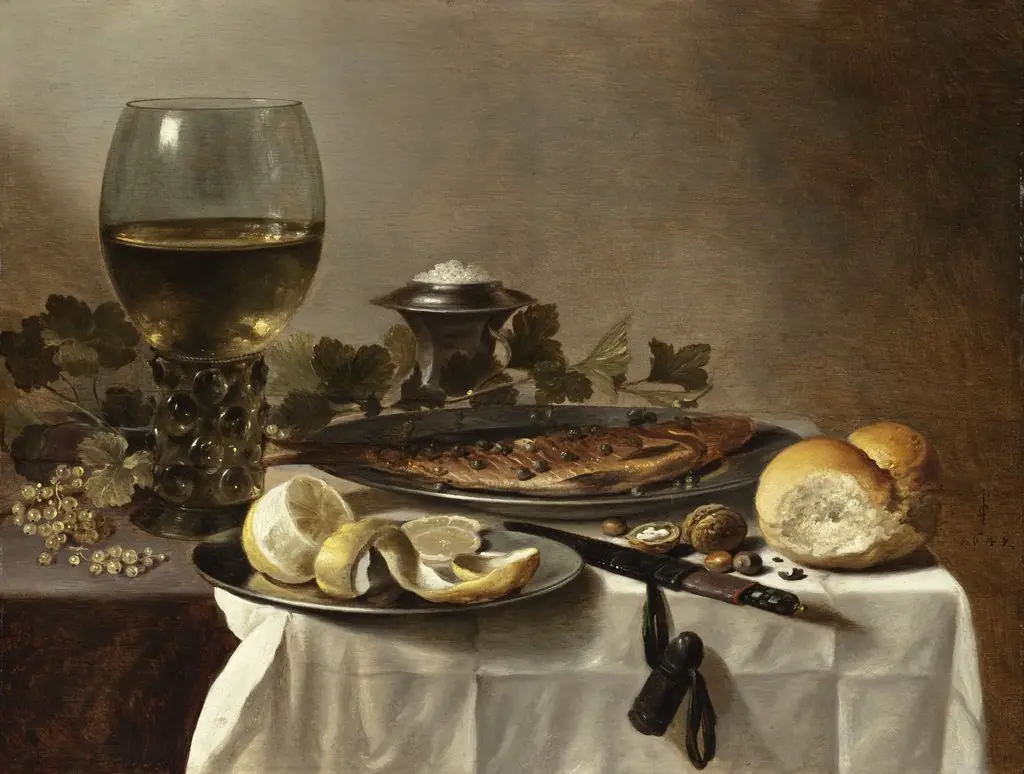 Still Life with Herring, Wine and Bread
 Still Life. Breakfast Piece
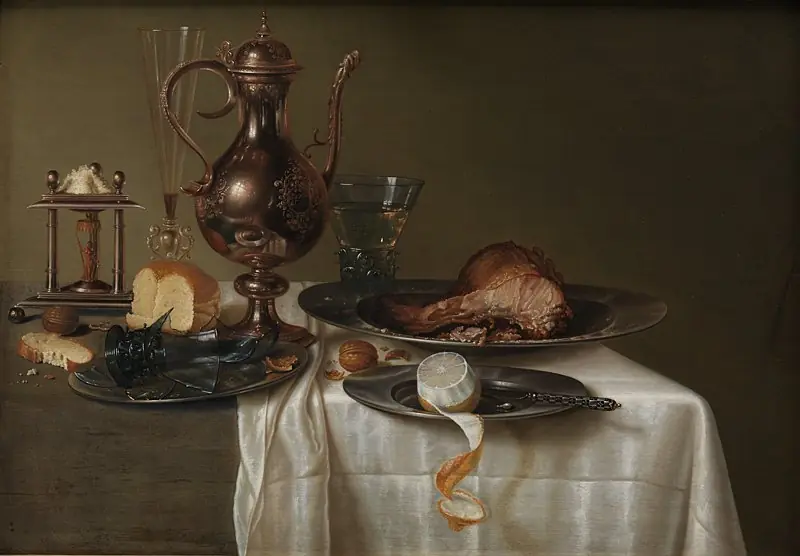 Still Life. Breakfast Piece
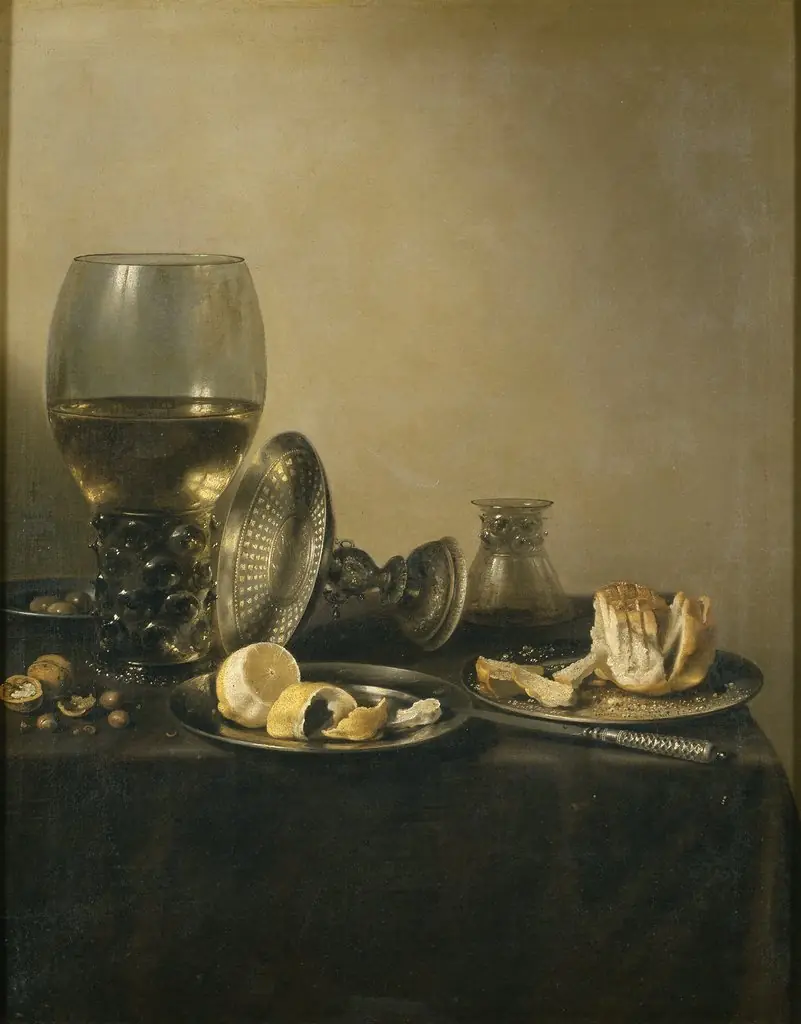 Still Life
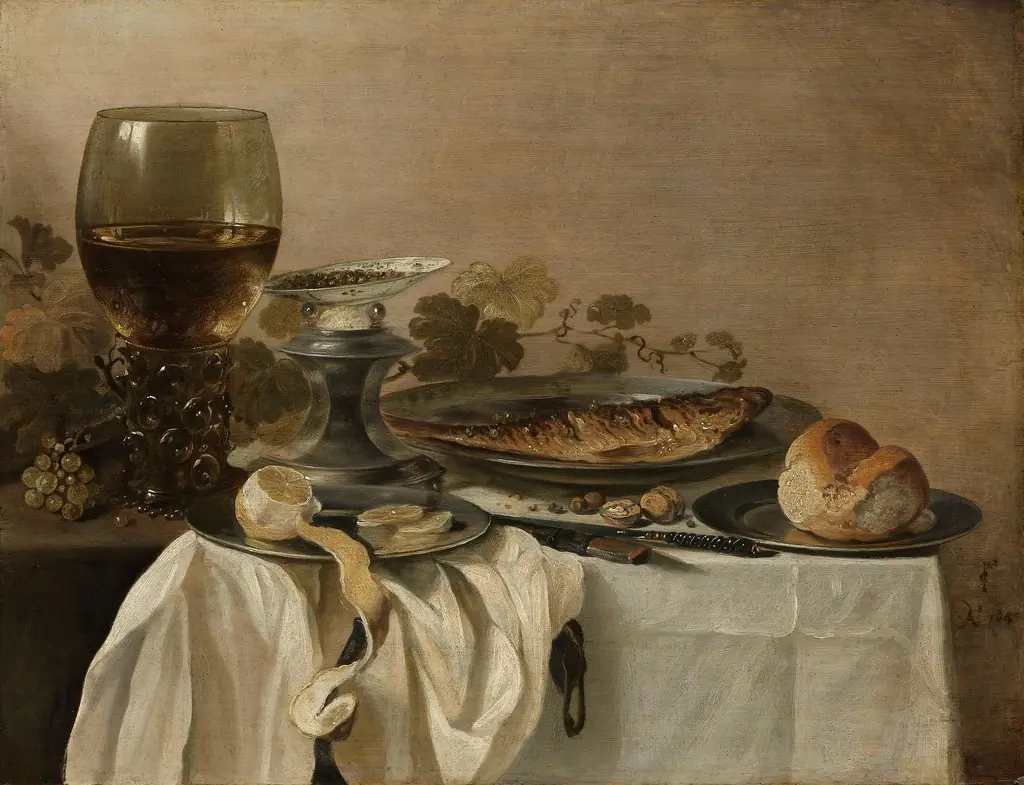 Still life with a fish
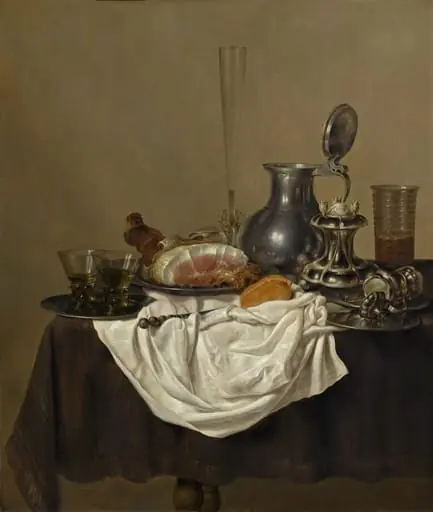 Still Life with Ham
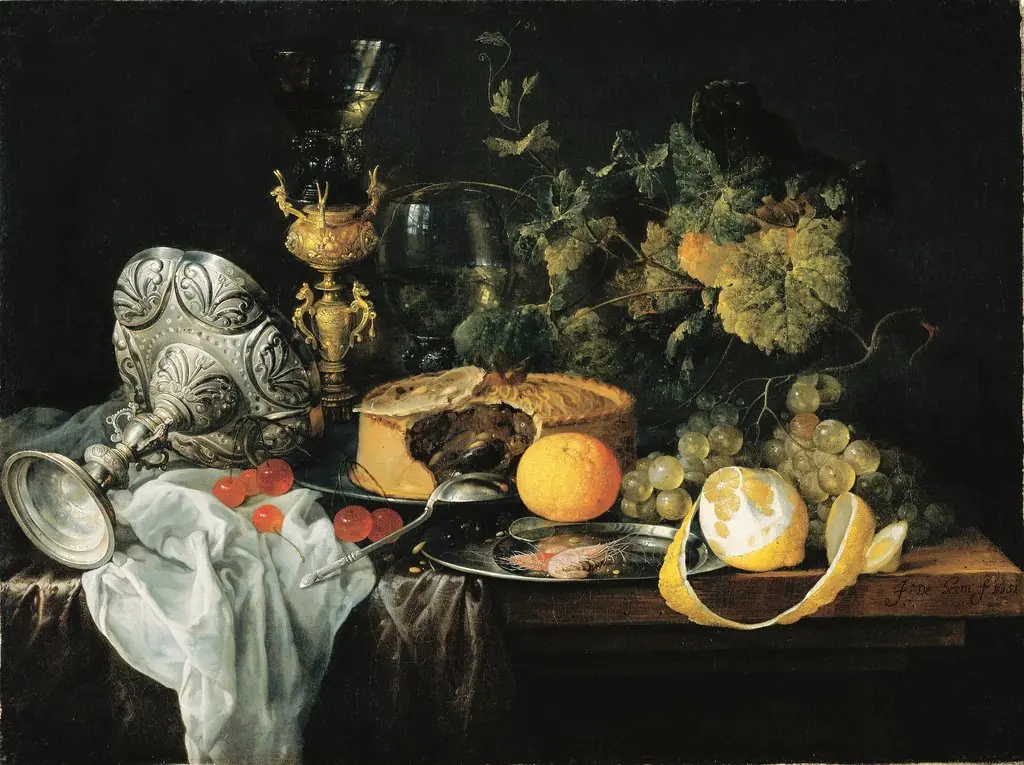 Sumptuous Still Life with Fruits, Pie and Goblets, 1651
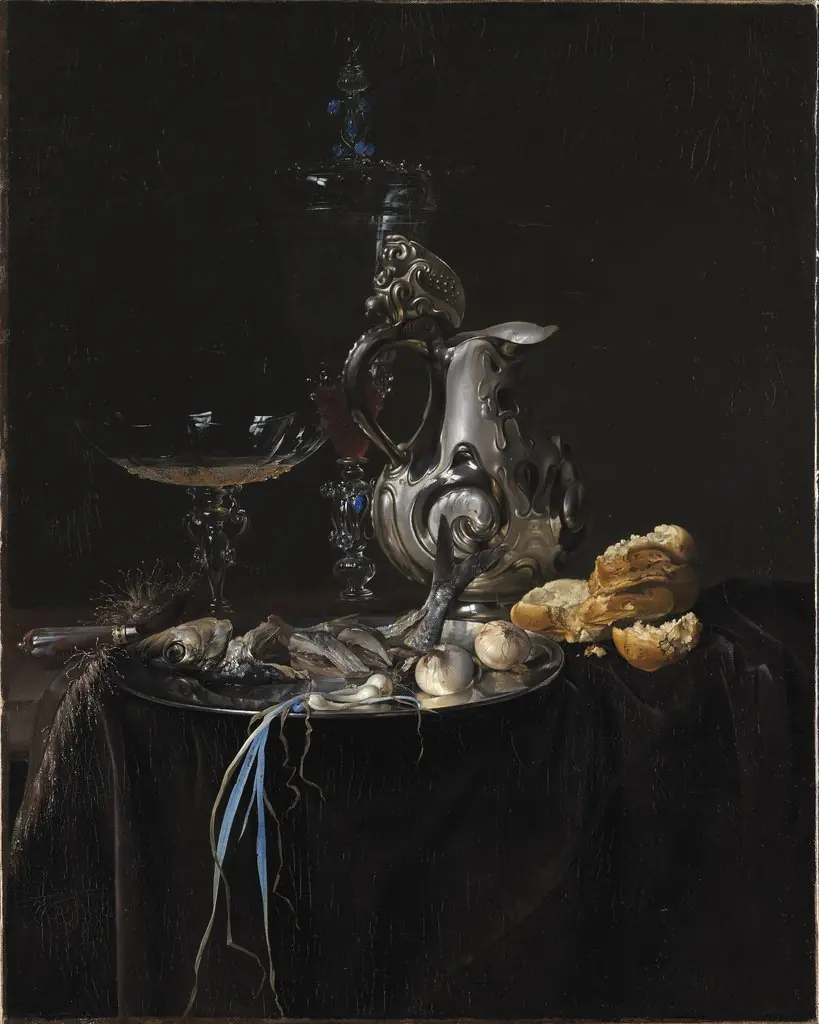 Still Life. Breakfast Piece with a Silver Jug
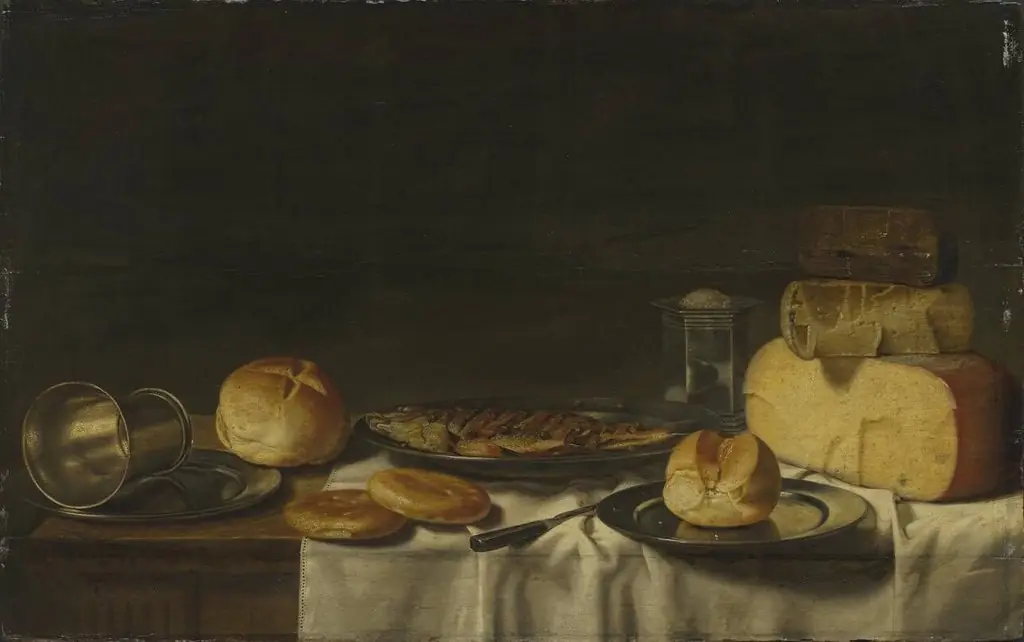 Still life of laid table with cheese
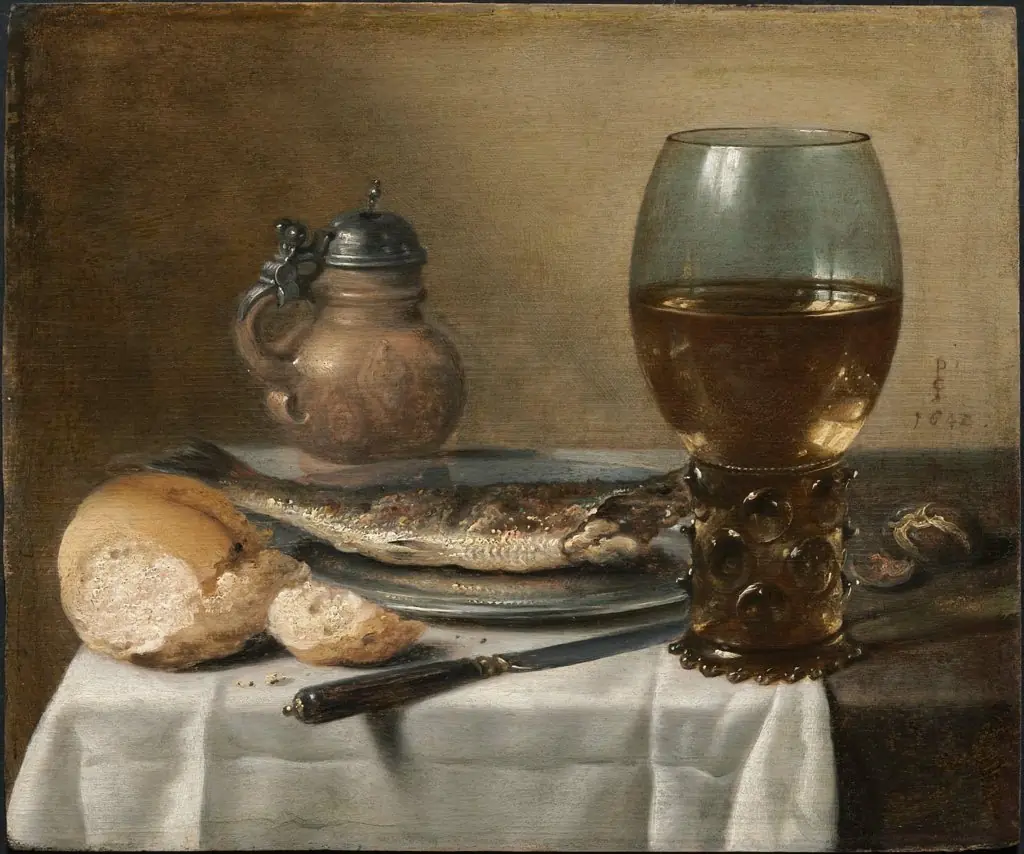 Still Life with Stoneware Jug, Wine Glass, Herring, and Bread