Artwork
Still Life with Stoneware Jug, Wine Glass, Herring, and Bread
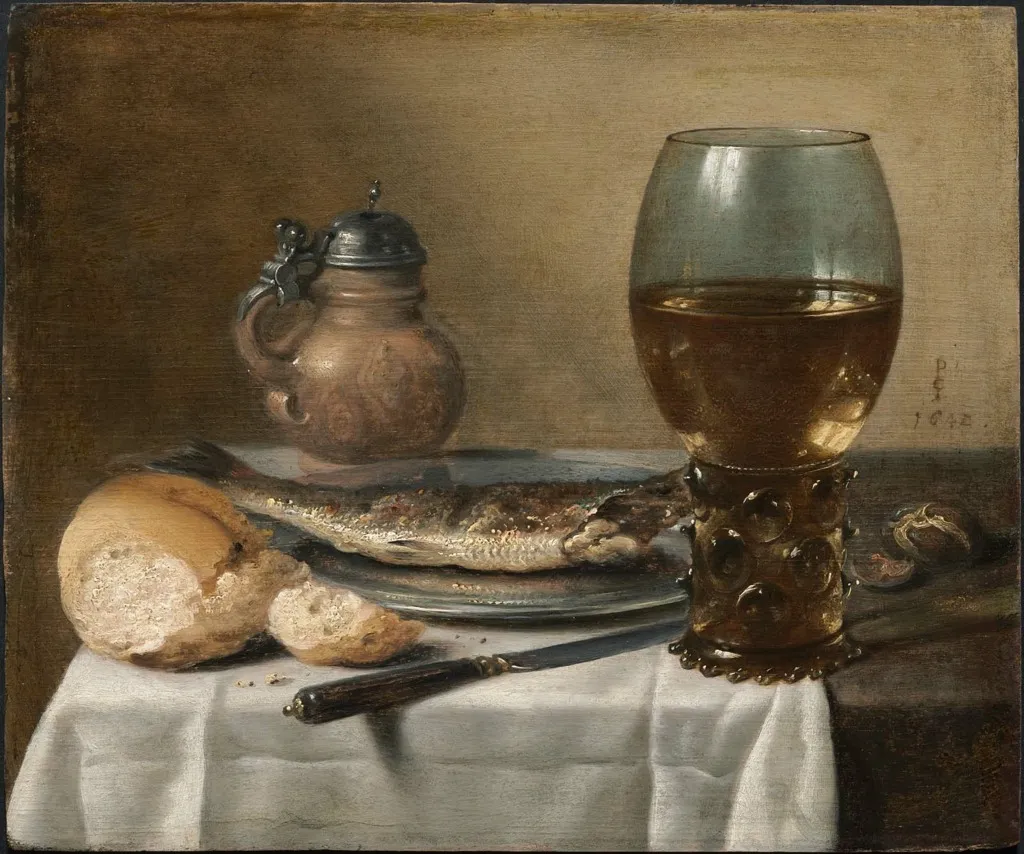
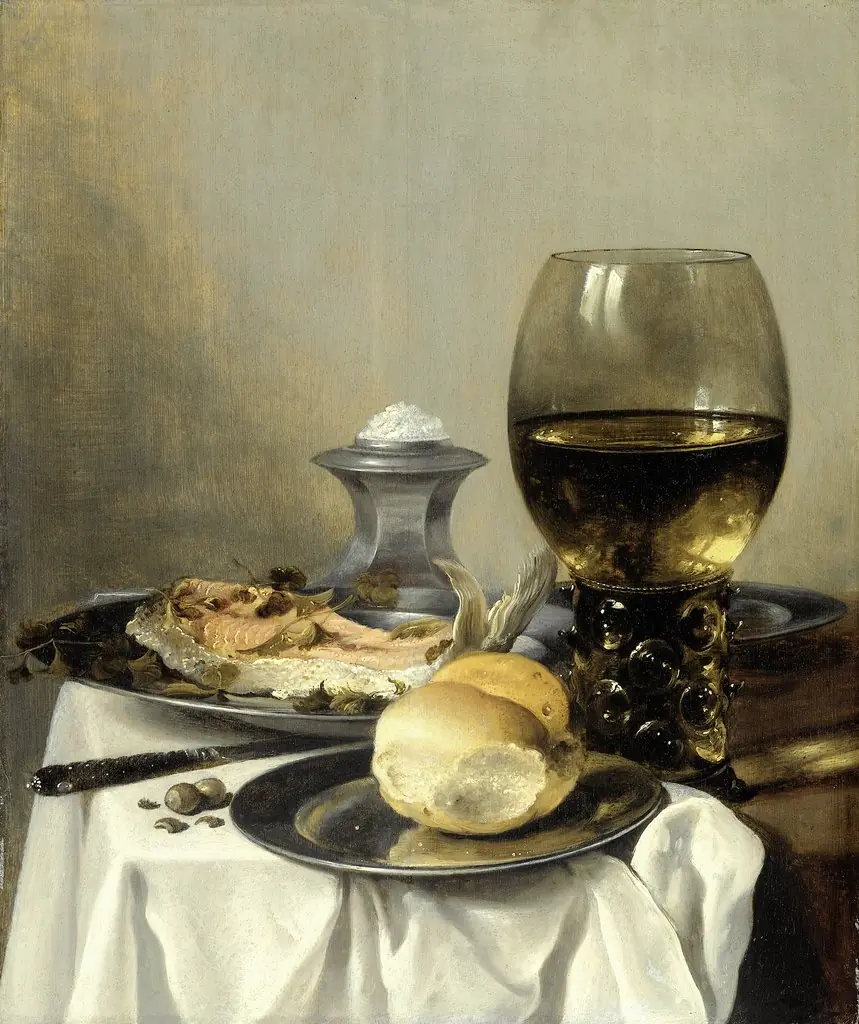
Still Life with Stoneware Jug, Wine Glass, Herring, and Bread is an oil painting by the Dutch Golden Age artist Pieter Claesz. It dates from 1642 and is held in the collection of the Museum of Fine Arts Boston.
About this work
Technique & Style
8 cm, situate the work within the intimate, cabinet-picture format favored by Haarlem still-life specialists of the period.
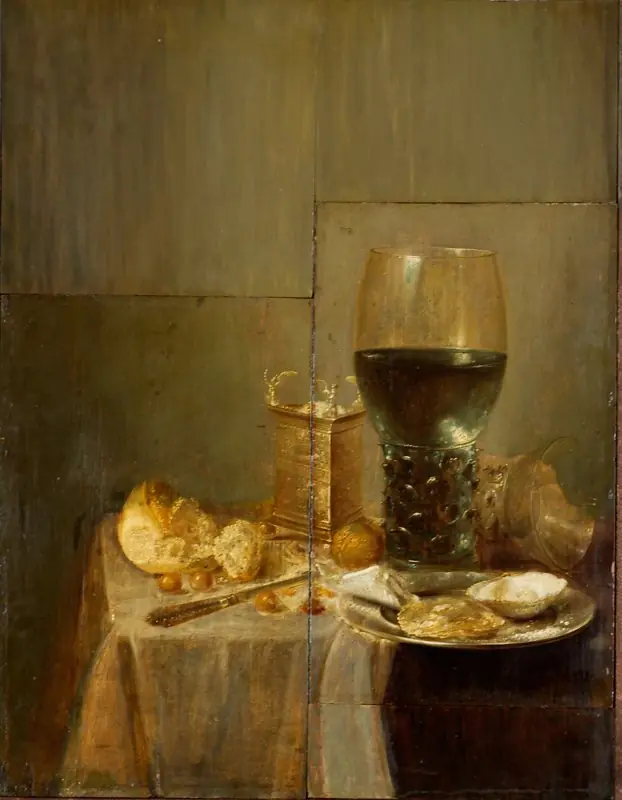
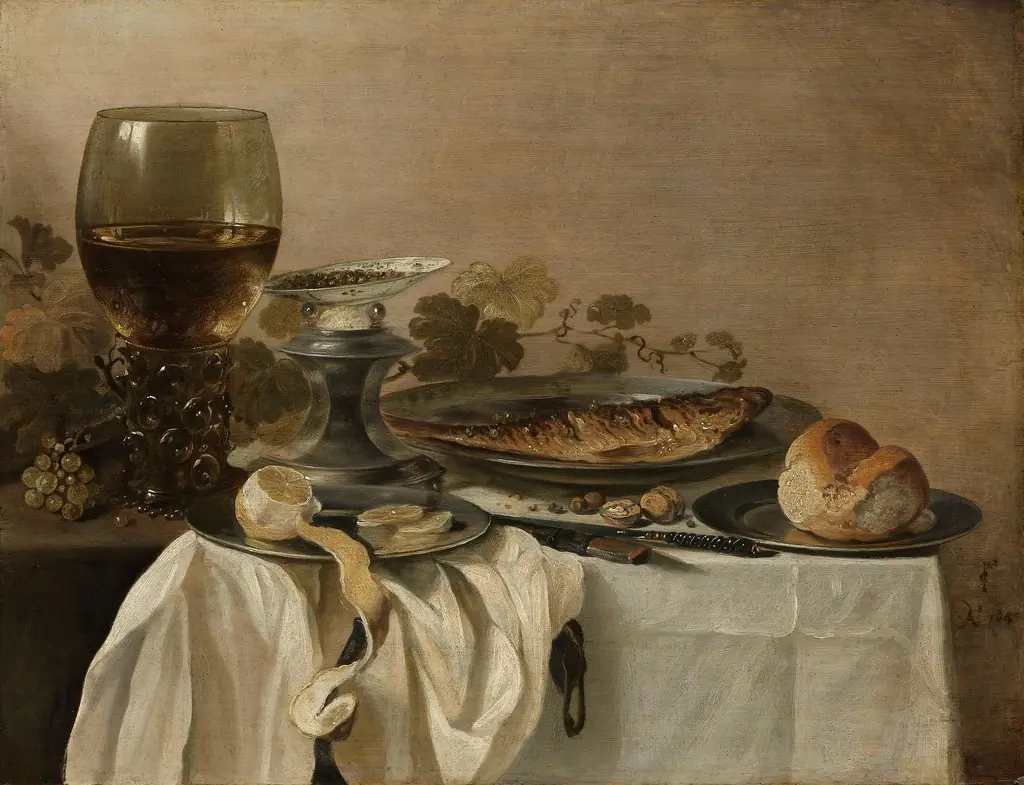
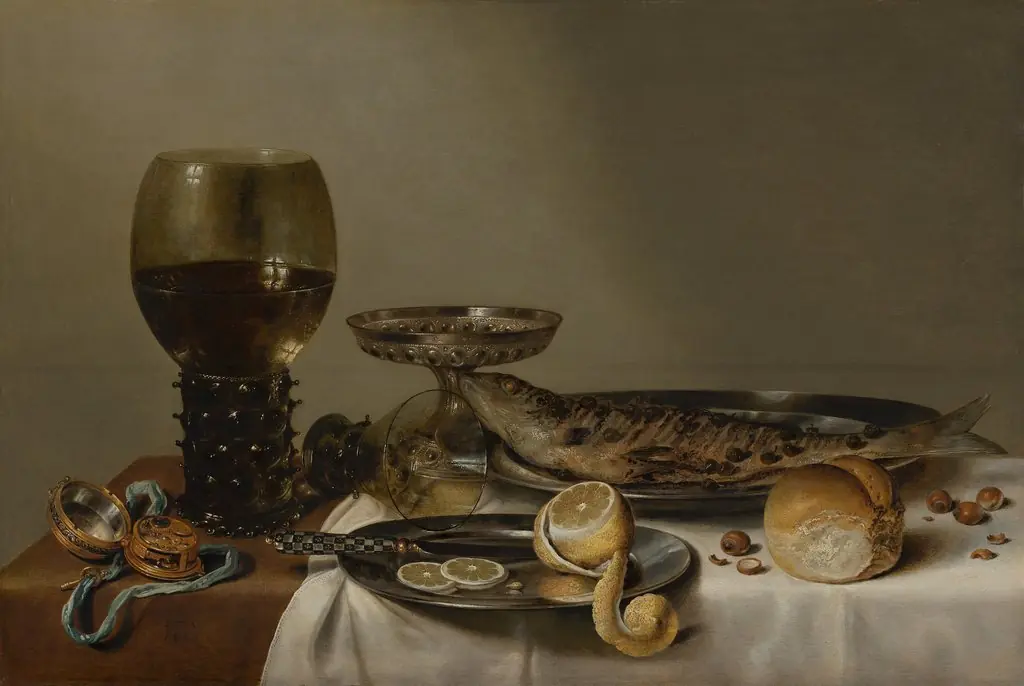
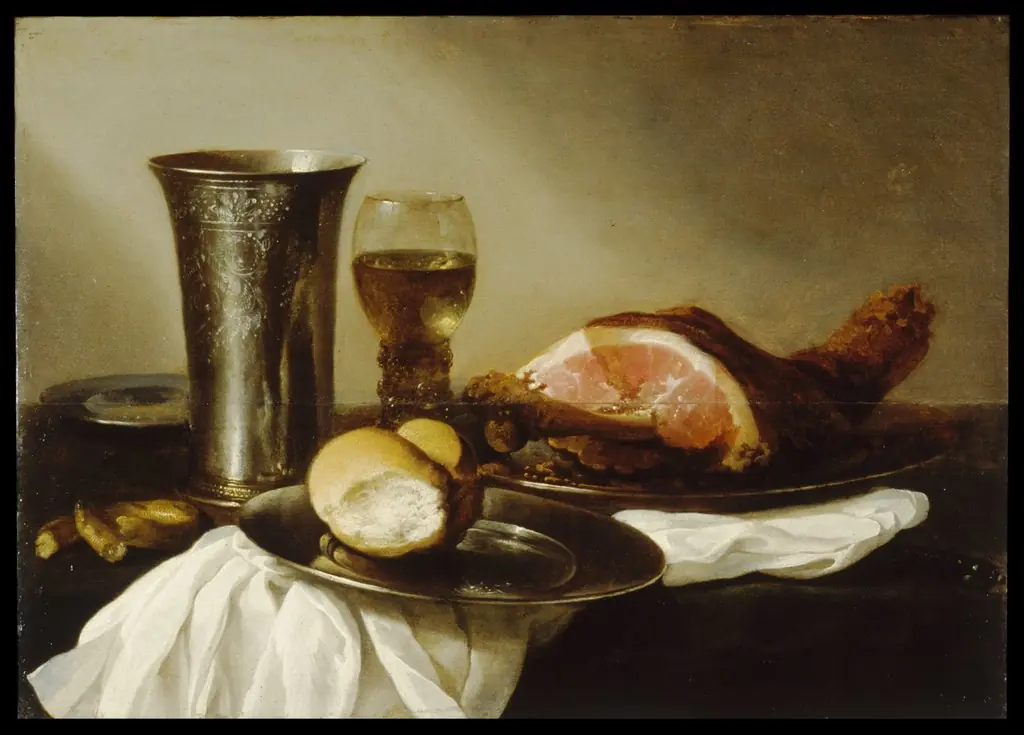
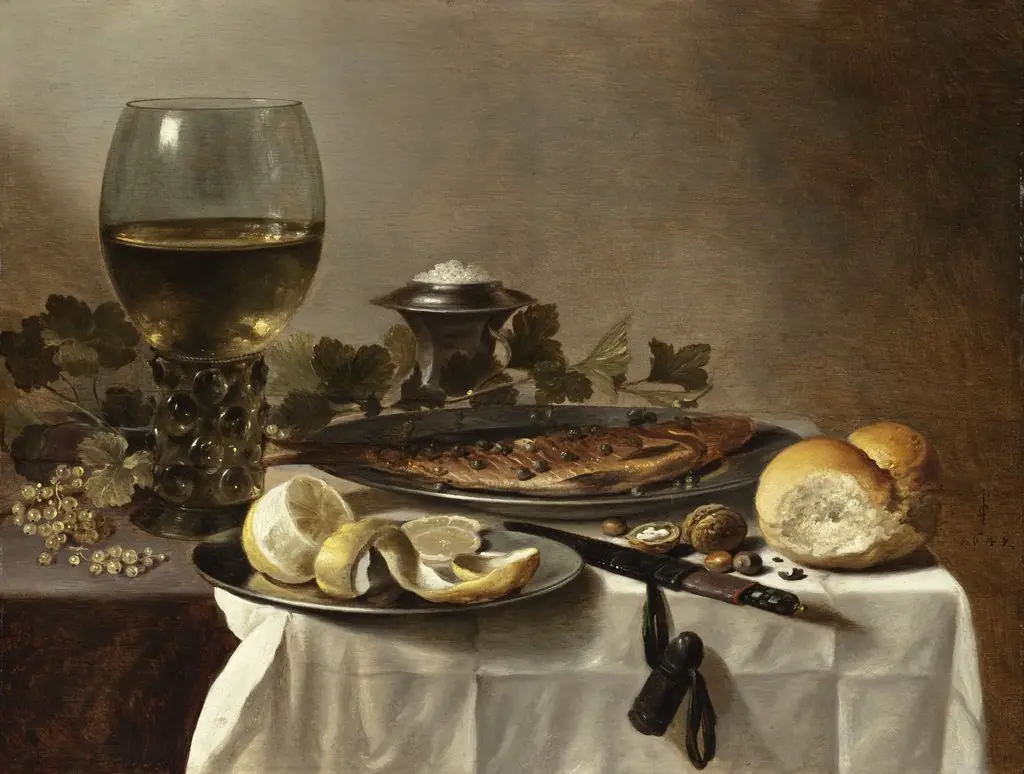
Still Life with Stoneware Jug, Wine Glass, Herring, and Bread is executed in oil paint on panel, a support typical of Pieter Claesz's small-scale still lifes of the early 1640s. The modest dimensions, 29.8 by 35.8 cm, situate the work within the intimate, cabinet-picture format favored by Haarlem still-life specialists of the period. The composition centers on a rummer, a jug, and fish, arranged in the restrained, monochromatic manner associated with Claesz's mature "ontbijtje" and "banketje" tradition, in which everyday objects are rendered with sober tonalities and careful attention to surface textures rather than ornate display.
The handling reflects the controlled, finely tuned brushwork characteristic of the artist, with subtle modeling of the stoneware, glass, and bread against a neutral ground. The work is held in the collection of the Museum of Fine Arts Boston.
History & Provenance
The painting Still Life with Stoneware Jug, Wine Glass, Herring, and Bread by Pieter Claesz is held in the collection of the Museum of Fine Arts, Boston. Created in 1642, the work is executed in oil on panel and measures 29.8 cm in height by 35.8 cm in width. The provided sources confirm the museum as the current location and specify the physical dimensions and materials of the artwork.
No specific inventory or accession number is listed in the available documentation, nor is there any record of past or future exhibitions for this piece within the cited materials.
Legacy
The painting has shaped later still-life compositions through its economical arrangement of humble household items. Contemporary accounts note its impact on Dutch banquet scenes of the mid-seventeenth century, while modern scholarship cites its compositional clarity as a model for later genre painters.
Although the work resides in the collection of the Museum of Fine Arts Boston, its visual language recurs in other museum holdings of the period, demonstrating a sustained influence on the development of Dutch still-life painting.
The composition’s restrained palette and precise rendering of everyday objects have been referenced in later still-life works housed at the Rijksmuseum and the Metropolitan Museum of Art, underscoring its enduring reputation within the genre.
Overview
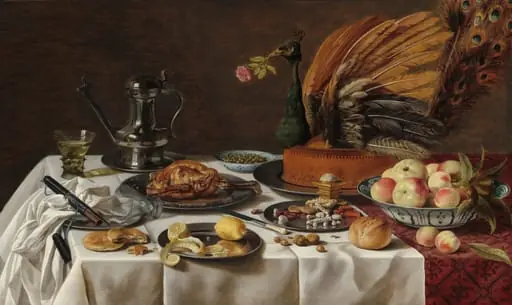
Pieter Claesz’s oil painting, Still Life with Stoneware Jug, Wine Glass, Herring, and Bread, was executed in 1642 and is part of the collection of the Museum of Fine Arts, Boston. The work presents a modest tabletop arrangement that includes a silver‑capped stoneware jug, a clear wine glass, a herring on a white plate, a small loaf, and a knife, all rendered with restrained coloration.
Subject & Meaning
The composition gathers everyday objects, food, drink, and vessels, to evoke a moment of quiet consumption. By placing the herring, bread, and glass together, Claesz underscores the transient nature of a simple meal, while the careful placement of each item invites contemplation of material abundance and its fleeting presence.
Context
The work belongs to the Dutch Golden Age tradition of banquet and kitchen still lifes, where artists like Claesz emphasized realism and the moral undertones of everyday objects. The inclusion of modest fare such as herring and bread aligns with contemporary cultural values that prized modesty, temperance, and the fleeting pleasures of the table.
Artist & collection