Artwork
Still Life with Herring, Wine and Bread
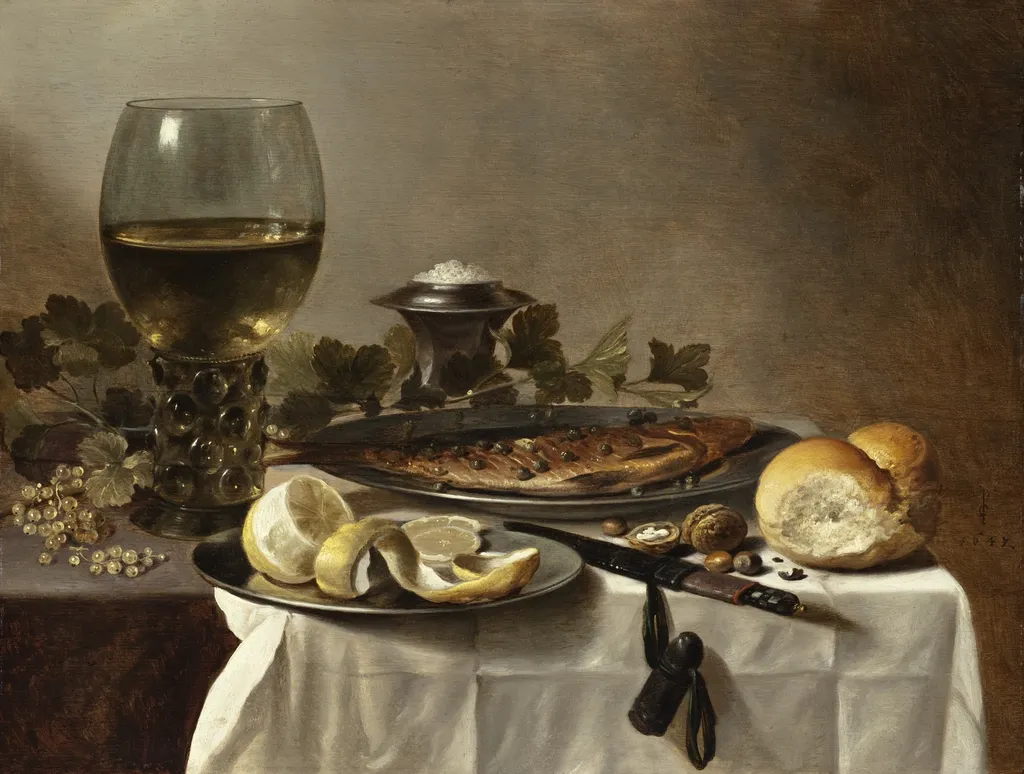
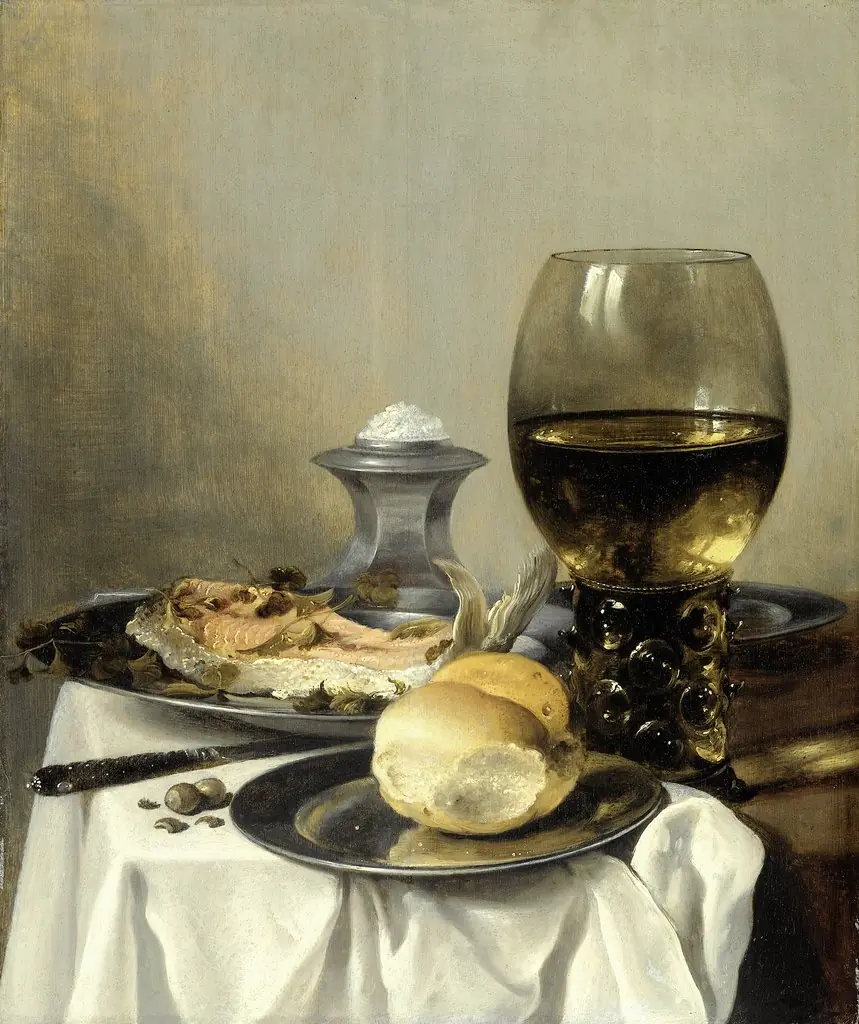
Still Life with Herring, Wine and Bread is an oil painting by the Dutch Golden Age artist Pieter Claesz. It dates from 1647 and is held in the collection of the Los Angeles County Museum of Art.
About this work
Subject & Meaning
The inclusion of a rummer, a type of Roemer glass associated with German and Dutch drinking culture, reinforces the theme of shared refreshment.
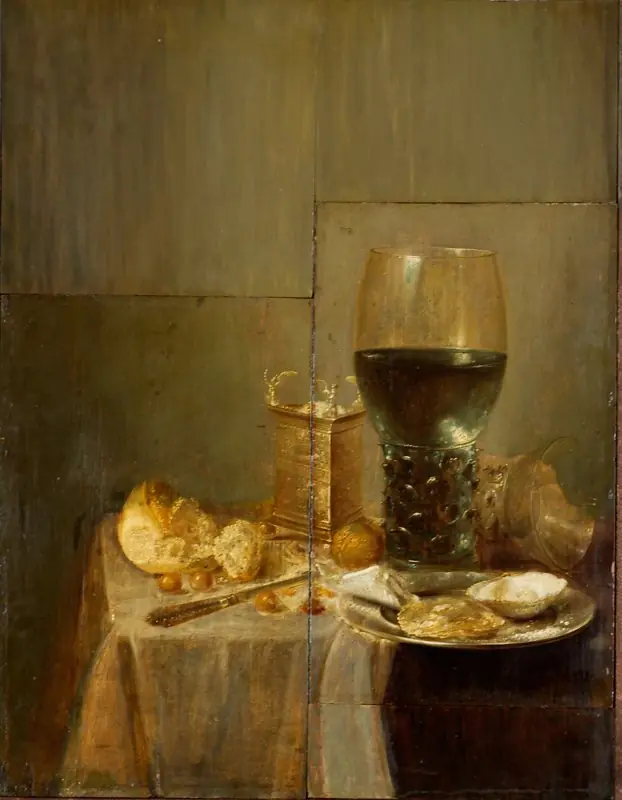
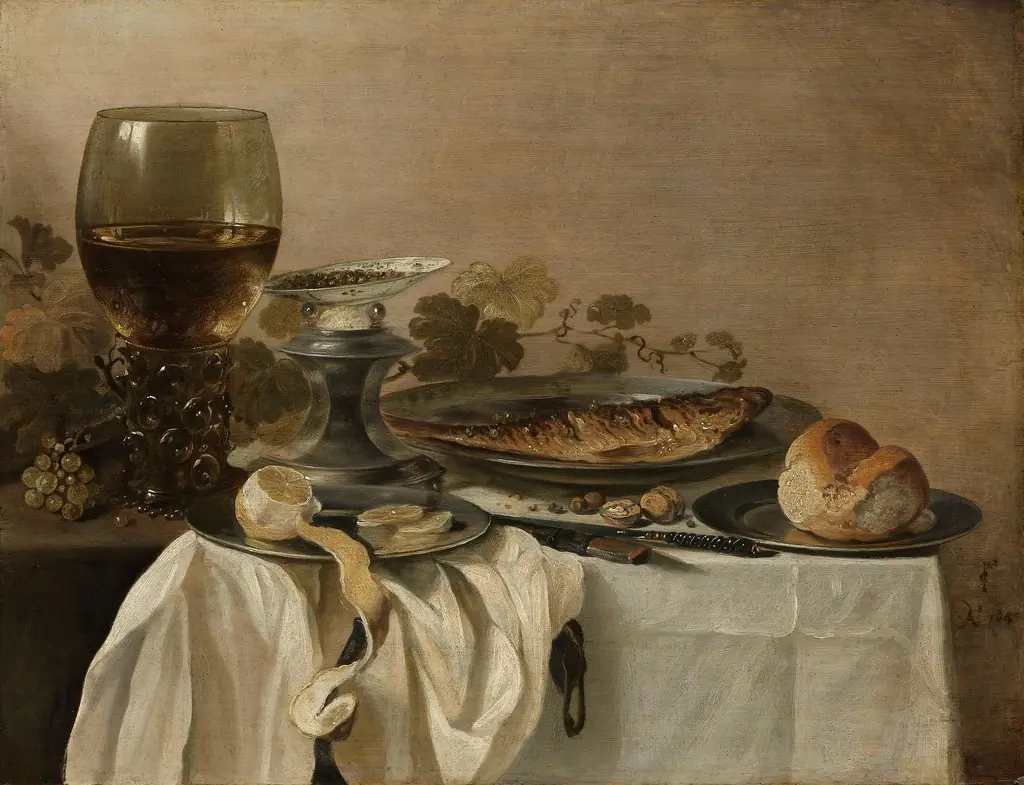
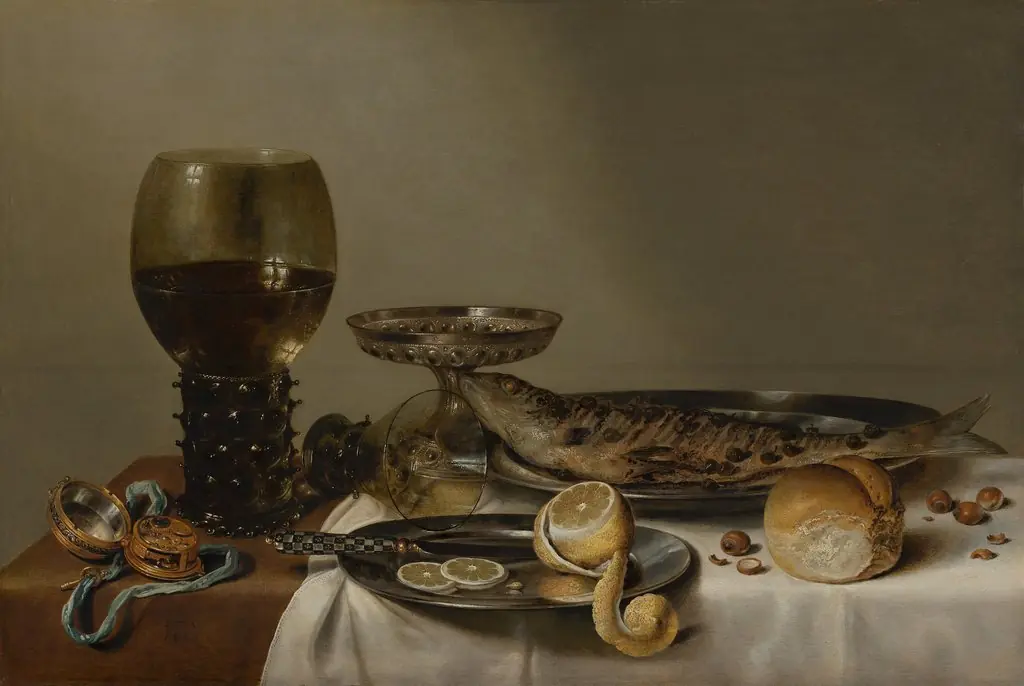
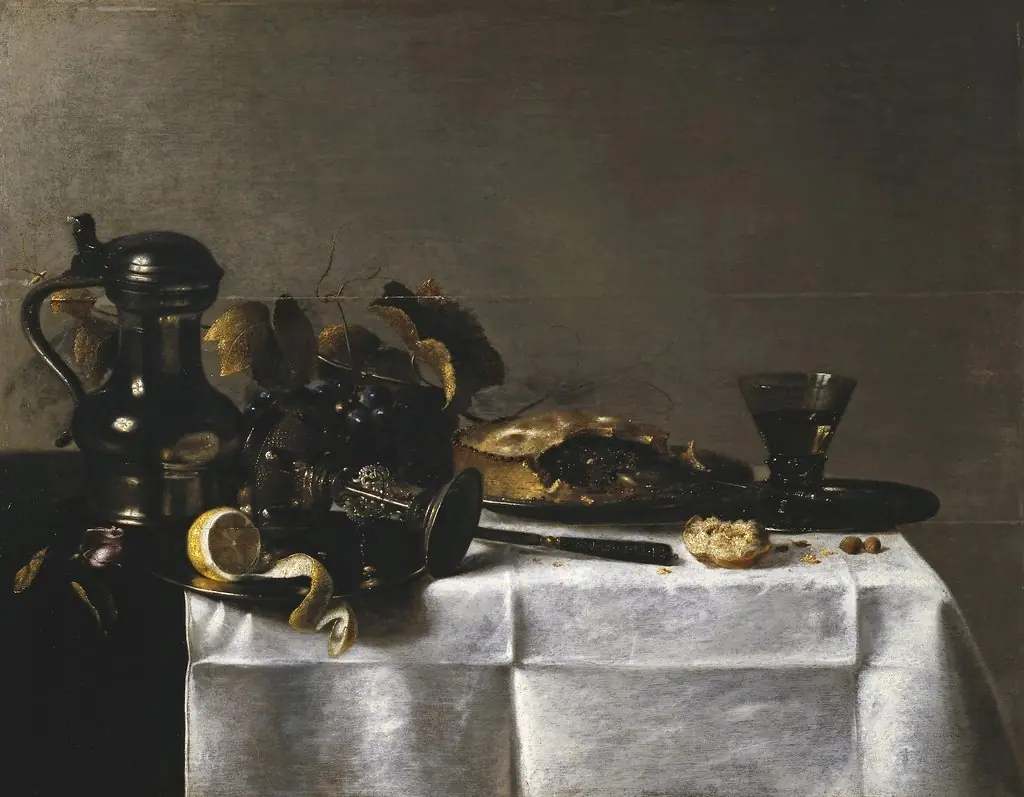
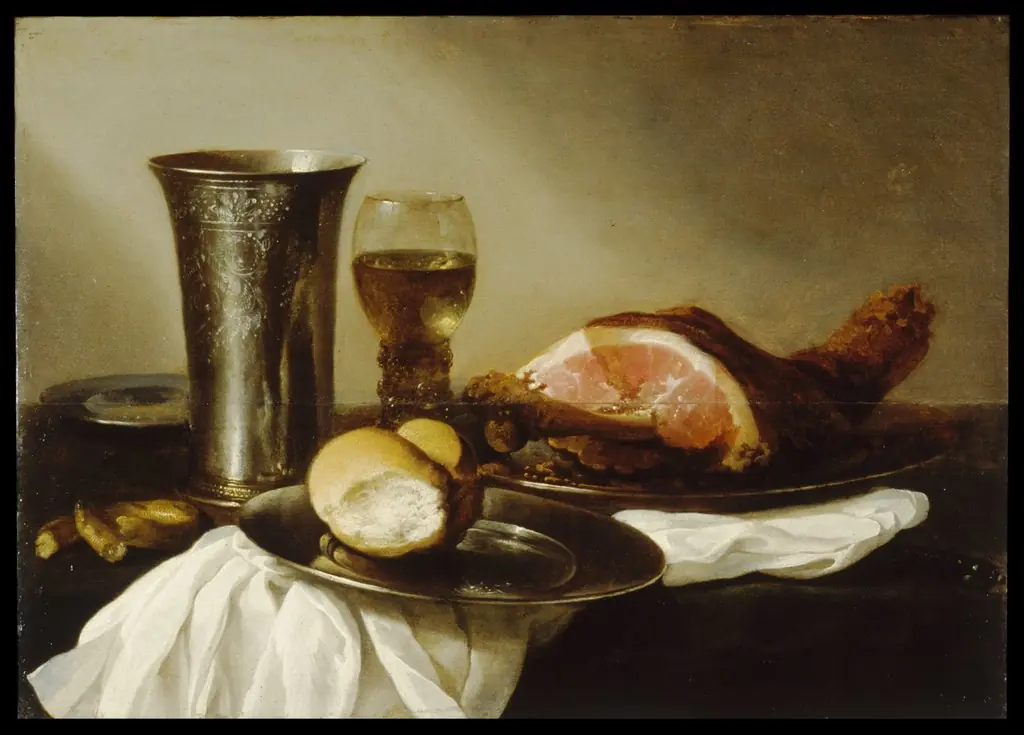
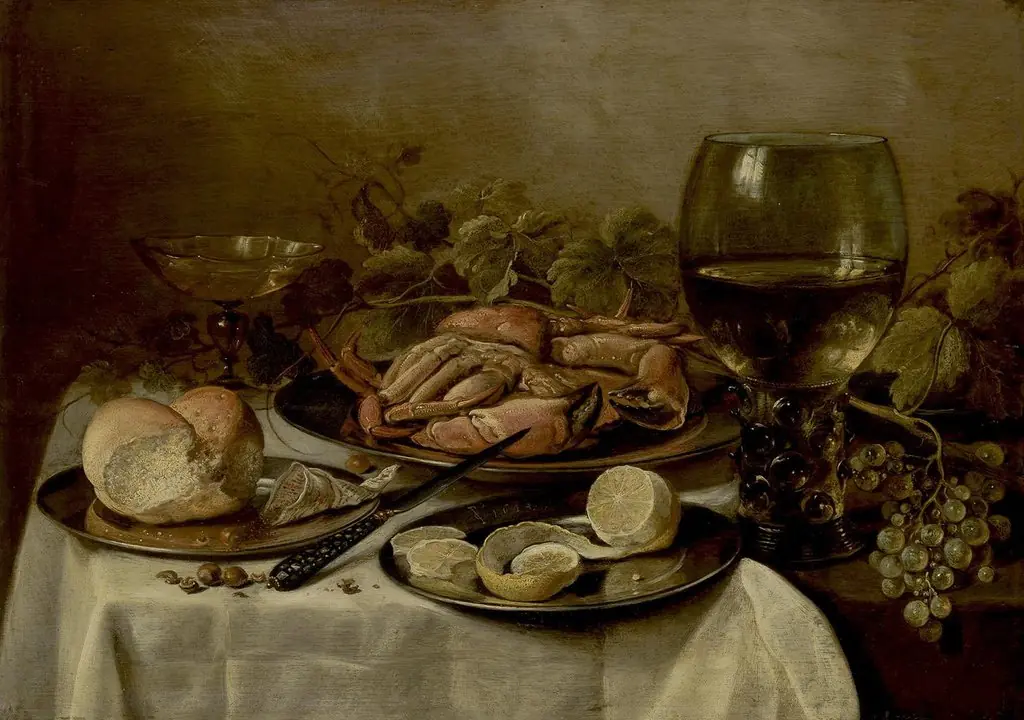
Pieter Claesz's Still Life with Herring, Wine and Bread presents a laid table arranged with a rummer, bread, a salt cellar, and fish, set upon a draped tablecloth. The composition belongs to the "ontbijtje" or breakfast piece tradition of Dutch still life painting, in which modest culinary items are elevated through careful observation of light, texture, and material.
The herring, wine, and bread carry conventional symbolic weight rooted in everyday Dutch life of the period. Bread and salt together traditionally signified hospitality and sustenance, while wine evoked both conviviality and, in religious imagery, sacramental resonance. The inclusion of a rummer, a type of Roemer glass associated with German and Dutch drinking culture, reinforces the theme of shared refreshment. The fish, a humble yet protein-rich staple, underscored the domestic abundance available to the merchant class.
Taken together, these elements transform a simple repast into a meditation on nourishment, sociability, and the quiet prosperity of seventeenth-century Dutch households.
Technique & Style
Executed in 1647, this still life by Pieter Claesz is an oil painting created on a wooden panel support. The work measures 44.45 cm in height and 59.06 cm in width. Visually, the composition features a laid table displaying specific items including a herring, a loaf of bread, a salt cellar, a rummer (a type of glass), and a draped tablecloth.
The artist's handling of the medium captures the textures of these various objects, ranging from the reflective surfaces of the glassware and metal salt cellar to the organic forms of the fish and bread.
History & Provenance
The painting was executed by Pieter Claesz in 1647, as indicated by the date inscribed on the work.
The picture entered the collection of Edward W. Carter and later passed to his wife Hannah Locke Carter, who retained it until at least the mid‑1970s. By 1983 it had entered the holdings of Hoogsteder & Hoogsteder, a dealer specializing in Dutch still life, before being acquired by the Los Angeles County Museum of Art.
The painting Still Life with Herring, Wine and Bread by Pieter Claesz is held in the collection of the Los Angeles County Museum of Art (LACMA) in Los Angeles. The work, dated 1647, has been associated with the gallery Hoogsteder & Hoogsteder and was previously owned by Edward W. Carter and Hannah Locke Carter. While the museum currently houses the piece, the provided sources do not list specific inventory or accession numbers, nor do they detail a history of public exhibitions for this specific artwork.
Context
Critical reception of Still Life with Herring, Wine and Bread remains sparse, with no contemporary commentary located in the sources. Scholarly attention focuses on its material and formal qualities, particularly the restrained palette and compositional balance that exemplify mid‑seventeenth‑century Dutch still‑life conventions. The painting’s provenance through the Hoogsteder firm and subsequent acquisition by the Los Angeles County Museum of Art underscores its significance within the artist’s oeuvre and the broader market for Dutch genre scenes.
Its depiction of a laid table with a rummer, bread, salt cellar and herring reflects the everyday material culture of the Dutch Republic, situating the work within the trajectory of Claesz’s career and the development of banquet still lifes in the 1620s‑1650s.
Legacy
The painting's composition of a humble laid table with everyday provisions contributed to the development of later Dutch still-life arrangements that emphasized moral symbolism and the transience of material wealth. Art historians note its role in shaping the genre's focus on modest domestic scenes, influencing subsequent artists who adopted similar iconographic details such as the rummer and salt cellar. Its inclusion in prominent collections, including the Los Angeles County Museum of Art, has ensured continued scholarly attention to Claesz's contribution to 17th-century Dutch art.
Overview
Pieter Claesz’s 1647 oil painting Still Life with Herring, Wine and Bread presents a modest banquet arranged on a darkened tabletop. A silver platter supports a cooked herring, a halved lemon, and several slices of bread, while a tall rummer of white wine, a small lidded salt pot, and a black‑handled knife complete the composition. The work is part of the Los Angeles County Museum of Art’s collection.
Own this work as a print
Artist & collection