Artwork
Still Life with Breams, Oranges, Garlic, Condiments, and Kitchen Utensils
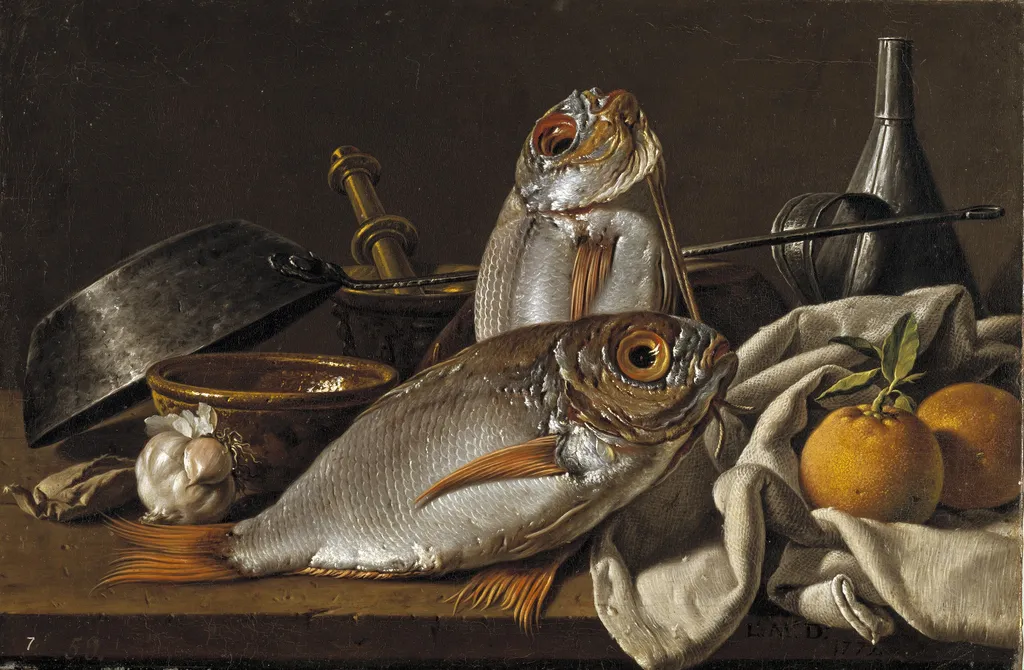
Still Life with Breams, Oranges, Garlic, Condiments, and Kitchen Utensils is an oil painting by the Rococo painting artist Luis Egidio Meléndez. It dates from 1772 and is held in the collection of the Museo del Prado.
About this work
Subject & Meaning
Luis Egidio Meléndez depicts a rigorous arrangement of humble kitchen items on a wooden ledge, centering on two freshly caught sea bream.
Luis Egidio Meléndez depicts a rigorous arrangement of humble kitchen items on a wooden ledge, centering on two freshly caught sea bream. These fish rest partially on a white cloth alongside two oranges, while a head of garlic and a spice wrapper sit before a brown Alcorcón earthenware bowl and an overturned long-handled frying pan. Background elements include a copper mortar and pestle and a tall metal oil pitcher known as an alcuza.
The composition emphasizes geometric forms such as cones and spheres, imbuing ordinary objects with a sense of monumentality characteristic of a near-Neoclassical spirit. Strong chiaroscuro effects, generated by light entering from the upper left, model the textures and create dramatic shadows that highlight the magical lucidity of the subjects. This work represents a departure from Baroque traditions by elevating modest culinary tools rather than ornate display vessels.
Technique & Style
The work is an oil painting on canvas, measuring 42 × 62.2 cm, and is signed and dated "Ls.Mz.Do./1772" along the edge of the table beneath the cloth.
Meléndez arranges the objects on a wooden ledge and builds the composition from elementary geometric volumes, cones, truncated cones, and spheres, lending the humble kitchen items a deliberate monumentality. Light enters from the upper left, casting energetic shadows that model the forms and differentiate surface textures, giving the breams an almost luminous quality. The palette is restricted to grays and oranges, picked up in the fishes' fins, eye contours, and tails as well as in the citrus, set against a dark background in the Spanish still-life tradition.
The handling is meticulous and precise, with careful attention to material distinctions between the rough fish scales, the white drapery, the ceramic Alcorcón bowl, the copper mortar, and the metal oil pourer.
History & Provenance
The work was created in 1772 for the Royal Cabinet of Natural History commissioned by the future King Ferdinand VII of Spain, and entered the collection of the Royal Palace of Aranjuez. It remained in the royal apartments there until the early 19th century, later being documented in the palace's inventory as piece 7 in 1818. The painting stayed in the Royal Palace of Aranjuez until its transfer to the Museo del Prado, where it has been listed under inventory number P000903 since its accession.
The work was signed and dated on the table edge as 'Ls.Mz.Do./1772' and measures 42 x 62.2 cm in oil on canvas. It is recognized as part of a pair with another still life held in the Prado, and was originally part of the royal collection displayed in the prince's chambers at Aranjuez.
The painting is held by the Museo del Prado in Madrid under inventory number P000903. It originates from the royal collection, having been initially located in the Natural History Cabinet of the Prince of Asturias at the Royal Palace of Madrid around 1771. It was subsequently moved to the Casita del Príncipe at El Escorial in 1778 and later transferred to the Royal Palace of Aranjuez around 1785, where it remained through at least 1818.
Context
Luis Egidio Meléndez is recognized as the foremost Spanish still-life painter of the eighteenth century, with this 1772 canvas standing among his most celebrated works. Originally commissioned for the Cabinet of Natural History of the Prince of Asturias, the painting exemplifies Meléndez's departure from Baroque traditions by elevating humble kitchen utensils and fresh ingredients rather than ornate display vessels. Scholars note the composition's rigorous geometry and near-Neoclassical spirit, where common objects like earthenware and copper mortars acquire a deliberate monumental quality through precise detailing and dramatic chiaroscuro.
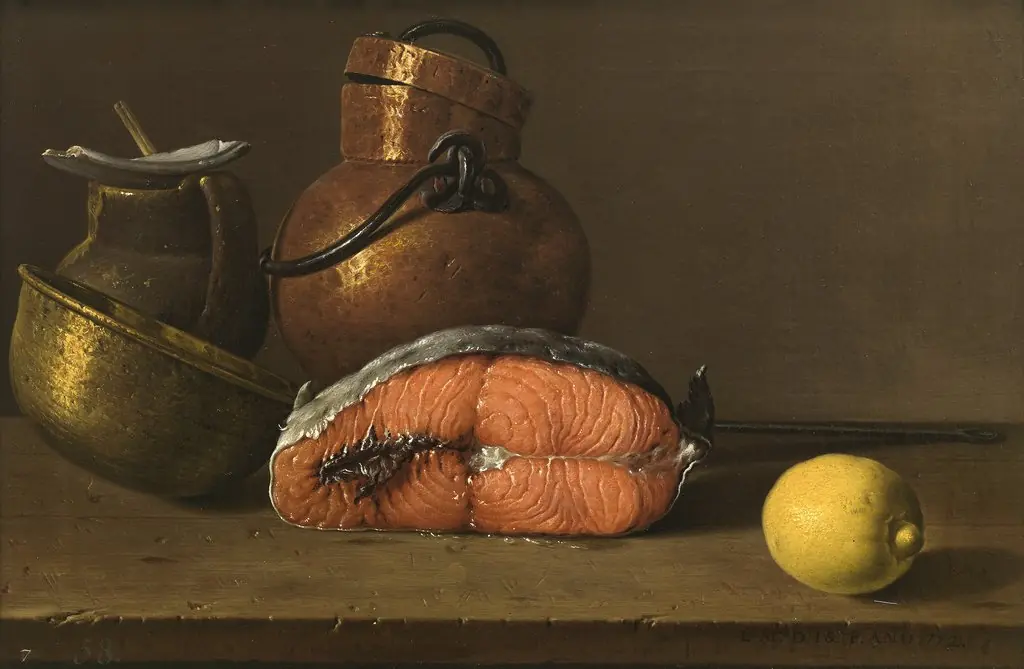
The work is frequently analyzed alongside its pendant, a still life featuring salmon and lemons, as well as comparable fish compositions held in Cleveland and London. This approach solidified Meléndez's unique position within art history, bridging earlier Spanish bodegón conventions with an Enlightenment-era focus on naturalistic observation.
Overview
Luis Egidio Meléndez’s 1772 oil painting, Still Life with Breams, Oranges, Garlic, Condiments, and Kitchen Utensils, presents a carefully arranged group of kitchen objects on a dark surface. The composition centers on two glistening bream, bright oranges, and cloves of garlic, accompanied by a metal pitcher, a bowl and a cloth. The work is part of the Prado Museum’s collection in Madrid.
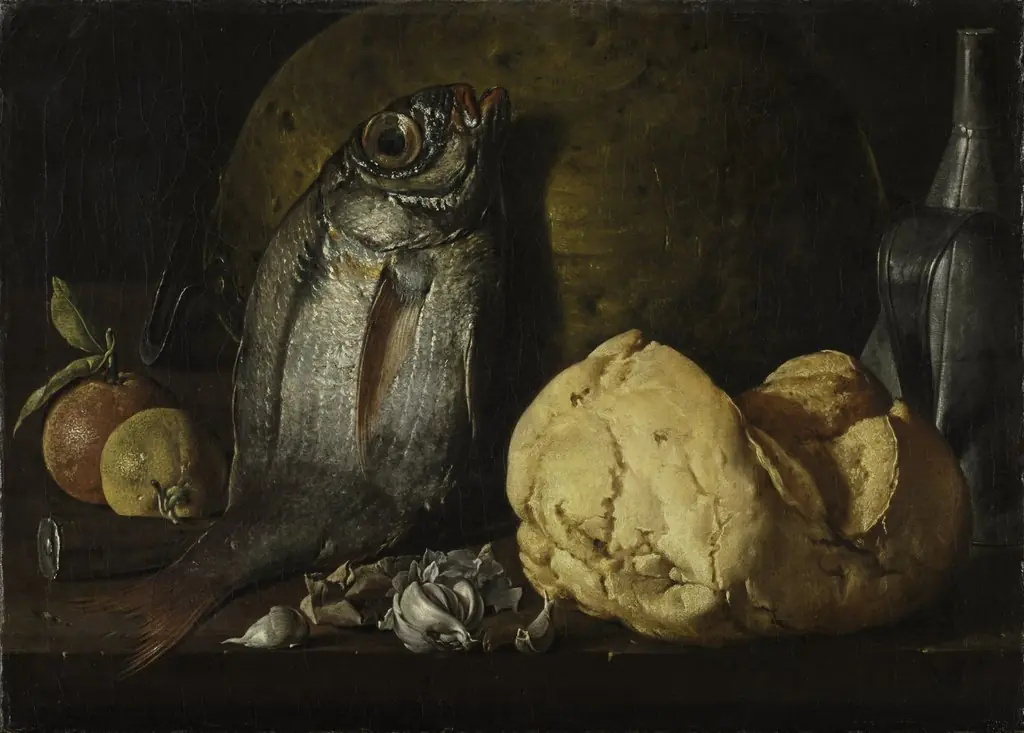
Own this work as a print
Artist & collection
Artist
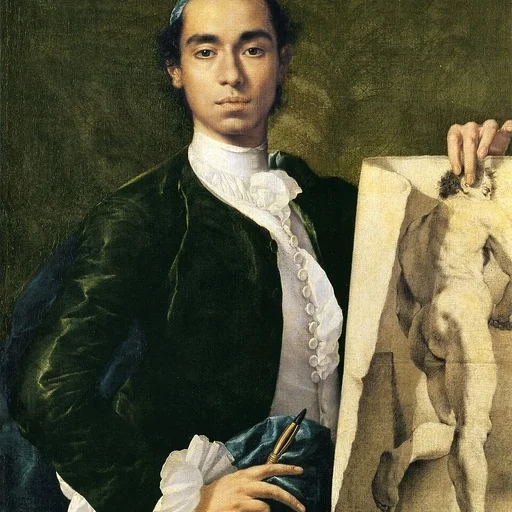
Luis Egidio Meléndez (1716–1780) was a Spanish painter. Though he received little acclaim during his lifetime and died in poverty, Meléndez is recognized as one of the greatest Spanish still-life painters of the 18th…

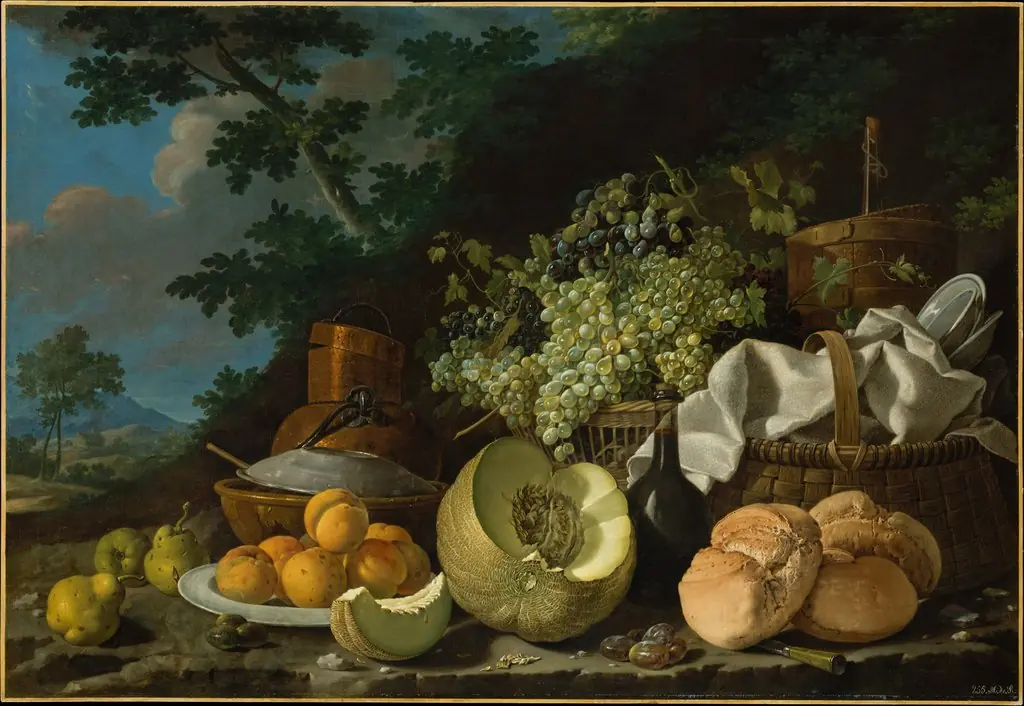 The Afternoon Meal (La Merienda)
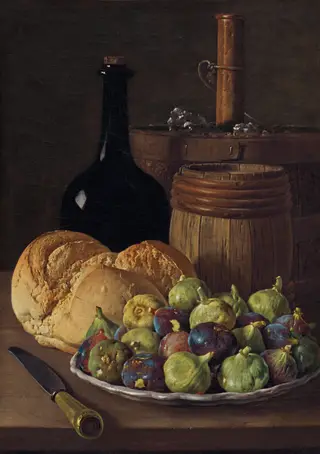 Still Life with Figs and Bread
- Still Life with Fish, Bread, and Kettle
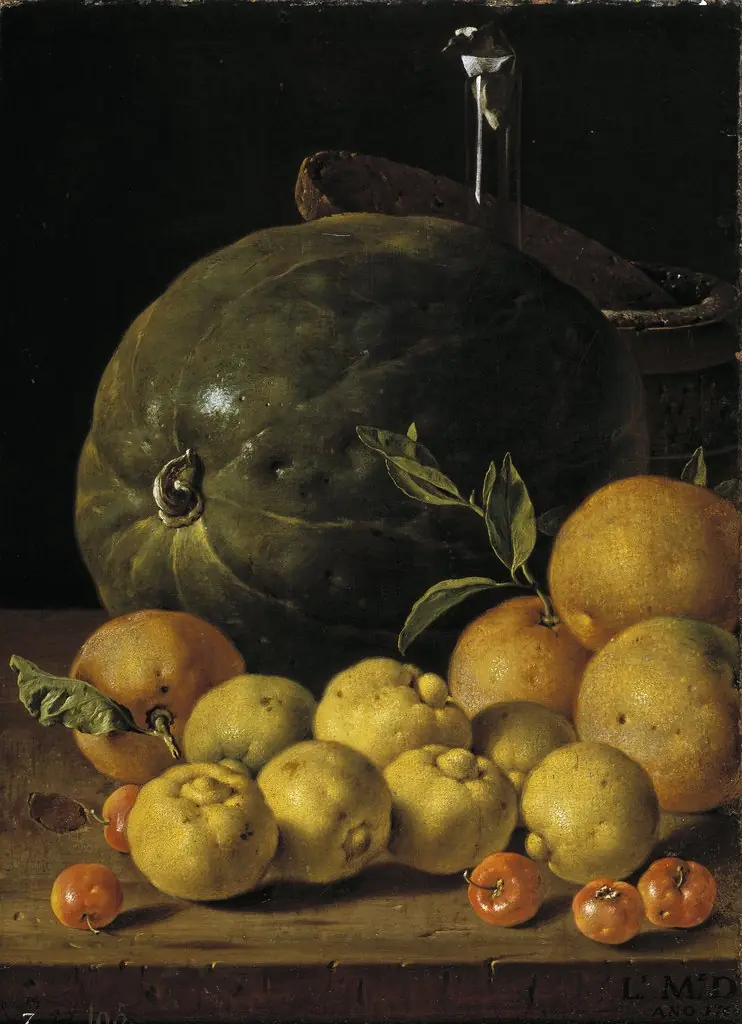 Still Life with Limes Oranges Haw Berries and Watermelon
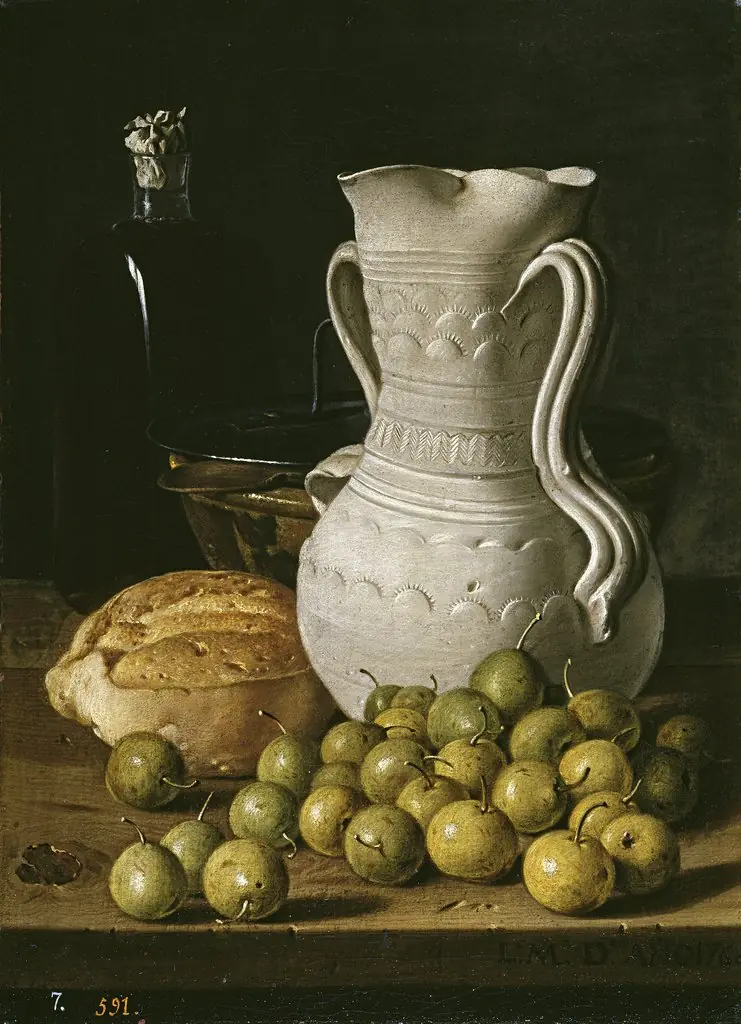 Still Life with Small Pears Bread Flask Bowl and Dry Leaves
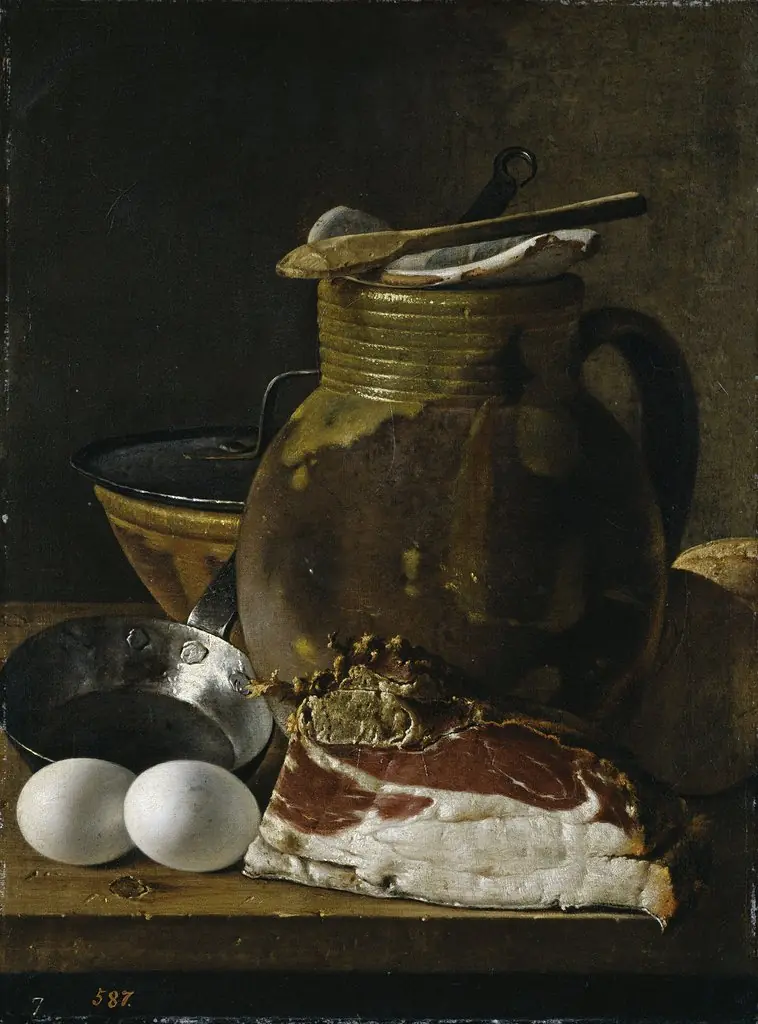 Still Life with Ham Eggs and Vessels
 Still Life with Oysters Garlic Eggs Pot and Pan
 Bodegón con pichones cesta de comida y cuencos