Artwork
Self-portrait of the Artist in his Studio
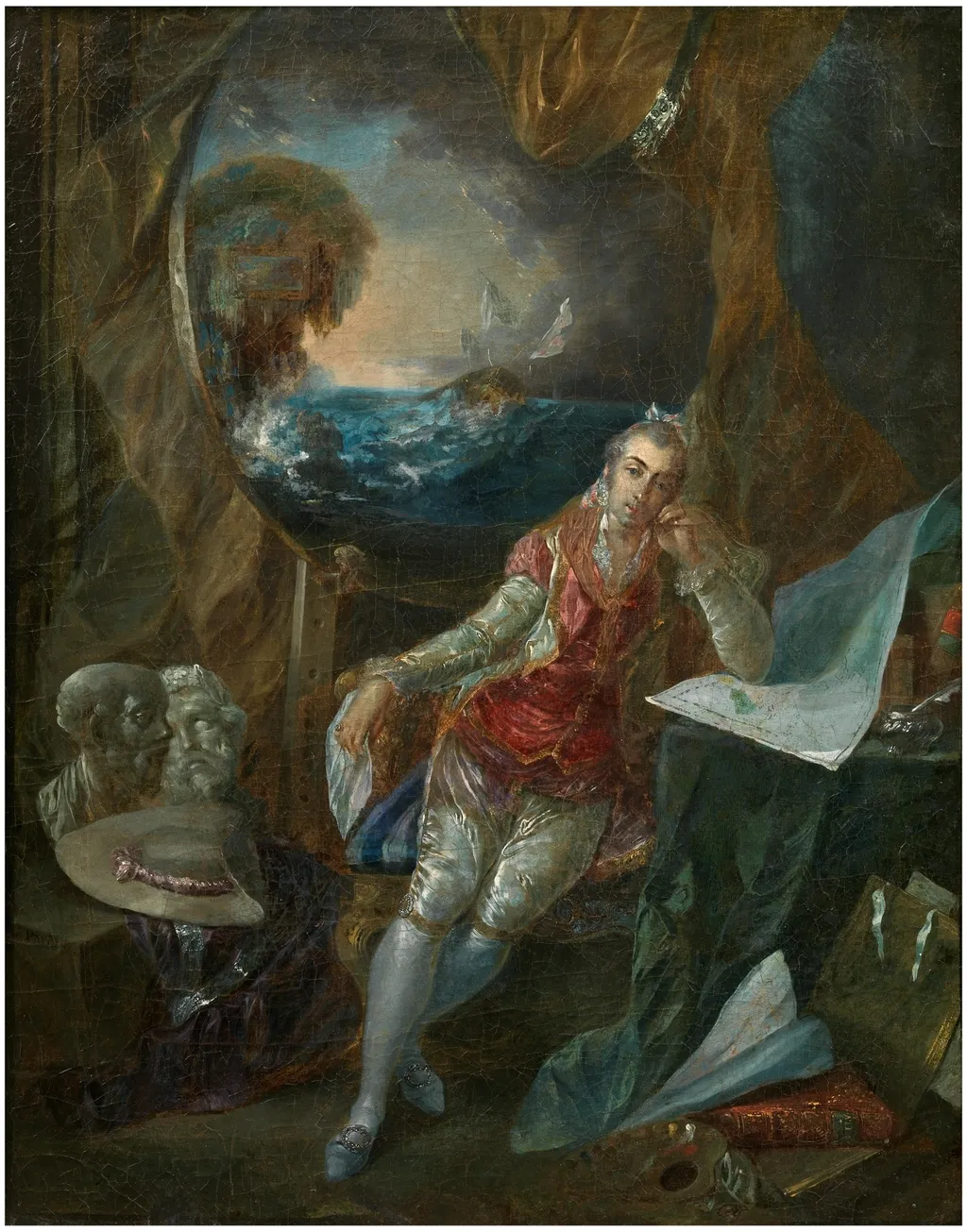
Self-portrait of the Artist in his Studio is an oil painting by the Rococo painting artist Luis Paret y Alcázar. It dates from 1775 and is held in the collection of the Museo del Prado.
About this work
Technique & Style
Stylistically the work aligns with eighteenth-century Spanish portraiture, characterized by restrained modeling and delicate highlights.
The painting is executed in oil on canvas, measuring 39.8 × 31.8 cm. The handling combines fine, controlled brushwork in the face and hands with looser passages in the background and studio props. The palette is subdued, dominated by earthy browns and ochres in the studio setting, with brighter accents in the sitter's face. Stylistically the work aligns with eighteenth-century Spanish portraiture, characterized by restrained modeling and delicate highlights.
The composition is tightly framed, focusing on the artist at work, with props such as a book, inkwell, sculpture, and painting paraphernalia arranged to reinforce the theme of artistic identity.
History & Provenance
Self-portrait of the Artist in his Studio was painted by Luis Paret y Alcázar around 1775. The painting is executed in oil on canvas and is held in the collection of the Museo del Prado, Madrid, where it carries the inventory number P004462. Beyond its institutional location, no further details regarding commission or earlier provenance are documented in the available sources.
Overview
Luis Paret y Alcázar's Self-portrait of the Artist in his Studio, an oil painting from 1775, offers a glimpse into the artist's professional environment. This work, currently housed at the Museo del Prado, depicts Paret himself amidst the tools and trappings of his craft. The composition invites viewers into his workspace, characterized by a detailed rendering of his surroundings and a contemplative pose.
Subject & Meaning
The painting presents Paret y Alcázar seated in a red coat and silver trousers, holding and pointing at a piece of paper, suggesting an act of creation or contemplation. His cluttered studio includes an easel, a book, and a bust of a bearded man, signaling his artistic and intellectual pursuits. A prominent mirror behind him reflects a dramatic seascape with crashing waves, creating a striking contrast and expanding the perceived space of the studio into an imagined exterior world.
Own this work as a print
Artist & collection

 Allegorie sur la mariage du Comte de Provence
 St Jerome in the Wilderness
 Water
Water Alexander at the Tomb of Cyrus
 José Moñino y Redondo, 1st Count of Floridablanca
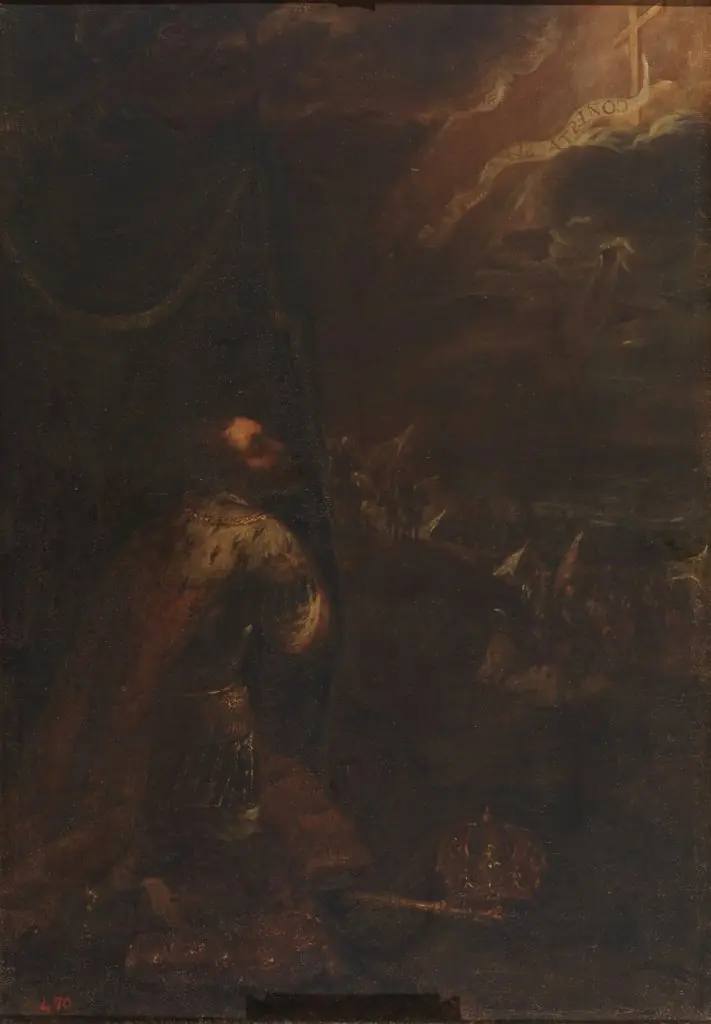 San Fernando arrodillado
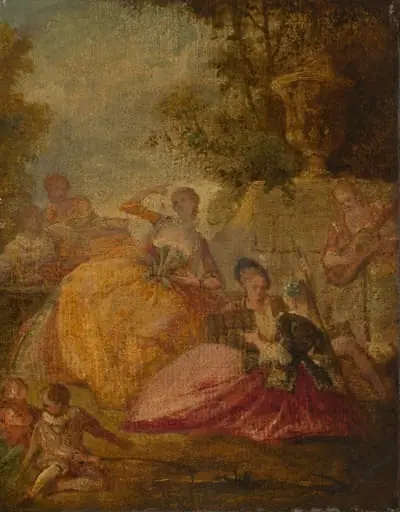 Divertissement
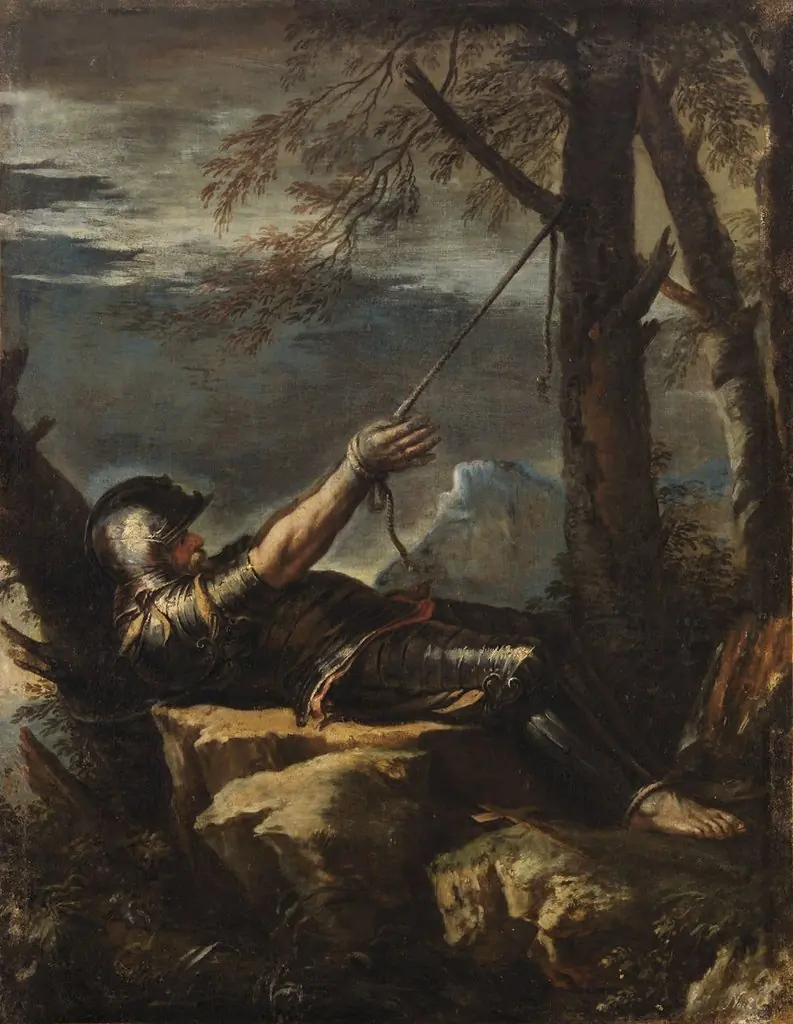 William of Maleval as a penitent
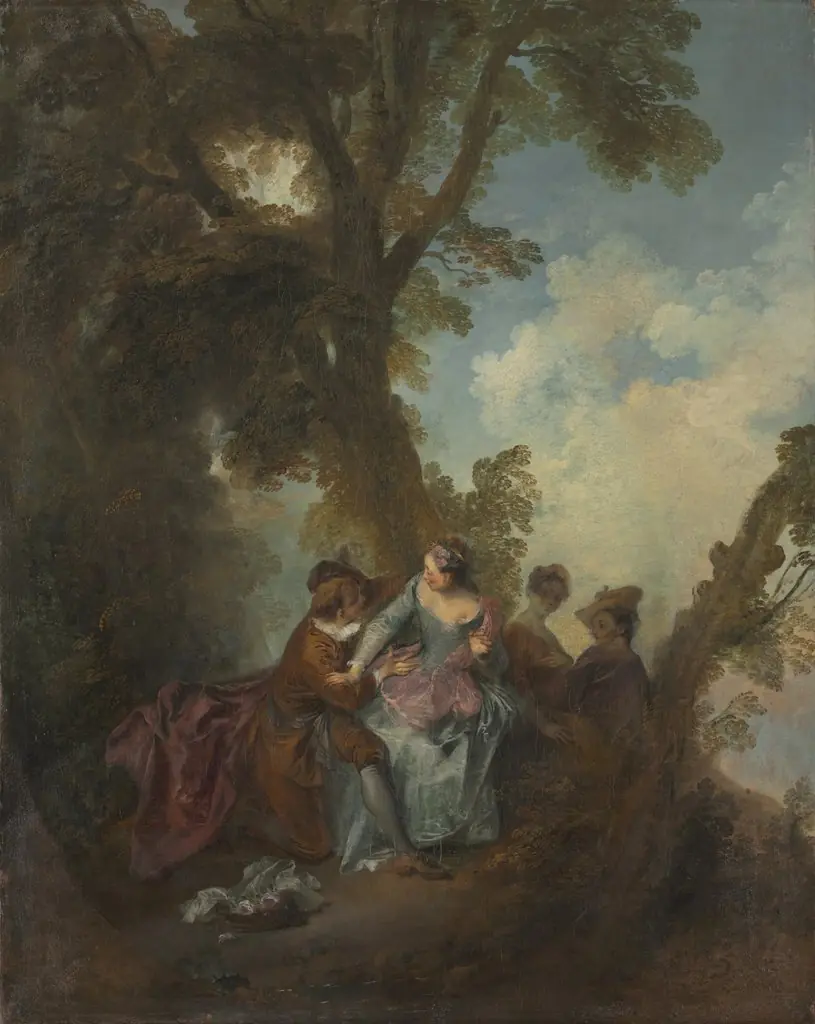 Declaration of Love
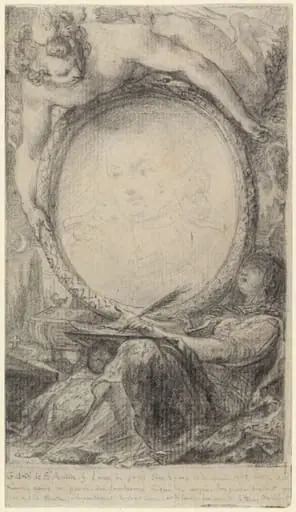 Allegorical Frame with a Genius and a Veiled Woman Writing
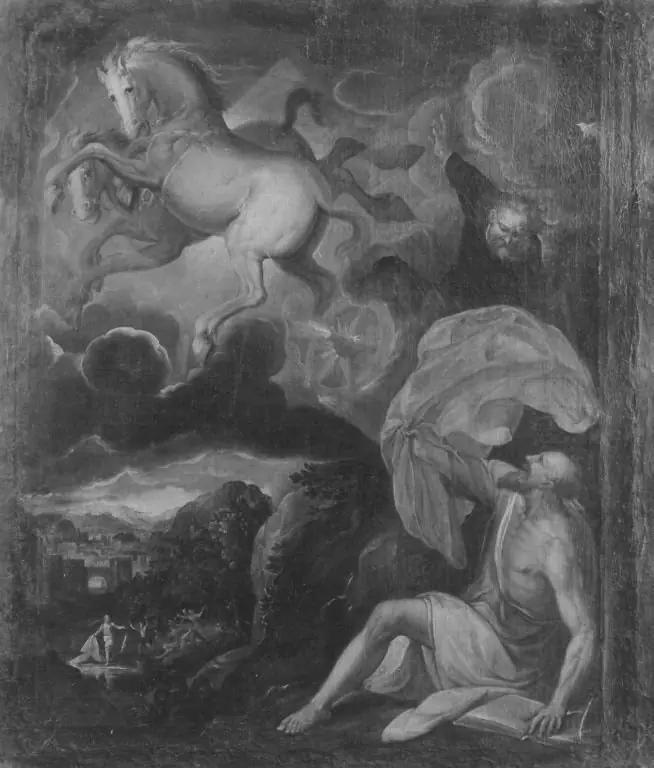 Elias und der Feuerwagen
- Studio of an Artist