Artwork
Untitled
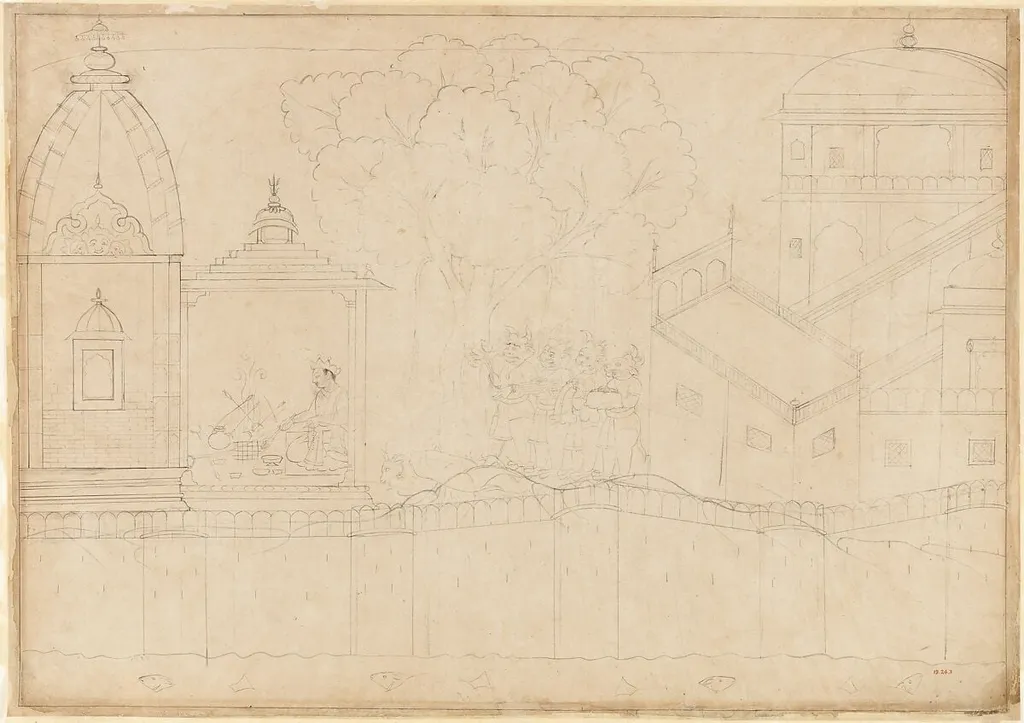
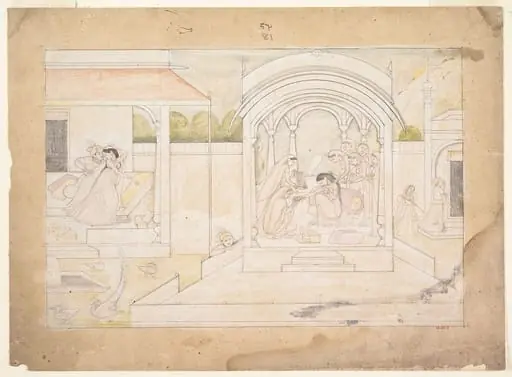
Untitled is an ink painting by the Baroque artist Seu Family. It dates from 1725 and is held in the collection of the Metropolitan Museum of Art.
About this work
Subject & Meaning
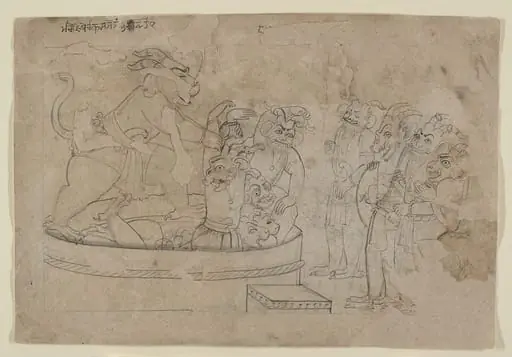
Set in India, the composition centers on the interaction between these three figures, suggesting a narrative of spiritual conflict or ritual confrontation.
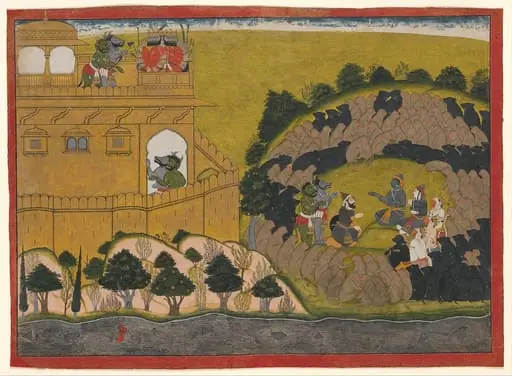
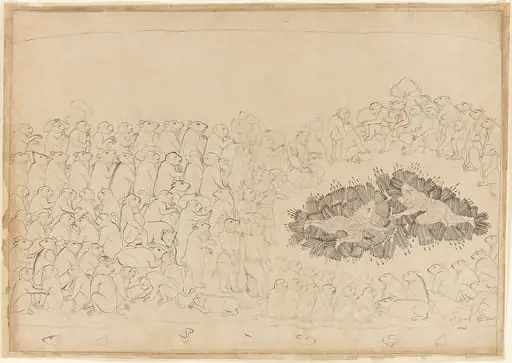
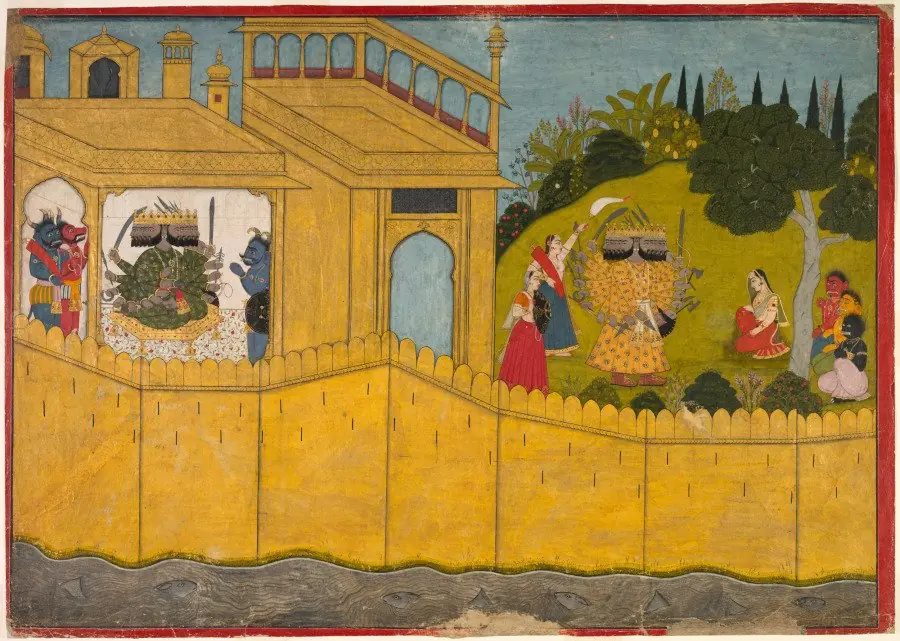
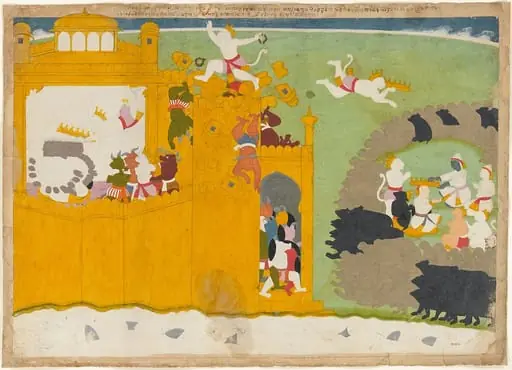
The painting Untitled by Manaku, created in 1725, is a religious work that depicts a scene involving a man, a demon, and an altar. Set in India, the composition centers on the interaction between these three figures, suggesting a narrative of spiritual conflict or ritual confrontation. The presence of the demon alongside a human figure and a sacred altar indicates iconography typical of religious storytelling in the tradition of the Seu Family.
While the specific textual narrative is not detailed in the available records, the visual arrangement implies a moment of divine or supernatural intervention, where the man may be facing a demonic force at a place of worship. This imagery reflects broader themes of moral struggle and the protection of sacred spaces found in 18th-century Indian religious art.
Technique & Style
Created in 1725 by Manaku of the Seu family, this work is executed in ink on paper. The painting measures 62.2 cm in height and 82.9 cm in width. Stylistically, it functions as a religious composition depicting an altar, a demon, and a male figure.
Produced in India, the piece utilizes a two-dimensional approach characteristic of the region's pictorial traditions, focusing on narrative representation through linear definition. The medium of ink allows for precise delineation of the supernatural and human elements within the sacred scene.
History & Provenance
Created in 1725 in India, the painting known as Untitled is attributed to the artist Manaku of the Seu family. Executed in ink on paper, the work was produced during the early eighteenth century as part of a religious genre tradition. The piece entered the collection of the Metropolitan Museum of Art, where it is currently held.
While the specific commissioning patron is not detailed in the available records, the work's creation date is firmly established as 1725. The painting depicts religious iconography, including an altar, a demon, and a man. Its physical dimensions measure 62.2 cm in height and 82.9 cm in width.
The artwork remains a significant example of Manaku's output from this period, reflecting the artistic practices of the Seu family workshop in India.
Overview
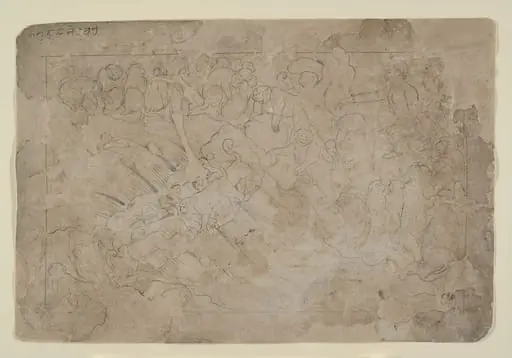
This untitled work by Manaku, created around 1725, is an ink drawing on paper. It portrays a religious narrative set in the Punjab hills, featuring an altar surrounded by both human figures and demonic entities. The composition is characterized by its intricate detail and dynamic arrangement, with the artist employing ink to convey a sense of texture and visual depth within the scene.
Artist & collection

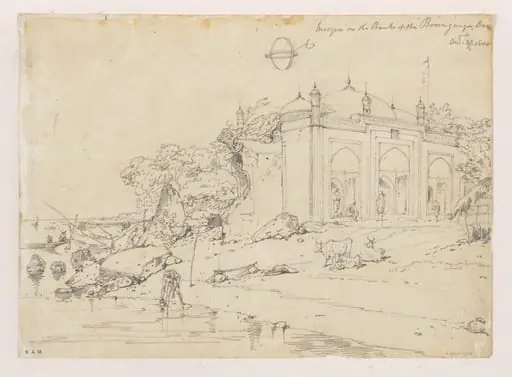 A mosque on the banks of the Buriganga River, Dhaka, Bangladesh
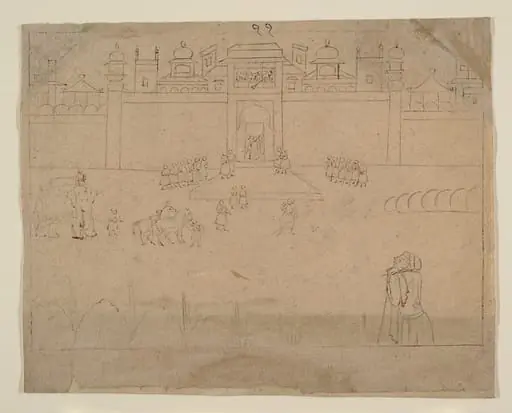 Untitled
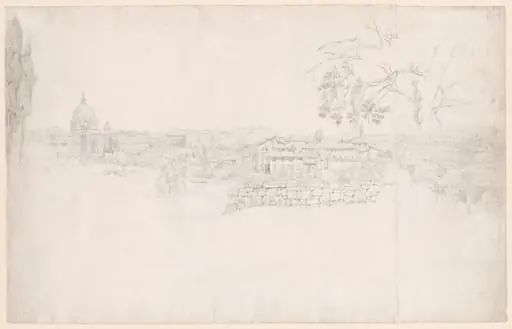 Fantasy Panorama of Rome from St. Peter's to the Castel San Angelo
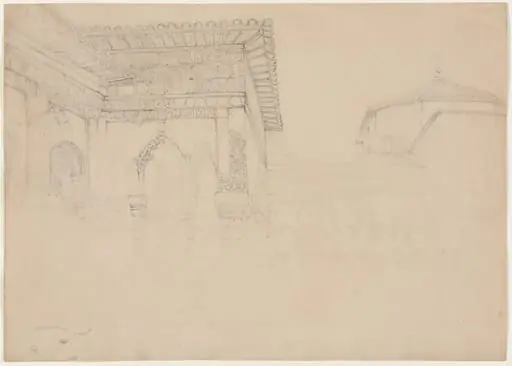 The Court of the Lions, Alhambra
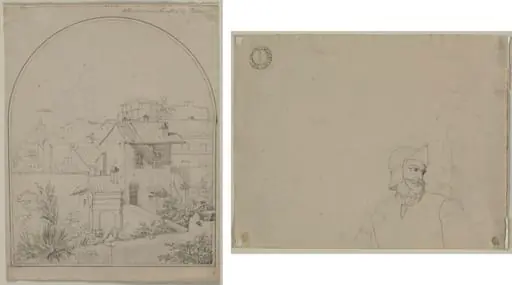 View from My Window in Rome (recto) Soldier in a Landscape (verso)
 Untitled
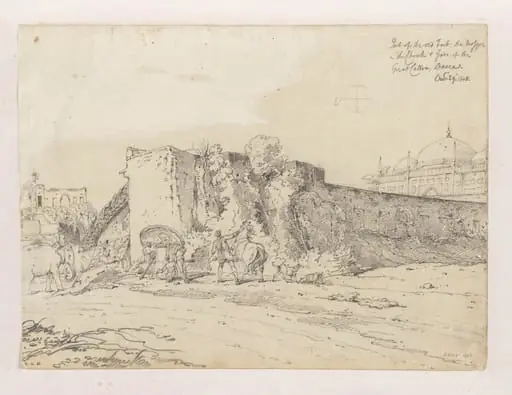 Part of the old fort: the mosque in the chowk and gate of the Great Katra, Dhaka (Dacca)
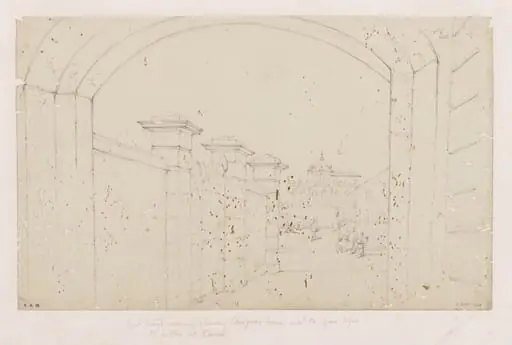 Chungqua's premises seen from the portico of the East India Company's 'factory' at Guangzhou (Canton)
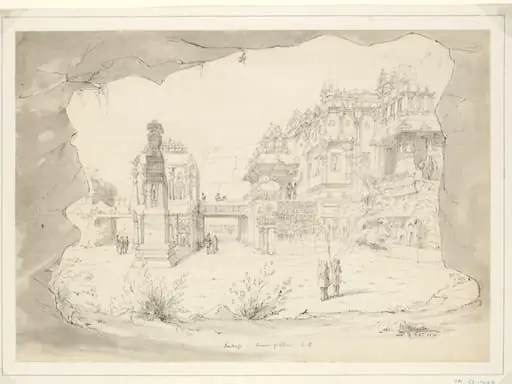 Kailasanatha Temple, Ellora
 Classical Buildings above a Wall
 The gateway to the convent of Santa Clara, Macau
- Fort Putnam