Artwork
Untitled
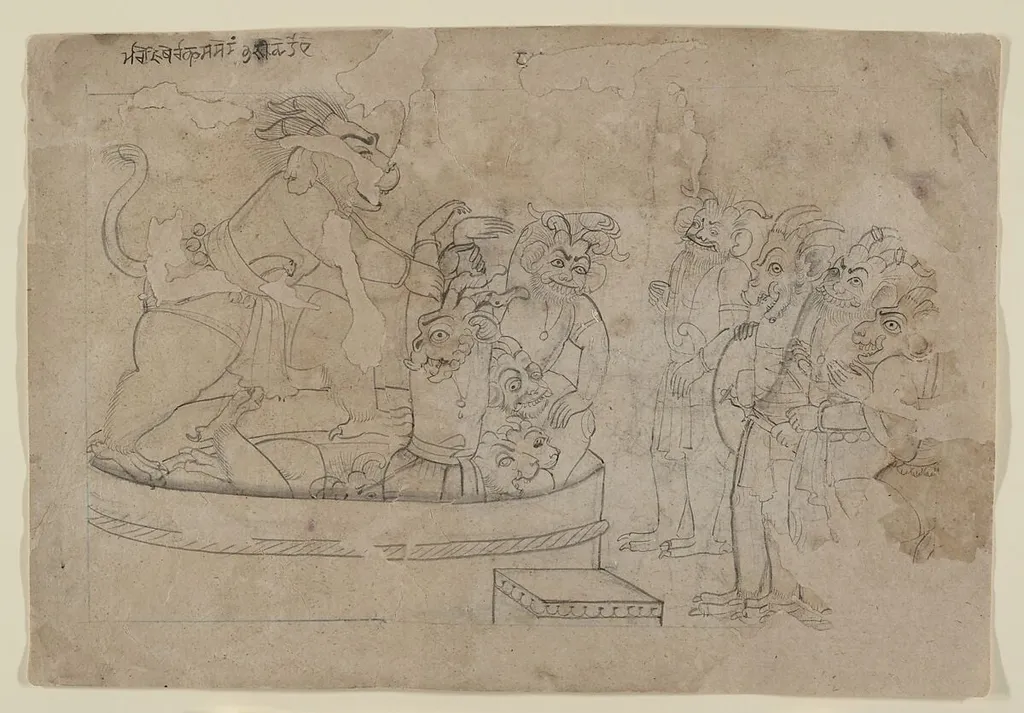
Untitled is an ink painting by the Baroque artist Seu Family. It dates from 1753 and is held in the collection of the Metropolitan Museum of Art.
About this work
Subject & Meaning
The demon serves as the focal narrative element, conveying themes typical of the genre through its supernatural and otherworldly character.
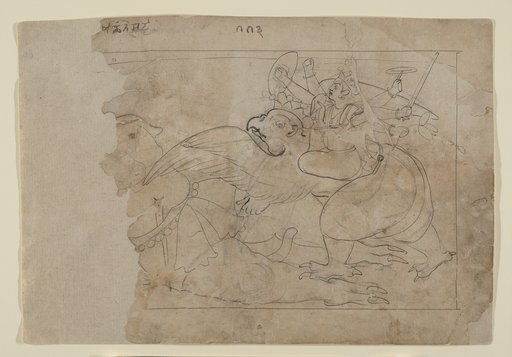
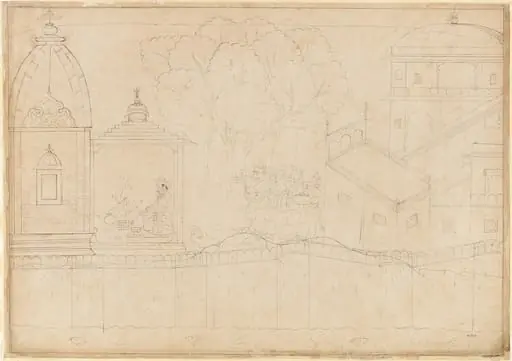
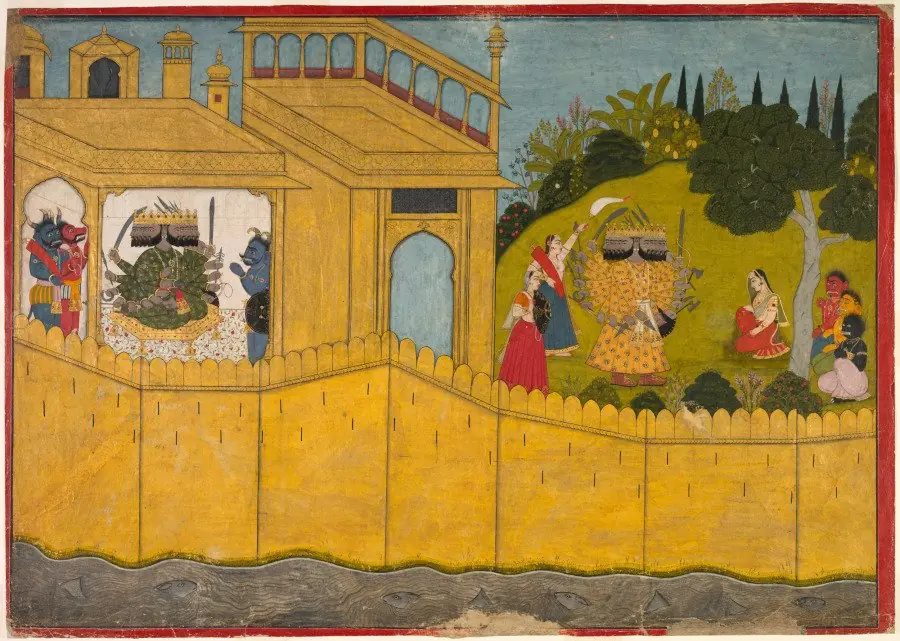
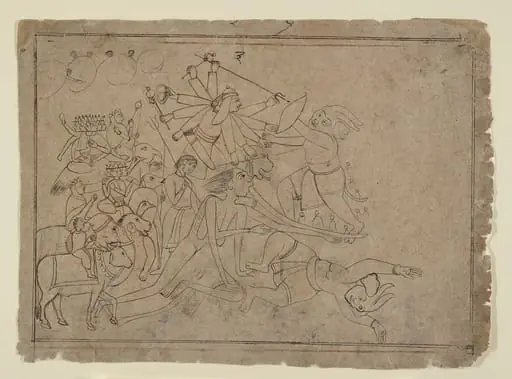
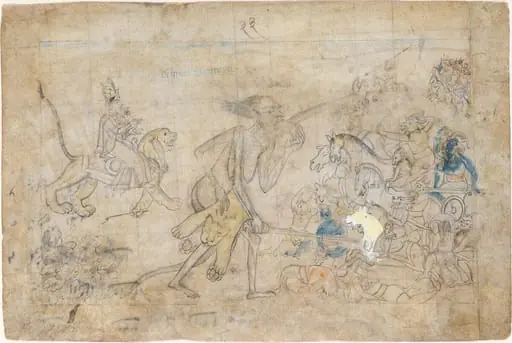
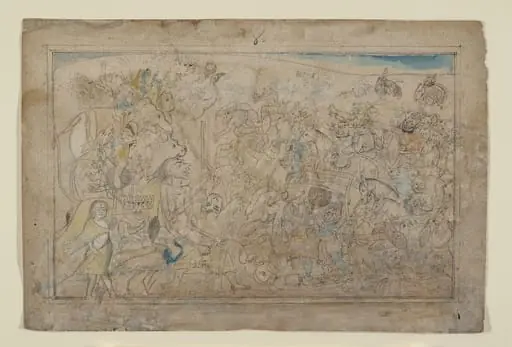
The work belongs to the genre of mythology and depicts a demon, situating the image within the tradition of demonic iconography. Classified as a painting in ink and wash on paper, the composition centers on a demonic figure as its primary subject, a common motif in 18th-century Indian mythological painting. The demon serves as the focal narrative element, conveying themes typical of the genre through its supernatural and otherworldly character.
Technique & Style
Executed in 1753, the work employs ink and wash on paper, a medium typical of Pahari painting traditions in northern India. The support measures 21.6 cm in height by 30.8 cm in width, offering an intimate scale suited to delicate linework and tonal modulation.
Manaku’s handling is characterized by fine, assured brushstrokes that define the demon’s musculature and facial features, while graded washes create volumetric shadows and atmospheric depth. The stylistic qualities reflect the mature Guler-Kangra idiom, balancing naturalistic detail with expressive distortion, most evident in the demon’s exaggerated physiognomy and dynamic posture.
History & Provenance
The painting was completed in 1753, as indicated by the inscribed date on the work.
It entered the collection of the Metropolitan Museum of Art, where it remains held. The artist is identified as Manaku of the Seu family, a painter active in the 18th century in India. The painting depicts a demon and is rendered in ink and wash on paper.
Overview
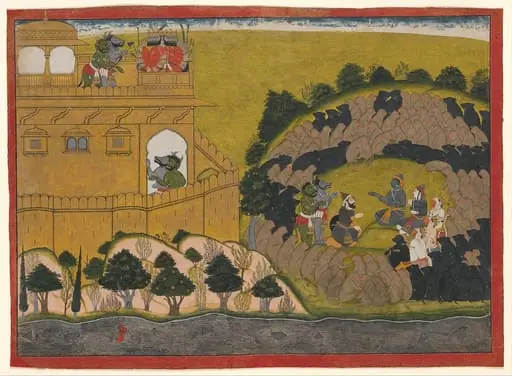
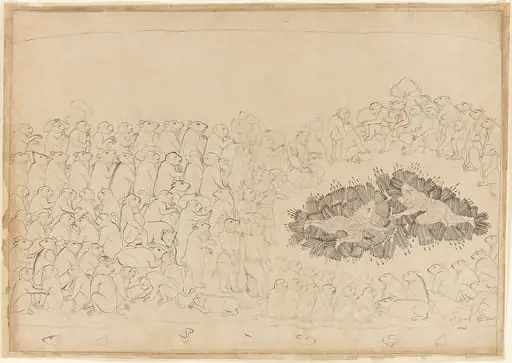
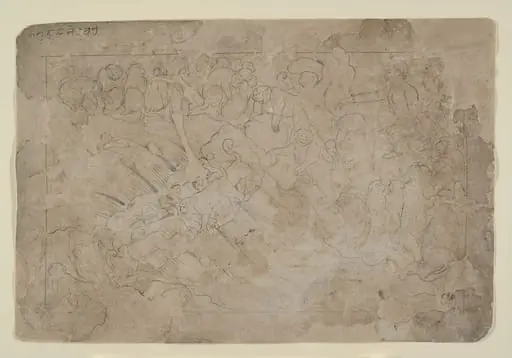
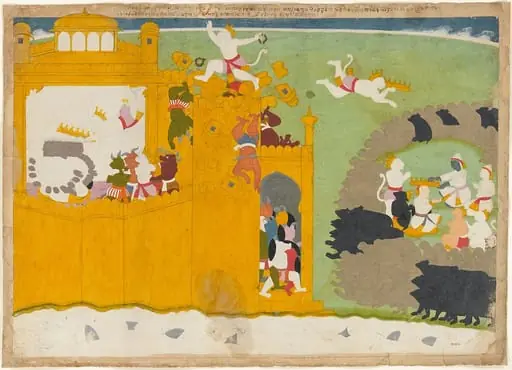
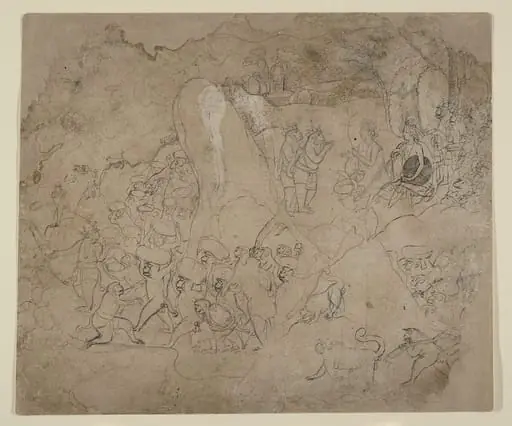
This untitled work, created by the Seu Family in 1753, is an ink and wash painting on paper. It portrays a mythological scene filled with a multitude of demonic figures. The artwork originates from the Pahari hills of northern India, a region known for its rich tradition of illustrating religious narratives. The composition captures a dynamic and intense moment, characteristic of the period's artistic output.
Context
This painting is representative of the artistic traditions prevalent in the Pahari hills of northern India during the 18th century. Artists from this region, including the Seu Family, frequently dedicated their efforts to illustrating sacred Hindu texts. Such works served to visualize the narratives and characters from revered epics, making complex mythological stories accessible and engaging for their audiences.
Artist & collection