Artwork
Untitled
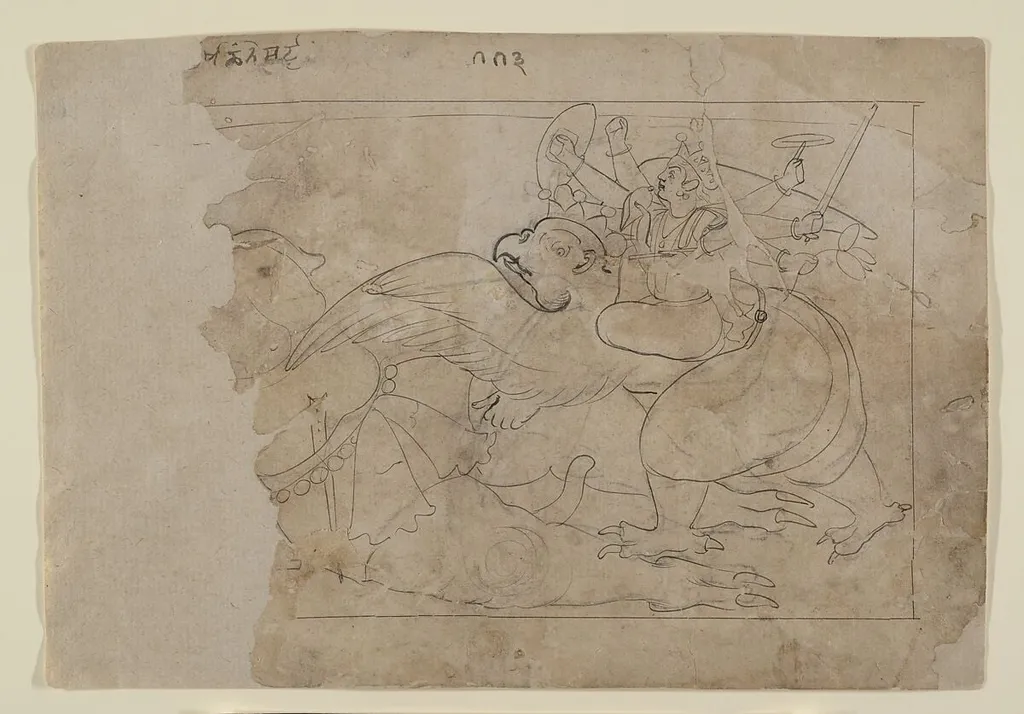
Untitled is an ink painting by the Baroque artist Seu Family. It dates from 1753 and is held in the collection of the Metropolitan Museum of Art.
About this work
Subject & Meaning
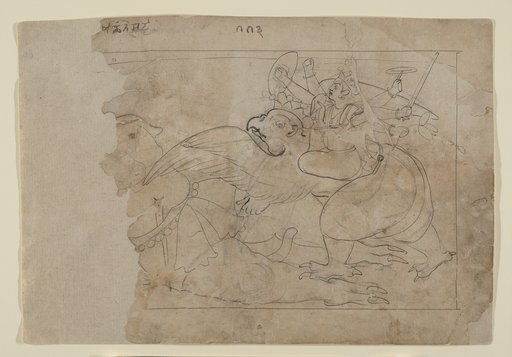
Garuda, depicted as a large eagle‑like creature, serves as Vishnu’s mount and vehicle, symbolizing power and the ability to traverse between worlds.
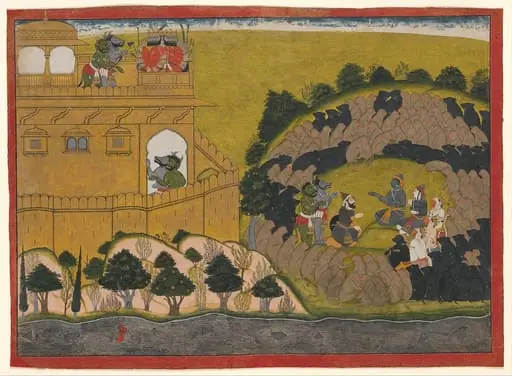
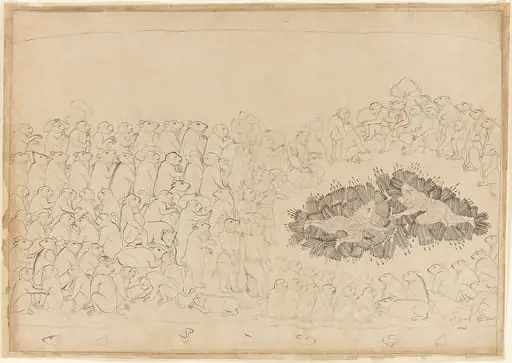
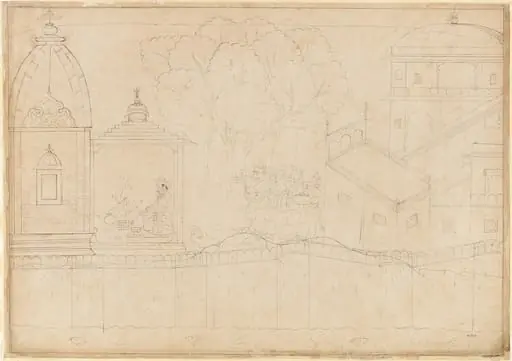
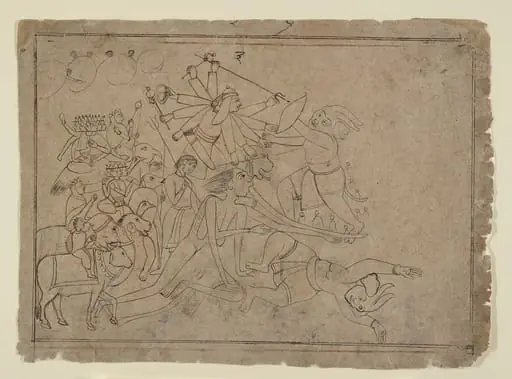
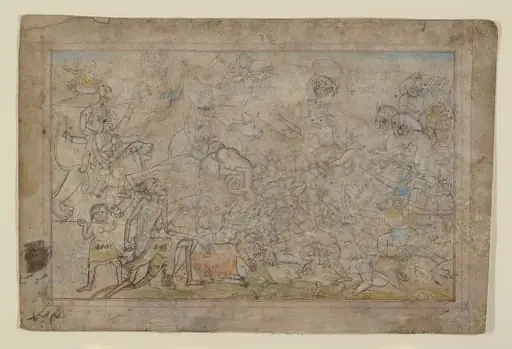
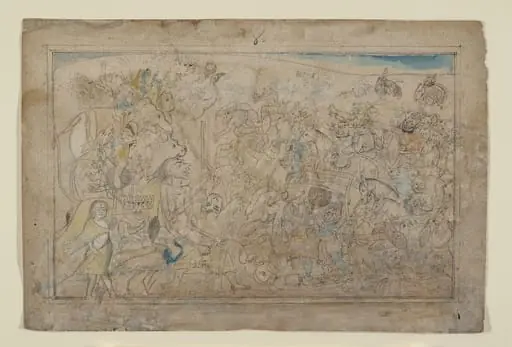
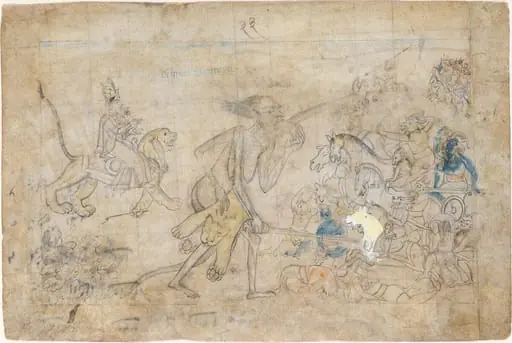
The painting shows the Hindu god Vishnu mounted on the mythic bird Garuda as he confronts a demon, a common motif in Indian religious art that illustrates the triumph of divine order over chaos. Garuda, depicted as a large eagle‑like creature, serves as Vishnu’s mount and vehicle, symbolizing power and the ability to traverse between worlds. The demon represents evil forces that are subdued by the deity’s cosmic authority.
Together, these elements convey themes of protection, cosmic balance, and the victorious restoration of dharma, reflecting the devotional focus of 18th‑century Indian painting.
Technique & Style
The work is executed in ink and wash on paper, a fragile support typical of Indian miniature traditions. The paper substrate is thin and prone to handling stress, requiring careful conservation. The composition portrays the Hindu deity Vishnu astride the mythic bird Garuda, confronting a demon, reflecting a narrative found in Hindu iconography.
Stylistically, the piece employs delicate line work and subtle tonal gradations characteristic of the Seu Family’s workshop, blending narrative clarity with decorative patterning. Its condition remains stable, though the paper’s susceptibility to humidity is noted.
History & Provenance
Created in 1753, this ink and wash painting on paper is attributed to Manaku of the Seu family. The work was produced in India and depicts religious subjects from Hinduism, specifically Vishnu riding the bird Garuda alongside a demon. The piece currently resides in the collection of the Metropolitan Museum of Art, which lists its inception date as January 1, 1753.
While the specific commission details and intermediate ownership history are not provided in the available records, the work's classification as a religious painting and its physical dimensions of 21.6 by 31.4 units are documented alongside its current institutional location.
The painting is held in the collection of the Metropolitan Museum of Art. Created in 1753 by Manaku of the Seu Family, the artwork measures 21.6 cm in height and 31.4 cm in width. The provided sources do not list a specific inventory or accession number for the work, nor do they document any exhibition history.
Overview
This untitled work, rendered in ink and wash on paper, presents a dynamic scene from Hindu mythology. A blue-skinned deity hovers above a tumultuous assembly of fanged demons, who brandish weapons and snarl below. The god, identifiable by the discus and conch shell he holds, intervenes in a moment of chaos, asserting divine order.
Context
This painting originates from the Pahari Hills, a region in northern India renowned for its distinctive artistic traditions. Artists in these areas frequently served the small, independent courts of local rulers, producing works that were both intimate in scale and rich in detail. The style is characterized by its expressive lines and vivid storytelling, reflecting the cultural and religious narratives prevalent in the region.
Artist & collection