Artwork
Untitled
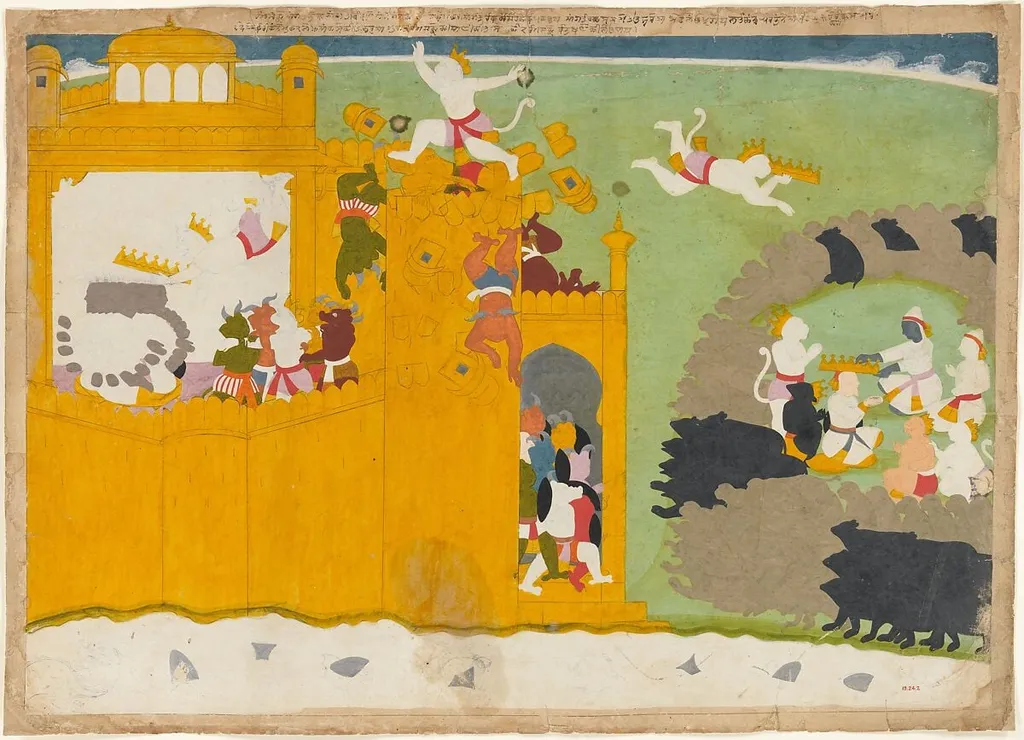
Untitled is a watercolor painting by the Baroque artist Seu Family. It dates from 1725 and is held in the collection of the Metropolitan Museum of Art.
- Accession no.
- 19.24.2
- Credit line
- Rogers Fund, 1919
About this work
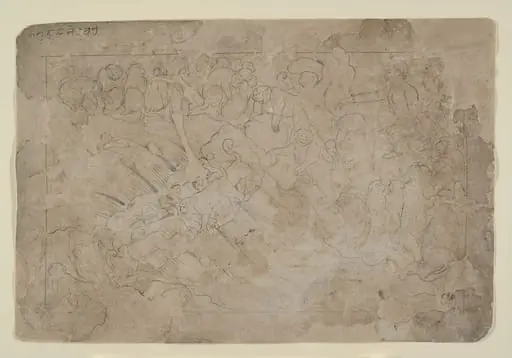
You see a line of monkeys climbing a bare tree against a pale sky.
Manaku painted this in the Punjab Hills around 1725. The monkeys aren’t just copied, they’re arranged like a musical scale, each one a little higher than the last. The tree trunk bends slightly, almost like it’s swaying in the wind.
If you like this quiet rhythm, look up the subject Punjab Hills.
Subject & Meaning
The sources do not provide further detail on symbolic meaning, narrative content, or specific iconographic motifs beyond the depiction of the monkey itself.
The painting depicts a monkey, the sole subject named in the work's iconographic record. Created in 1725 by Manaku of the Seu family, the work belongs to a landscape genre, situating the animal within a broader natural setting rendered in ink and opaque watercolor on paper. The sources do not provide further detail on symbolic meaning, narrative content, or specific iconographic motifs beyond the depiction of the monkey itself.
Technique & Style
Created in 1725 by the artist Manaku of the Seu family, this landscape painting utilizes ink and opaque watercolor applied to a paper support. The work measures 56.7 cm in height and 83.8 cm in width, reflecting the substantial scale often found in Indian court paintings of the period. Stylistically, the composition is defined by its depiction of a monkey, which serves as the primary subject within the naturalistic setting.
The application of opaque pigments allows for vibrant coloration typical of the Pahari school, while the ink provides linear definition to the forms. The piece is currently held in the collection of the Metropolitan Museum of Art.
History & Provenance
The painting titled Untitled was created in 1725 by the artist Manaku of the Seu family. Executed in India, the work is an ink and opaque watercolor on paper depicting a monkey. It is currently held in the collection of the Metropolitan Museum of Art.
The piece measures 56.7 cm in height and 83.8 cm in width. No specific commission details or earlier ownership records are provided in the available documentation.
Overview
Created around 1725 in the Punjab Hills, this untitled work by Manaku depicts a vertical composition featuring a line of monkeys ascending a slender, bare tree against a pale sky. Executed in ink and opaque watercolor on paper, the painting exemplifies the distinctive style of the Guler school during its formative phase. Manaku arranges the figures with rhythmic precision, positioning each monkey slightly higher than the last to create a visual cadence reminiscent of a musical scale.
The tree trunk bends gently, suggesting movement and vitality rather than static rigidity. This approach reflects Manaku's departure from rigid Mughal conventions toward a more expressive, narrative-driven aesthetic that characterizes his early career. The work captures a moment of naturalistic observation infused with a sense of playful dynamism, highlighting the artist's skill in balancing detailed figuration with a simplified, atmospheric background.
It stands as a significant example of early 18th-century Pahari painting, illustrating the transition in regional art toward greater emotional resonance and compositional innovation.
Artist & collection

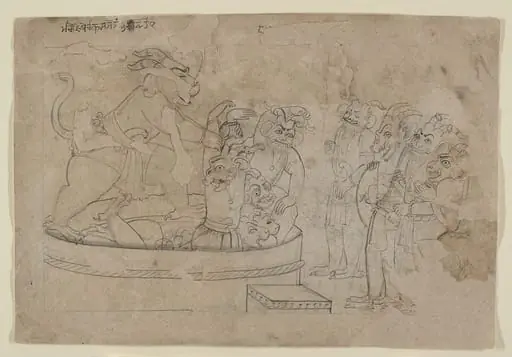
- Folio from a Bhagavata Purana series
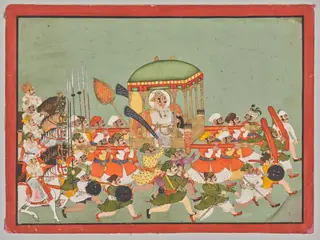 Maharao Chattar Sal (reigned 1758–64) of Kota in a Palanquin
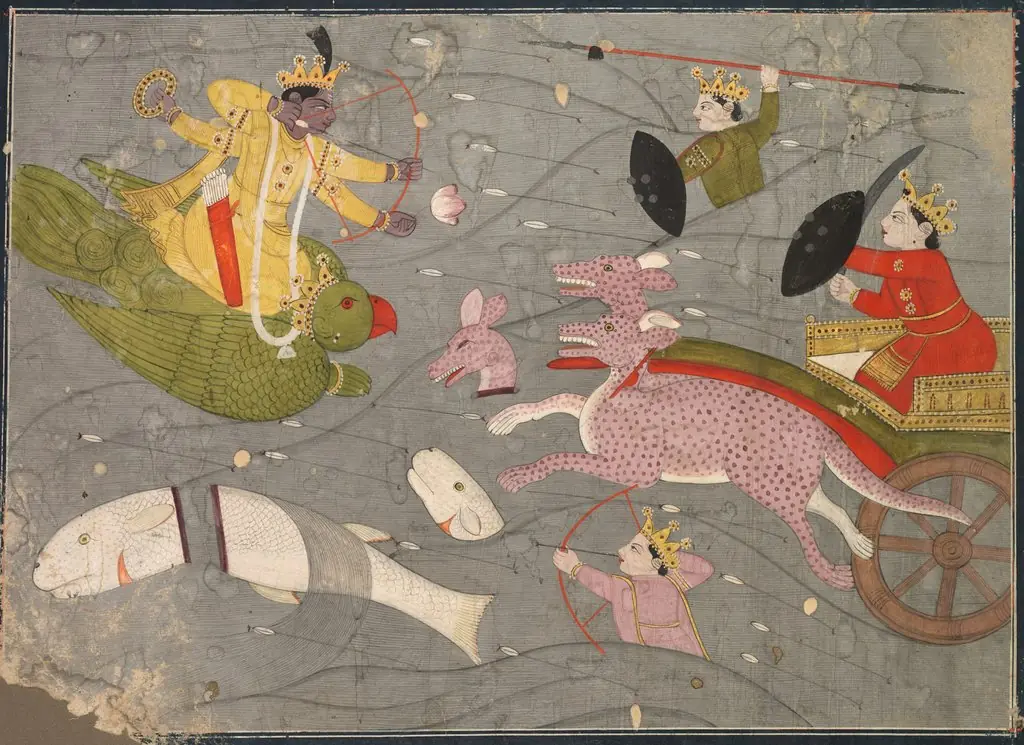 Krishna Fighting Vanasura's Sons: Scene from the Aniruddha Usha Section of Krishna Lila
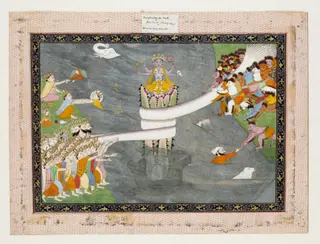 Vishnu as Kurma
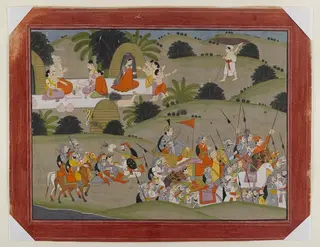 Battle between Lava and Rama's brother, Shatrughna, near the hermitage of Valmiki
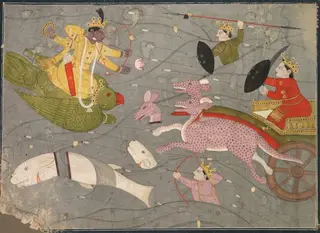 Krishna fighting the sons of King Bana, from an Usha-Aniruddha
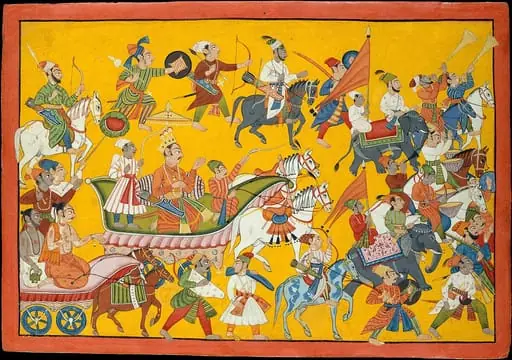 Untitled
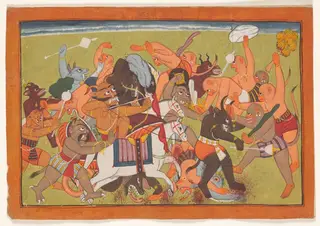 Battle between monkeys and demons, from the “Shangri” Ramayana
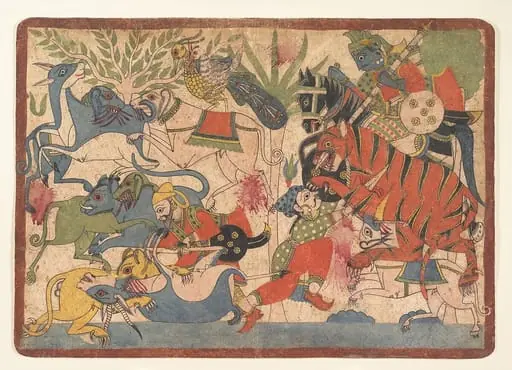 Untitled
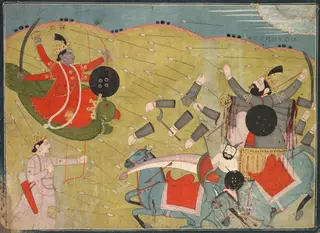 Krishna vanquishing King Bana, from an Usha-Aniruddha
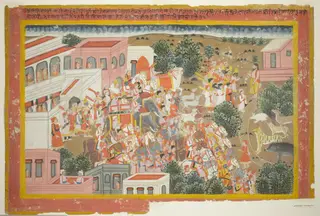 Four Princes in Procession Visit a Sage, page from a copy of the Ramayana