Artwork
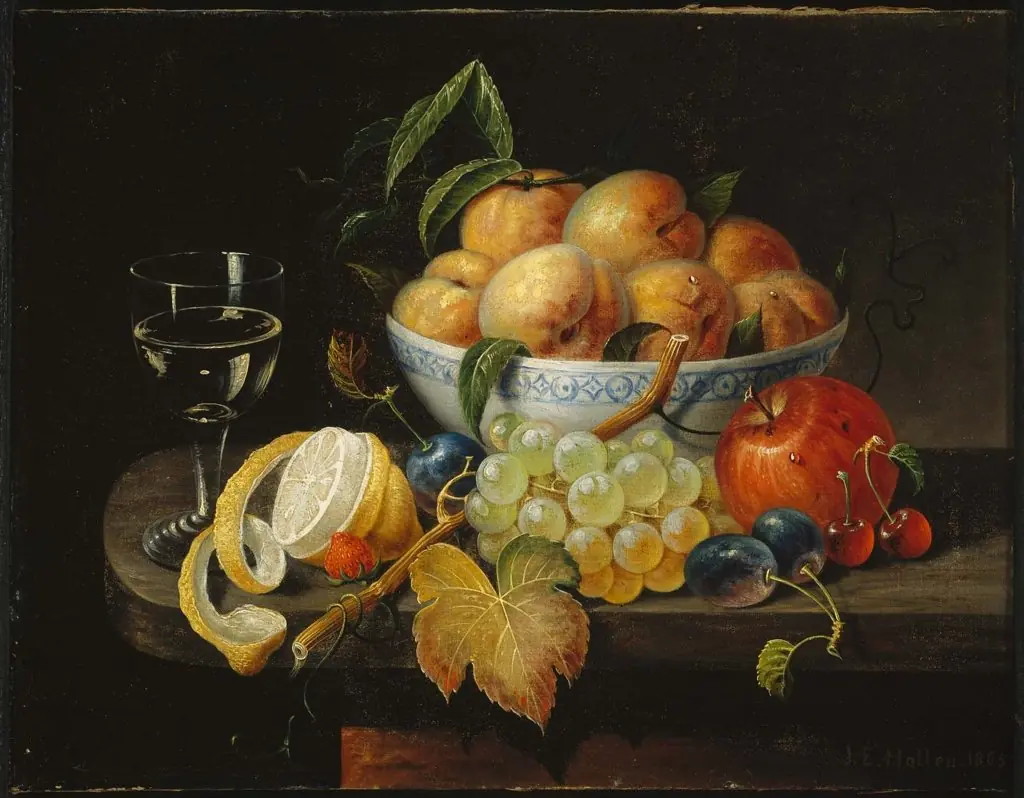
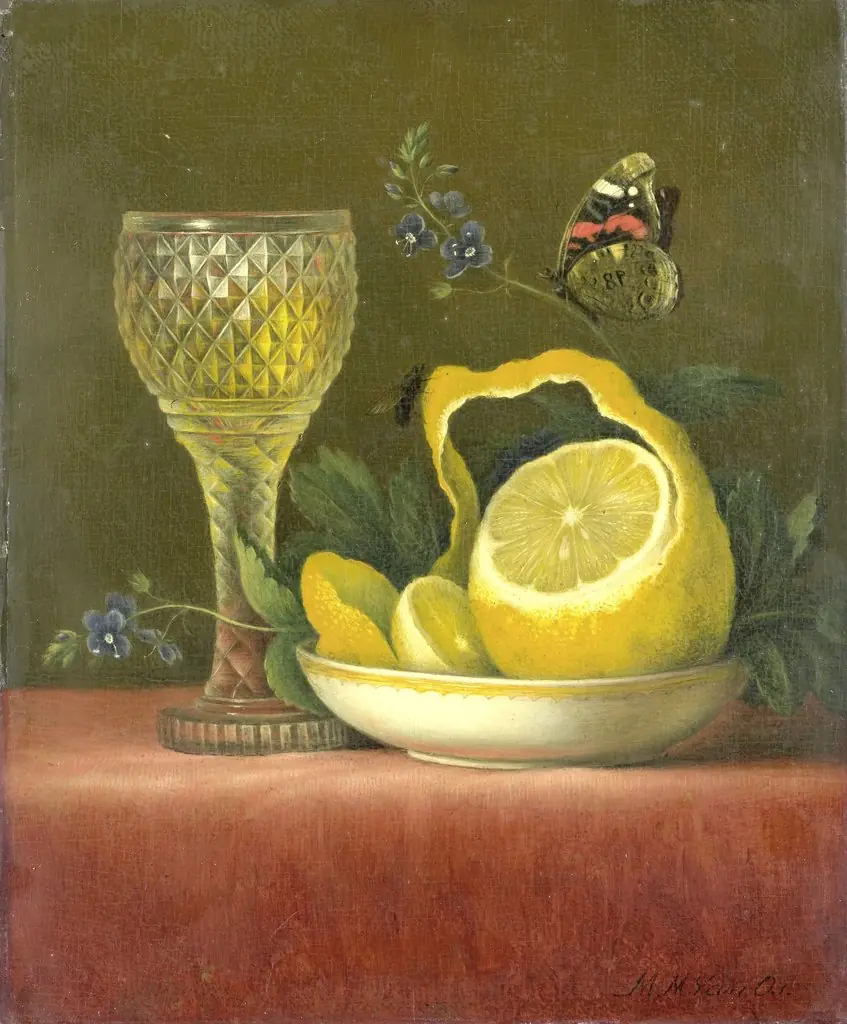
Still Life with Lemon and Cut Glass
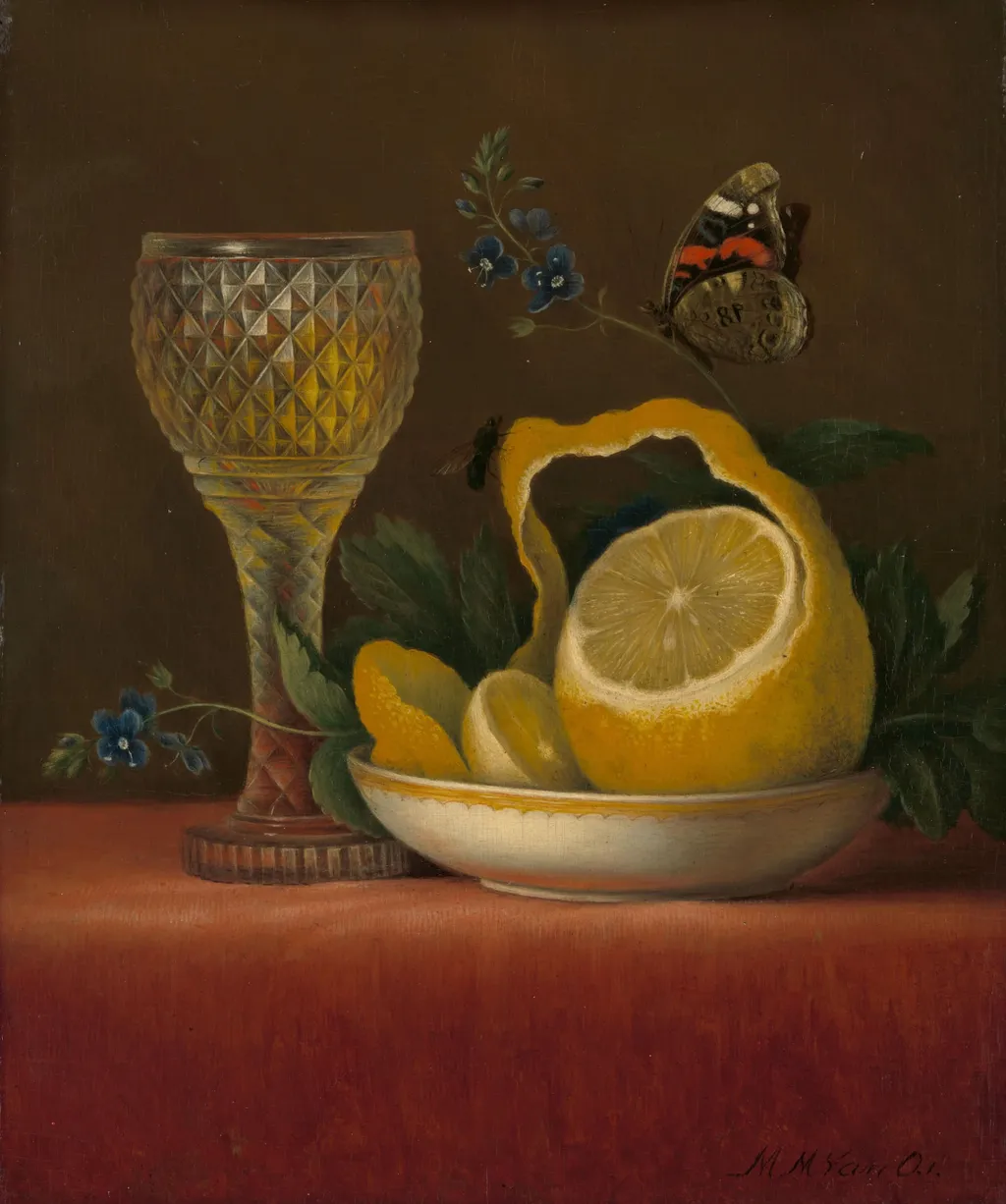
Still Life with Lemon and Cut Glass is an unspecified painting by the Biedermeier artist Maria Margaretha van Os. It dates from 1824 and is held in the collection of the Rijksmuseum.
About this work
Technique & Style
Executed with fine detail on a canvas support, it reflects the formal restraint and naturalistic arrangement characteristic of the genre during this period.
Still Life with Lemon and Cut Glass is an oil painting on canvas created between 1823 and 1826 by Maria Margaretha van Os, a Dutch still-life artist. The work exemplifies her precise brushwork and careful handling of light, typical of early 19th-century Dutch floral and fruit compositions. Executed with fine detail on a canvas support, it reflects the formal restraint and naturalistic arrangement characteristic of the genre during this period.
The painting features a lemon and cut glass rendered with controlled tonal modeling, demonstrating van Os's technical command of oil media and her focus on material clarity. Its compositional balance and restrained palette underscore the stylistic conventions of Dutch domestic still life in the transitional period toward Romanticism.
History & Provenance
Maria Margaretha van Os created Still Life with Lemon and Cut Glass between 1823 and 1826. She was the daughter of painter Jan van Os and Susanna de la Croix, born in The Hague on November 15, 1779. As the younger sister of Pieter Gerardus van Os, she was trained by her parents in flower and fruit still lifes.
By 1826 she was an honorary member of the Koninklijke Academie voor Beeldende Kunsten in Amsterdam. She remained unmarried and active in The Hague, exhibiting regularly in Dutch cities through the 1850s. Her works are held in the Rijksmuseum Amsterdam and the Kunstmuseum Den Haag.
Context
Maria Margaretha van Os emerged from a prominent artistic family in The Hague, where her father Jan van Os and mother Susanna de la Croix nurtured her early training in flower and fruit still lifes. Her work is recognized within the 19th-century Dutch still-life tradition, reflecting the genre's emphasis on botanical precision and domestic abundance. She exhibited regularly from 1814 through the "Levende Meesters" exhibitions and was appointed an honorary member of Amsterdam's Koninklijke Academie voor Beeldende Kunsten in 1826, a notable achievement for a woman artist of her time.
Her paintings and drawings are held in collections including the Rijksmuseum Amsterdam and the Kunstmuseum Den Haag, and her career is contextualized by scholarship as part of a broader Dutch artistic lineage that included her brothers Pieter Gerardus and Georgius Jacobus Johannes van Os.
Legacy
Maria Margaretha van Os gained modest recognition during her lifetime, noted by contemporaries such as Johannes Immerzeel and Christiaan Kramm as a skilled still-life painter. Her membership in the Koninklijke Academie voor Beeldende Kunsten in 1826, recorded in multiple sources, signaled institutional acknowledgment of her work. Although her output was modest, approximately seventy exhibited pieces, her paintings entered prominent Dutch collections, including the Rijksmuseum Amsterdam and the Kunstmuseum Den Haag, ensuring continued scholarly attention.
Contemporary references in Dutch, German, and French biographical dictionaries and art lexicons repeatedly cite her as a noteworthy flower and fruit painter, reflecting a legacy of quiet but persistent influence within 19th-century Dutch still-life traditions.
Overview
The work presents a compact still‑life arrangement: a peeled lemon coiled in a shallow bowl, a delicately faceted glass vessel, and a slender branch bearing small blossoms topped by a butterfly. The composition rests against an almost black background, emphasizing the objects’ forms and the subtle play of light.
Subject & Meaning
The peeled lemon, rendered in a single, continuous spiral, draws attention to the artist’s meticulous handling of texture. The inclusion of a butterfly perched on the floral twig has been interpreted as a reminder of transience, a common motif in still‑life painting that juxtaposes the permanence of the objects with the fleeting nature of life.
Own this work as a print
Artist & collection
Artist
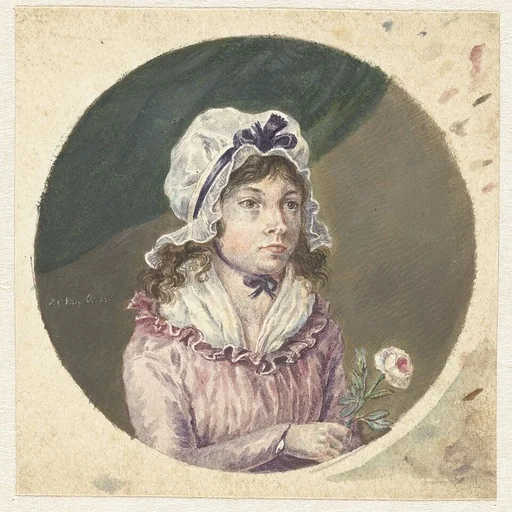
Maria Margaretha van Os (November 15, 1779 – November 17, 1862), was a 19th-century flower painter from the Netherlands.