Artwork
Still Life
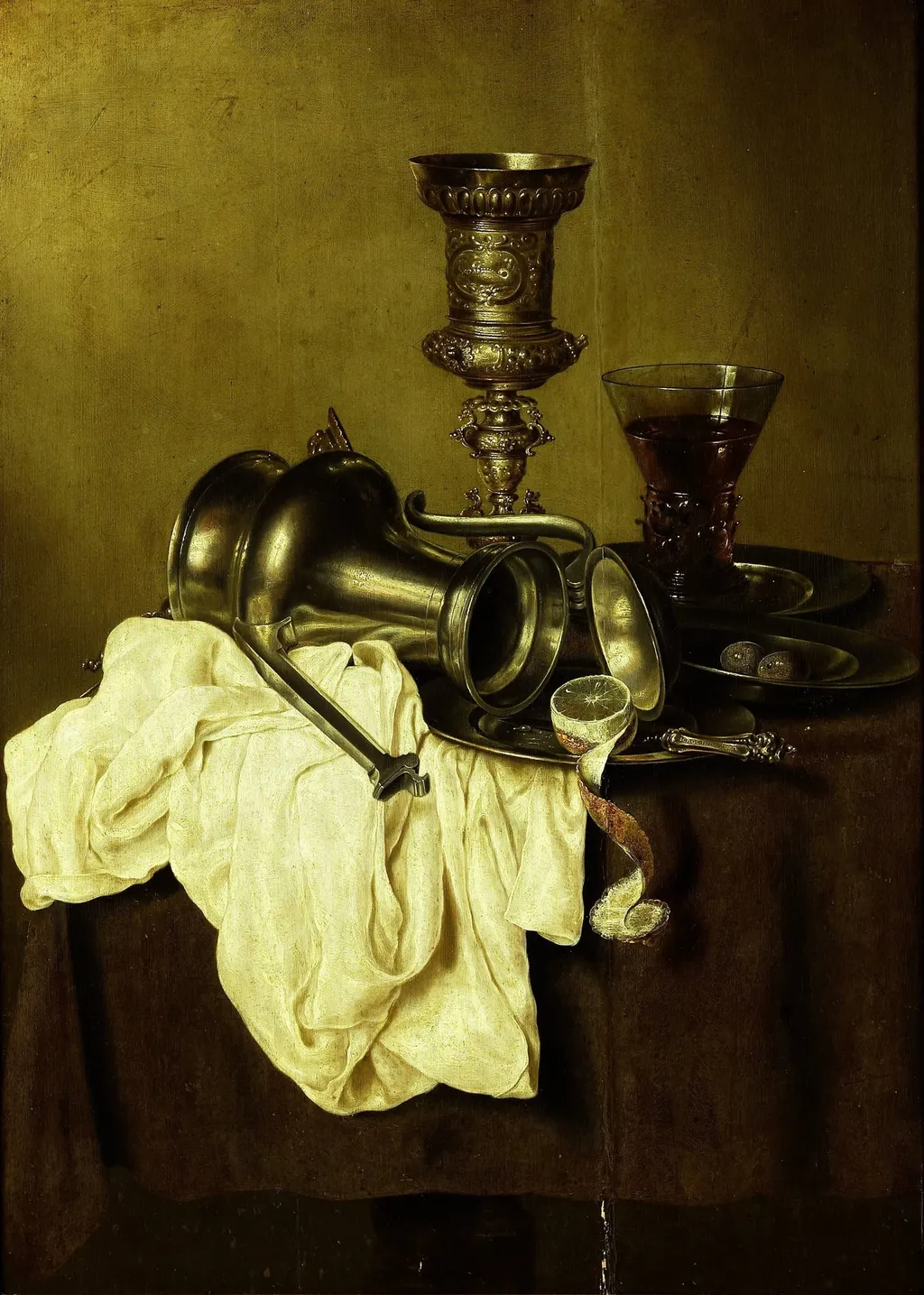
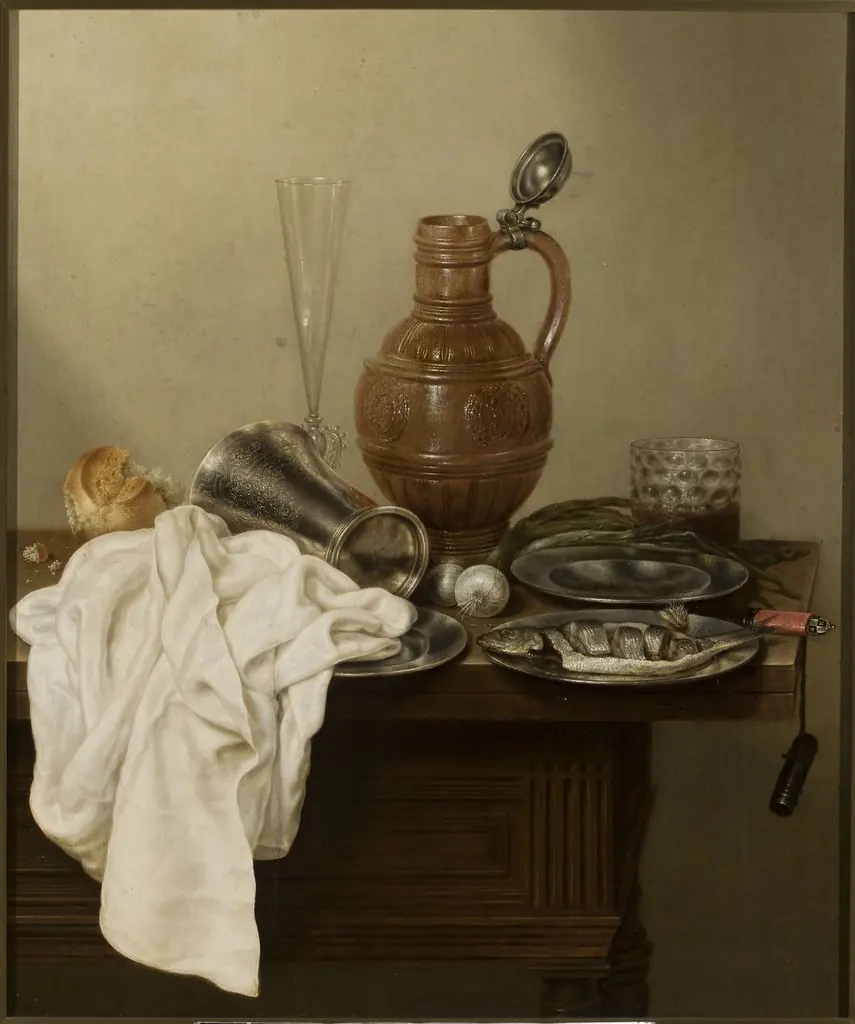
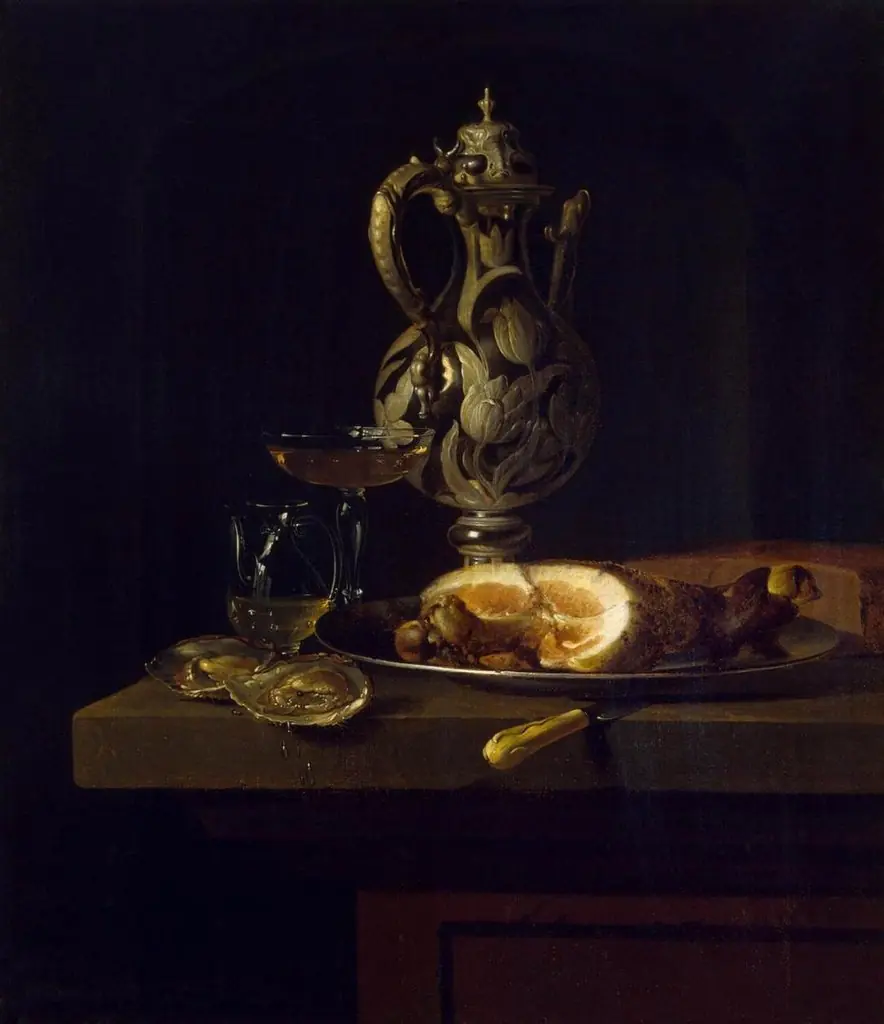
Still Life is an unspecified painting by the Dutch Golden Age artist Gerret Willemsz. Heda. It dates from 1642 and is held in the collection of the Rijksmuseum.
About this work
Subject & Meaning
These compositions frequently incorporate vanitas elements, serving as symbolic reminders of the transience of life and the futility of earthly pleasures.
Gerret Willemsz. Heda's Still Life (1642) belongs to the Dutch Golden Age tradition of depicting fruit arrangements and ontbijtjes (breakfast pieces). These compositions frequently incorporate vanitas elements, serving as symbolic reminders of the transience of life and the futility of earthly pleasures.
As the son and pupil of Willem Claesz. Heda, Gerret continued the family's focus on these meticulously rendered domestic scenes. The inclusion of perishable goods like fruit within the work reinforces the vanitas theme, suggesting the fleeting nature of sensory enjoyment and material wealth.
History & Provenance
The painting Still Life was created in 1642 by the Dutch Golden Age artist Gerret Willemsz. Heda. Historical records from the Haarlem Guild of Saint Luke confirm that in 1642, Heda was formally listed as a pupil of his father, Willem Claesz.
Heda, indicating the work was produced during his early career under paternal instruction. While specific details regarding the original commission or subsequent ownership chain of this particular canvas are not documented in the available records, the artist was active in Haarlem throughout the 1640s. The attribution to 1642 aligns with the period when Gerret Heda was establishing his practice, producing still lifes and vanitas works that closely mirrored the style of his father.
The painting titled Still Life by Gerrit Willemsz. Heda (c. 1620–1625 – buried 31 July 1647) is held in the Rijksmuseum Amsterdam, where it is listed under the inventory number SK-A-1642. The work has been part of the museum’s collection since at least the early 20th century and was featured in the 1936 exhibition "Dutch Seventeenth-Century Still Lifes" at the Rijksmuseum.
It was also included in the 1985 exhibition "Dutch Golden Age Paintings from Dutch Collections" at the Gemeentemuseum Den Haag. The painting’s provenance reflects continuous ownership by the Rijksmuseum since its acquisition, with no documented sales or transfers between institutions.
Overview
Still Life is a painting depicting everyday objects arranged on a table.
Technique & Style
The artist employed chiaroscuro, using strong contrasts between light and dark to create a sense of depth and to emphasize the reflective qualities of the metal objects.
Context
The use of chiaroscuro suggests an influence from artistic traditions that valued dramatic lighting effects.
Own this work as a print
Artist & collection
Artist
Gerret Willemsz. Heda (1620/25, in Haarlem – 1647/59, in Haarlem), was a Dutch Golden Age painter; known for fruit still lifes and vanitas paintings. He was the son and pupil of Willem Claesz. Heda, and influenced the…

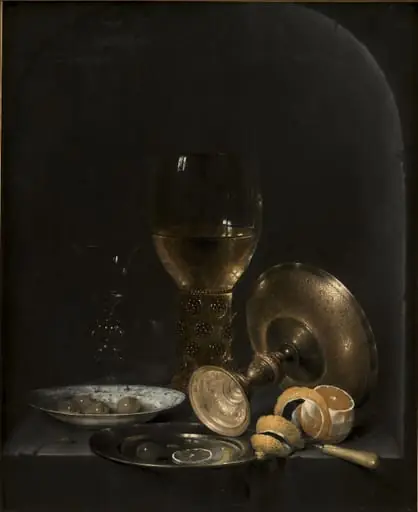 Still life. Breakfast Piece in a Stone Niche
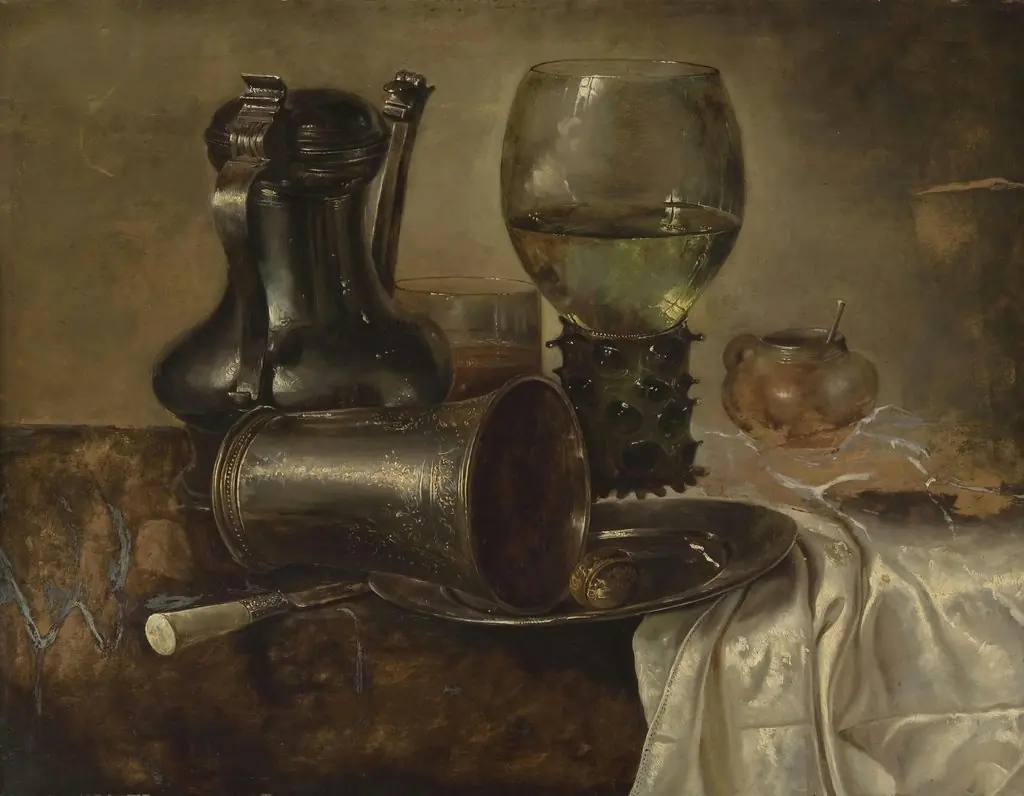 Still Life with a Roemer, a Covered Flagon, and a Beaker
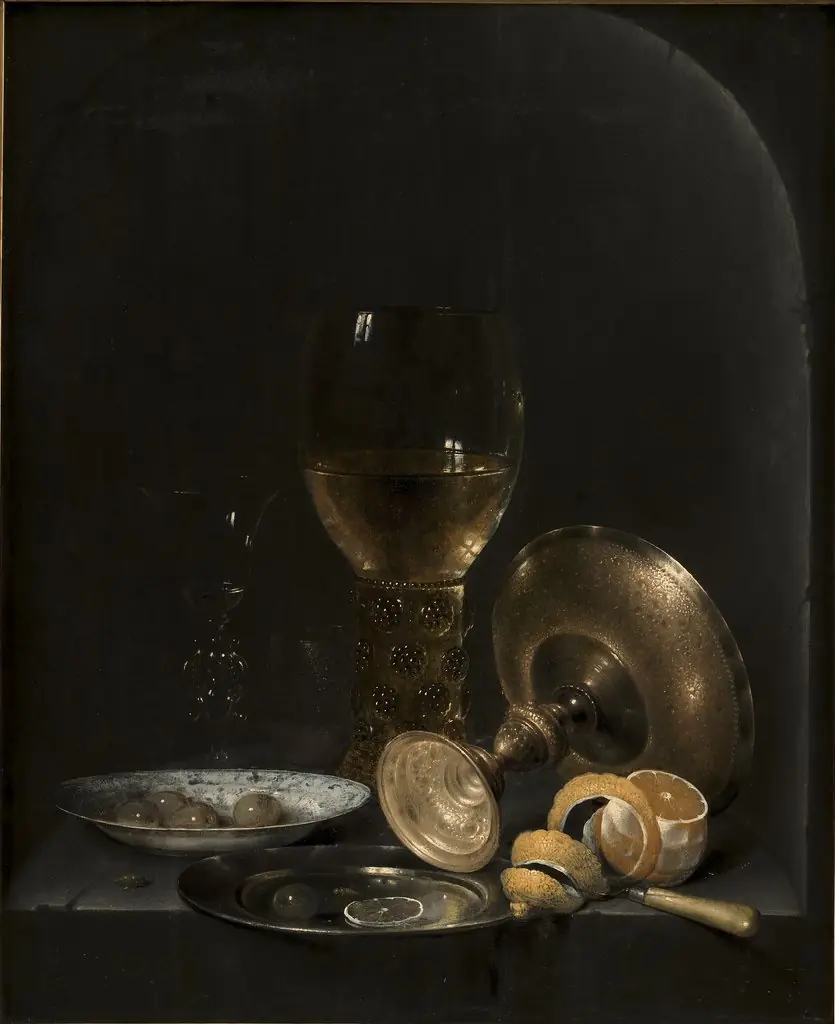 Still life. Breakfast Piece in a Stone Niche
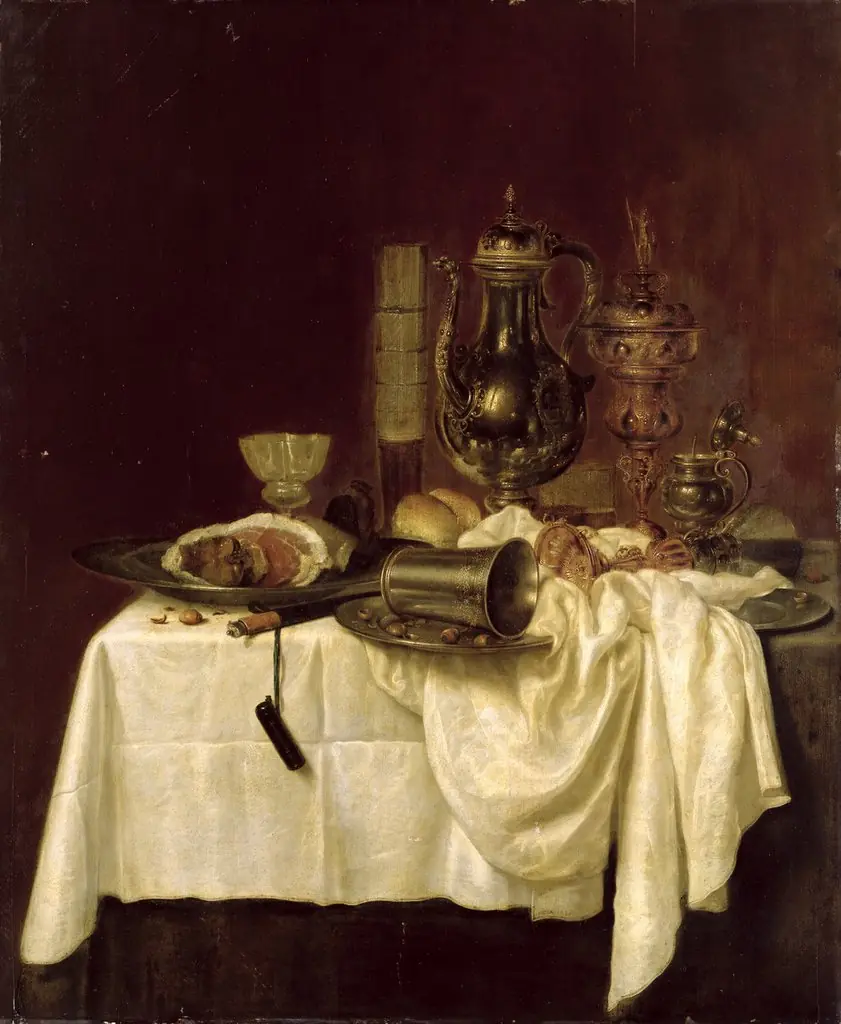 Still life with ham, decanter, columbine cup and passglass on a laid table
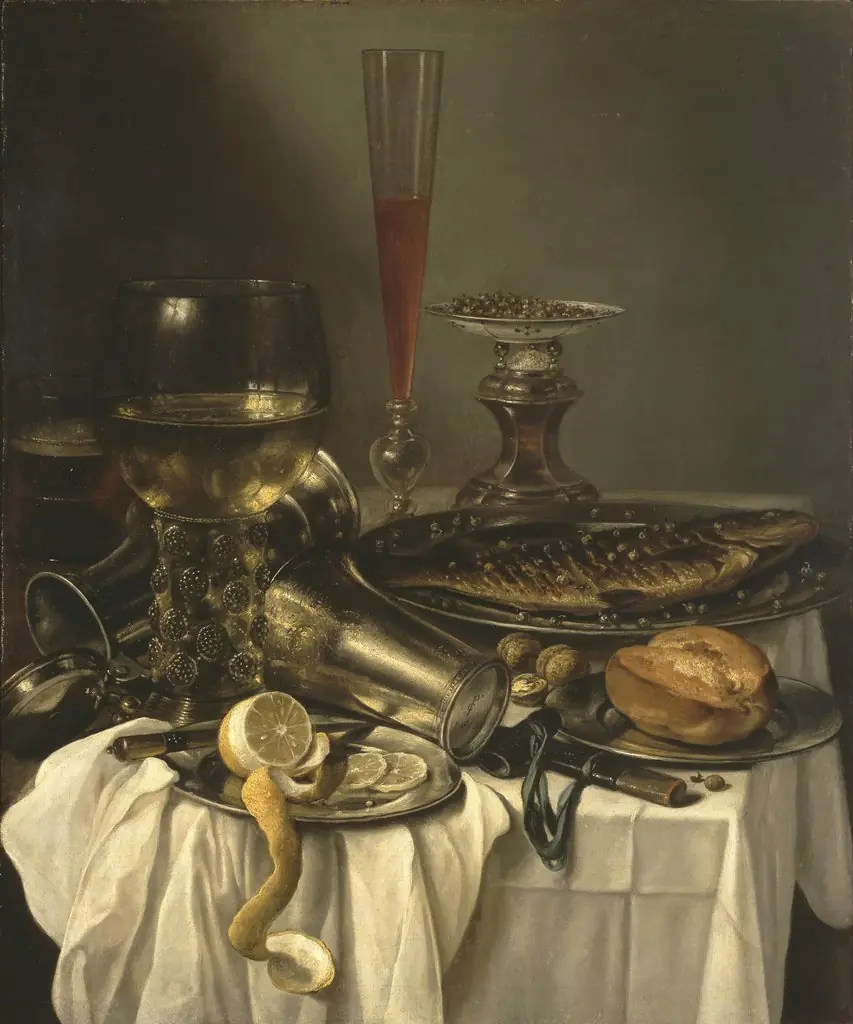 Breakfast with Fish
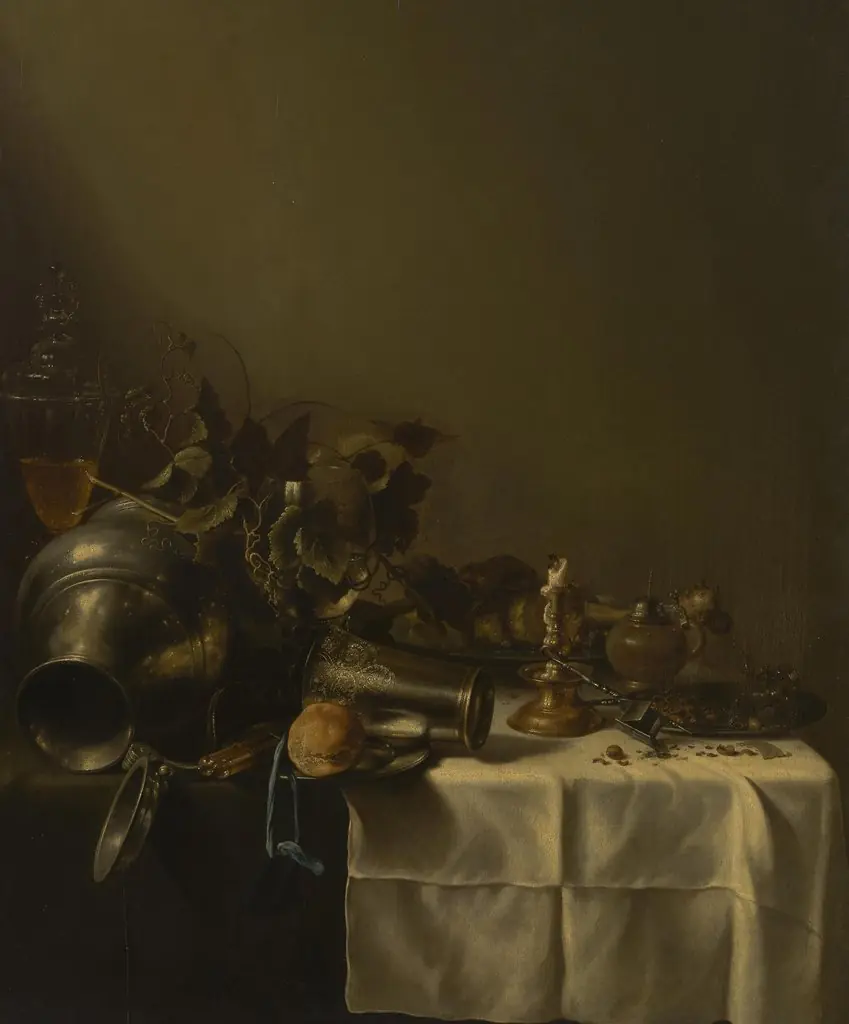 Overturned Jug and Other Items on the Tablecloth
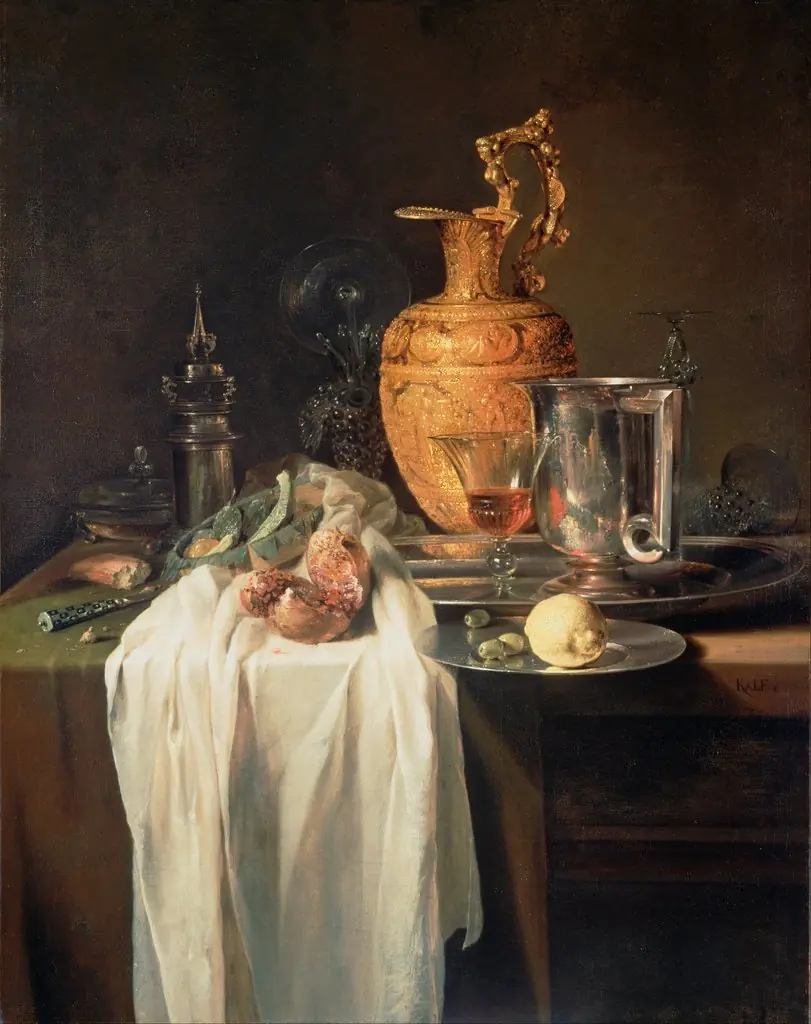 Still Life with Ewer, Vessels and Pomegranate
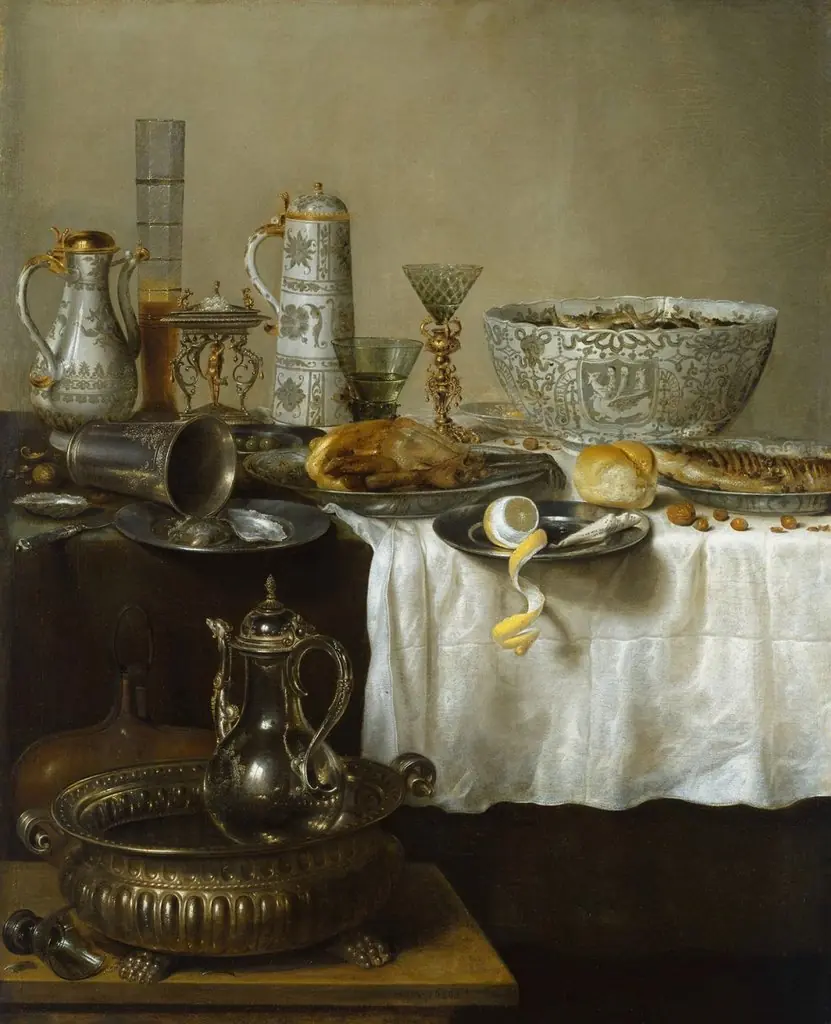 Sumptuous still life
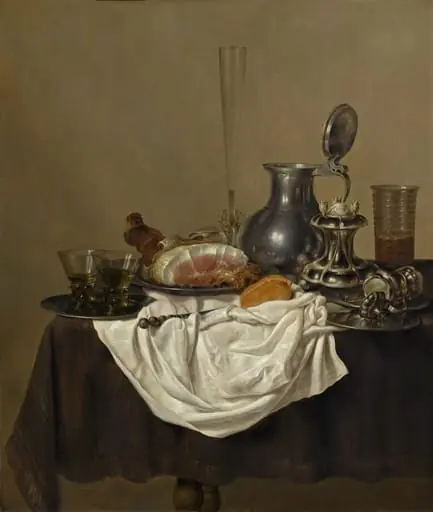
 Breakfast with Ham
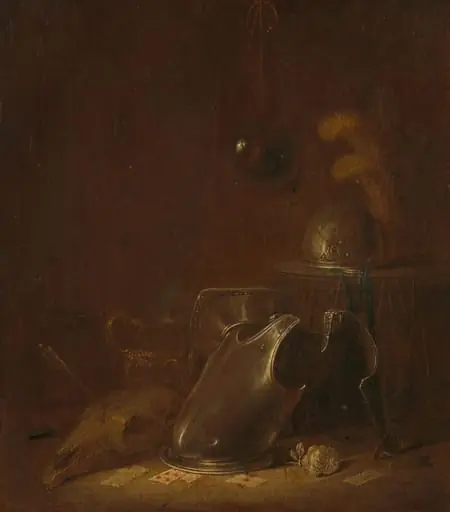
- Still life with Implements of War