Artwork
Nude Old Man in the Sun
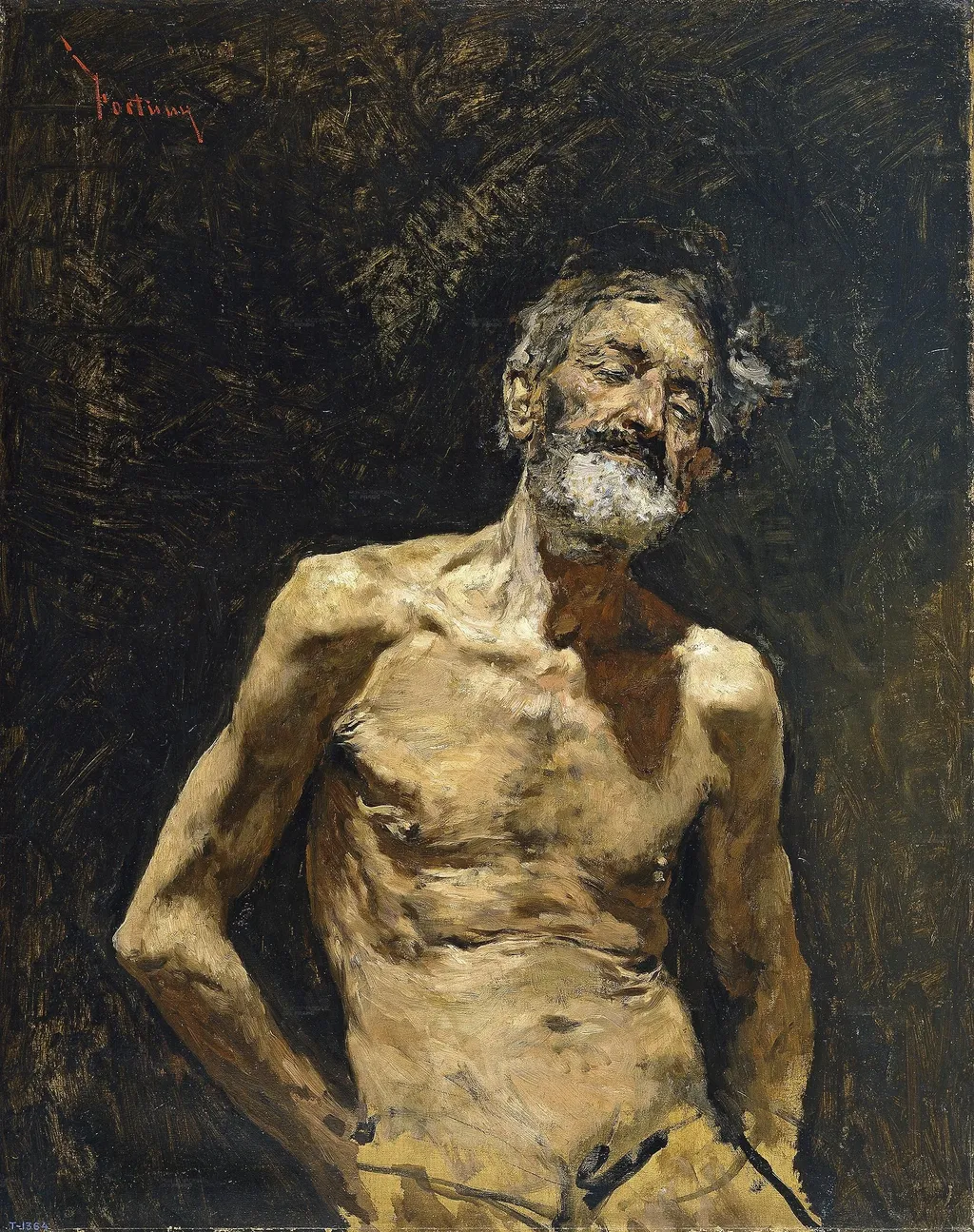
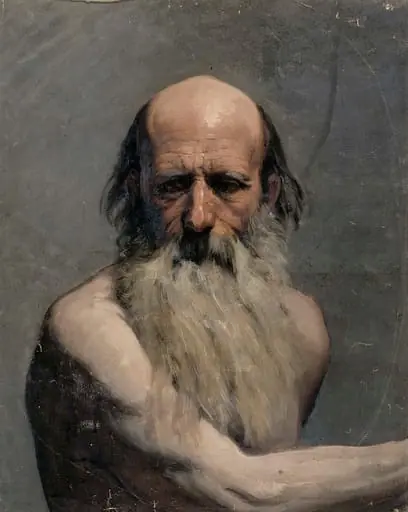
Nude Old Man in the Sun is an oil painting by the Impressionist artist Mariano Fortuny Marsal. It dates from 1871 and is held in the collection of the Museo del Prado.
About this work
Subject & Meaning
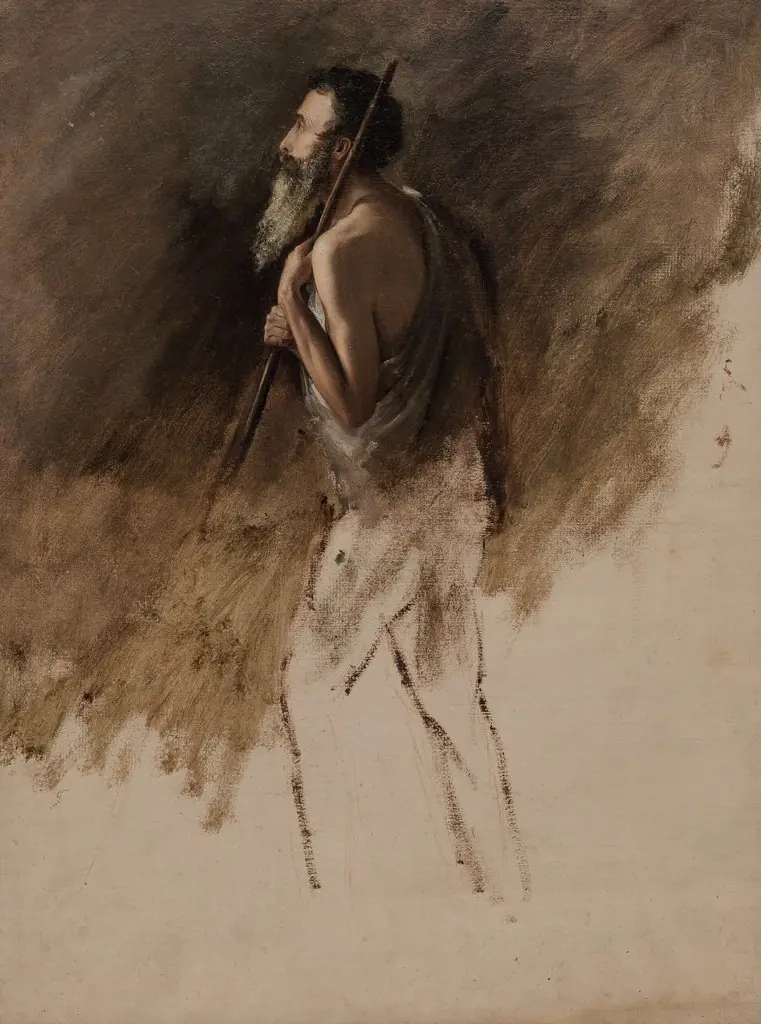
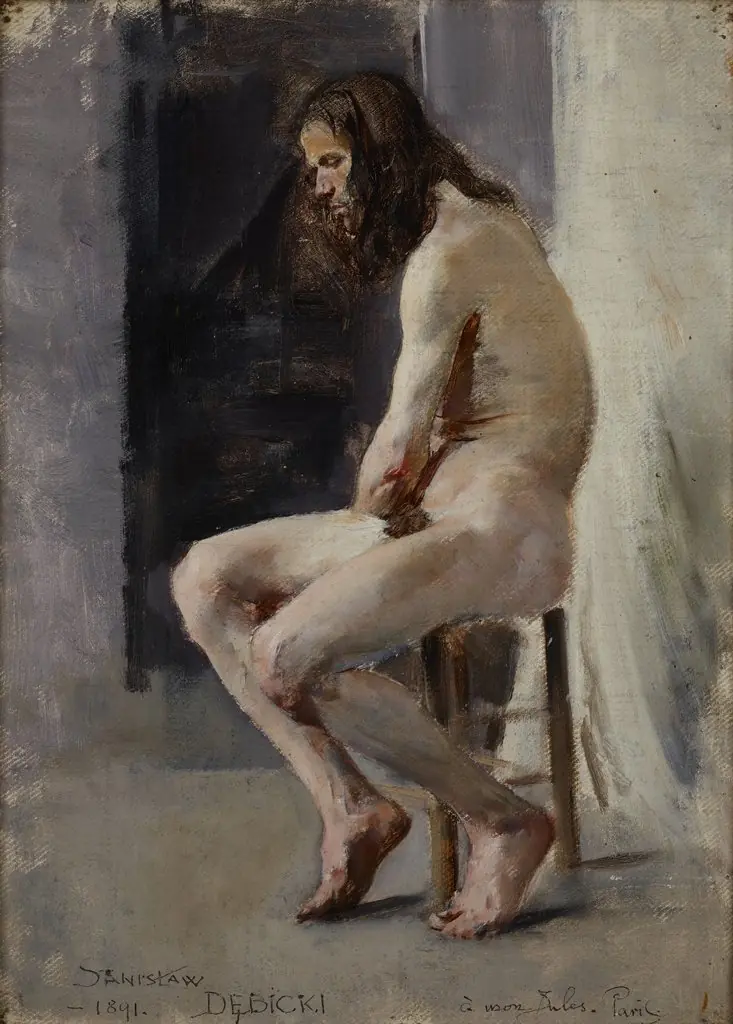
The figure is illuminated by intense sunlight, which highlights the physical signs of aging, such as skin and muscle decay, to emphasize naturalism.
The work depicts an elderly man with a beard and white hair, shown with a bare torso against a dark background. The figure is illuminated by intense sunlight, which highlights the physical signs of aging, such as skin and muscle decay, to emphasize naturalism. The face is rendered with precise detail, while the lower torso remains more sketchily executed.
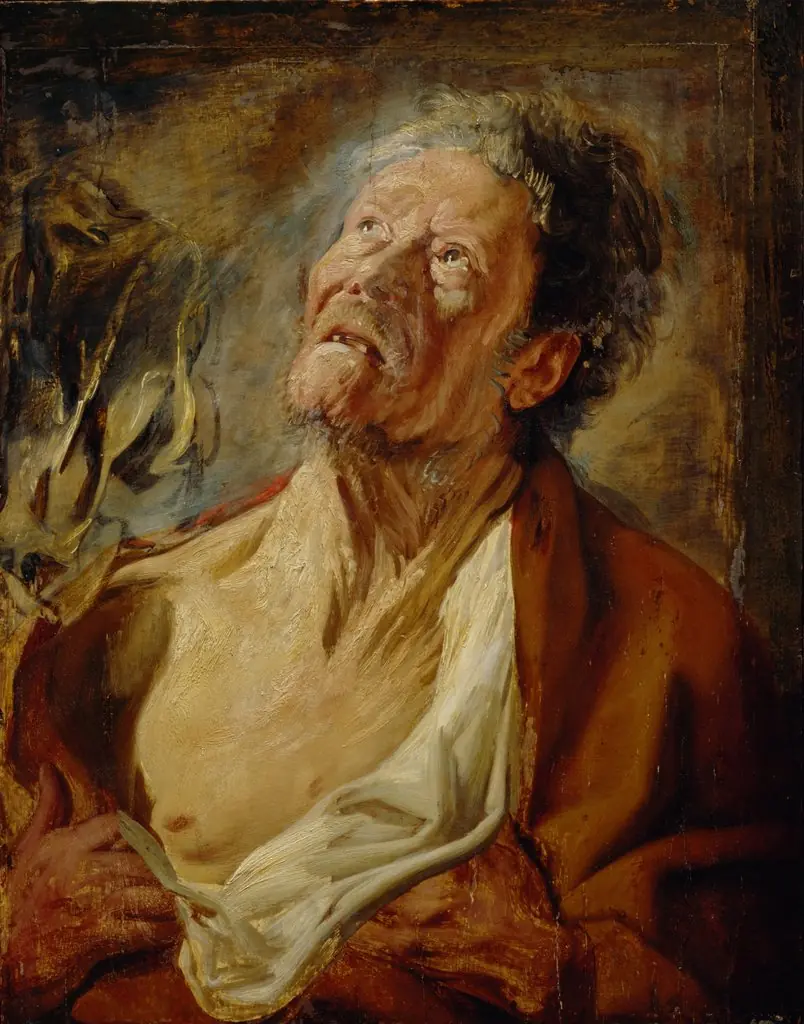
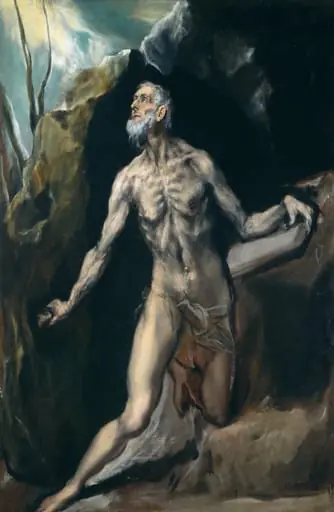
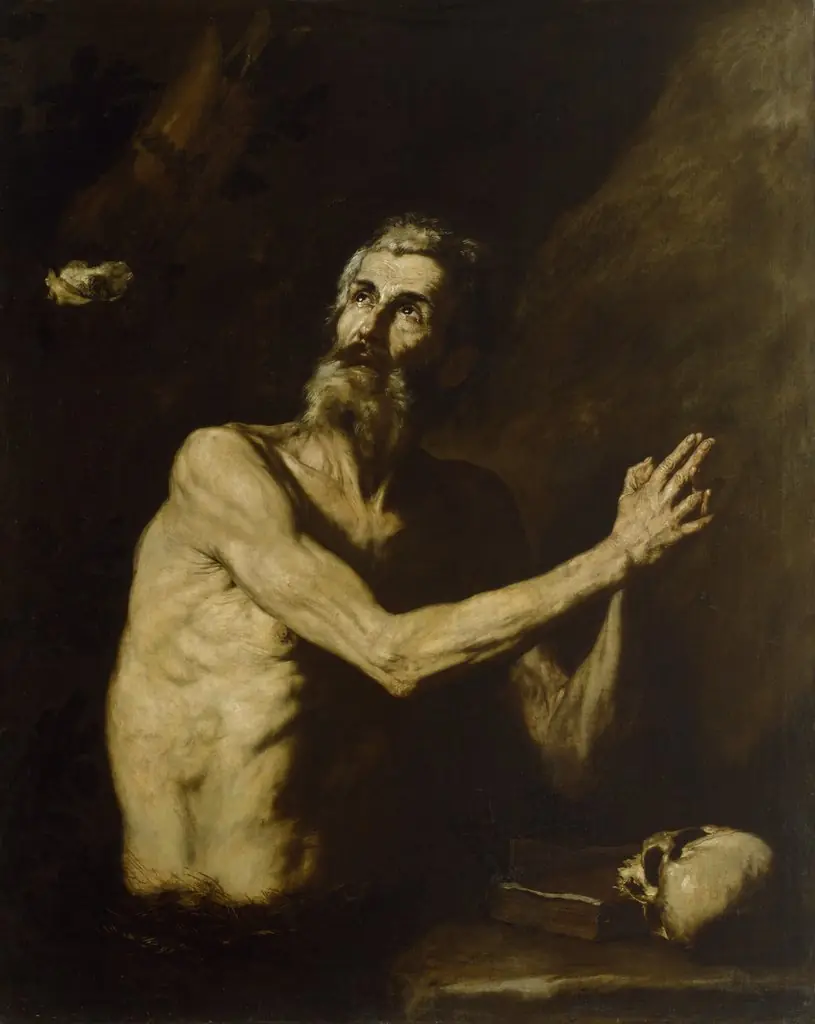
Art historians associate the painting's subject matter and treatment with the influence of Jusepe de Ribera, particularly regarding the depiction of an aged body reminiscent of Ribera's saints. The piece is further identified with Impressionist tendencies and naturalism, focusing on the dramatic incidence of light on dark grounds.
Technique & Style
Nude Old Man in the Sun is an oil‑on‑canvas painting measuring 76 cm by 60 cm, created by Mariano Fortuny Marsal in 1871. The work depicts an elderly male torso bathed in stark sunlight against a deep, dark backdrop; brushwork is more refined on the face while the lower torso remains loosely rendered, emphasizing a naturalistic treatment of age. Fortuny employed a chiaroscuro‑like illumination that anticipates Impressionist concerns with light, and his handling of skin texture reflects the naturalist tradition.
Stylistically the piece shows the influence of Jusepe de Ribera’s aged figures and the luminous approach later developed by Joaquín Sorolla. The painting belongs to the Museo del Prado’s collection.
History & Provenance
The painting titled Nude Old Man in the Sun was executed by Mariano Fortuny Marsal in 1871 using oil on canvas. It was created as a standalone work, with no record of a specific commission. The work entered the collection of the Museo del Prado, where it remains on display.
Documentation indicates that multiple versions exist, but the most widely known version is housed in the Prado. The painting depicts an elderly male model bathed in strong sunlight against a dark backdrop, reflecting Fortuny’s interest in light and naturalistic detail.
The painting is held in the collection of the Museo del Prado, Madrid. It is inventoried as P007696.
It has been exhibited repeatedly as a key work by Fortuny; the best-known version is the one permanently displayed at the Museo del Prado, where it appears in gallery listings and the museum’s online catalogue.
Context
Scholarship identifies Nude Old Man in the Sun as an exemplar of Mariano Fortuny y Marsal’s late-career synthesis of naturalism and luminism, with the work often discussed alongside the artist’s studies of light and aging in the 1870s. The painting’s dramatic chiaroscuro and the uneven finish, precise modeling of the face set against abbreviated treatment of the lower torso, have been read as anticipating aspects of Spanish luminism later developed by Joaquín Sorolla. Fortuny’s encounter with Jusepe de Ribera’s depictions of decaying flesh in the Museo del Prado in 1860 is cited as a decisive influence on the figure’s anatomical realism, situating the work within a lineage of Spanish naturalist tradition rather than a strict French Impressionist alignment.
The Prado’s version, dated 1871, is the canonical iteration, though multiple versions exist, underscoring the artist’s serial engagement with the motif.
Legacy
Nude Old Man in the Sun has been identified with the Impressionist movement while also reflecting strong Naturalist tendencies. Art historical analysis frequently traces its stylistic roots to Jusepe de Ribera, particularly in the depiction of aging skin and muscle decay, a connection stemming from Fortuny's admiration for the master during his 1860 visit to the Prado.
The painting's specific luminist approach, characterized by the interplay of intense sunlight against dark backgrounds, established a precedent for later Spanish art. This technique is notably recognized as a direct influence on Joaquín Sorolla, who continued this tradition of light-filled representation in his own oeuvre.
Overview
Mariano Fortuny y Marsal completed Nude Old Man in the Sun, an oil painting, in 1871. This work depicts an elderly male figure and is considered part of the Impressionist movement. Fortuny, a Spanish artist recognized for his Romantic and Orientalist compositions, created this piece, which is now housed in the collection of the Museo del Prado.
Own this work as a print
Artist & collection
Artist
Mariano Fortuny y Marsal (Catalan: Marià Fortuny i Marsal, pronounced; June 11, 1838 – November 21, 1874) was a Spanish painter known for works focusing on Romantic fascination with Orientalist themes, historicist genre…