Artwork
J.G. Shaddick, the Celebrated Sportsman
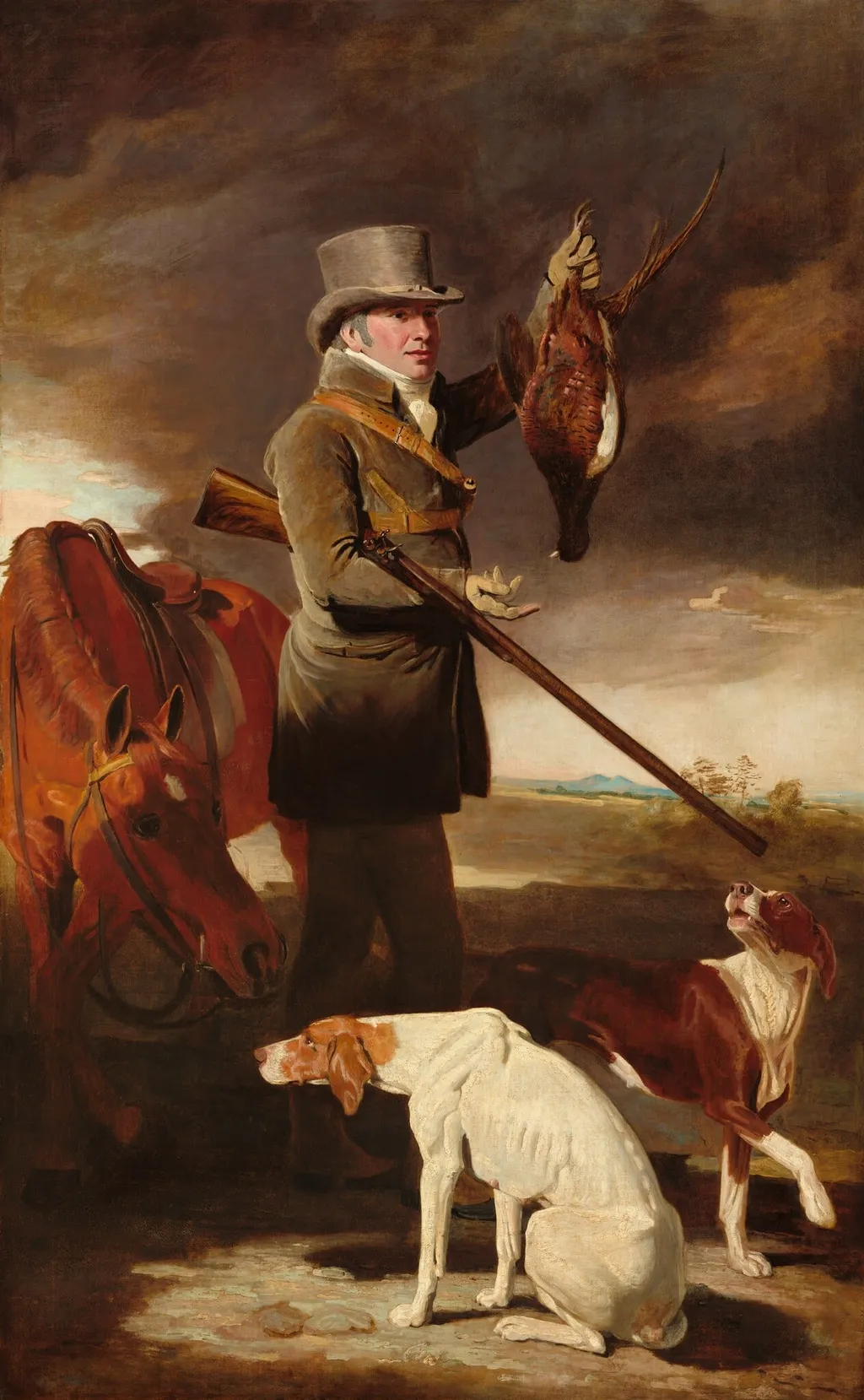
J.G. Shaddick, the Celebrated Sportsman is an oil painting by the Romanticist artist Benjamin Marshall. It dates from 1806 and is held in the collection of the National Gallery of Art.
About this work
Overview
Shaddick, the Celebrated Sportsman is an oil on canvas painting by the English sporting artist Benjamin Marshall, dated 1806.
J.G. Shaddick, the Celebrated Sportsman is an oil on canvas painting by the English sporting artist Benjamin Marshall, dated 1806. The work measures 240 x 148 cm (94 1/2 x 58 1/4 in.) and is held by the National Gallery of Art in Washington, D.C., where it is displayed in the West Building Main Floor, Gallery M59. It entered the collection in 1999 as part of the bequest of Mr. and Mrs. Paul Mellon, with the accession number 1999.79.24. The painting is one of Marshall's notable portraits of sporting characters from the early 19th century, a genre in which he established considerable reputation alongside his more numerous depictions of racehorses and their owners.
Subject & Meaning
The painting presents a full-length portrait of J.G. Shaddick, identified by his title as a celebrated sportsman, set within a hunting context that establishes his social identity and prowess. Shaddick stands at the center of a vertical composition, dressed in the fashionable attire of a gentleman hunter: a tall gray top hat, olive-green coat, dark trousers, and white cravat, with a leather strap crossing his chest. His right arm cradles a long gun across his body, while his gloved left hand lifts a dead game bird by its feet, displaying the tangible result of the hunt. He is flanked by a chestnut horse equipped with saddle and bridle, which lowers its head toward the ground, and by two hounds in the foreground, one white with tan patches seated with head turned left, the other brown and white standing with head tilted upward. The background opens onto a landscape beneath a turbulent sky of brown, gray, and pale yellow clouds, with distant blue hills and sparse trees on the horizon. The iconography of horse, hounds, gun, and game bird constitutes a visual vocabulary of aristocratic sporting life, asserting Shaddick's status as a man of landed leisure and accomplished field sports.
Technique & Style
Marshall executed the work in oil on canvas, employing a palette dominated by earth tones, olive, chestnut, and umber, with touches of white on the dogs and cravat. The painting is not signed. Light falls from the left, illuminating the sitter's face and the game bird, creating a dramatic focus on the human subject and the trophy of the hunt. The brushwork varies across the surface: smooth and refined on Shaddick's face, suggesting the conventions of portraiture, while becoming looser and more textured in the sky and landscape passages. This differential handling reflects Marshall's dual training and practice in both portrait painting and animal painting. The vertical format, at 240 cm in height, gives the figure monumental presence, while the inclusion of animals and landscape situates the portrait within the tradition of sporting art established by George Stubbs, whom Marshall followed. The composition balances formal portraiture conventions with the more informal, active stance of the sportsman in his element.
History & Provenance
The painting was exhibited at the Royal Academy of Arts in London in 1806 as no. 292, marking its first public appearance. Its early provenance possibly included a Mr. Payne of Walton-on-Thames. The work appeared at auction at Christie, Manson & Woods, London, on 28 February 1891 as lot 78, where it was acquired by Vokins. It then passed to E.M. Denny, London, and was sold again at Christie's on 31 March 1906 as lot 41, with Vokins once more the buyer. Subsequent owners included Viscount Enfield; the Earl of Stratford at Wrotham Park, Barnet, Hertfordshire; and A.S. Cochran, London, who sold it at Christie's on 13 February 1920 as lot 144. Basil Lewis Dighton, Esq., acquired it at that sale and retained it until at least 1922. Arthur S. Vernay, London, owned it by 1927 until at least 1938, during which time he lent it to the 1938 exhibition in Washington, D.C. C. Frederick C. Stout of Ardmore, Pennsylvania, owned it by 1941 and lent it to the Outdoor England exhibition at The Century Club, New York, that year. M. Knoedler & Co., Inc., New York, handled the painting in 1965. Mr. and Mrs. Paul Mellon of Upperville, Virginia, acquired it subsequently and bequeathed it to the National Gallery of Art in 1999. The painting was exhibited at the Museum of Modern Art Gallery, Washington, D.C., in 1938 in Sporting Paintings from 1700 to 1937, where it was reproduced on the cover of the unnumbered brochure.
Context
Benjamin Marshall (1768-1835) was born in Seagrave, Leicestershire, and initially focused on portrait painting before concentrating on horses at age 26. He was a follower of George Stubbs and studied under Lemuel Abbott for three years. He exhibited thirteen pictures, chiefly portraits of racehorses and their owners, at the Royal Academy between 1801-1812 and 1818-1819. His portraits of sporting characters included J.G. Shaddick in 1806 and Daniel Lambert in 1807. About 1800-1810, Marshall lived at 23 Beaumont Street, Marylebone, before relocating to Newmarket in 1812, where he became known as "Marshall of Newmarket." A serious coach crash in 1819 left him with permanent disability and prevented him from painting for a year. From 1821 until 1833, he contributed letters about horse racing to The Sporting Magazine under the pseudonym "The Observator." The painting of Shaddick belongs to a period when Marshall was establishing his reputation in London before his move to Newmarket, when he was still producing portraits of sporting figures alongside his more numerous equine subjects. The work has been discussed in scholarly literature including Walter Shaw Sparrow's George Stubbs and Ben Marshall (1929), Guy Paget's "Ben Marshall and John Ferneley" (1944), the Leicester Museums exhibition catalogue (1967), John Hayes's British Paintings of the Sixteenth through Nineteenth Centuries (1992), and Aubrey Noakes's Ben Marshall 1768-1835 (1978).
Legacy
The painting's later history reflects the shifting fortunes of British sporting art in private and public collections across the Atlantic. Its inclusion in the Paul Mellon bequest to the National Gallery of Art secured its place in one of the most important public collections of art in the United States. The work's reproduction on the cover of the 1938 Washington exhibition brochure indicates its recognized status within the sporting art canon even before its acquisition by the Mellon family. A photograph dated 15 May 1945 in the Gottscho-Schleisner Collection at the Library of Congress shows the painting hanging in the upper hall of the Stout house, above what appears to be a mezzotint by Henry Macbeth-Raeburn after the painting, suggesting that reproductive prints after Marshall's work circulated and contributed to his reputation. The painting has been reproduced in Country Life on multiple occasions, including a supplement to the 15 July 1922 issue and in articles by H.A. Bryden (1927) and Walter Shaw Sparrow (1935). Marshall's broader legacy rests on his substantial body of sporting and animal paintings, with sixty paintings of sportsmen, horses, and dogs engraved by John Scott for Whettle's Sporting Magazine, though his exhibited and engraved works represent only a fraction of his commissions for patrons of the turf and masters of hounds throughout Britain. His son, Lambert Marshall (1809-1873), attempted to continue the family tradition as a sporting painter but without comparable success, eventually teaching drawing in Brighton and ending his life in the workhouse there.
Own this work as a print
Artist & collection

Artist
Benjamin Marshall (8 November 1768 – 29 January 1835) was an English sporting and animal painter. He was a follower of George Stubbs and studied under Lemuel Abbott for three years.

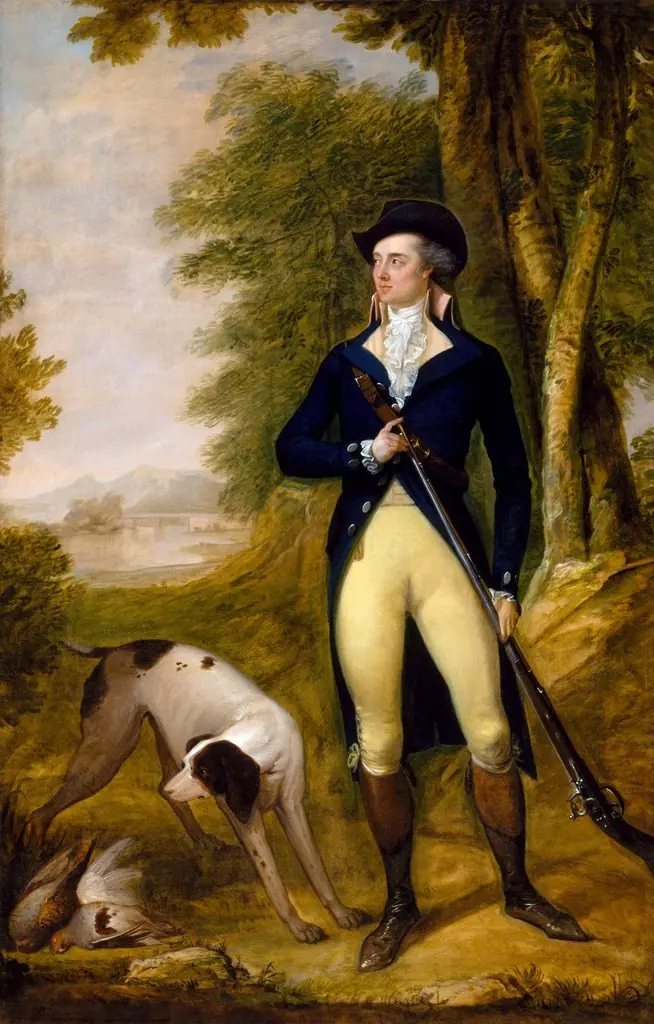 Portrait of a Gentleman
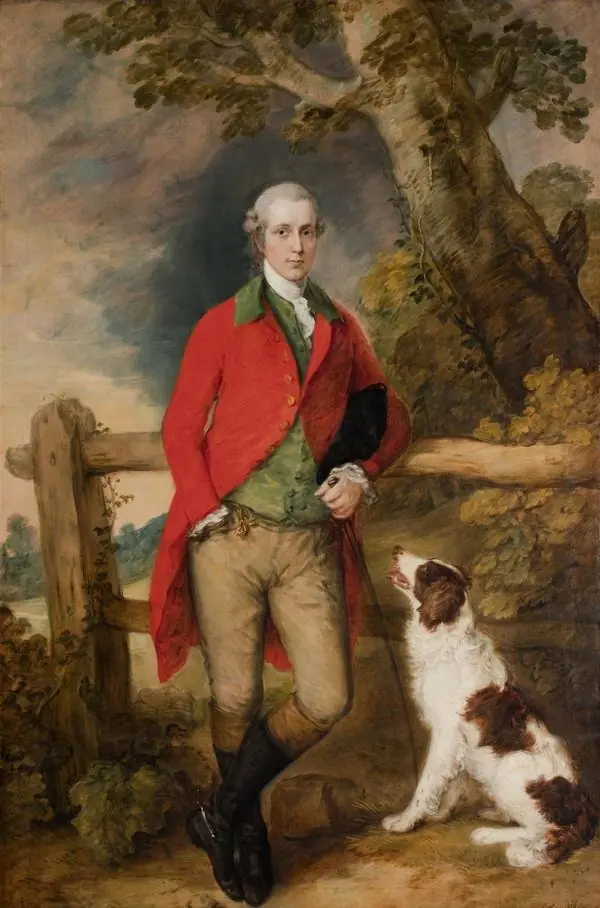 Portrait of Robert Thistlethwayte of Norman Court, standing full-length, wearing a red coat, green waistcoat and buff breaches, holding a can, leaning against a fence, a spaniel by his side
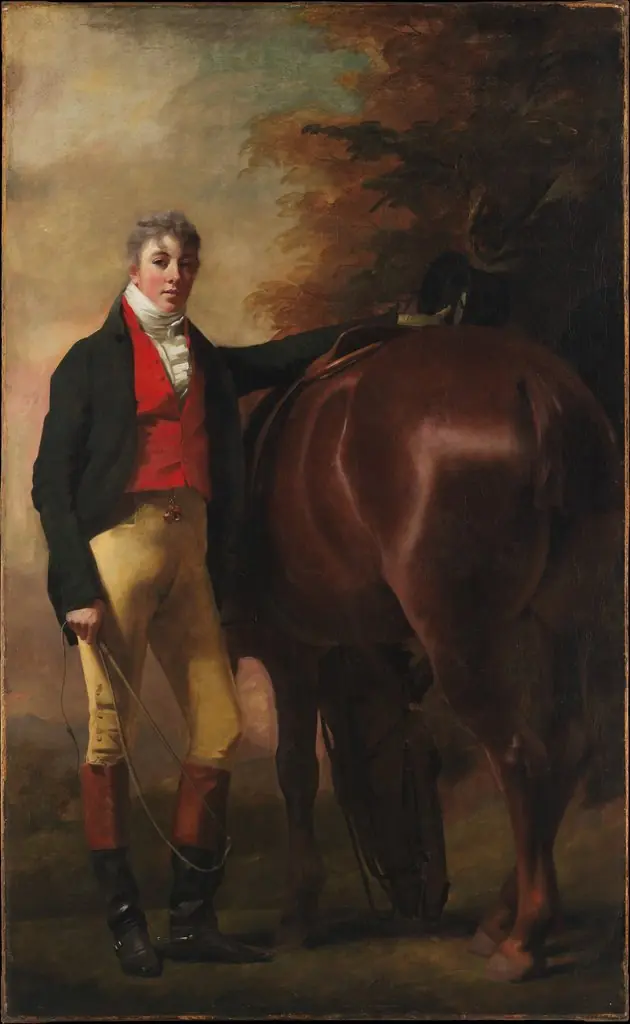 George Harley Drummond (1783–1855)
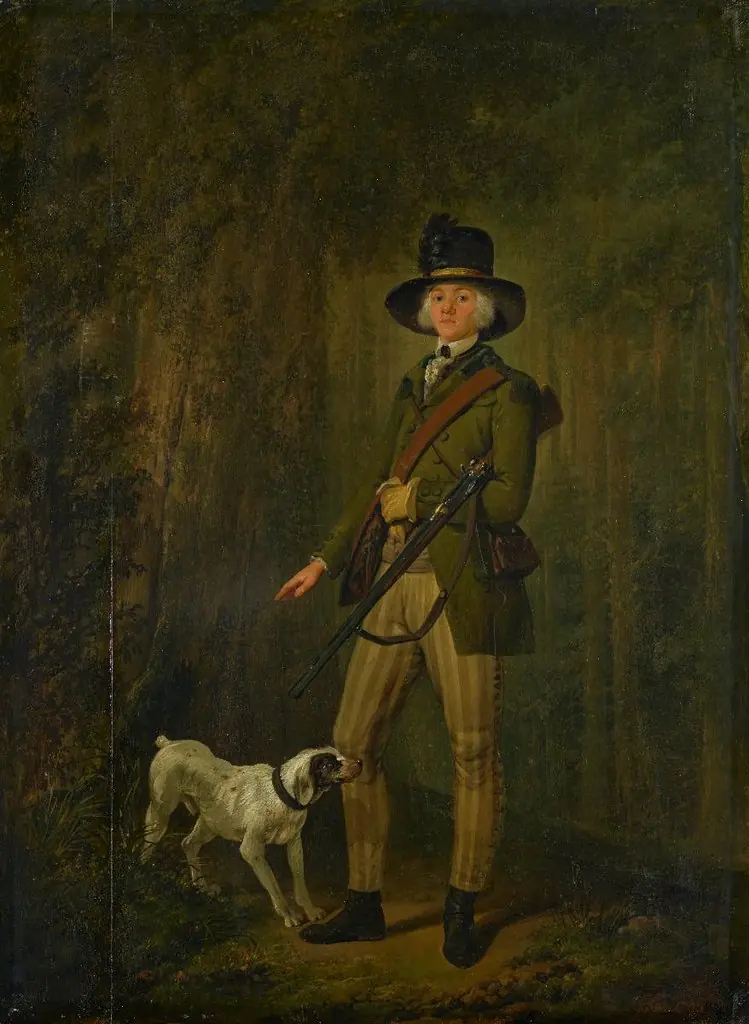 Paulus Usteri als Jäger im Walde
 The Death of the Fox
 William Yelverton Davenport
 Landskab med en jæger og hans hund
 Gogerddan hunt
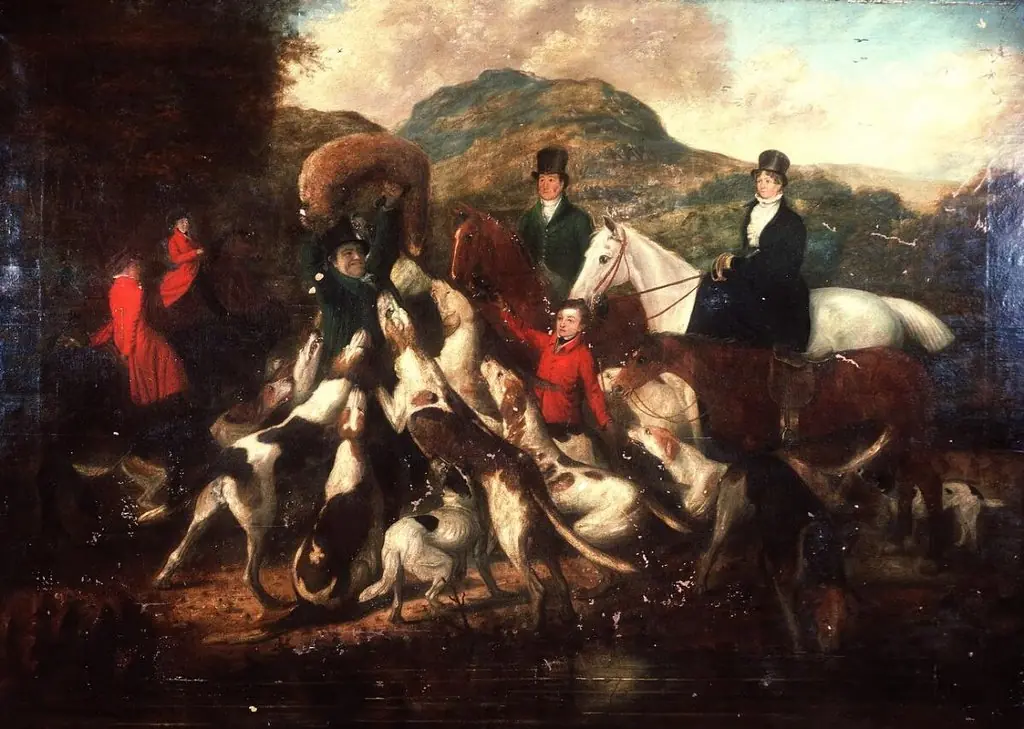 Gogerddan hunt
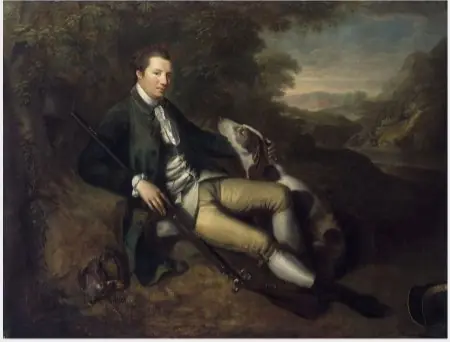 Portrait of Peter La Touche of Bellevue (1733-1828)
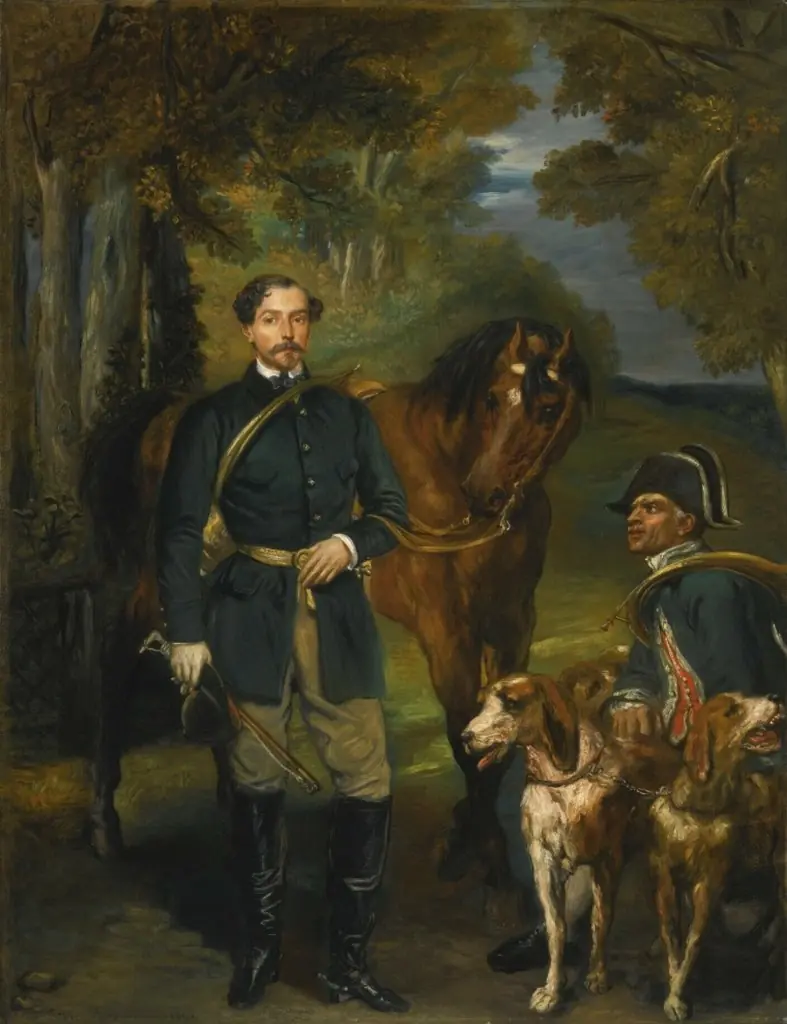 Portrait du comte Oscar de Ranchicourt partant pour la chasse à courre
- The young sportsman