Artwork
George Harley Drummond (1783–1855)
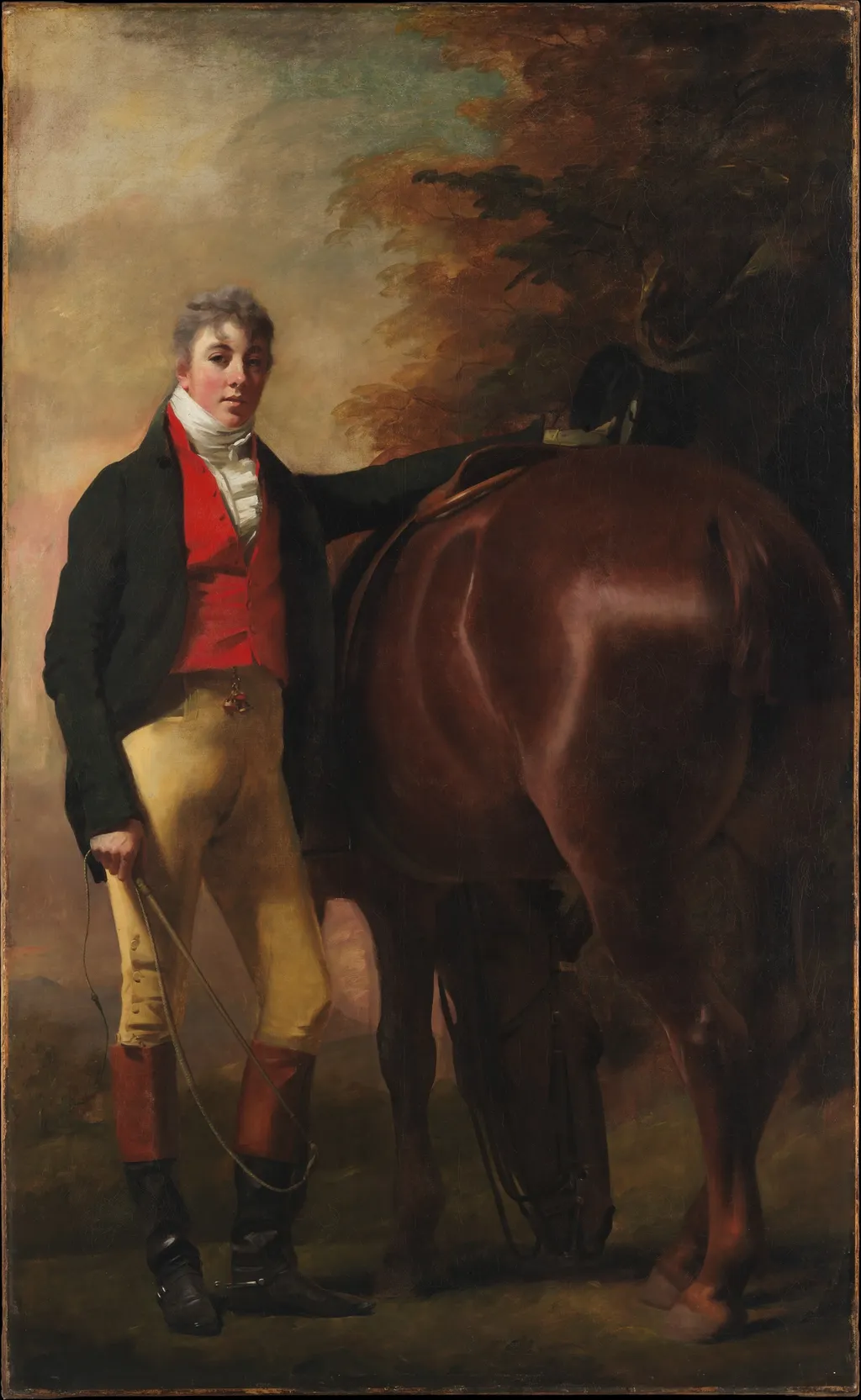
George Harley Drummond (1783–1855) is an oil painting by the British Romanticist artist Henry Raeburn. It dates from 1808 and is held in the collection of the Metropolitan Museum of Art.
About this work
Technique & Style
The classification identifies the piece specifically within the genre of portraiture, utilizing these standard materials to achieve its formal presentation.
Created in 1808, the portrait of George Harley Drummond by Henry Raeburn is executed in oil paint applied to a canvas support. The work functions as a formal portrait, depicting the subject alongside a horse. Its substantial physical dimensions measure 239.4 centimeters in height and 147.3 centimeters in width.
As a product of Raeburn's practice, the painting relies on the traditional medium of oil on canvas to render the likeness of the man and the animal. The classification identifies the piece specifically within the genre of portraiture, utilizing these standard materials to achieve its formal presentation.
History & Provenance
The portrait of George Harley Drummond was created by Sir Henry Raeburn in 1808. Executed in oil on canvas, the work measures 239.4 cm in height by 147.3 cm in width and depicts Drummond accompanied by a horse. It is held in the collection of the Metropolitan Museum of Art, where it remains a significant example of Raeburn's portraiture from the early nineteenth century.
No specific accession number, accession date, or details of prior provenance and exhibition history are documented in the available sources.
Overview
Sir Henry Raeburn, a prominent Scottish portraitist, completed this oil on canvas work in 1808. Titled George Harley Drummond (1783–1855), the painting captures its namesake in an outdoor setting alongside a horse. This piece exemplifies characteristics of British Romanticism and is presently housed in the collection of The Metropolitan Museum of Art.
Subject & Meaning
The portrait presents George Harley Drummond in a rural landscape, standing next to a horse whose hindquarters are turned towards the viewer. Drummond is depicted in a black jacket, red vest, and yellow trousers, holding a whip in his right hand. This attire and the outdoor environment suggest a connection to equestrian pursuits or country life, emphasizing the sitter's identity within a specific social context.
Context
Sir Henry Raeburn was a highly regarded figure in Scottish art during his lifetime. His distinguished career culminated in his appointment as Portrait Painter to King George IV in Scotland, a testament to his skill and prominence. This official recognition underscores Raeburn's significant standing within the artistic landscape of the early 19th century, influencing the demand for his portraiture.
Own this work as a print
Artist & collection
Artist
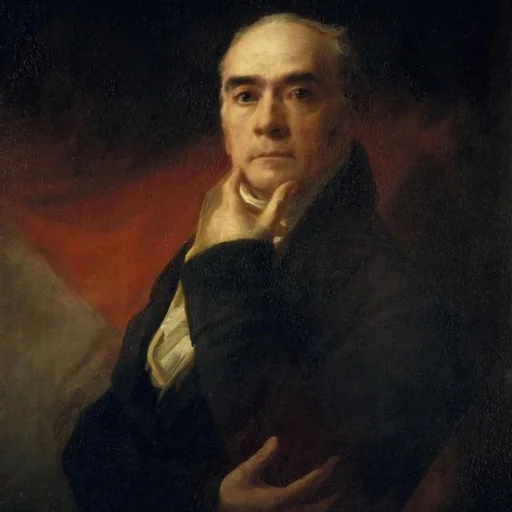
Sir Henry Raeburn (; 4 March 1756 – 8 July 1823) was a Scottish portrait painter. He served as Portrait Painter to King George IV in Scotland.

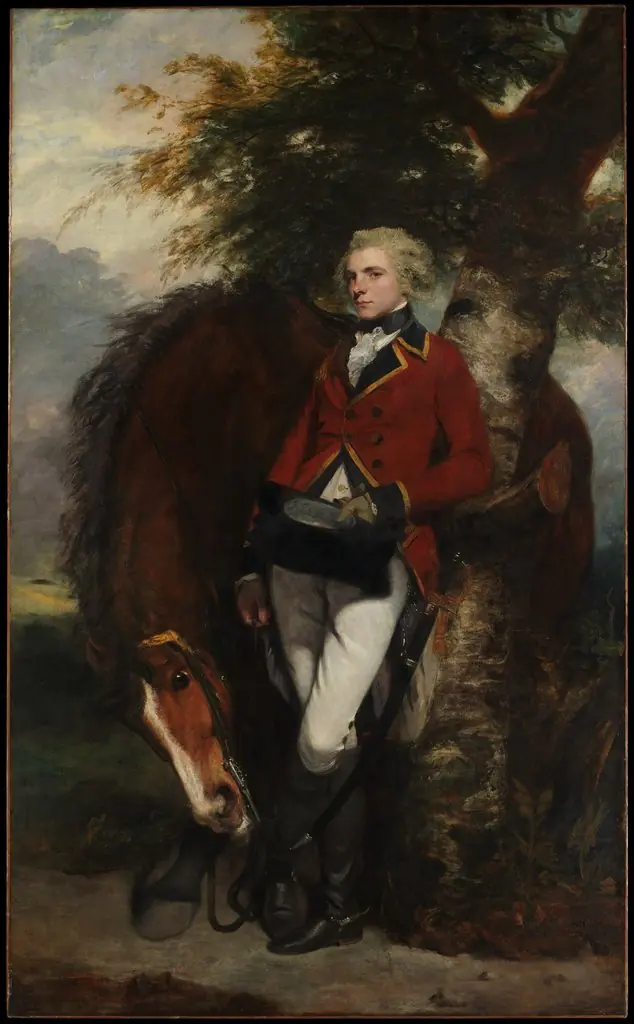 Captain George K. H. Coussmaker
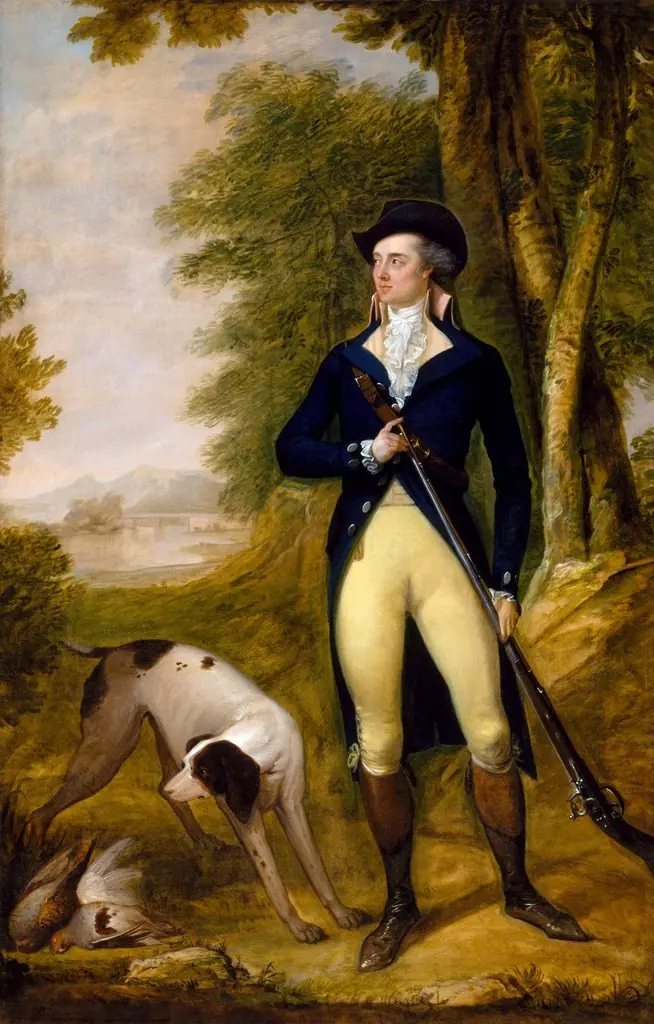 Portrait of a Gentleman
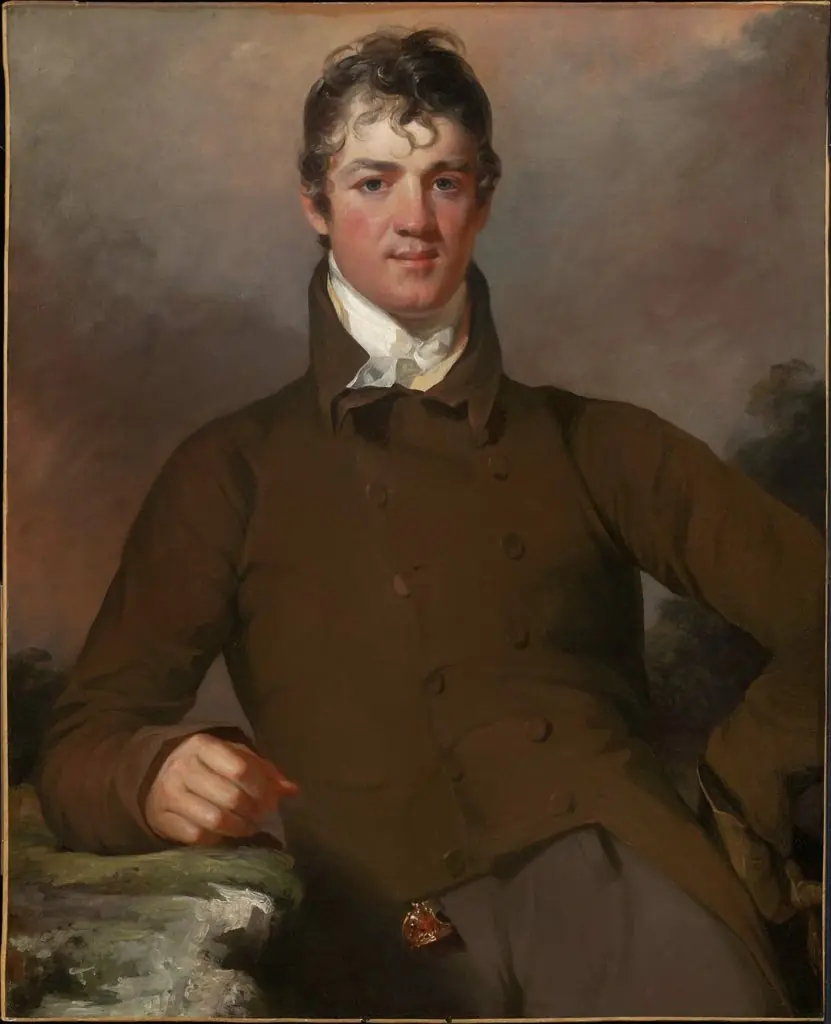 John Myers
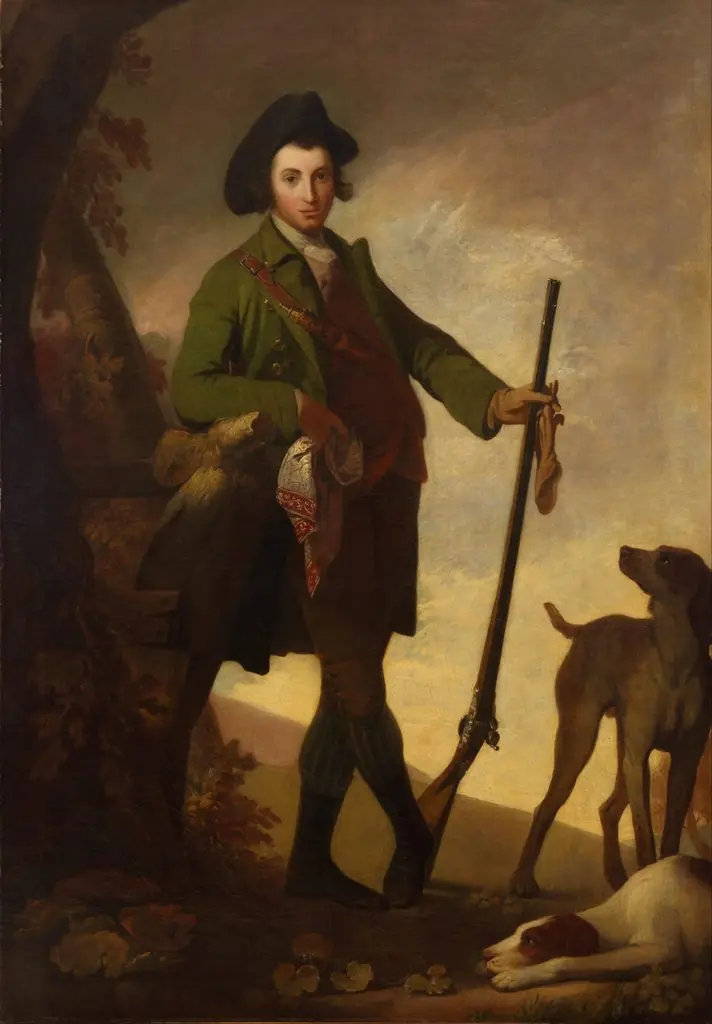 The young sportsman
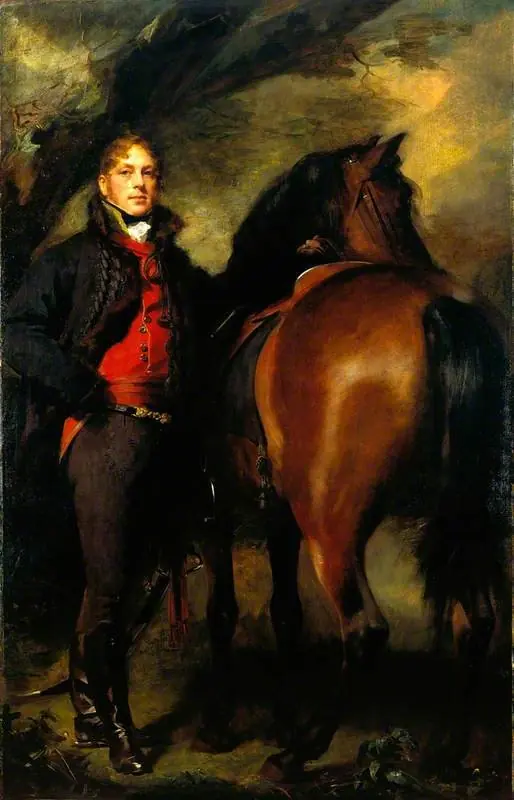 Major William Clunes of Crakaig, died 1829
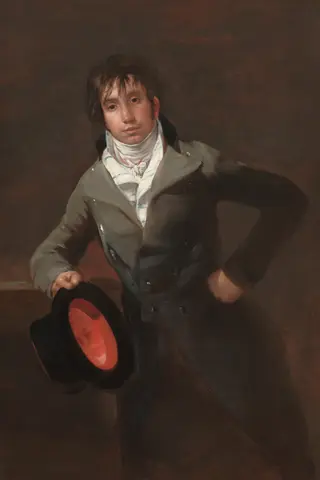 Bartolomé Sureda y Miserol
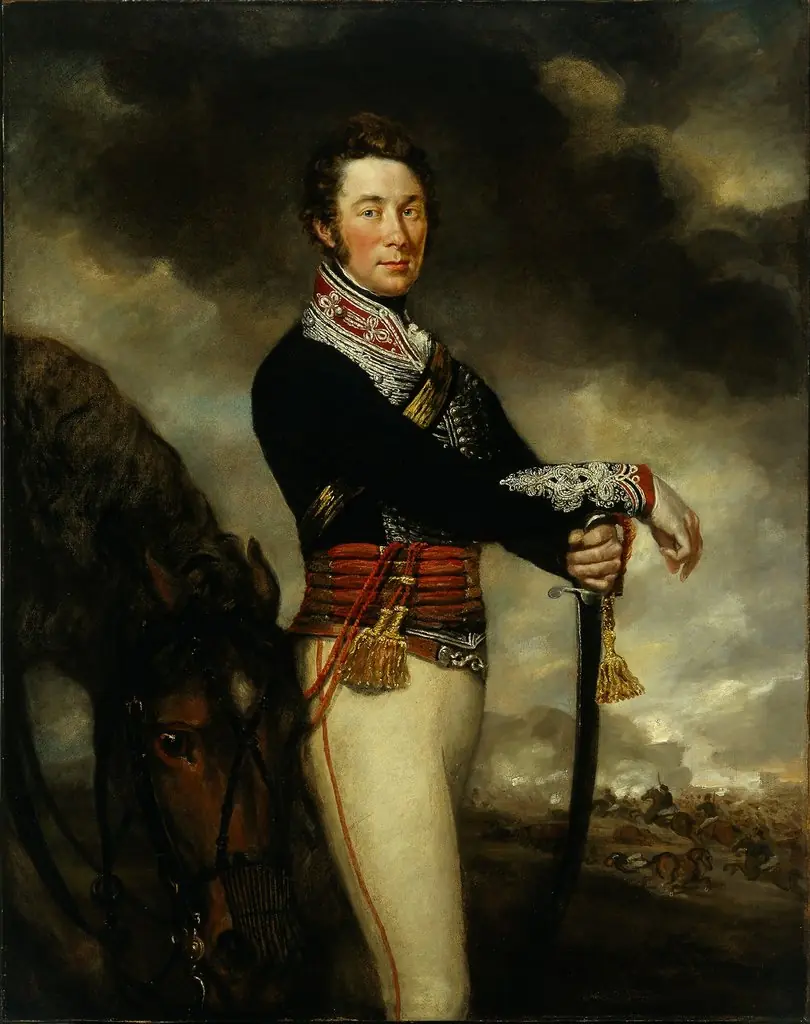 Captain Peter Hawker of the 14th Light Dragoons
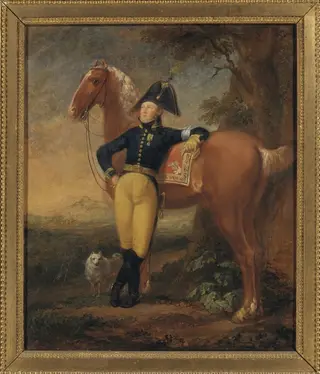 Johan Adam von Gertten (1767-1835), överste, ståthållare på Strömsholms slott, landskapsmålare
 Portretul unui adolescent
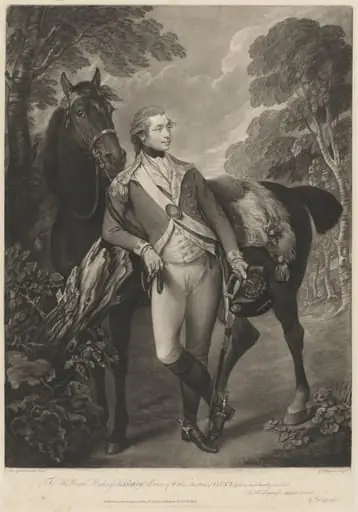 Colonel St. Leger