Artwork
Expulsion from the Garden of Eden
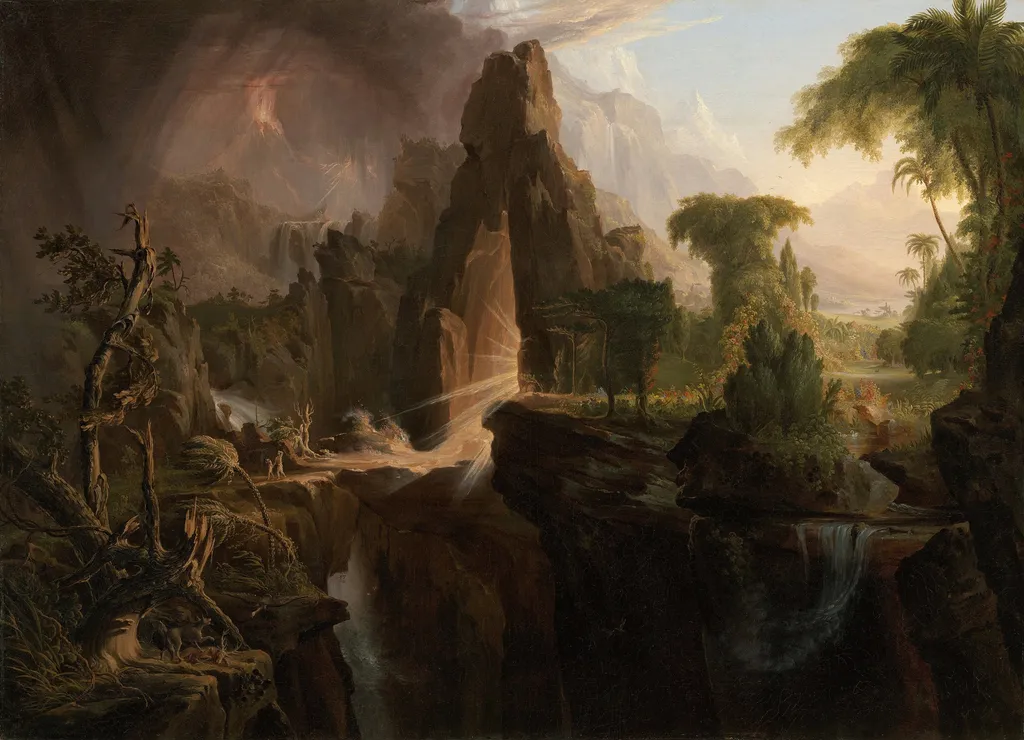
Expulsion from the Garden of Eden is an oil painting by Thomas Cole. It dates from 1828 and is held in the collection of the Museum of Fine Arts Boston.
About this work
This painting is called Expulsion from the Garden of Eden. It's an oil paint work by Thomas Cole.
The painting is from 1828 and is part of the Museum of Fine Arts Boston collection. It's a landscape painting that shows the style of a group of American landscape painters.
You can learn more about the artist behind this work, Thomas Cole.
Subject & Meaning
The painting depicts the biblical moment of Adam and Eve's expulsion from Paradise, a scene drawn from the Book of Genesis that frames the entry of sin and suffering into human history. Thomas Cole renders this narrative through a stark contrast between a luminous, fertile Eden on the right and a dark, volcanic wilderness on the left, using the landscape itself to convey theological meaning. Light radiates from an arch that suggests divine presence, while shadows, decaying trees, a wolf preying on a deer, and an erupting volcano underscore the moral and existential consequences of disobedience.
The composition thus balances a paradisiacal realm of joy and abundance against a realm of chaos and punishment, reflecting the dualistic worldview common in Christian thought. The work belongs to the Hudson River School tradition, emphasizing the spiritual significance of the American landscape as a stage for narrative and moral allegory.
Technique & Style
43 cm in width, and is executed in oil on canvas, reflecting Cole's emphasis on landscape as a narrative vehicle for moral and theological themes.
Thomas Cole employed oil paint on canvas to create Expulsion from the Garden of Eden in 1828, a work classified as a religious painting within the Hudson River School tradition. The composition is divided symmetrically: the right half depicts Paradise with radiant light, lush vegetation, and wildlife, while the left side portrays a dark, foreboding landscape featuring decaying trees, a volcano, a wolf attacking a deer, and a scavenging vulture. Adam and Eve appear as small, minimally detailed figures dwarfed by the environment, their posture and expression conveying despair through the landscape's symbolic weight rather than individual characterization.
The painting measures 100.96 cm in height and 138.43 cm in width, and is executed in oil on canvas, reflecting Cole's emphasis on landscape as a narrative vehicle for moral and theological themes.
History & Provenance
Thomas Cole painted Expulsion from the Garden of Eden in 1828, creating an oil on canvas work measuring 100.96 cm in height and 138.43 cm in width, as documented in multiple sources. The painting was first exhibited at the National Academy of Design in New York later that year. Following its creation, the artwork entered the collection of Dr. David Hosack in 1829, subsequently passing to his widow Magdalena Coster after his death in 1835, then to John Kearney Rodgers in 1846, and finally to James Lenox in 1849, who displayed it in his personal library until 1895.
The painting remained in the Lenox Library collection after the library's consolidation into the New York Public Library, but was sold in 1943 at auction and later acquired by Maxim Karolik, whose wife donated it to the Museum of Fine Arts, Boston in 1947, where it has been part of the permanent collection ever since. The work is housed in the Museum of Fine Arts, Boston, and is cataloged under inventory number 47.1188, per Spanish-language documentation.
Expulsion from the Garden of Eden has been in the collection of the Museum of Fine Arts, Boston since June 12, 1947, when it was donated by Martha Catherine Codman Karolik, the widow of collector Maxim Karolik. Its inventory number at the museum is 47.1188. The painting is on display in the Waleska Evans James Gallery (Gallery 236).
The work's exhibition history begins in 1828, when Cole showed it alongside his Garden of Eden at the National Academy of Design in New York. After passing through the hands of David Hosack, Magdalena Coster, John Kearney Rodgers, and James Lenox, who displayed it in his Lenox Library, the painting entered the New York Public Library in 1895. The NYPL sold it at Parke-Bernet Galleries on April 16, 1943, to Arnold Seligmann, Rey, & Co., from whom Karolik acquired it later that year.
Legacy
The painting is widely regarded as a seminal work of the Hudson River School, exemplifying the landscape‑focused style that Thomas Cole helped found and that defined American romantic landscape painting. Since its acquisition by the Museum of Fine Arts, Boston in 1947, it has remained on view in the Waleska Evans James Gallery (Gallery 236), continuing to shape public and scholarly appreciation of Cole’s allegorical approach and the broader legacy of the Hudson River School.
Overview
Thomas Cole’s 1828 oil painting titled Expulsion from the Garden of Eden is part of the Museum of Fine Arts, Boston’s collection and is displayed in the Waleska Evans James Gallery. The work measures a modest size and bears the artist’s signature, “T Cole,” on the lower left cliff edge, confirming its authorship.
Context
Cole, an English‑born artist who emigrated to America, is credited with founding the Hudson River School, a movement that celebrated the nation’s natural scenery. Expulsion from the Garden of Eden illustrates his interest in combining religious narrative with the American wilderness, a theme he would revisit throughout his career.
Own this work as a print
Artist & collection
Artist
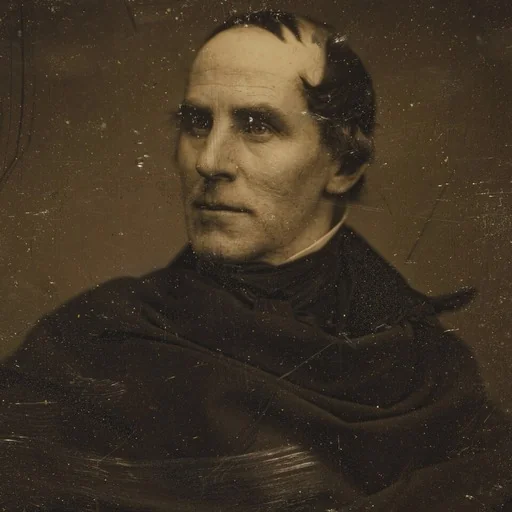
Thomas Cole (February 1, 1801 – February 11, 1848) was an Anglo-American artist who founded the Hudson River School art movement.

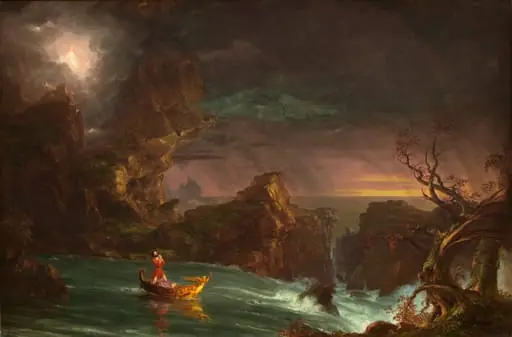
- The Voyage of Life: Youth
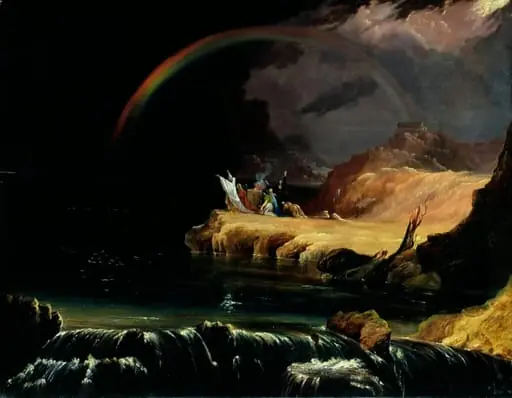 The Covenant
 The Covenant
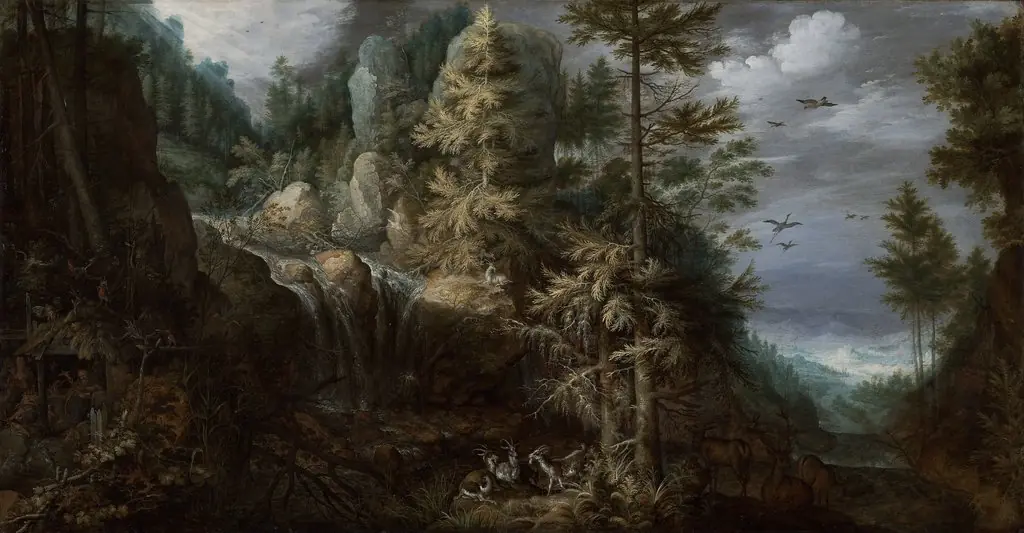 Landscape with the Temptation of Saint Anthony
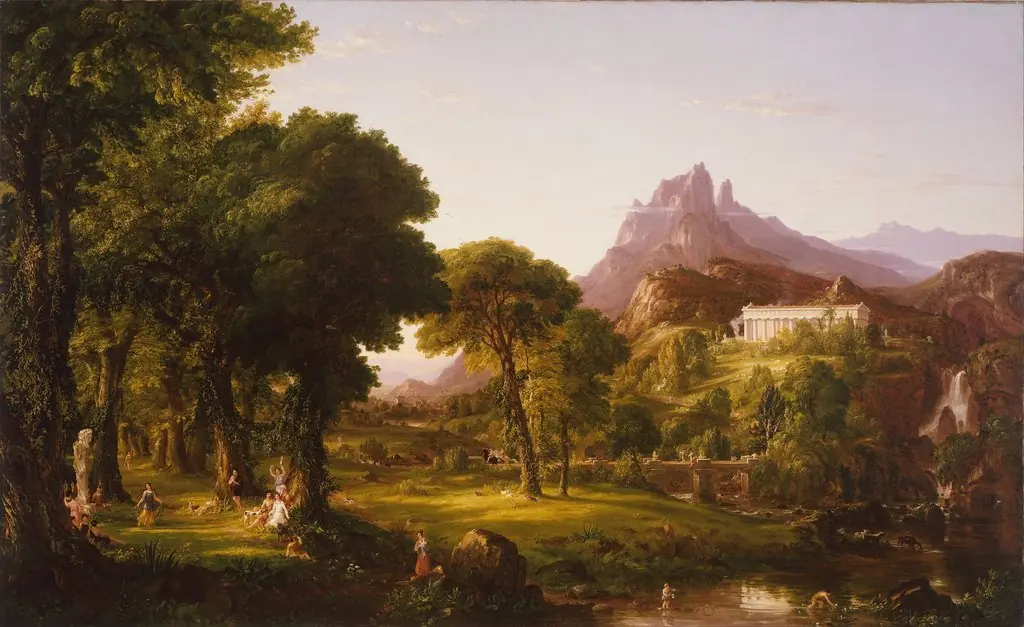 Dream of Arcadia
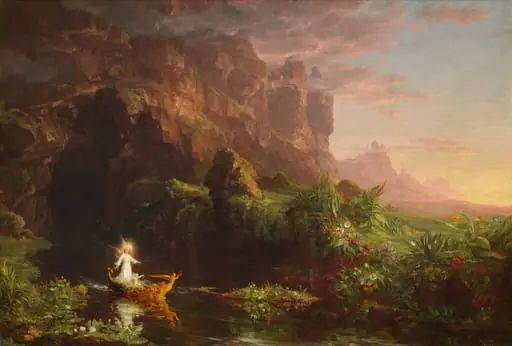 The Voyage of Life: Childhood
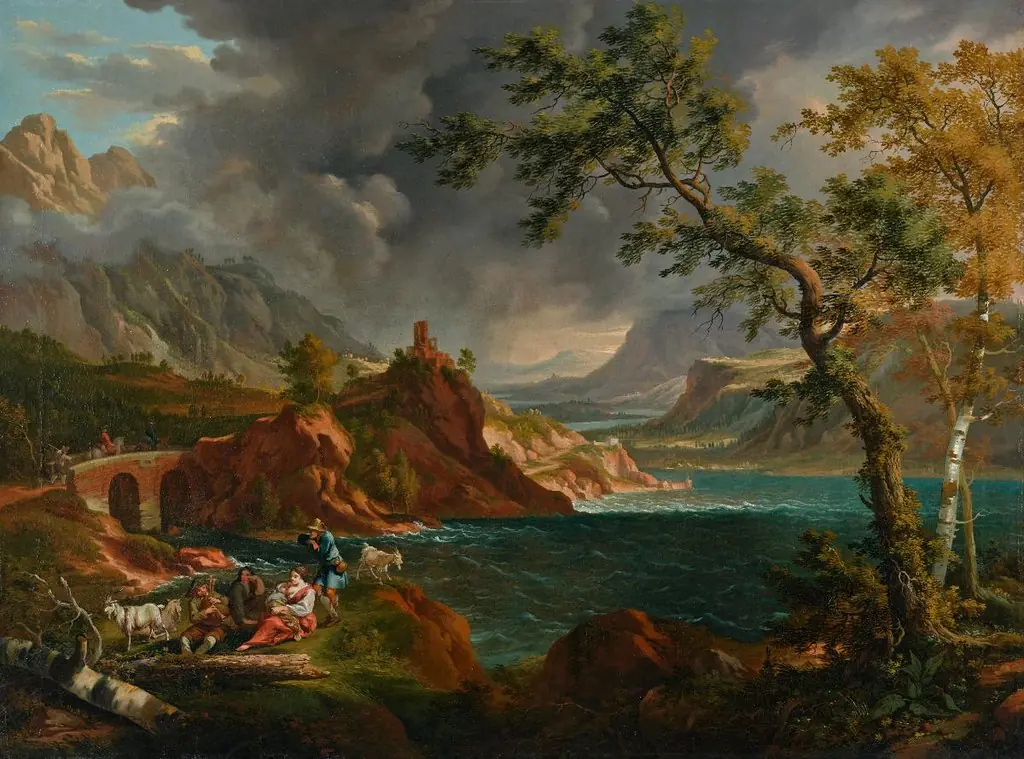 Seelandschaft mit Gewitter
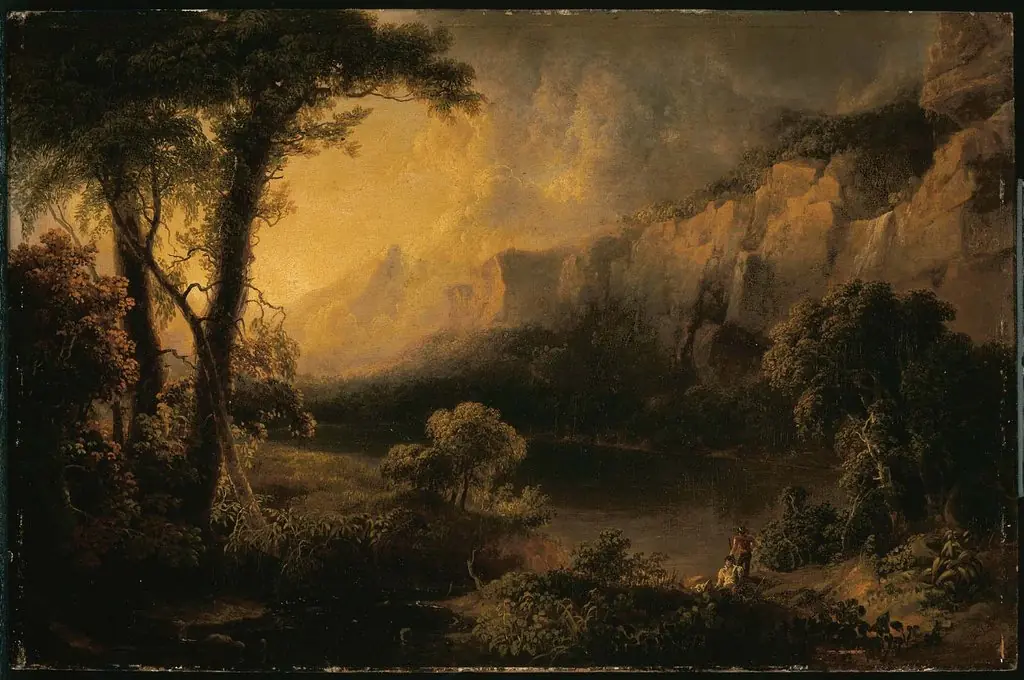 Lake and Mountains
 Fanciful Landscape
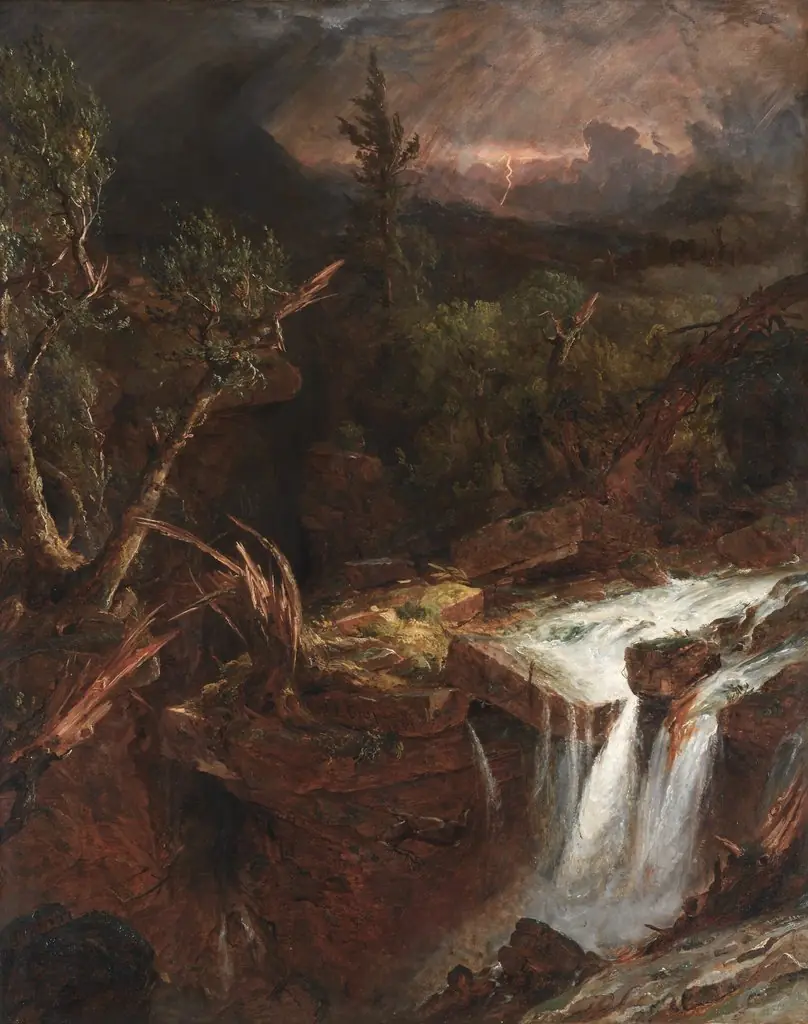 The Clove - A Storm Scene in the Catskill Mountains
 The Clove - A Storm Scene in the Catskill Mountains