Artwork
Magnolia Grandiflora
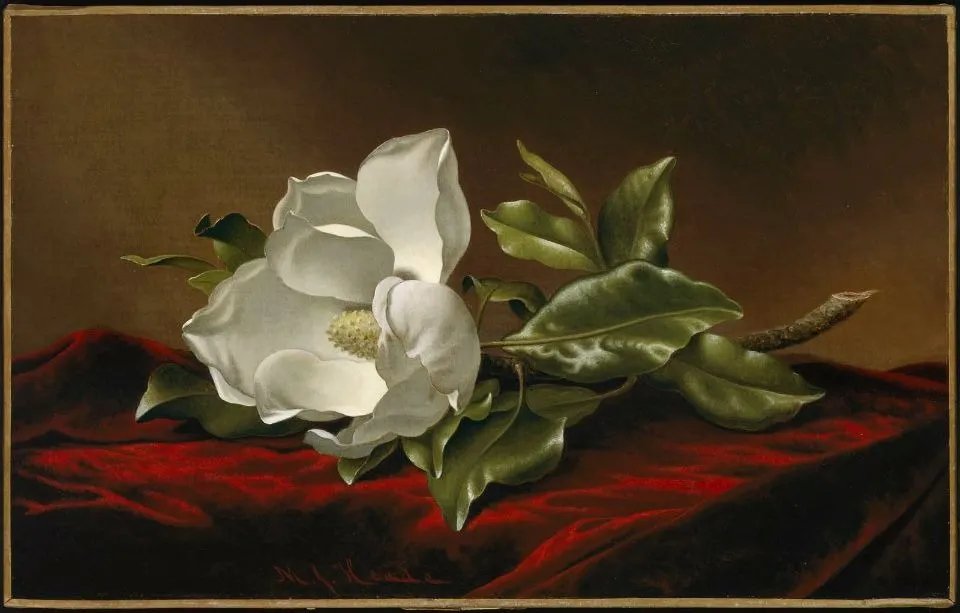
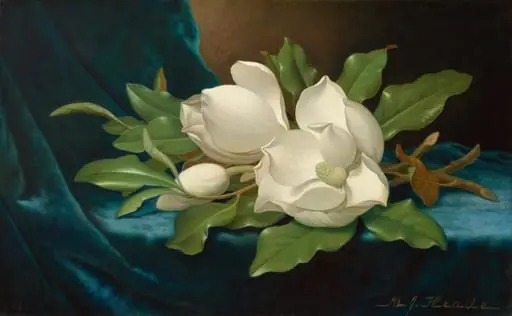
Magnolia Grandiflora is an oil painting by the American Impressionist artist Martin Johnson Heade. It dates from 1893 and is held in the collection of the Museum of Fine Arts Boston.
About this work
Overview
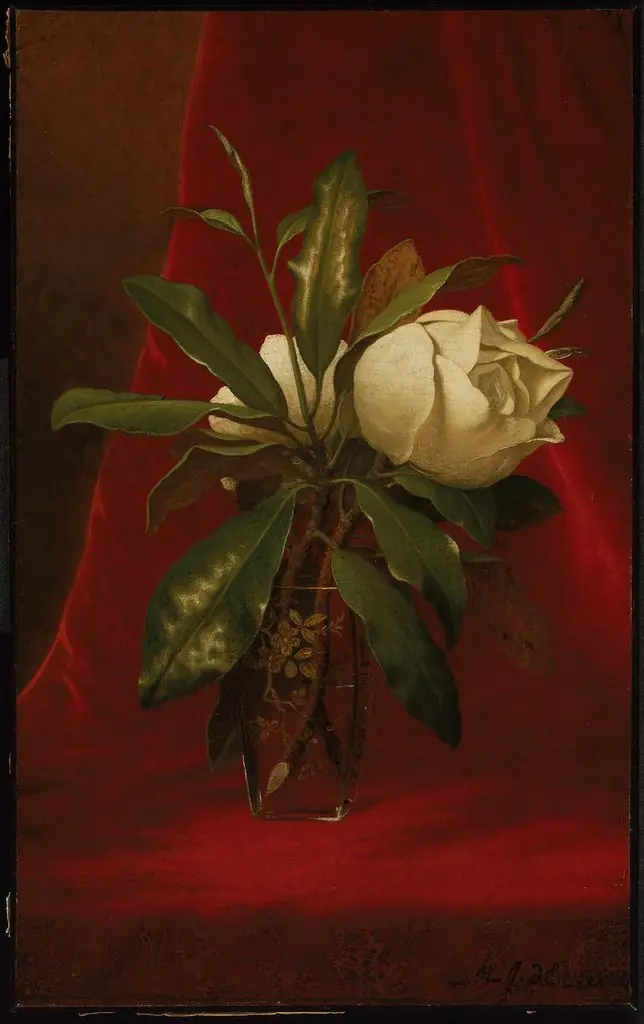
Magnolia Grandiflora is an 1893 oil painting by American artist Martin Johnson Heade, characterized by its realistic depiction of a single white magnolia flower against a warm, muted background.
Subject & Meaning
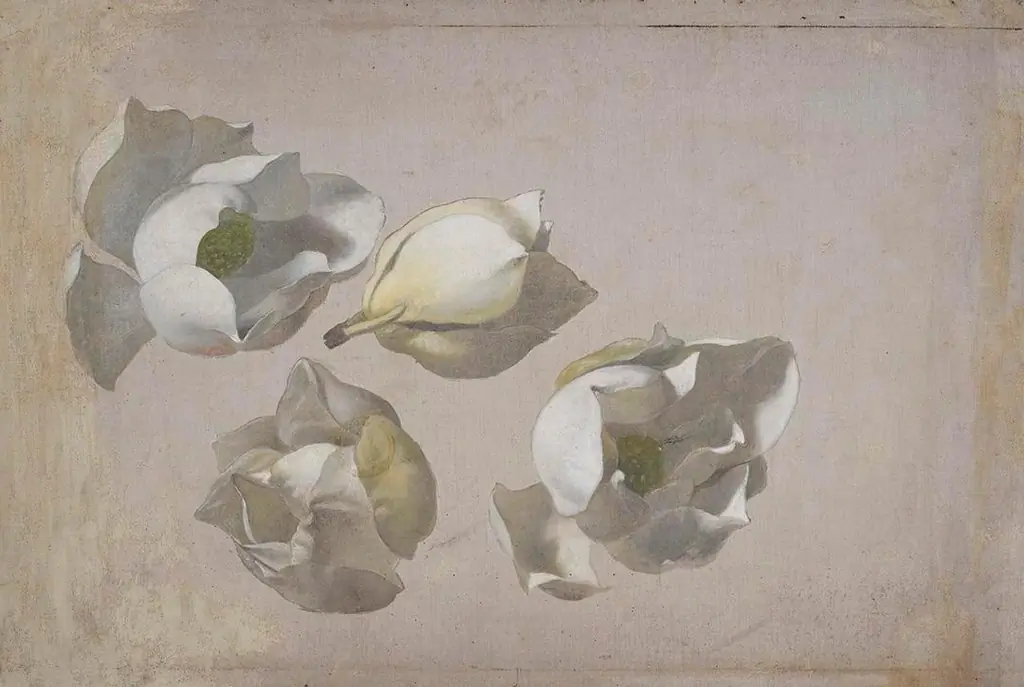
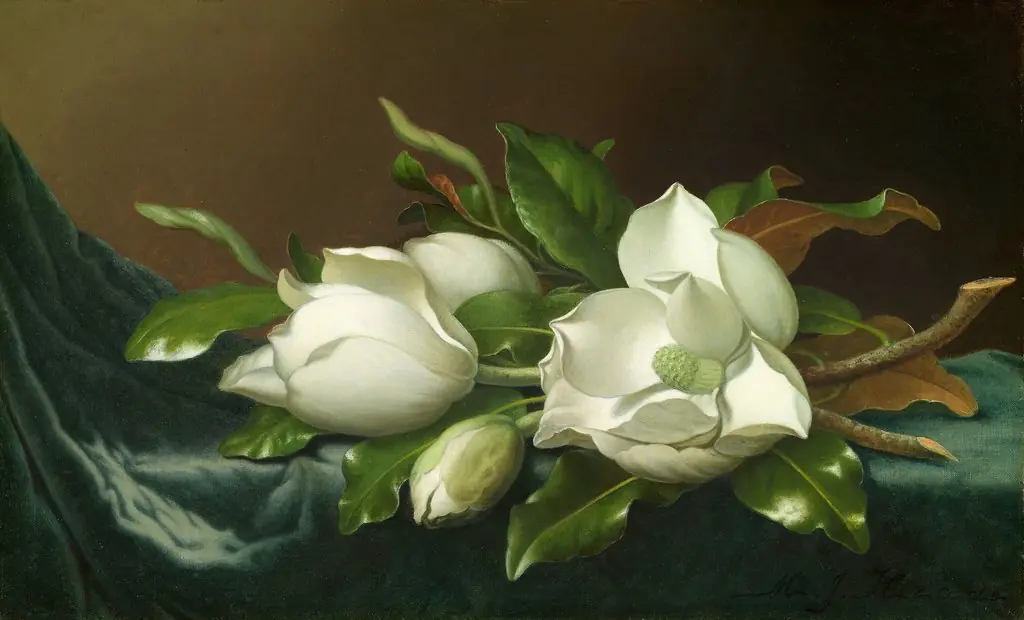
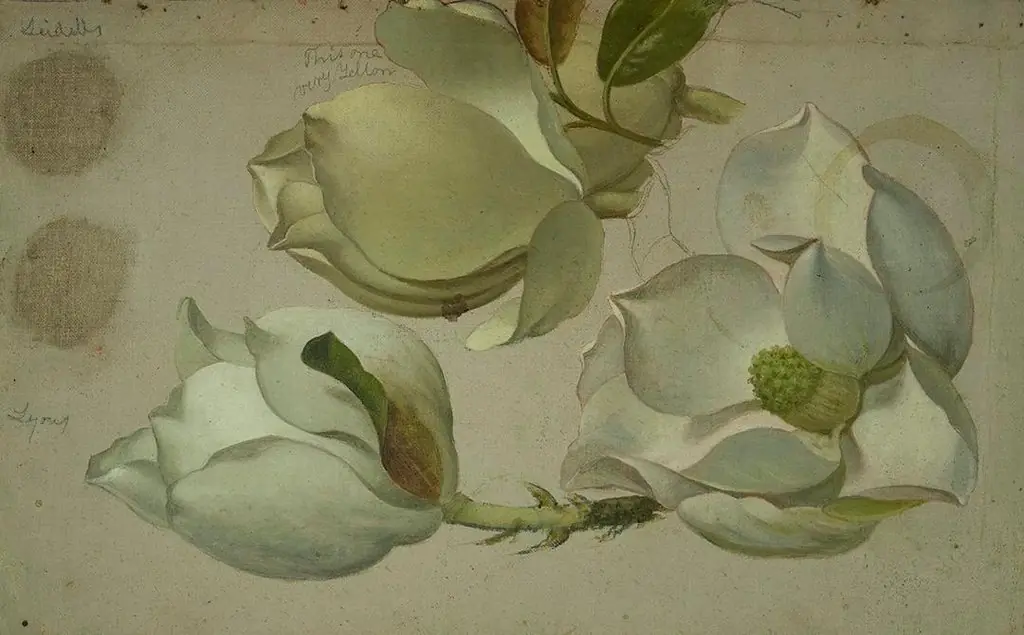
The painting focuses on a magnolia flower, a frequent subject in Heade's floral still lifes, set amidst glossy green leaves on a dark red cloth. The composition emphasizes the flower's prominence.
Technique & Style
Heade employed meticulous attention to texture, rendering the petals and leaves with near-tactile realism. The use of chiaroscuro creates a soft, glowing effect on the flower, highlighting his distinct approach within the broader American Impressionist context.
History & Provenance
Created in 1893, the painting is part of the collection at the Museum of Fine Arts, Boston, reflecting Heade's late 19th-century contribution to American art.
Context
While aligned with American Impressionism, Heade's work in Magnolia Grandiflora maintains a unique stylistic identity, distinguishing it from the work of his contemporaries.
Legacy
The painting showcases Heade's skill in capturing light and texture, influencing the appreciation of floral still lifes and the study of light effects in art, as hinted by the reference to chiaroscuro.
Artist & collection

Artist
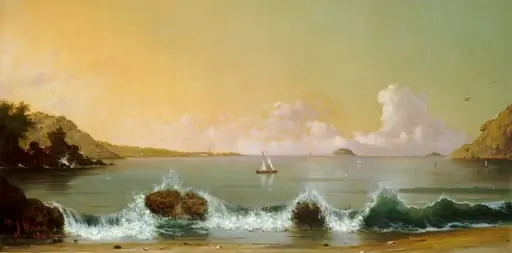
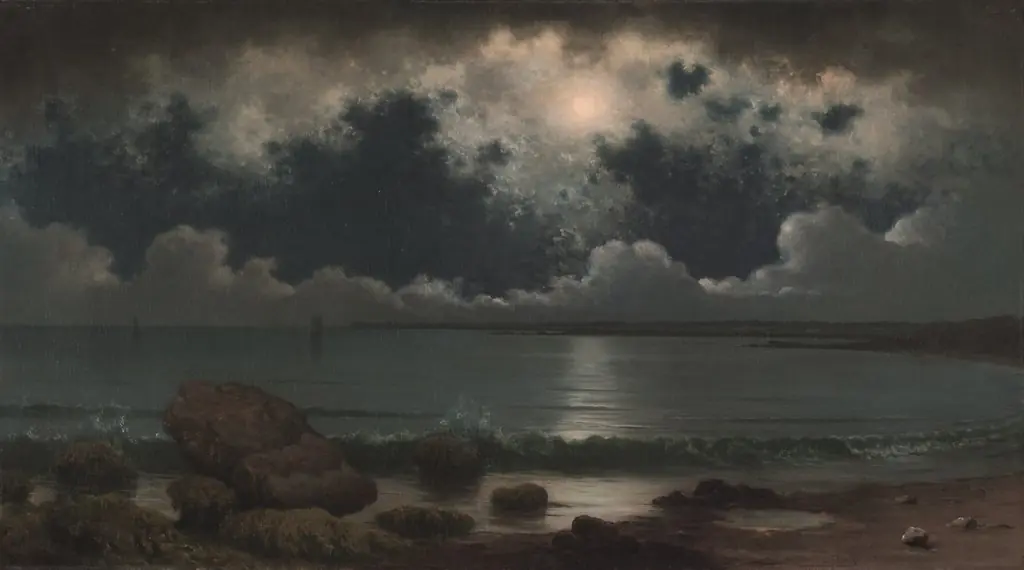
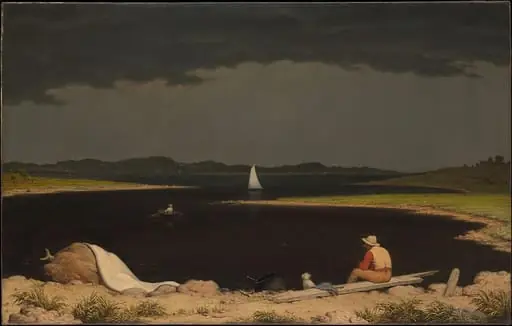
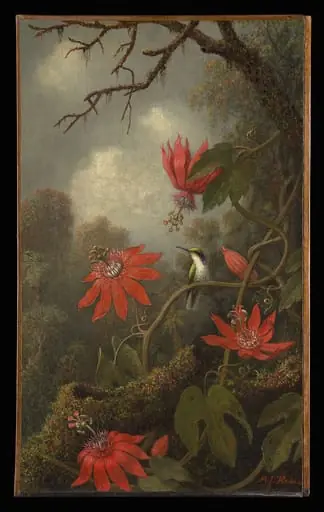
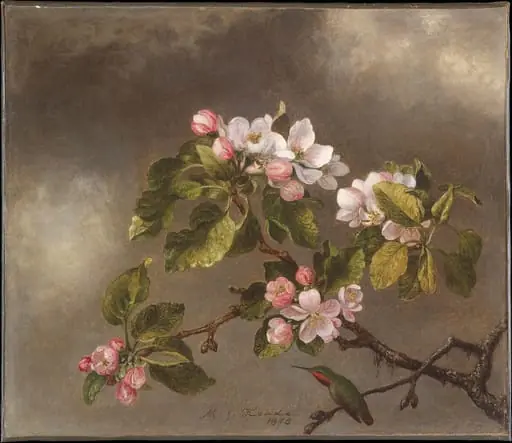
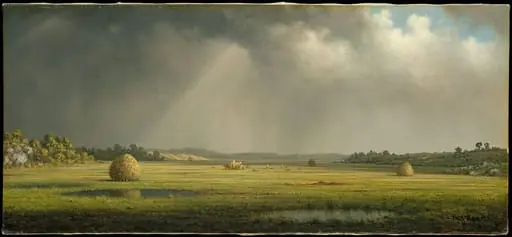
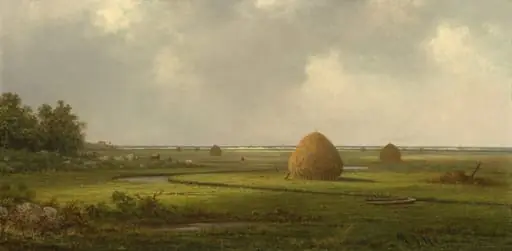
Martin Johnson Heade (August 11, 1819 – September 4, 1904) was an American painter known for his salt marsh landscapes, seascapes, and depictions of hummingbirds, often depicted with orchids, as well as lotus blossoms and other still lifes.