Artwork
The Stranded Boat
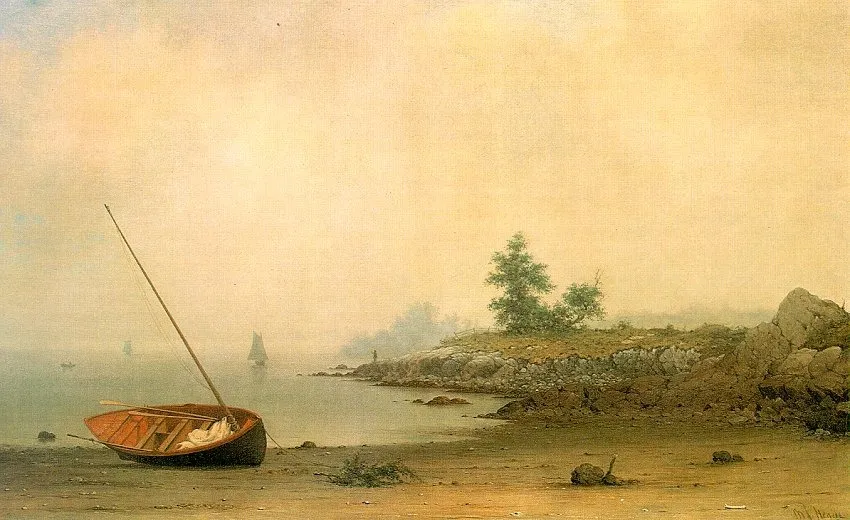
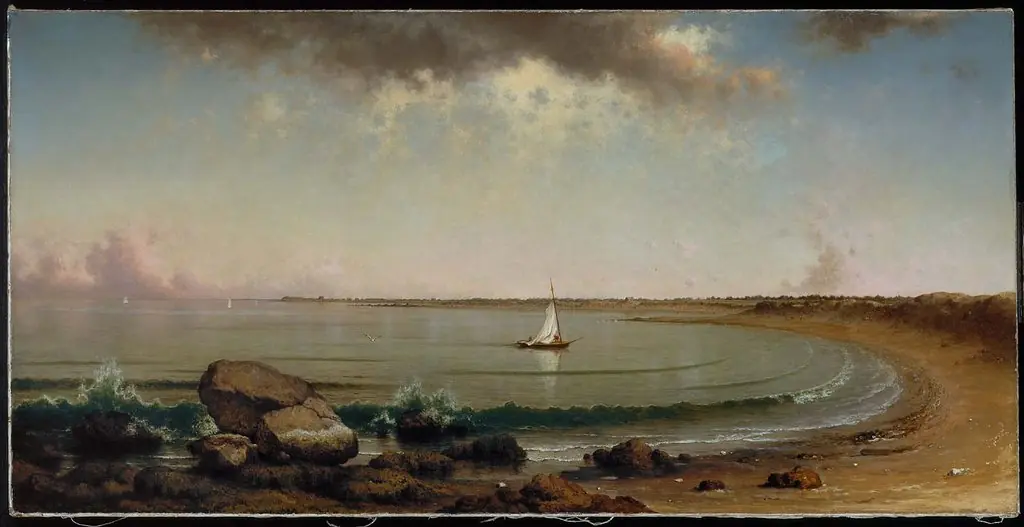
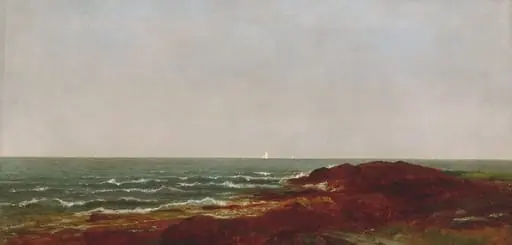
The Stranded Boat is an oil painting by the American Impressionist artist Martin Johnson Heade. It dates from 1863 and is held in the collection of the Museum of Fine Arts Boston.
About this work
Subject & Meaning
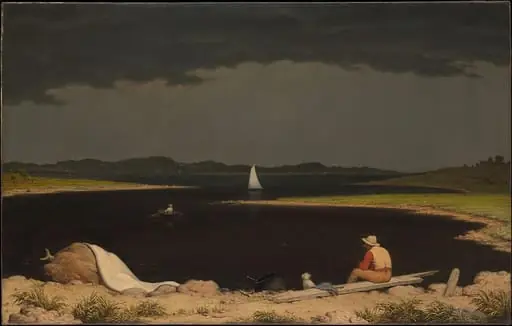
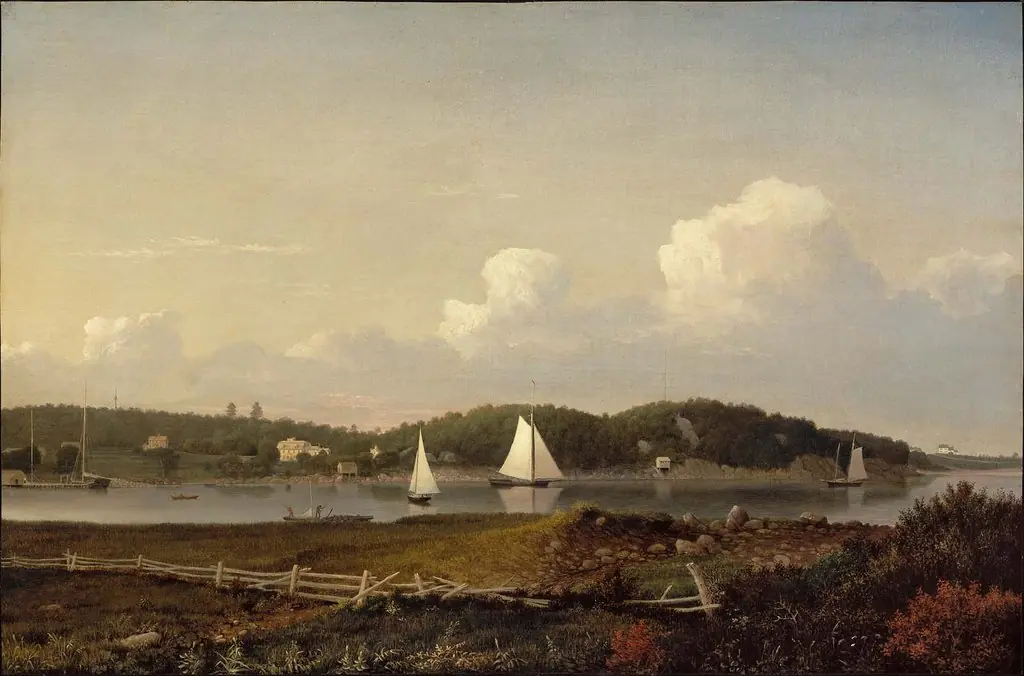
Painted in 1863, this marine work by Martin Johnson Heade presents a coastal landscape dominated by a solitary sailboat stranded on a beach.
Painted in 1863, this marine work by Martin Johnson Heade presents a coastal landscape dominated by a solitary sailboat stranded on a beach. The composition features a low horizon line that emphasizes an expansive sky filled with clouds, contrasting with the sea and the shore.
The iconography focuses on the stillness of the vessel grounded on the sand, surrounded by the natural elements of the coast. While the specific symbolic intent is not explicitly detailed in available records, the depiction of the isolated boat against the vast atmospheric backdrop suggests themes of solitude or the quiet power of nature over human artifacts.
Technique & Style
The Stranded Boat is an oil painting on canvas, produced in 1863 by Martin Johnson Heade. The work belongs to the marine genre and is executed in oil paint, a medium noted in the artist’s own documentation. Its support consists of a canvas surface, as recorded in the material specifications.
The composition displays an expansive sky and horizon, with clouds, sea, coastline, a sailboat and beach, elements that define its marine subject matter. These formal elements emphasize light and atmospheric effects, reflecting the observational focus of marine art.
History & Provenance
The Stranded Boat is an oil on canvas painting completed in 1863 by Martin Johnson Heade, measuring 58.1 cm × 93.66 cm. It belongs to the marine genre, depicting sky, cloud, sea, and a small sailboat on a horizon.
The work is held in the collection of the Museum of Fine Arts Boston, where it has been part of the museum’s holdings since its acquisition. Its classification as a painting and marine art reflects the museum’s cataloging of Heade’s output.
Executed in oil paint on canvas, the piece demonstrates Heade’s technique of layered atmospheric effects characteristic of his mid‑19th‑century marine subjects.
Overview
Martin Johnson Heade's 1863 oil painting, "The Stranded Boat," presents a tranquil marine scene. This work exemplifies Heade's focus on natural coastal environments, a departure from the Romantic tendencies prevalent among many of his contemporaries. The artist, an American painter born in Pennsylvania in 1819, was particularly known for his depictions of seascapes and salt marshes, establishing a distinctive approach to landscape art.
Context
Martin Johnson Heade developed a unique artistic perspective that set him apart from many of his peers in the mid-19th century. Rather than embracing the dramatic narratives or idealized landscapes often seen in Romantic painting, Heade concentrated on the subtle beauty of natural coastal environments. This particular focus on specific geographic features, such as salt marshes and seascapes, defined his individual contribution to American landscape art.
Artist & collection

Artist
Martin Johnson Heade (August 11, 1819 – September 4, 1904) was an American painter known for his salt marsh landscapes, seascapes, and depictions of hummingbirds, often depicted with orchids, as well as lotus blossoms and other still lifes.