Artwork
The Virgin Nursing the Child
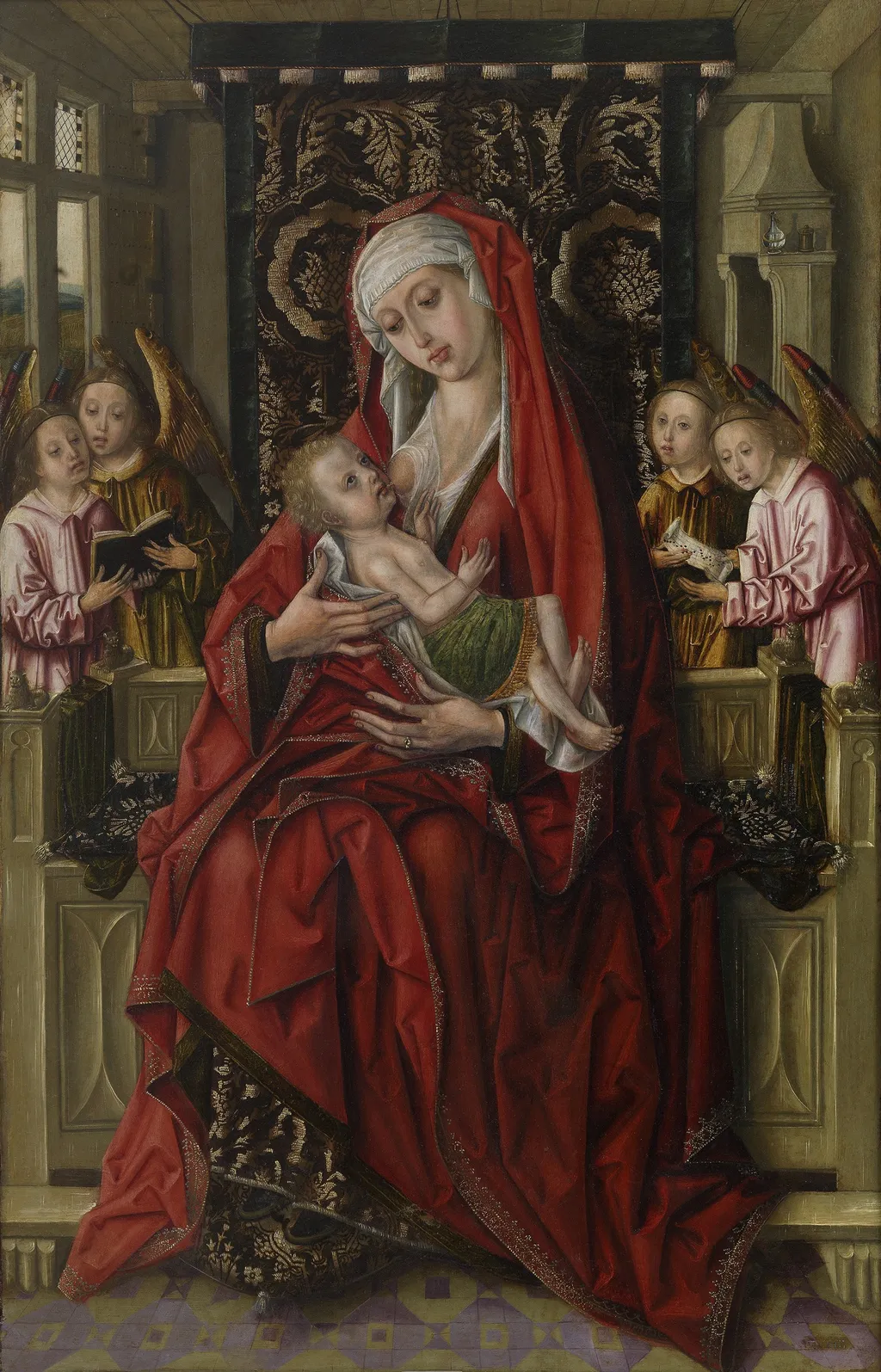
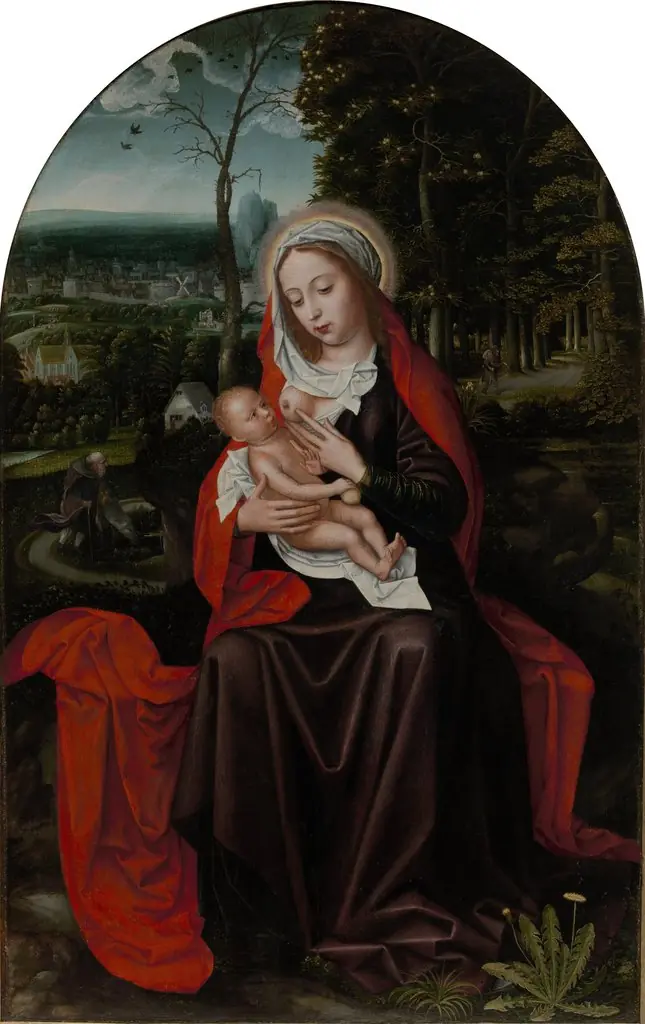
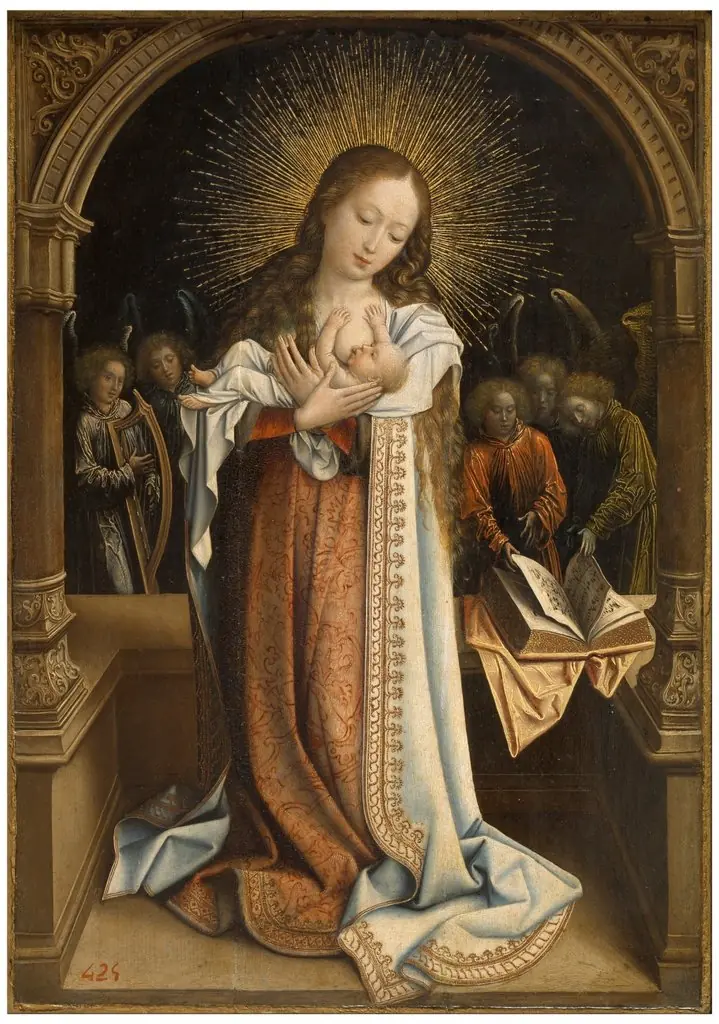
The Virgin Nursing the Child is a mixed painting by the Northern Renaissance artist Maestro de los Luna. It dates from 1496 and is held in the collection of the Museo del Prado.
About this work
Subject & Meaning
A small angel appears to the side, reinforcing the devotional context.
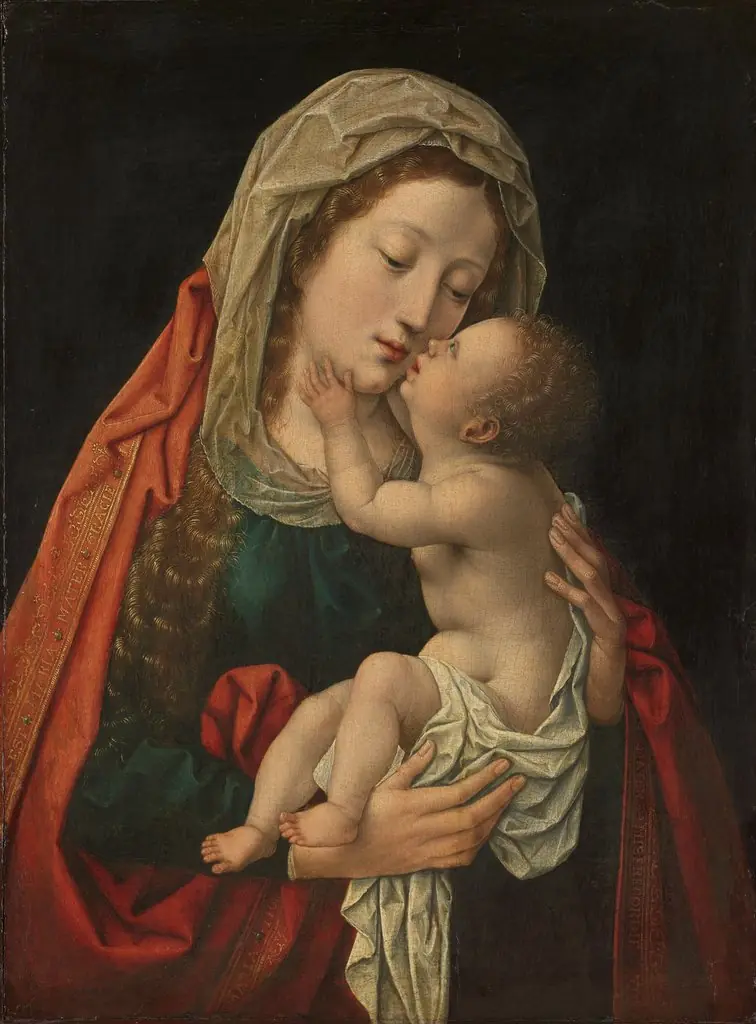
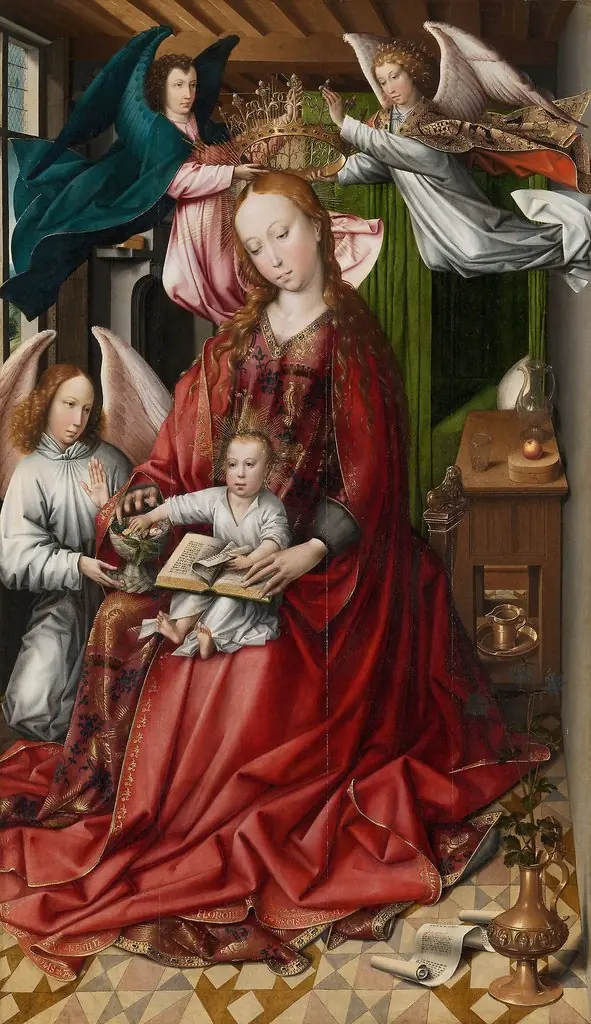
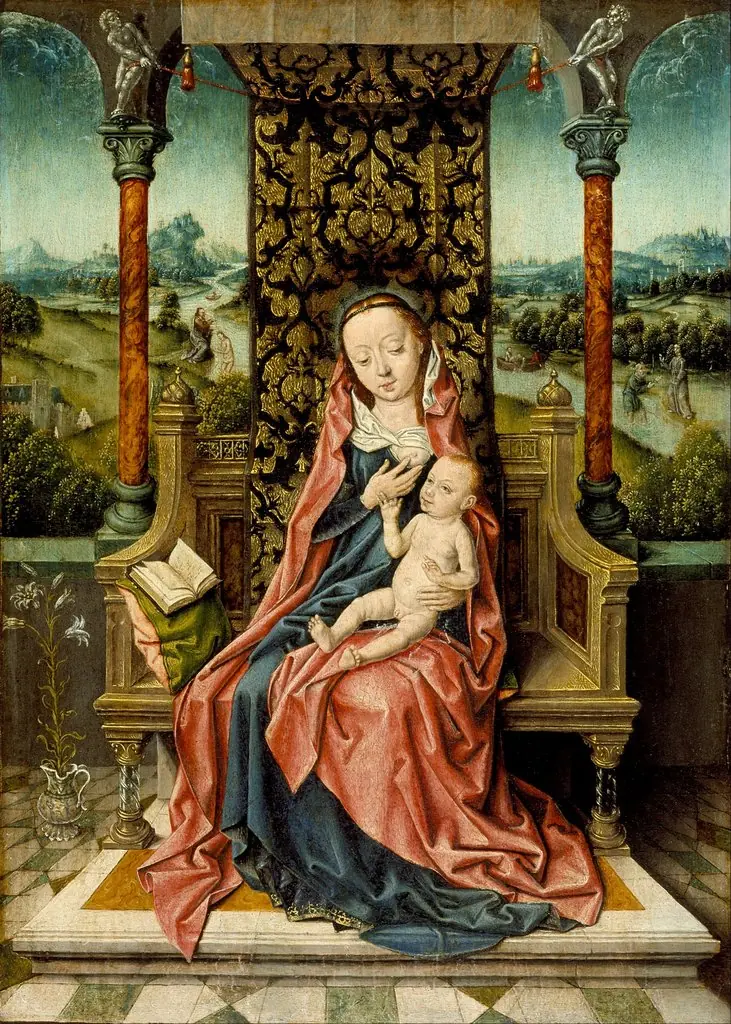
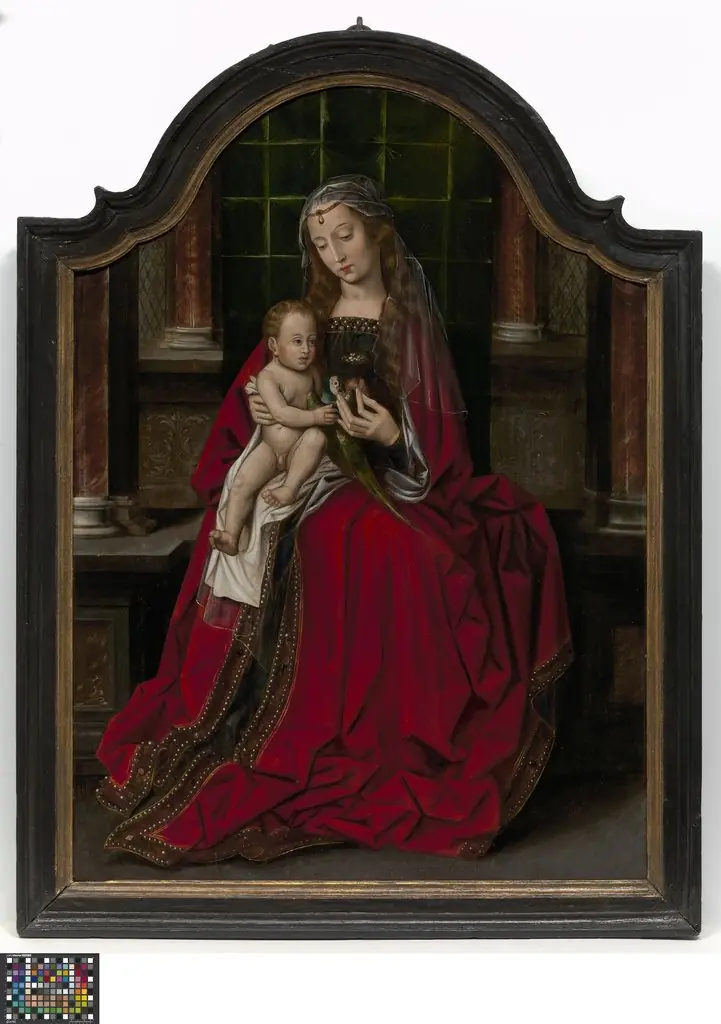
The painting depicts the Nursing Madonna, a conventional subject in late medieval and early Renaissance art showing the Virgin Mary breastfeeding the Christ Child. Here the Virgin is shown with the Child at her breast while he holds a small book, underscoring the sacred bond between mother and son and evoking the Incarnation and the humanity of Christ. A small angel appears to the side, reinforcing the devotional context.
The presence of the book suggests the Child’s future role as the Word made flesh and points to the theological theme of divine wisdom entering the world through Mary’s maternity. The composition emphasizes tenderness and intimacy, aligning with late fifteenth-century Iberian devotional imagery focused on maternal piety and spiritual nurture.
Technique & Style
Created in 1490, The Virgin Nursing the Child is a religious painting executed in mixed technique on a panel support. The work measures 112 cm in height and 71 cm in width. Stylistically, the composition centers on the Nursing Madonna, depicting the Virgin Mary with the Christ Child.
The scene includes secondary figures and objects such as an angel, a book, and elements suggesting a choir, all rendered within the devotional context characteristic of the Maestro de los Luna.
History & Provenance
Created in 1490, this panel painting was executed by the Maestro de los Luna, also identified as the Maestro de don Álvaro de Luna. The work employs a mixed technique on wood and depicts the Nursing Madonna with the Christ Child, the Virgin Mary, a book, and an angelic choir. Historically, the painting belonged to the collection of the Museo de la Trinidad before entering the holdings of the Museo del Prado, where it remains located.
The painting is held in the collection of the Museo del Prado in Madrid. Historically, the work was also associated with the Museo de la Trinidad before becoming part of the Prado's holdings. The provided sources do not contain specific inventory numbers or details regarding the artwork's exhibition history.
Context
The Virgin Nursing the Child is a 1490 mixed‑technique painting attributed to the Master of the Luna, known as Maestro de los Luna, that belongs to the religious genre.
The work portrays the Virgin Mary nursing the Christ Child amid symbolic attributes such as a book, a reading figure, a choir, and an angel, a composition typical of Nursing Madonna imagery.
Executed in oil on panel, the piece measures 112 cm in height and 71 cm in width and is part of the holdings of both the Museo del Prado and the former Museo de la Trinidad, situating it within the late‑15th‑century Spanish artistic context.
Legacy
The work is frequently referenced as a representative example of the Nursing Madonna tradition in late fifteenth‑century Spanish religious painting. Its creation in 1490, mixed‑technique execution, and depiction of Mary with the Christ Child, a book, and attendant figures are documented in contemporary catalogues. The painting’s inclusion in the collections of the Museo del Prado and the Museo de la Trinidad underscores its recognized cultural significance, and it is regularly cited in scholarly discussions of the Maestro de los Luna’s oeuvre and the broader iconography of Marian devotion.
As such, it contributes to the ongoing assessment of Spanish Renaissance art within museum displays and academic literature.
Overview
This painting, titled The Virgin Nursing the Child, was created in 1496 by the artist known as Maestro de los Luna. Executed using a mixed technique, the work depicts the Virgin Mary tenderly breastfeeding the Christ Child, a devotional subject known as the Nursing Madonna. The artwork is currently housed in the collection of the Museo del Prado.
Own this work as a print
Artist & collection
Artist
Maestro de los Luna, also called the Master of don Álvaro de Luna, is the conventional name given to an anonymous Spanish painter active in Toledo and Guadalajara in the late fifteenth century, roughly between 1483 and 1495.