Artwork
Cherry Laurel (Mock Orange) Bough
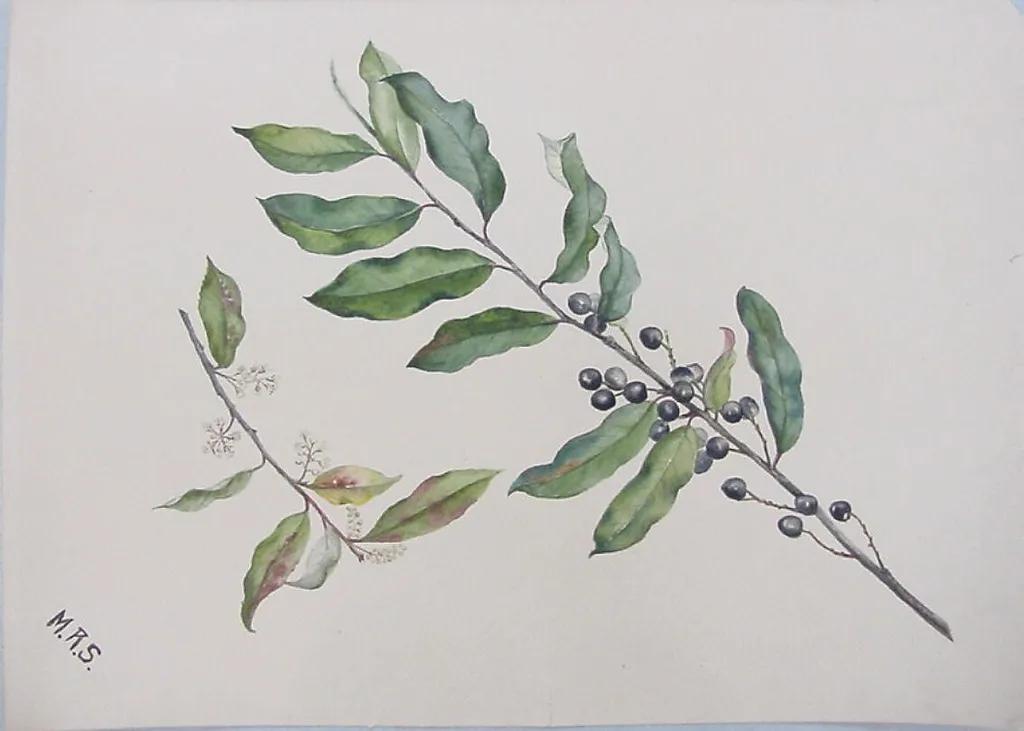
Cherry Laurel (Mock Orange) Bough is a watercolor work on paper by the American Folk Art artist Mary Russell Smith. It dates from 1860 and is held in the collection of the Metropolitan Museum of Art.
About this work
Technique & Style
Stylistically, the piece focuses on a botanical subject, depicting a branch of cherry laurel (also known as mock orange) adorned with leaves and flowers.
Created in 1860, this still life utilizes watercolor and gouache applied to a paper support. The work measures 37.1 cm in height and 52.4 cm in width. Stylistically, the piece focuses on a botanical subject, depicting a branch of cherry laurel (also known as mock orange) adorned with leaves and flowers.
The composition isolates this flowering plant element, characteristic of the artist's approach to naturalistic detail within the genre.
History & Provenance
Mary Russell Smith created the watercolor and gouache work titled Cherry Laurel (Mock Orange) Bough in 1860. The piece, which depicts a flowering laurel branch with leaves, was executed on paper. It eventually entered the collection of the Metropolitan Museum of Art, where it is classified within the American Wing as a still life.
The specific circumstances regarding its original commission or the details of its ownership prior to arriving at the museum are not detailed in the available records.
The work is held by the Metropolitan Museum of Art in New York, where it is classified under The American Wing. Its inventory or accession number is not provided in the available sources. No exhibition history is recorded in the given materials.
Overview
Mary Russell Smith's "Cherry Laurel (Mock Orange) Bough," created in 1860, is a watercolor and gouache still life on paper. It presents a detailed study of a single branch of the flowering plant, notable for its dark, glossy leaves and delicate white blossoms. This work is part of the American Wing collection, reflecting a specific artistic focus during the mid-19th century.
Subject & Meaning
In an era dominated by large-scale landscapes and formal portraiture, Smith deliberately chose a modest botanical subject. Her depiction of a cherry laurel branch, with its star-like flowers and lustrous foliage, eschews human figures or dramatic narratives. This intimate focus on a natural specimen invites close observation, highlighting the inherent beauty found in everyday flora rather than grand scenes.
Context
During the 1800s, many artists pursued subjects that conveyed national identity or social status. Smith's decision to concentrate on a simple plant branch diverged from these prevailing artistic currents. Her still life reflects a quieter, more personal engagement with the natural world, offering a contemplative alternative to the more ambitious or narrative-driven works common in American art of the period.
Artist & collection


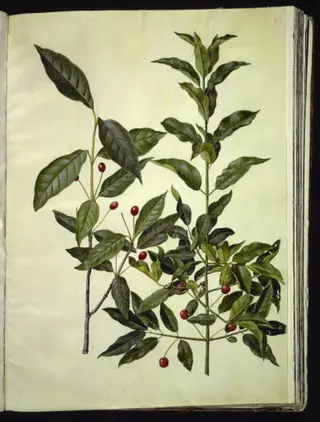
- Euonymus latifolius (bredbladet benved); Euonymus europaeus (almindelig benved)
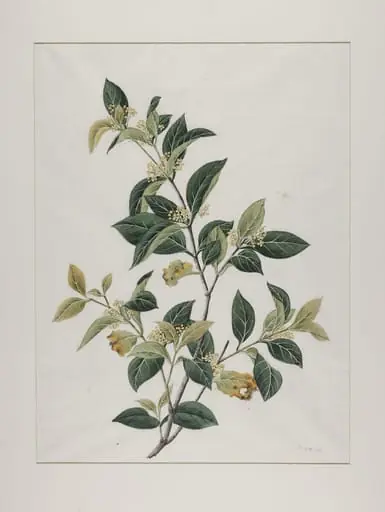 Mock lime (aglaia odorata), zhen zhu lan or mi zi lan
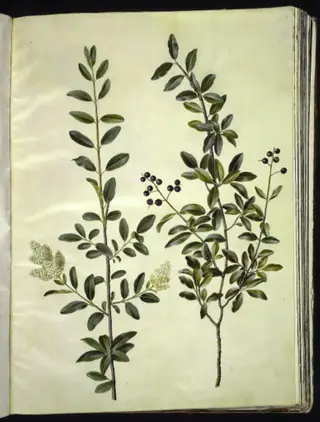 Ligustrum vulgare (almindelig liguster)
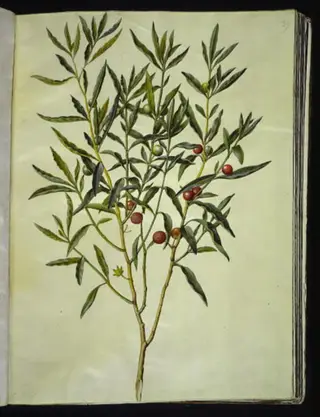 Solanum pseudocapsicum (jerusalem-koralbær)
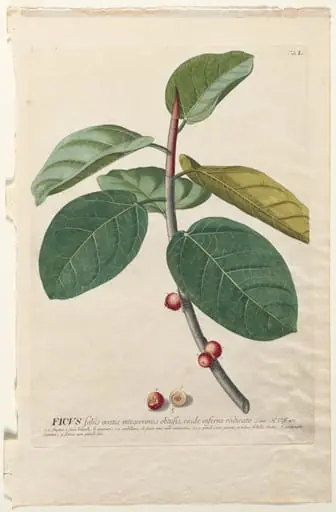 Plantae Selectae: No. 50 - Ficus
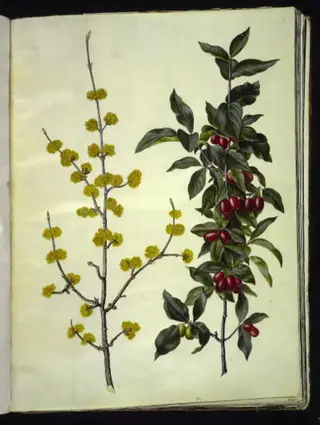 Cornus mas (kirsebær-kornel)
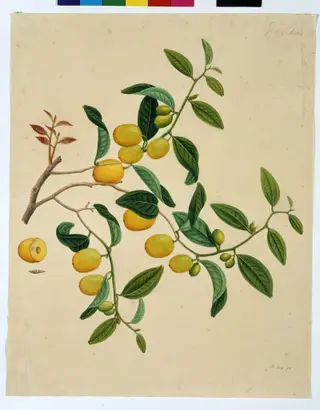 Chinese dates
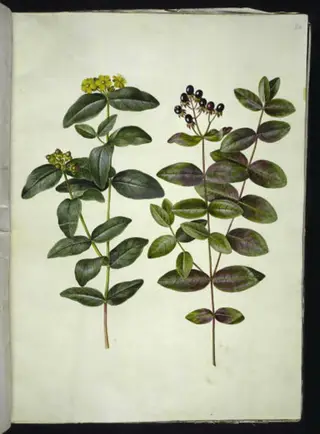 Hypericum androsaemum (bær-perikon)
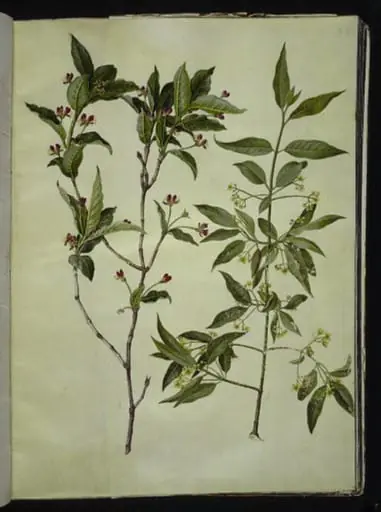 Lonicera alpigena (alpe-gedeblad); Euonymus europaeus (almindelig benved)
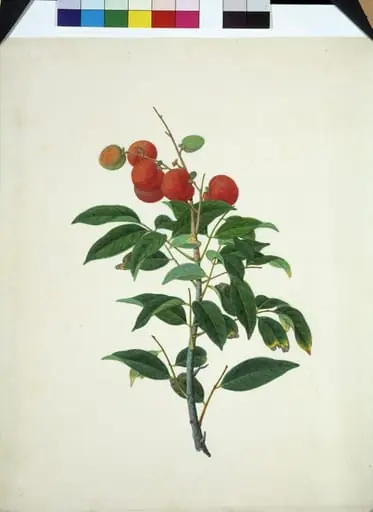 Lychee
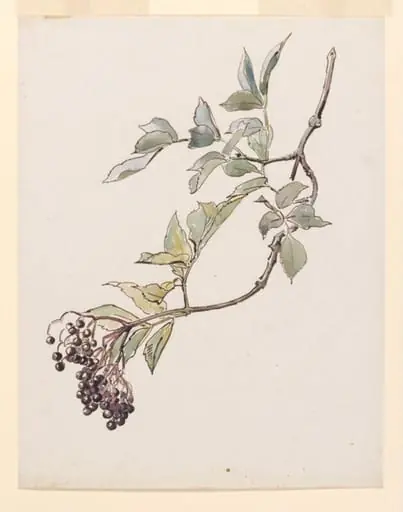 Study of a spray of elderberries
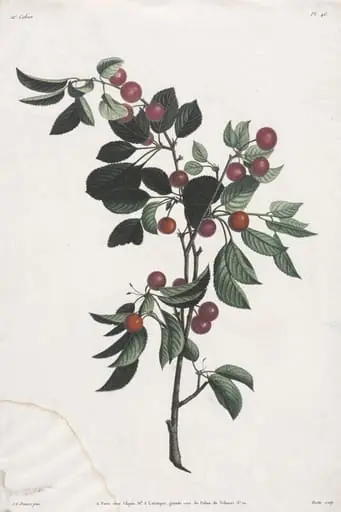 Collection des fleurs et des fruits: Branches de Cérises précoce