Artwork
Saint Anthony of Padua
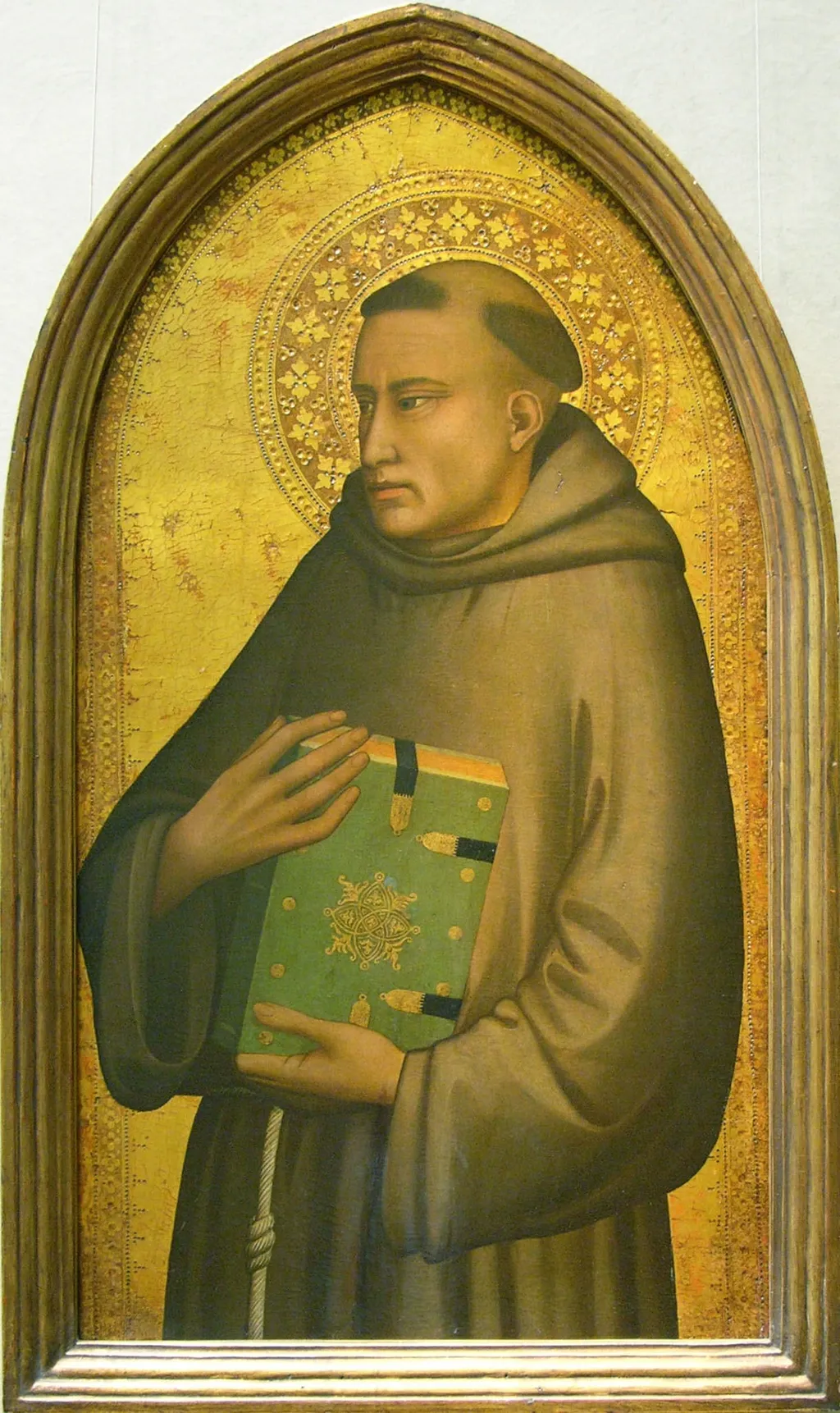
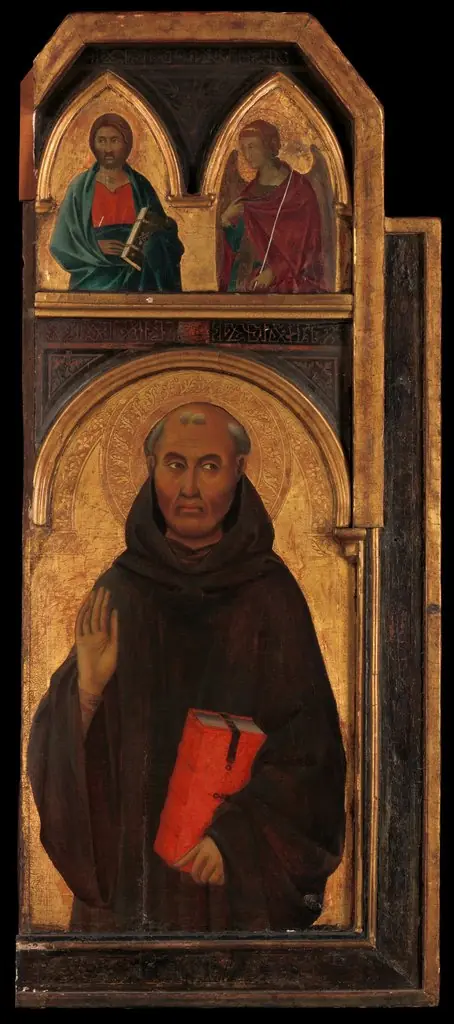
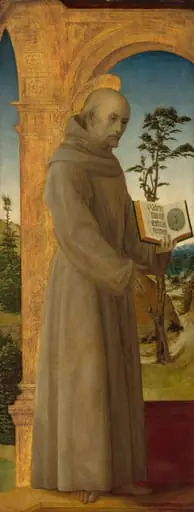
Saint Anthony of Padua is a tempera painting by the Italo Byzantine artist Maso di Banco. It dates from 1340 and is held in the collection of the Metropolitan Museum of Art.
About this work
Subject & Meaning
Such iconography underscores the work's devotional purpose, promoting Anthony's intercessory role and the Franciscan emphasis on humility and learning.
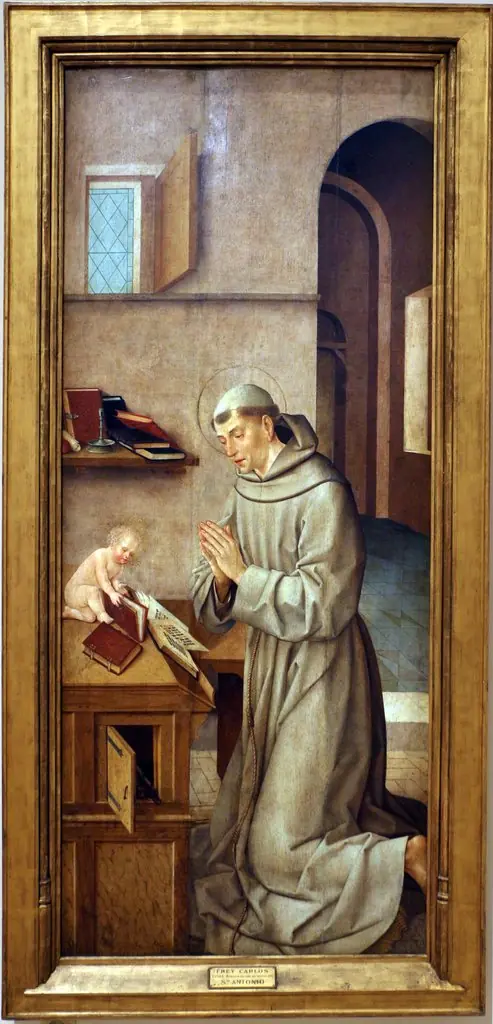
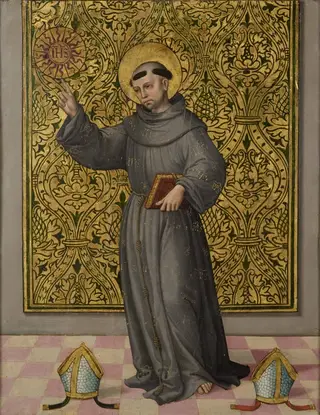
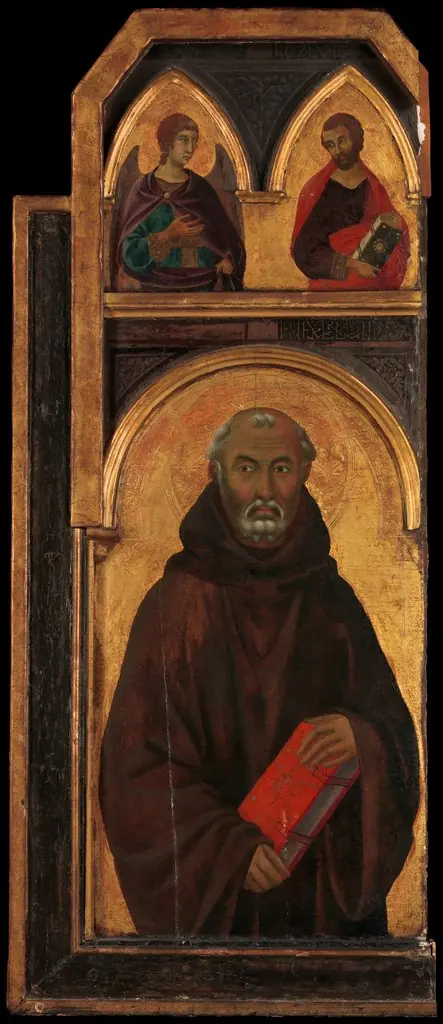
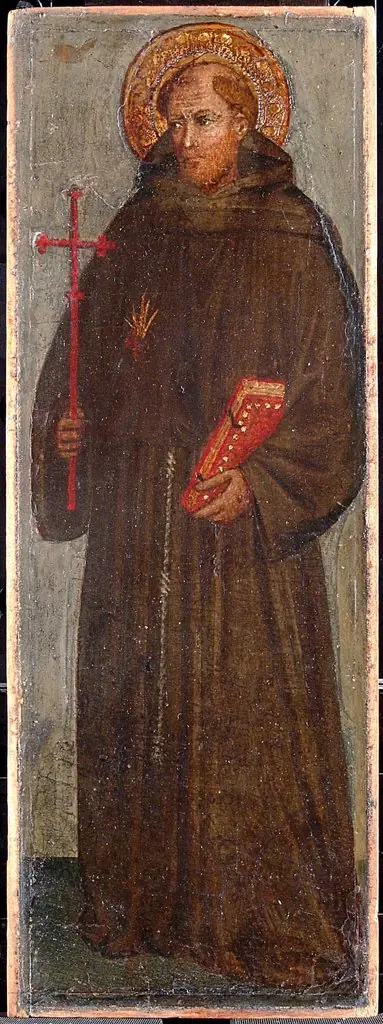
The panel depicts Saint Anthony of Padua, identifiable by his Franciscan habit and the Christ Child appearing on a book he holds, a motif linked to a miracle in which the Christ Child revealed himself to Anthony during prayer. The book symbolizes Anthony's scholarship and preaching, while the Christ Child's presence signifies divine revelation and the saint's sanctity. Such iconography underscores the work's devotional purpose, promoting Anthony's intercessory role and the Franciscan emphasis on humility and learning.
The museum's records also associate the panel with Anthony the Great, reflecting the period's devotion to ascetic saints.
Technique & Style
The panel painting Saint Anthony of Padua by Maso di Banco employs tempera on wood, consistent with mid-fourteenth-century Florentine practice. Measuring 74.3 cm in height and 40.6 cm in width, the work exhibits refined linear definition and controlled modeling, hallmarks of the artist's style within the Giottesque tradition. Figures are rendered with volumetric solidity yet restrained drapery folds, emphasizing clarity over excess.
The handling favors precise contours and localized color modulation rather than optical illusionism, reinforcing the panel's devotional function.
History & Provenance
The panel painting of Saint Anthony of Padua was executed by Maso di Banco in 1340 using tempera on wood. It portrays the saint with traditional attributes, reflecting the religious iconography of the period, and is consistent with early-14th-century Florentine workshop practice. The work is held in the collection of the Metropolitan Museum of Art in New York and measures 74.3 cm in height and 40.6 cm in width.
The sources confirm its current institutional location and physical dimensions but do not provide a specific accession number or record any exhibition history for the piece.
Context
Maso di Banco's Saint Anthony of Padua, created in 1340, represents a contribution to the artist's body of religious works within the Trecento period. Executed in tempera on panel, the piece resides in the collection of the Metropolitan Museum of Art. The work is firmly attributed to Maso di Banco, a figure active in the early-to-mid 14th century, and reflects his engagement with hagiographic subjects common to the era.
Its inclusion in a major institutional collection underscores its status as an artifact of Italian religious art that preserves the stylistic conventions of the mid-1300s.
Overview
Maso di Banco, a Florentine painter active in the mid-14th century, created Saint Anthony of Padua around 1340. This tempera painting depicts a revered figure, characterized by a solemn expression and a richly adorned book. The work exemplifies the artistic trends of its period and is currently housed in The Metropolitan Museum of Art, offering insight into early Renaissance devotional art.
Artist & collection
Artist
Maso di Banco (working c 1335–1350) was an Italian painter of the 14th century, who worked in Florence, Italy.