Artwork
Saint Anthony of Padua
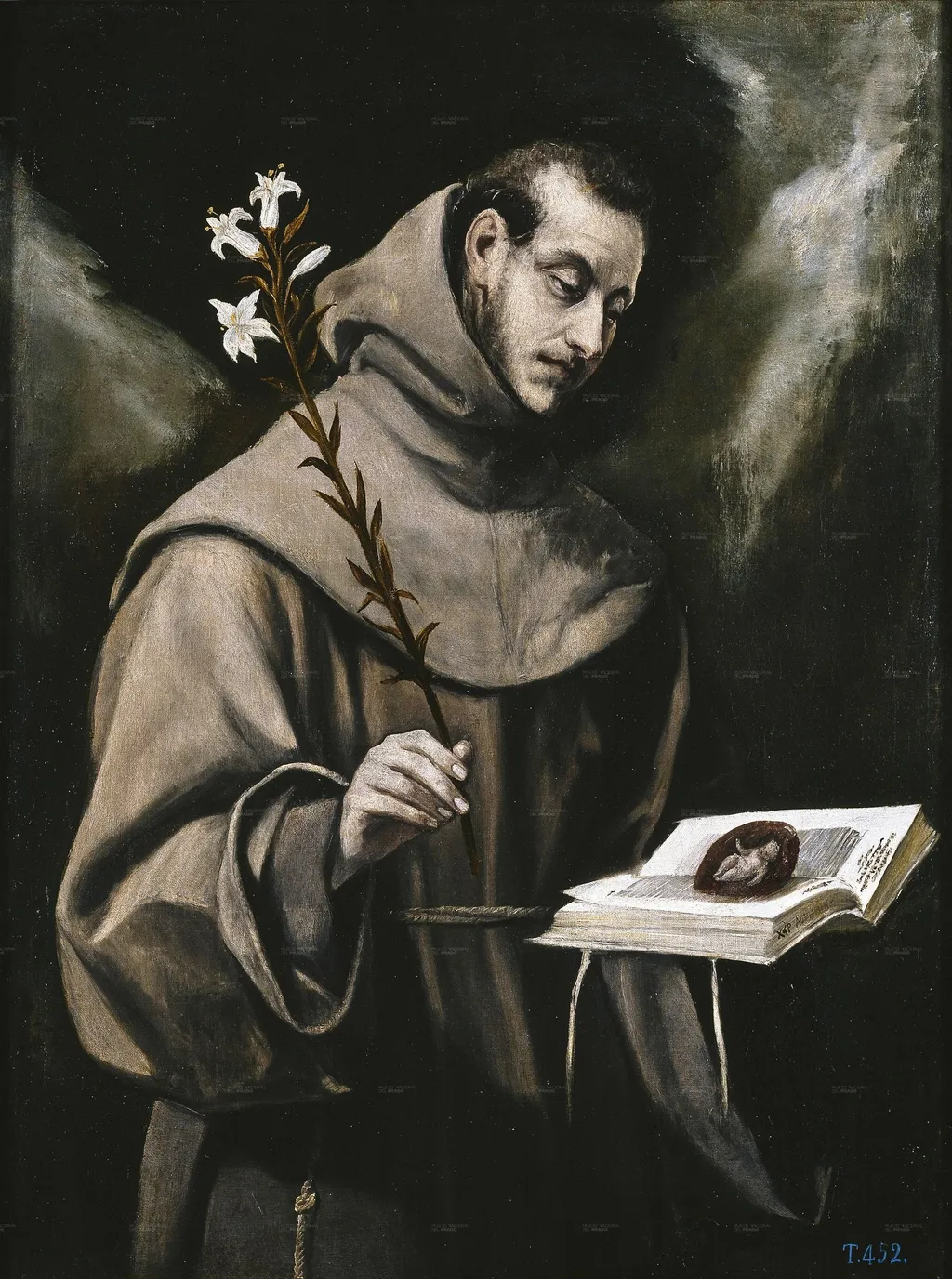
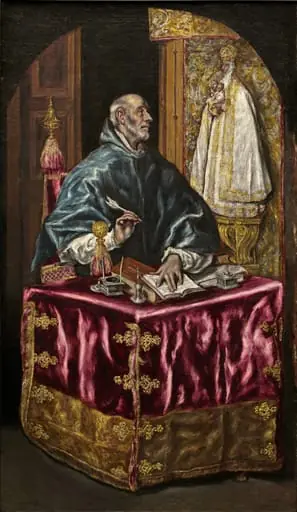
Saint Anthony of Padua is an oil painting by the Mannerist artist El Greco. It dates from 1590 and is held in the collection of the Museo del Prado.
About this work
Saint Anthony of Padua is an oil painting created by El Greco around 1580. The work shows the saint in a traditional devotional pose, painted in the artist’s characteristic style. It’s part of the Prado’s collection in Madrid, where it has been on display for centuries. If you liked this piece, you might want to explore more about the artist: El Greco.
Subject & Meaning
The painting depicts Saint Anthony of Padua, a Franciscan saint, dressed in his traditional brown habit.
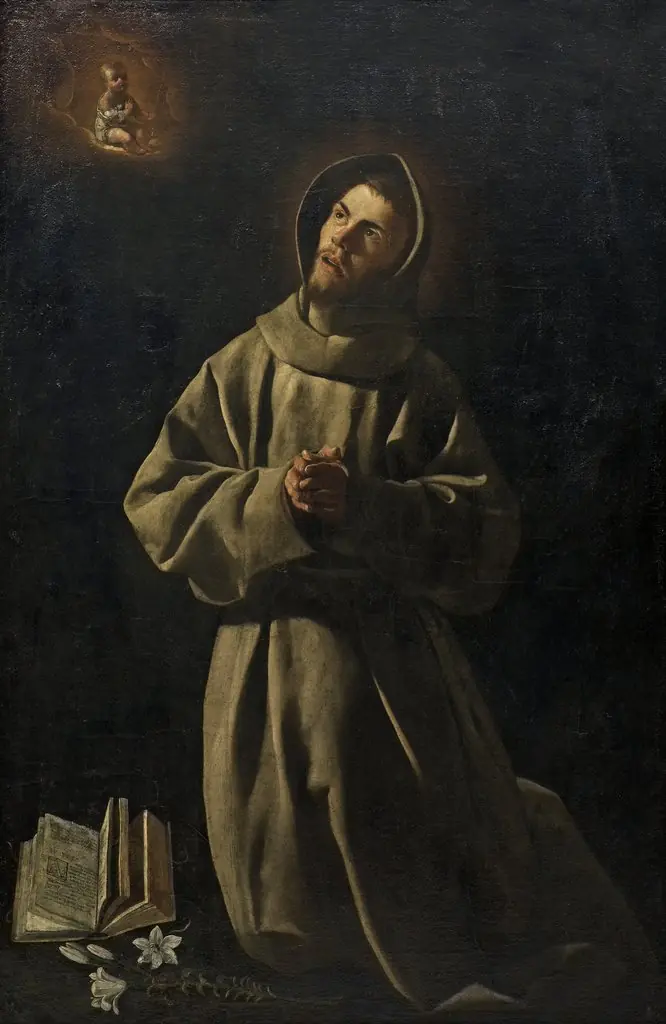
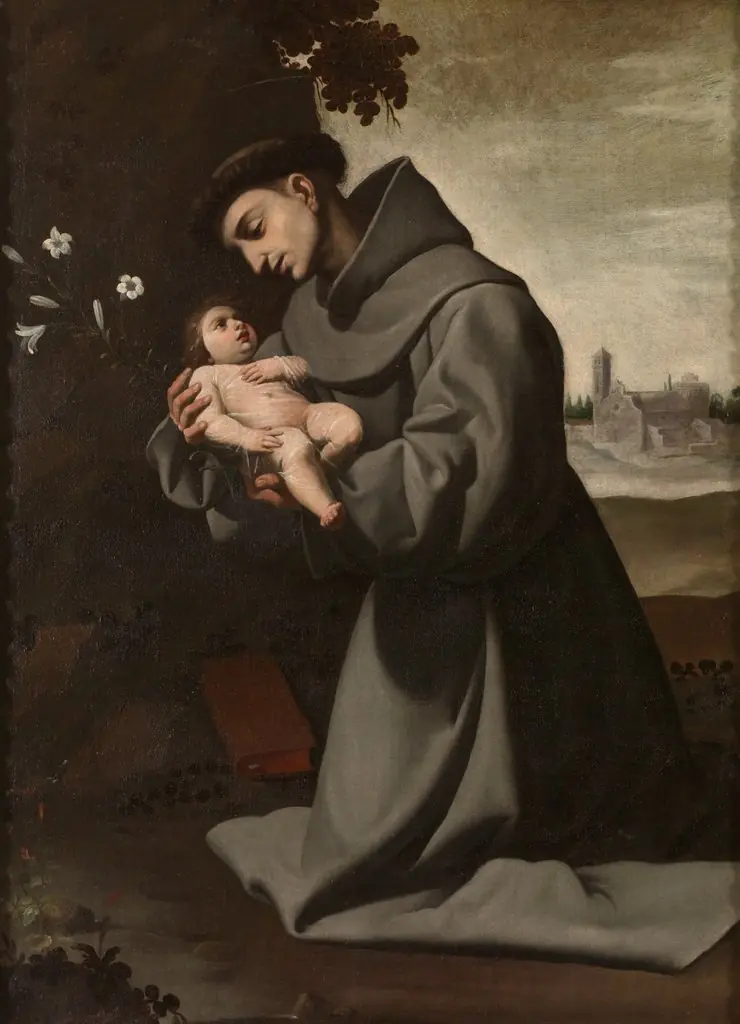
The painting depicts Saint Anthony of Padua, a Franciscan saint, dressed in his traditional brown habit. He holds a lily in one hand, a standard symbol of purity, and an open book in the other, which alludes to his dedication to theological study and his role as a prominent preacher. Resting upon the book is an image of the Christ Child; radiographic analysis reveals this figure was added later to align the work with the consolidated iconography of the saint.
The composition is set against a dark, cloudy background that creates a mystical atmosphere, directing the viewer's focus toward the illuminated elements: the saint's face, the white lily, and the book's pages.
Technique & Style
The painting is executed in oil on canvas with dimensions of 104 × 79 cm. Its composition centers on Saint Anthony of Padua, depicted in a Franciscan habit, holding an open book in his left hand and a lily in his right. Radiographic analysis revealed that the small image of the Christ Child on the open book was added later to align with established Antonine iconography. The background consists of a dark, cloudy sky that isolates the saint’s face, the lily, and the illuminated pages as focal points of light.
Stylistically, the handling reflects El Greco’s Venetian training: rapid, vigorous brushwork and a palette of luminous contrasts echoing Titian and Tintoretto. The nocturnal cloud formation also shows Michelangelo’s influence, lending a mystical atmosphere to the scene.
History & Provenance
Executed around 1580, shortly after El Greco's Venetian period and at the beginning of his residence in Toledo, this oil on canvas depicts Saint Anthony of Padua. The work bears the artist's signature in uppercase Greek characters on the edge of the book held by the saint, reading "Hand of Domenico." Radiographic analysis reveals that the small image of the Christ Child appearing on the open book was not part of the original composition but was added later to align the painting with established Antonian iconography.
The painting is currently housed in the Museo del Prado in Madrid. Earlier records indicate it was held in the collection of the Museo de la Trinidad before becoming part of the Prado's holdings.
Painted around 1580, Saint Anthony of Padua is held in the collection of the Museo del Prado in Madrid, Spain. Earlier records indicate the work was also part of the holdings of the Museo de la Trinidad before residing in its current location. The painting measures 104 by 79 centimeters and is executed in oil on canvas.
While the work is documented as being exhibited within the museum's galleries, specific details regarding temporary loan exhibitions or a chronological exhibition history are not provided in the available sources.
Context
Scholarship on the painting emphasizes its role within El Greco's mature period in Toledo and its dialogue with Venetian influences. The work demonstrates the artist's synthesis of Michelangelo's compositional dynamism, Titian's coloristic vigor, and Tintoretto's gestural energy, as noted in multiple sources. Radiographic analysis reveals a later addition of the infant Christ figure on the open book, aligning the composition with evolving Antonian iconography.
The signature in Greek majuscule on the book's edge confirms the involvement of Domenico, reflecting workshop practices. Critical reception highlights the painting's expressive intensity and mystical atmosphere, particularly the nocturnal cloud background that focuses attention on the saint's face, lily, and illuminated manuscript. This piece is consistently documented as part of the Museo del Prado's collection since its acquisition, forming a key reference point for studies of El Greco's religious output and the stylistic evolution of Counter-Reformation art.
Overview
Executed in oil on canvas around 1580, this work by Doménikos Theotokópoulos, known as El Greco, depicts Saint Anthony of Padua. The painting belongs to the collection of the Museo del Prado in Madrid, where it has been displayed for many years as part of the museum’s holdings of Spanish Renaissance art.
Own this work as a print
Artist & collection
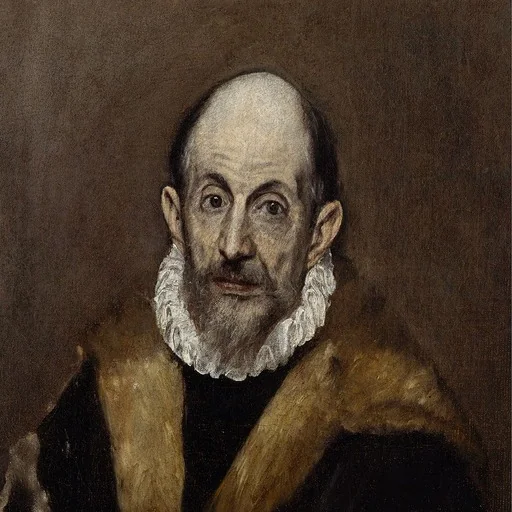
Artist
Doménikos Theotokópoulos was born in 1541 in Candia (modern Heraklion), the capital of Venetian-ruled Crete, where he was trained in the post-Byzantine tradition of icon painting.