Artwork
Saint Anthony of Padua
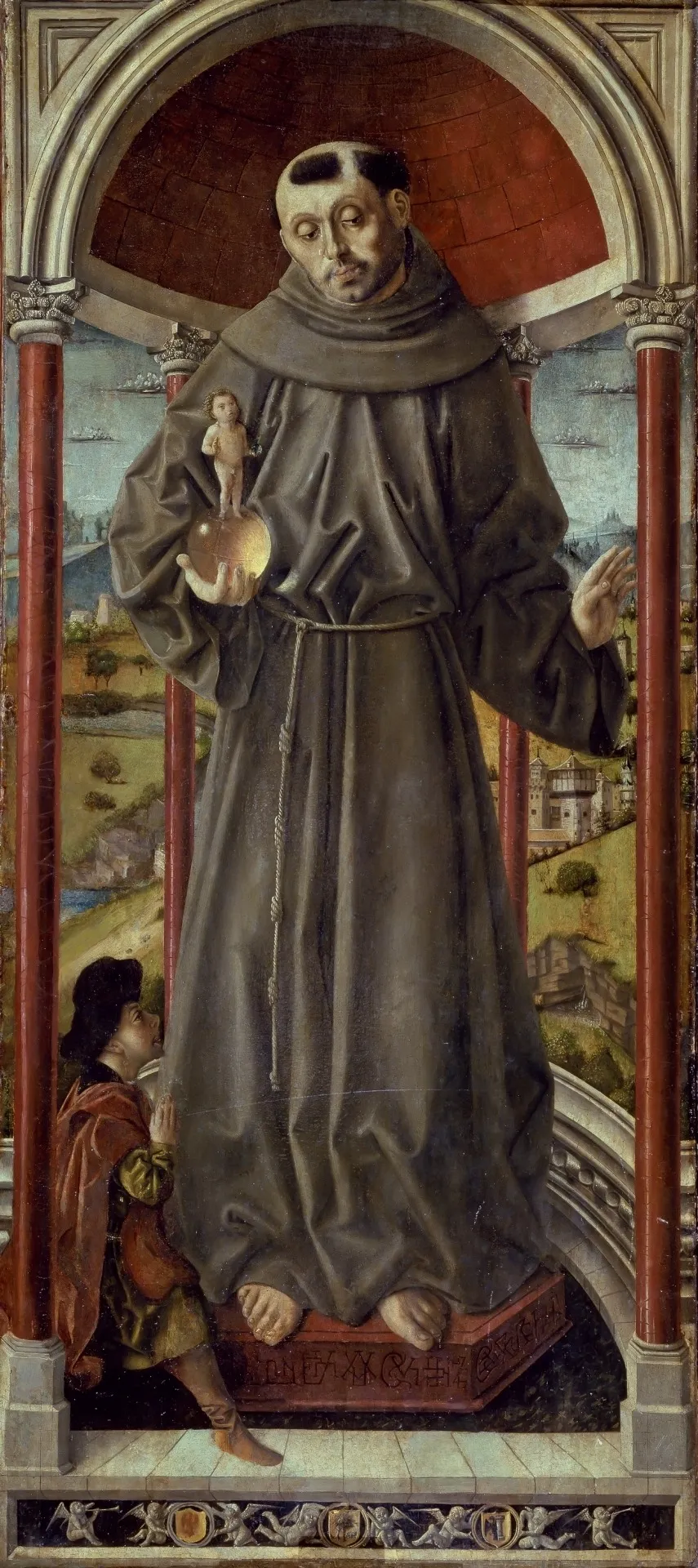
Saint Anthony of Padua is an unspecified painting by the Byzantine icon painting artist Maestro de los Luna. It dates from 1501 and is held in the collection of the Museo del Prado.
About this work
Subject & Meaning
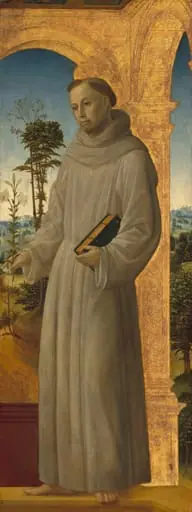
The painting portrays Anthony of Padua holding the infant Jesus while displaying a coat of arms and an orb, symbols that emphasize his role as a preacher and his association with divine authority. Created in 1501 by Maestro de los Luna for the Museo del Prado, the composition reflects late medieval Spanish religious art where iconographic details served didactic purposes, linking the saint’s miracles to broader theological narratives.
Technique & Style
The work is an oil painting executed on wood panel, measuring 105 x 53 cm. It depicts Saint Anthony of Padua holding the Child Jesus while surrounded by symbolic attributes including a coat of arms and an orb. The composition follows late Gothic stylistic conventions with richly detailed drapery and intense emotional expression typical of early 16th-century Spanish religious art.
History & Provenance
The work is catalogued within the museum's holdings as a religious panel painting on panel, measuring 105 cm in height by 53 cm in width.
Saint Anthony of Padua was created in 1501 by the Maestro de los Luna, also identified as the Maestro de don Álvaro de Luna. The work is a religious painting produced in that year, with its inception recorded as 1501-01-01. It is held in the collection of the Museo del Prado, where it remains located.
The sources do not provide further information regarding the original commission, prior ownership, or intermediate provenance of the work prior to its entry into the museum's holdings.
Saint Anthony of Padua, painted by the Maestro de los Luna in 1501, is held in the collection of the Museo del Prado. The work is catalogued within the museum's holdings as a religious panel painting on panel, measuring 105 cm in height by 53 cm in width.
No specific exhibition history beyond its presence in the Museo del Prado's permanent collection is documented in the available sources.
Overview
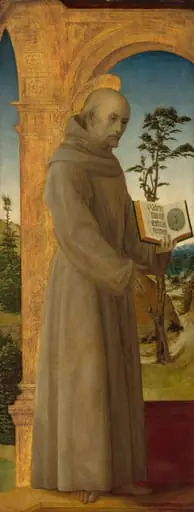
Created in 1501 by the Spanish painter known as Maestro de los Luna, this oil work portrays Saint Anthony of Padua. The figure stands before an arched opening, his dark, hooded habit contrasting with the luminous gold of the orb he cradles. A diminutive, unclothed child rests atop the sphere, while a tranquil landscape of hills and distant structures fills the background. The composition is housed in Madrid’s Museo del Prado.
Context
At the turn of the 16th century, Spanish art was increasingly influenced by both Italian Renaissance ideals and local Gothic traditions. Maestro de los Luna’s work reflects this synthesis, combining a clear, humanistic portrayal of a saint with the lingering ornamental richness of earlier Spanish painting, situating the piece within the broader evolution of Iberian religious art.
Artist & collection
Artist
Maestro de los Luna, also called the Master of don Álvaro de Luna, is the conventional name given to an anonymous Spanish painter active in Toledo and Guadalajara in the late fifteenth century, roughly between 1483 and 1495.