Artwork
Ill-Matched Lovers
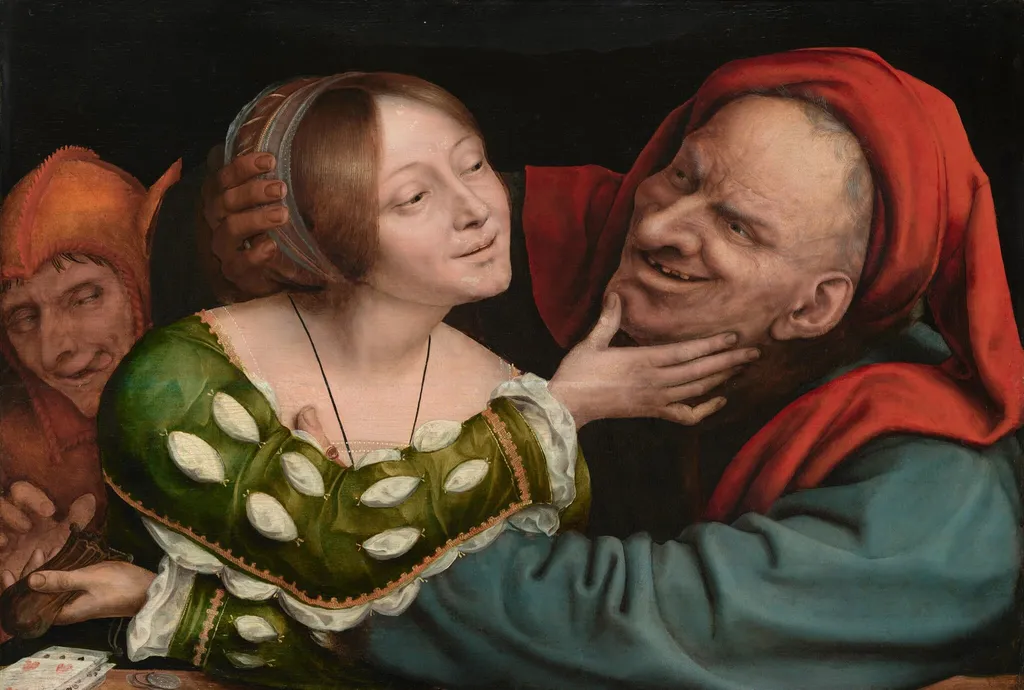
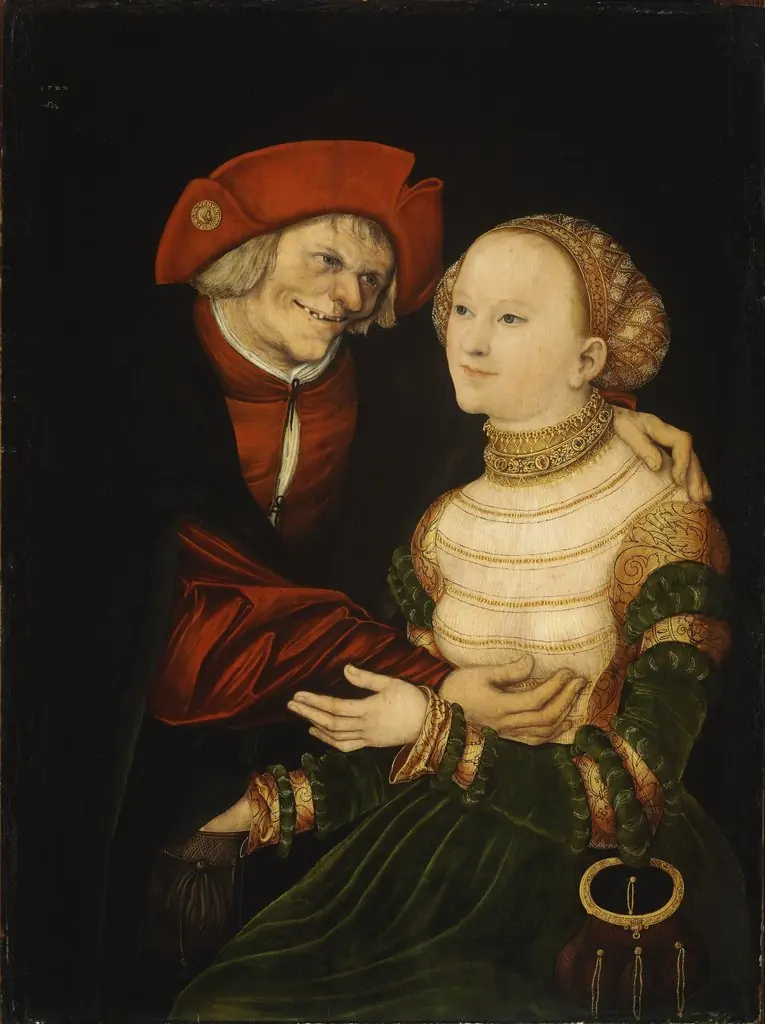
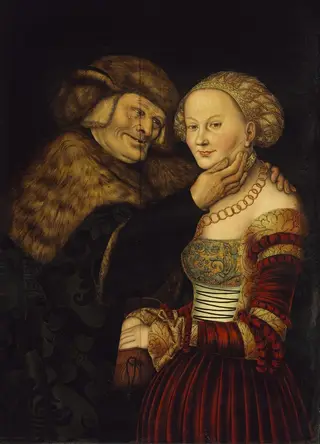
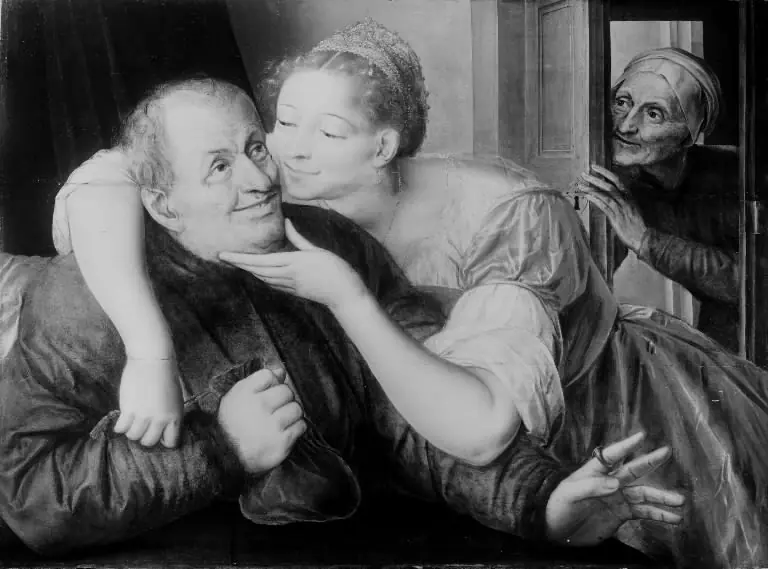
Ill-Matched Lovers is an oil painting by the Northern Renaissance artist Quinten Metsys. It dates from 1522 and is held in the collection of the National Gallery of Art.
About this work
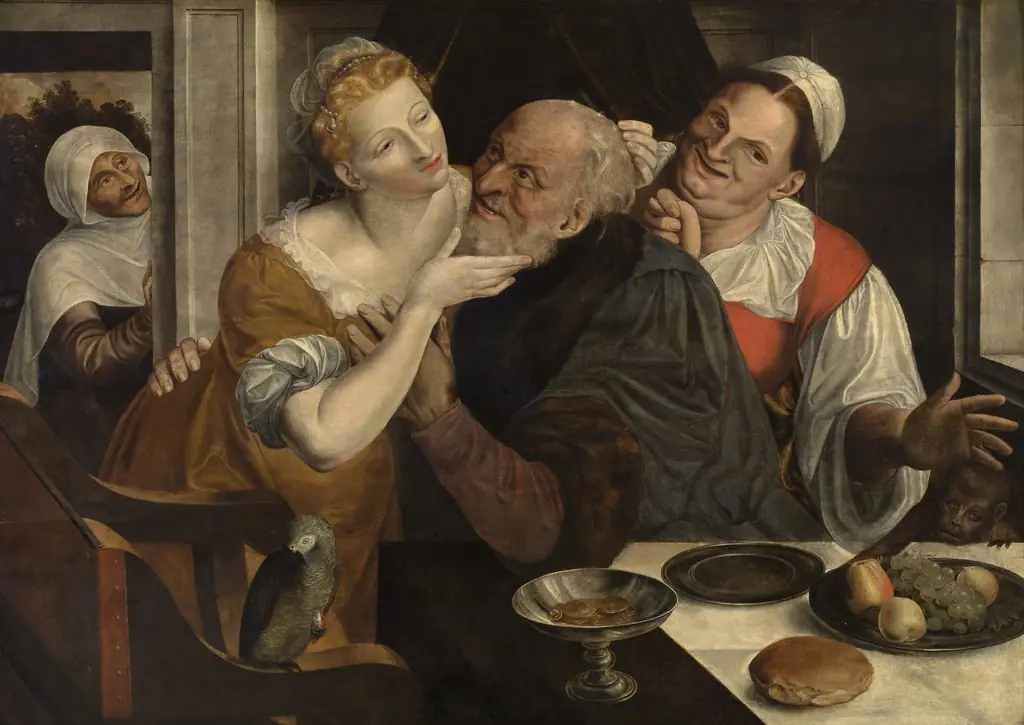
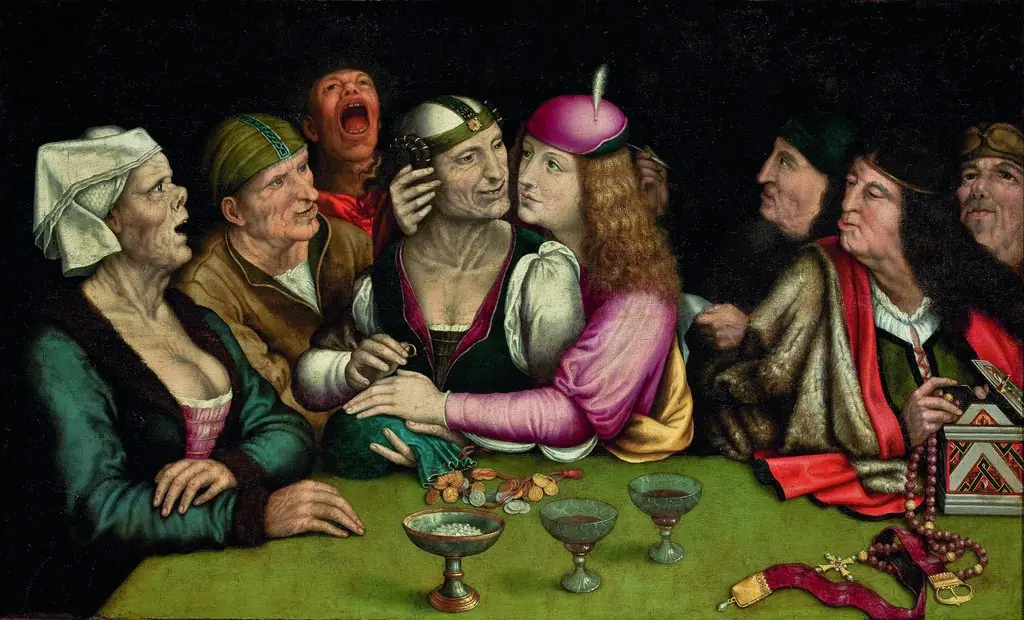
Playing cards scattered on the table add another note of vice to the transaction.
An old man in a fur-lined coat slides his hand beneath a young woman's bodice while she, smiling back, slips his purse toward a cross-eyed fool waiting at her side. Painted in Antwerp around 1520 by Quentin Massys, this small panel in the National Gallery of Art turns a stock proverb about unequal love into a sharp-eyed scene of mutual deception. Playing cards scattered on the table add another note of vice to the transaction.
Subject & Meaning
Quentin Massys's Ill-Matched Lovers (1522) is an allegorical genre scene that critiques the folly of unequal love. The painting depicts an elderly man, infatuated with a young woman who, with a jester-like accomplice, pickpockets his purse. The iconography, playing cards, money bag, coin purse, reinforces themes of deception, gambling, and financial loss.
The work symbolizes the foolishness of old age when blinded by desire, warning against mercenary and mismatched relationships. Massys blends Northern moralizing with Italian influence, notably Leonardo da Vinci's caricature studies for the old man's face.
Technique & Style
Painted in oil on panel, _Ill-Matched Lovers_ (43.2 × 63 cm) exhibits Quentin Massys's meticulous handling and attention to surface detail typical of early Netherlandish painting. The composition centers on the unequal couple, with the old man's face showing a clear influence from a drawing by Leonardo da Vinci, reflecting Massys's integration of Italian Renaissance elements. The narrative of deception is conveyed through the woman's glance and the accomplice's action of stealing the purse.
Allegorical details such as the jester, playing cards, and money bag reinforce the theme of foolishness in old age. The oil medium and panel support allow for subtle modeling and rich, nuanced coloration.
History & Provenance
The painting is dated 1522. Its earliest documented ownership may be traced to Steven Wils the younger (d. 1628) and Herman Neyt (d. 1642), both of Antwerp. By the nineteenth century it belonged to James-Alexandre, comte de Pourtalès-Gorgier (1776–1855) of Paris; after his death it passed through members of the Pourtalès family, including Comte Edmond de Pourtalès (d. 1895) and later the Comtesse de Pourtalès.
The work was exhibited at the 1902 Exhibition of Flemish Primitives in Bruges. It later belonged to Count Bismarck in Paris and New York during the late 1940s, then to the dealer Spencer A. Samuels, from whom the National Gallery of Art in Washington purchased it on 7 October 1971.
Context
Scholarship positions Massys's Ill-Matched Lovers as a moralizing allegory on the folly of old age, a common Northern Renaissance trope. The painting demonstrates Massys's synthesis of Northern genre conventions with Italian Renaissance influence, specifically Leonardo da Vinci's physiognomic drawings seen in the old man's face. Its inclusion in the landmark 1902 Bruges Exhibition of Flemish Primitives signaled its role in the early 20th-century revival of interest in early Netherlandish art.
The work has received sustained scholarly attention, including a catalogue raisonné entry by Larry Silver and systematic catalogue analysis by Hand and Wolff, and early references in 17th-century inventories further attest to its longstanding art-historical significance.
Legacy
The painting's modern reputation was cemented by its inclusion in the landmark 1902 Exposition des Primitifs Flamands in Bruges. Since 1971 it has been housed at the National Gallery of Art in Washington, where it features in major systematic catalogues, affirming its status within the Northern Renaissance canon.
Overview
Quentin Matsys's Ill-Matched Lovers, an oil on panel from the early 1520s, presents a cautionary tale of infatuation and deception. This small painting, now in the National Gallery of Art, illustrates an older man's foolish devotion to a younger woman who, with the help of an accomplice, is simultaneously robbing him. The work exemplifies a popular Northern European theme, rendered with keen observation and a touch of satire.
Own this work as a print
Artist & collection
Artist
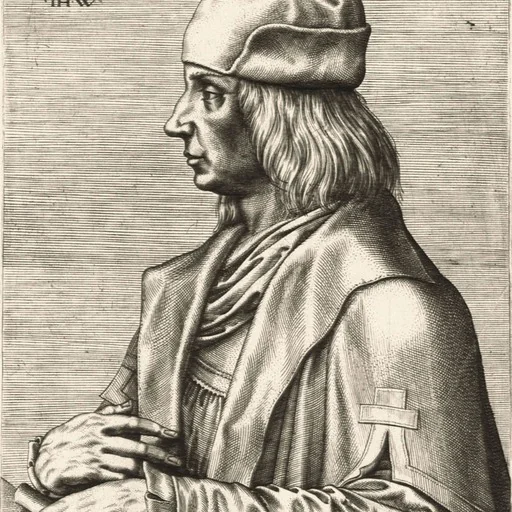
Quentin Matsys (UK: MAT-sysse, US: MAHT-sysse; also Massys or Metsys; Flemish: Quinten Matsijs; 1466–1530) was a Flemish painter in the Early Netherlandish tradition.