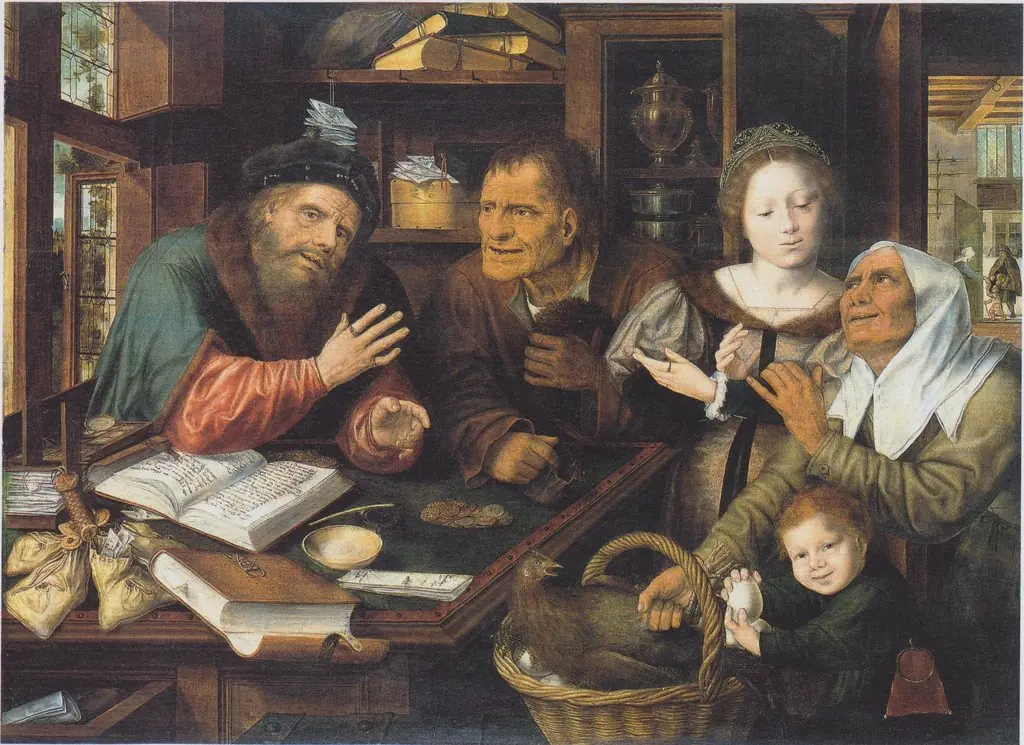
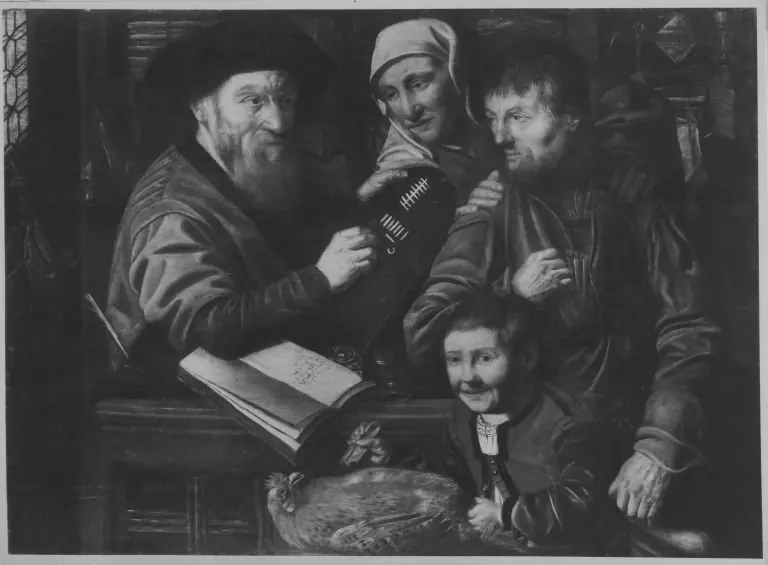
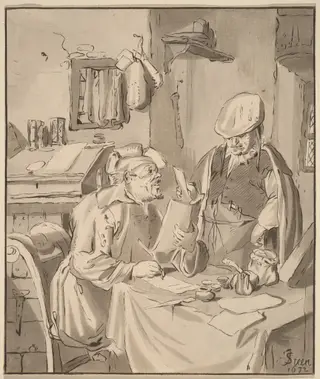
Artwork
The Two Tax Collectors
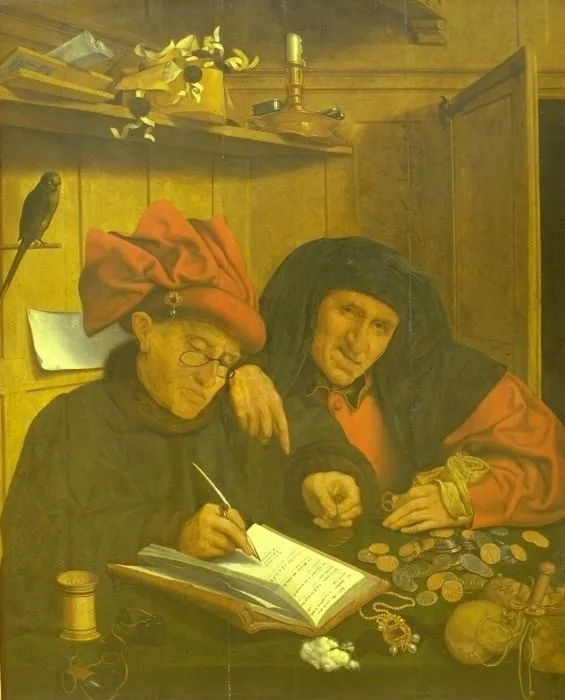
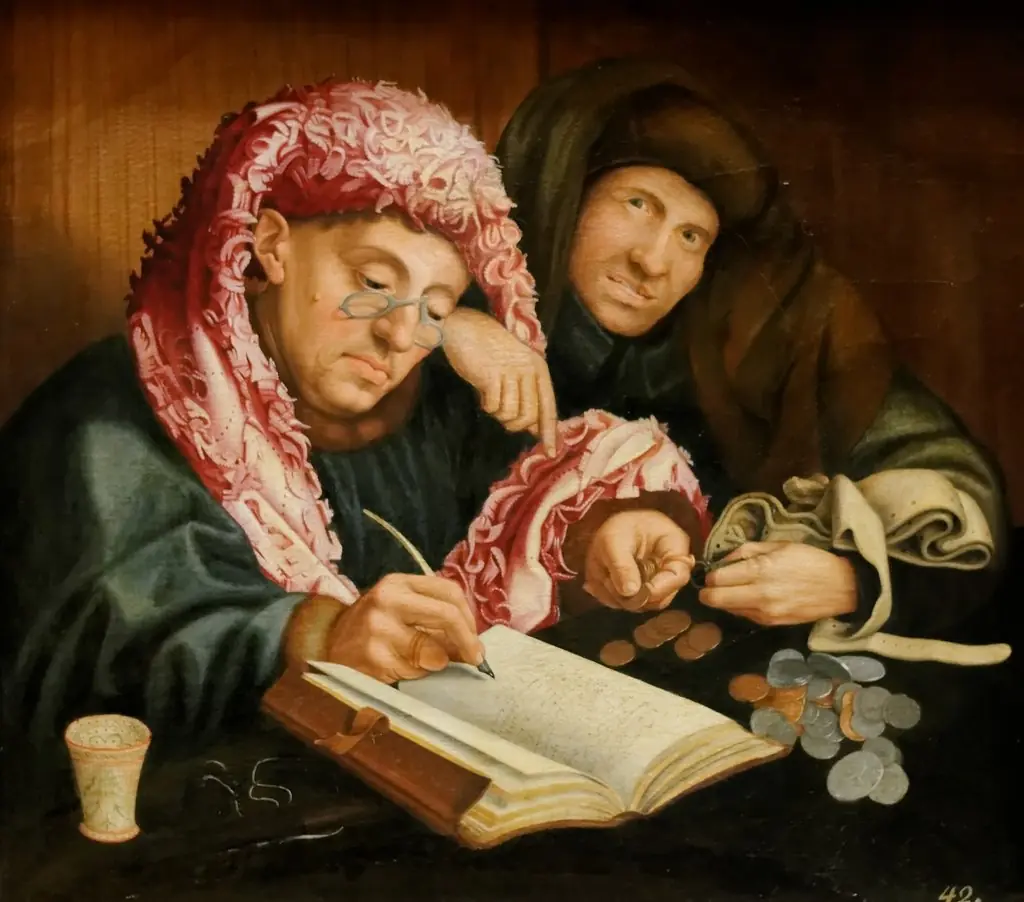
The Two Tax Collectors is a paint painting by the Northern Renaissance artist Quinten Metsys. It dates from 1530 and is held in the collection of the Gemäldegalerie Berlin.
About this work
Subject & Meaning
Quinten Metsys's 1530 painting, The Two Tax Collectors, is a genre scene centered on the main subject of a tax collector engaged in financial activities.
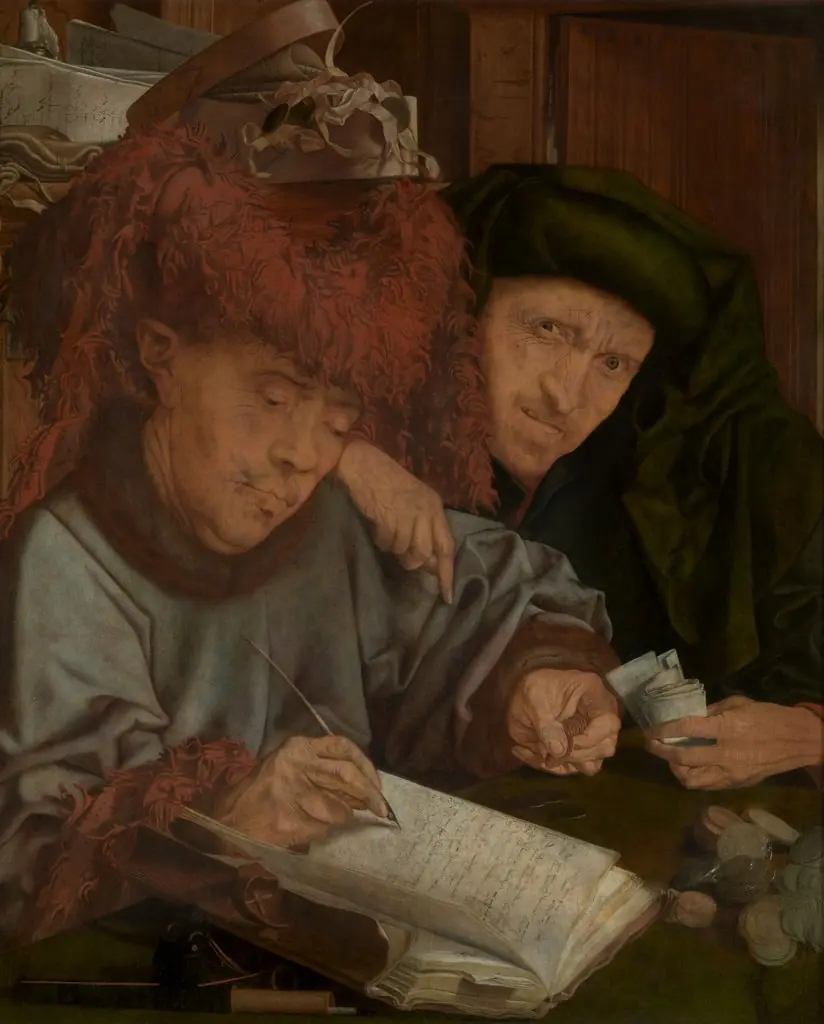
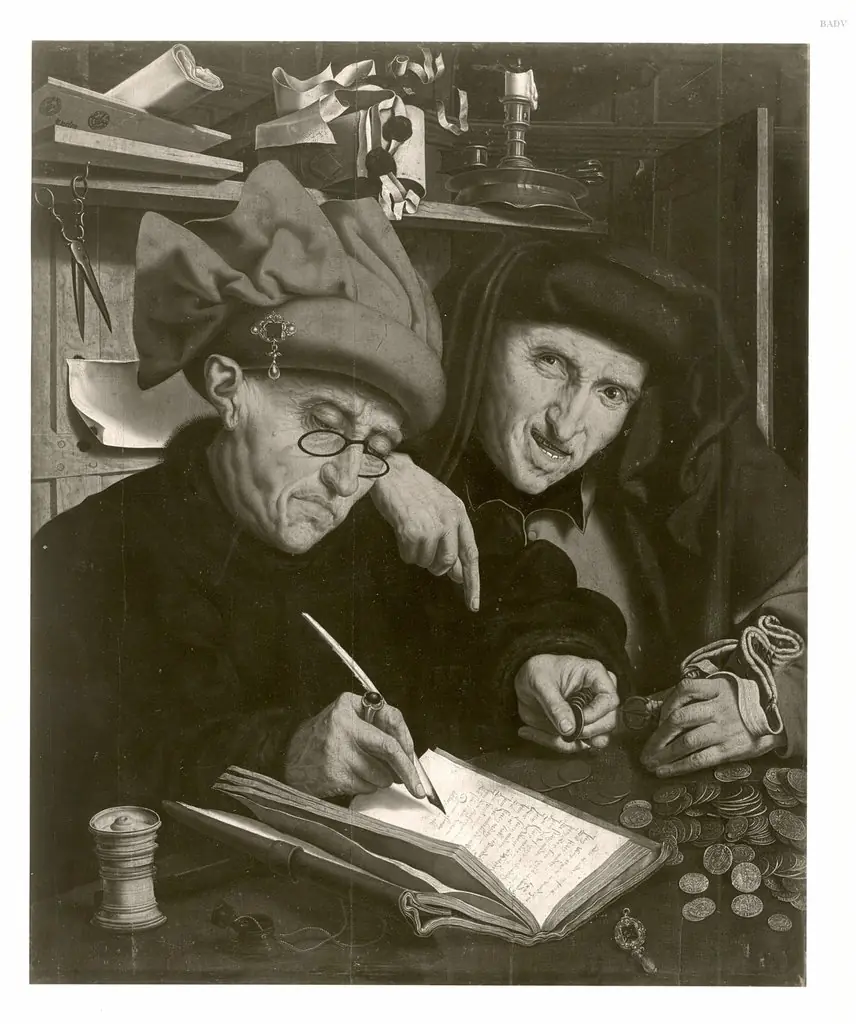
Quinten Metsys's 1530 painting, The Two Tax Collectors, is a genre scene centered on the main subject of a tax collector engaged in financial activities. The work depicts two figures, identified as a tax collector and a financial adviser, gathered around a ledger while counting coins. This imagery of accounting and monetary exchange is set within a domestic interior featuring a doorway and a parrot.
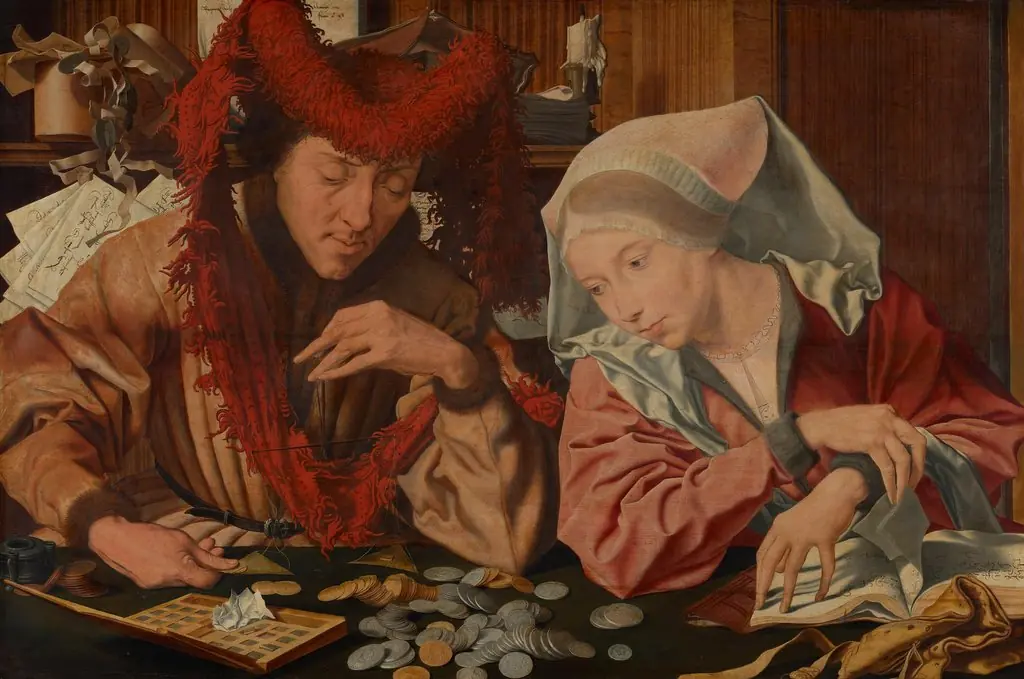
The composition is based on the earlier work The Debt Collectors, continuing the exploration of fiscal themes common in the artist's oeuvre. The presence of the parrot and the focused interaction between the figures serve as key iconographic elements defining the narrative of financial transaction and advice.
Technique & Style
Created in 1530 by Quinten Metsys, this work is executed in paint on a wooden panel support. The composition measures 115 cm in height and 93 cm in width. Stylistically, the piece functions as a genre scene, depicting two figures identified as a tax collector and a financial adviser engaged in the act of counting coins and consulting a ledger.
The setting includes architectural elements such as a doorway and features a parrot, contributing to the narrative detail characteristic of the artist's approach to domestic interiors.
History & Provenance
Quinten Metsys created the painting The Two Tax Collectors in 1530. The work is executed in paint on a panel support and depicts figures associated with financial counting and ledgers. It is based on an earlier composition titled The Debt Collectors. The painting is currently held in the collection of the Gemäldegalerie in Berlin.
Context
Quinten Metsys' 1530 painting The Two Tax Collectors entered the Gemäldegalerie Berlin's collection and is documented in its catalogue as a pivotal genre scene that satirizes fiscal authority. Scholars have highlighted its sharp social critique, linking it to early Netherlandish traditions while emphasizing Metsys' role in shaping Antwerp's market for narrative works. The composition builds on earlier depictions of tax collectors but introduces a distinct Antwerp perspective, situating the piece within broader discussions of mercantile culture and moralizing art in the sixteenth century.
Overview
Quentin Matsys painted The Two Tax Collectors around 1530 while working in Antwerp. The oil work portrays a cramped interior where two elderly men handle money and documents near a doorway. The composition is modest in scale but densely arranged, emphasizing the figures’ interaction with coins, jewelry and a ledger. The painting now belongs to the Gemäldegalerie in Berlin.
Artist & collection
Artist
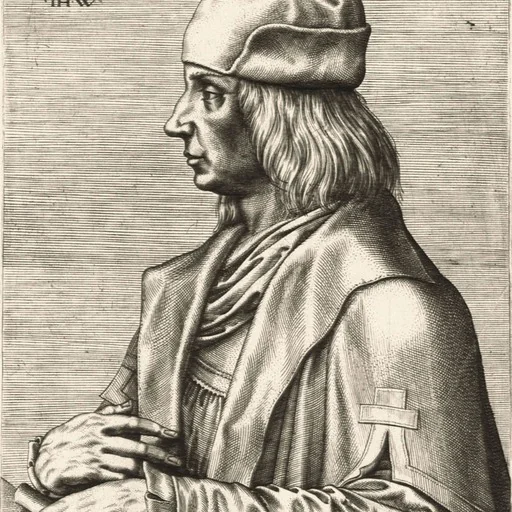
Quentin Matsys (UK: MAT-sysse, US: MAHT-sysse; also Massys or Metsys; Flemish: Quinten Matsijs; 1466–1530) was a Flemish painter in the Early Netherlandish tradition.