Artwork
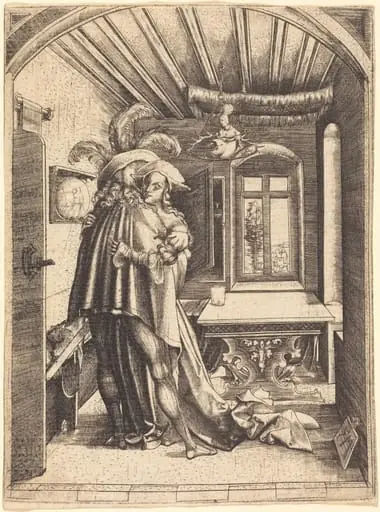
The Two Lovers
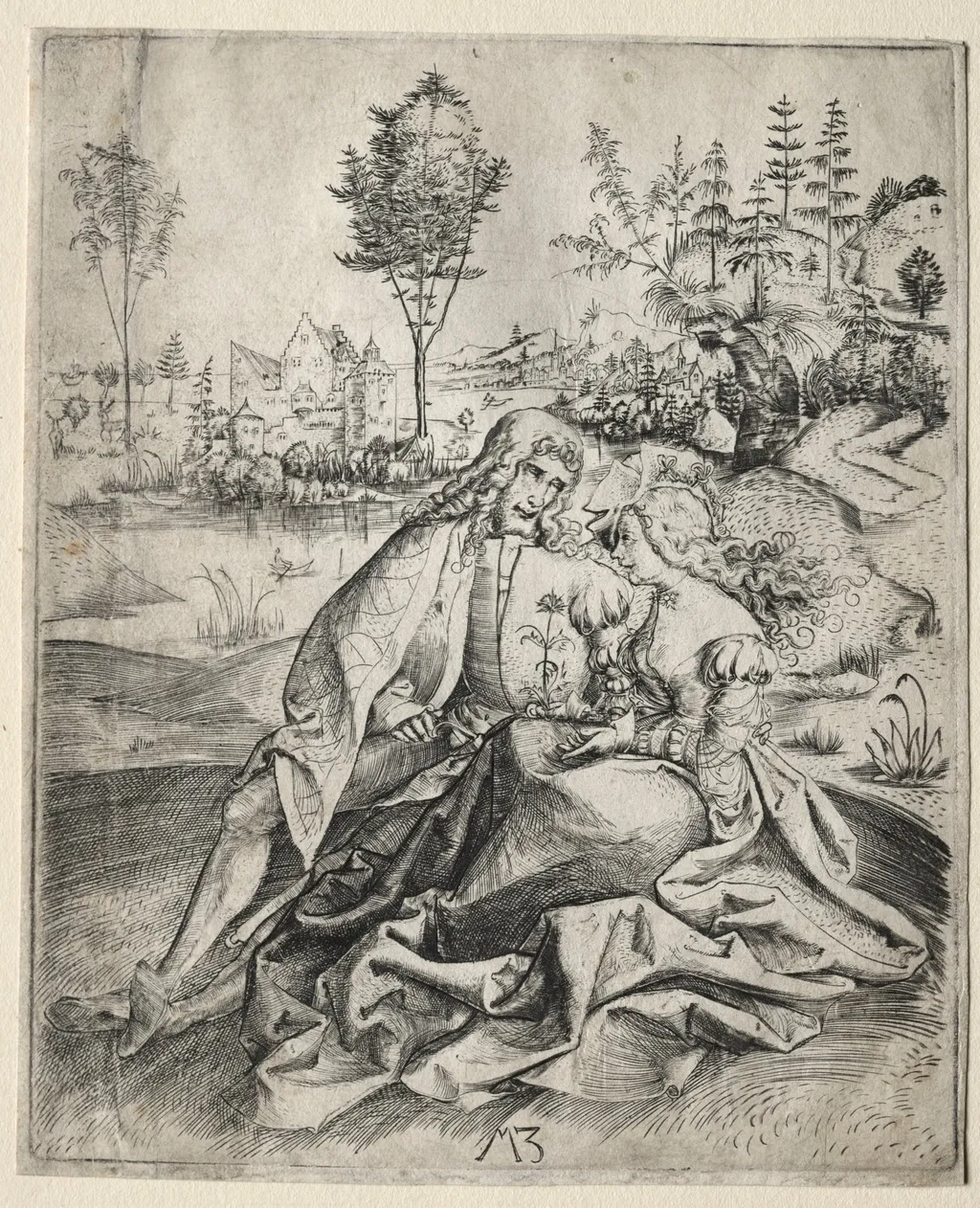
The Two Lovers is a print by the Renaissance artist Master MZ. It dates from 1502 and is held in the collection of the Cleveland Museum of Art.
- Accession no.
- 1922.364
- Credit line
- Dudley P. Allen Fund
About this work
Overview
Created in 1502 by the German engraver and painter Master MZ, The Two Lovers depicts a young couple seated intimately within a dense, naturalistic landscape.
Created in 1502 by the German engraver and painter Master MZ, The Two Lovers depicts a young couple seated intimately within a dense, naturalistic landscape. The composition centers on the figures, who rest on the ground with their legs bent to the side, a pose that emphasizes their closeness and shared space. The man, characterized by long curly hair and a draped cloak, holds a plant, while the woman, similarly adorned with flowing curls and a dress, grasps a small object, likely a flower or fruit, though the specific item is partially obscured.
The artist renders the surrounding foliage with meticulous detail, creating a textured backdrop that frames the subjects without distracting from their interaction. This work exemplifies Master MZ's contribution to early 16th-century German art, bridging the late Gothic tradition with emerging Renaissance sensibilities regarding human emotion and natural observation. The painting reflects the period's interest in allegorical representations of love and courtship, utilizing the landscape not merely as a setting but as an integral component of the narrative.
Its precise execution and emotional restraint are characteristic of the Master's style, distinguishing it within the corpus of German panel painting from the early 1500s.
Subject & Meaning
The image presents a man and a woman seated together in an open landscape. Both figures have long, curly hair; the man wears a cloak over his attire, while the woman is dressed in a flowing gown. Each holds an object, a plant in the man’s hand and a small animal in the woman’s, suggesting themes of fertility or domestic intimacy.
Technique & Style
Executed in print, the composition relies on pronounced chiaroscuro, employing stark light‑and‑dark contrasts to model the figures and give them a three‑dimensional presence. The treatment of foliage, hills, and distant architecture reflects the stylistic conventions of early Renaissance art.
History & Provenance
Created in the early sixteenth century, the work has remained relatively obscure until its acquisition by the Cleveland Museum of Art. The museum’s records indicate it entered the collection as part of a broader acquisition of Northern European prints.
Own this work as a print
Artist & collection


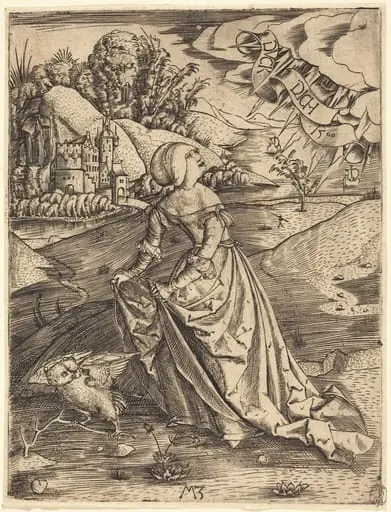
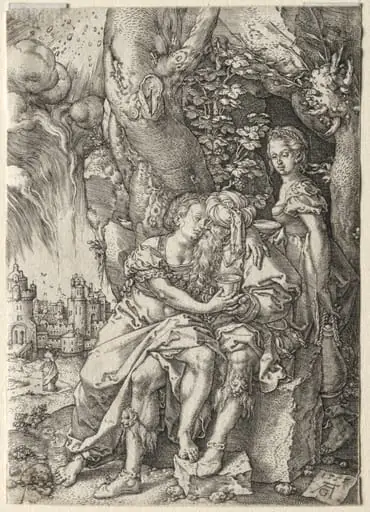
- The Story of Lot: Lot with His Daughters
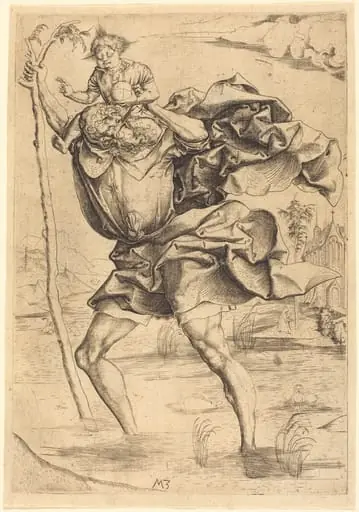
 Saint Christopher at the Border of a River
 Virgin and Child in a Landscape
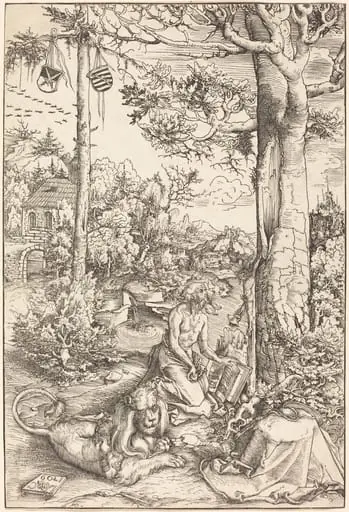 The Penitence of Saint Jerome
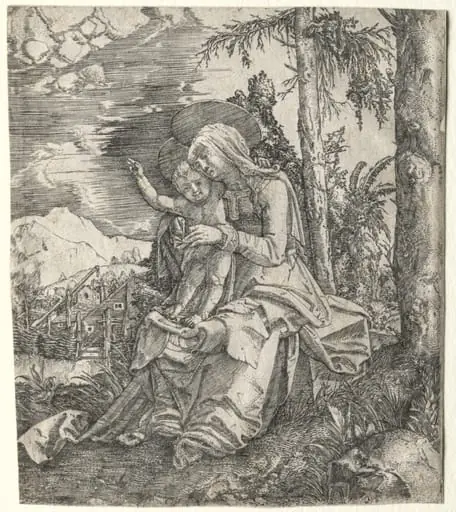 The Virgin in a Landscape
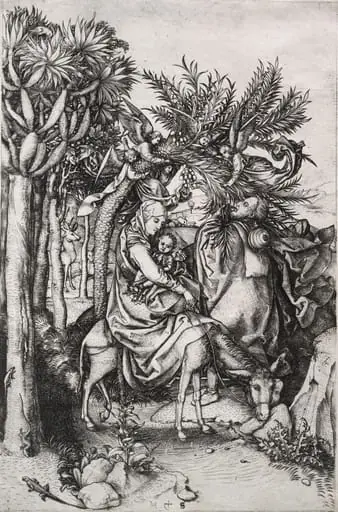 The Flight into Egypt
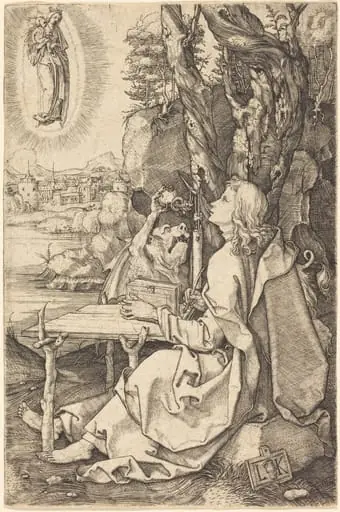 Saint John
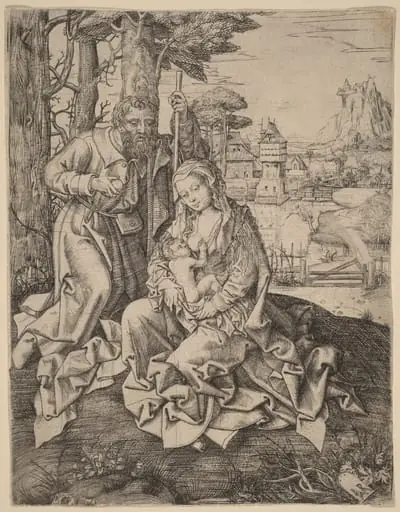 The Holy Family in a Landscape
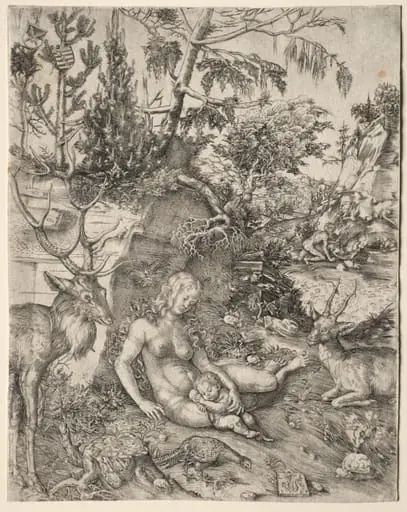 The Penance of St. John Chrysostom
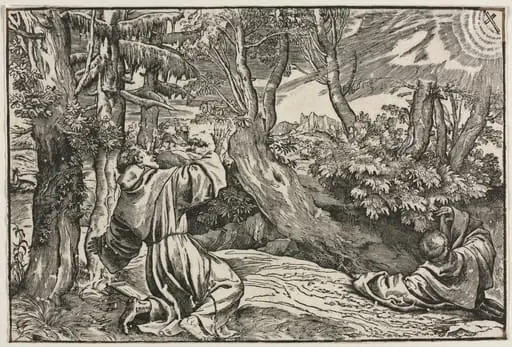 Saint Francis Receiving the Stigmata
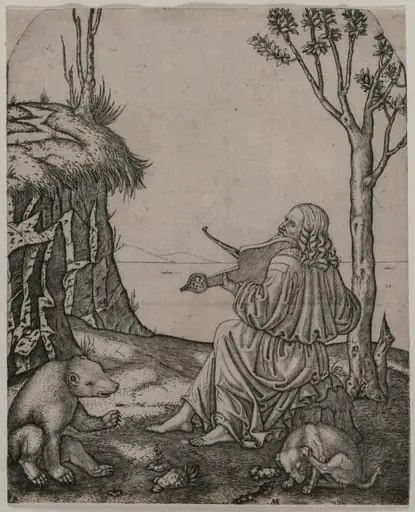 Orpheus Charming the Animals
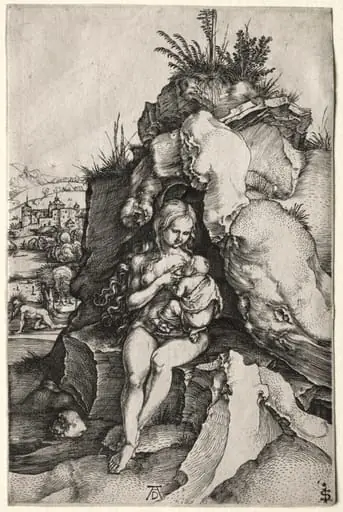 The Penance of St. John Chrysostom