Artwork
Crucifixión
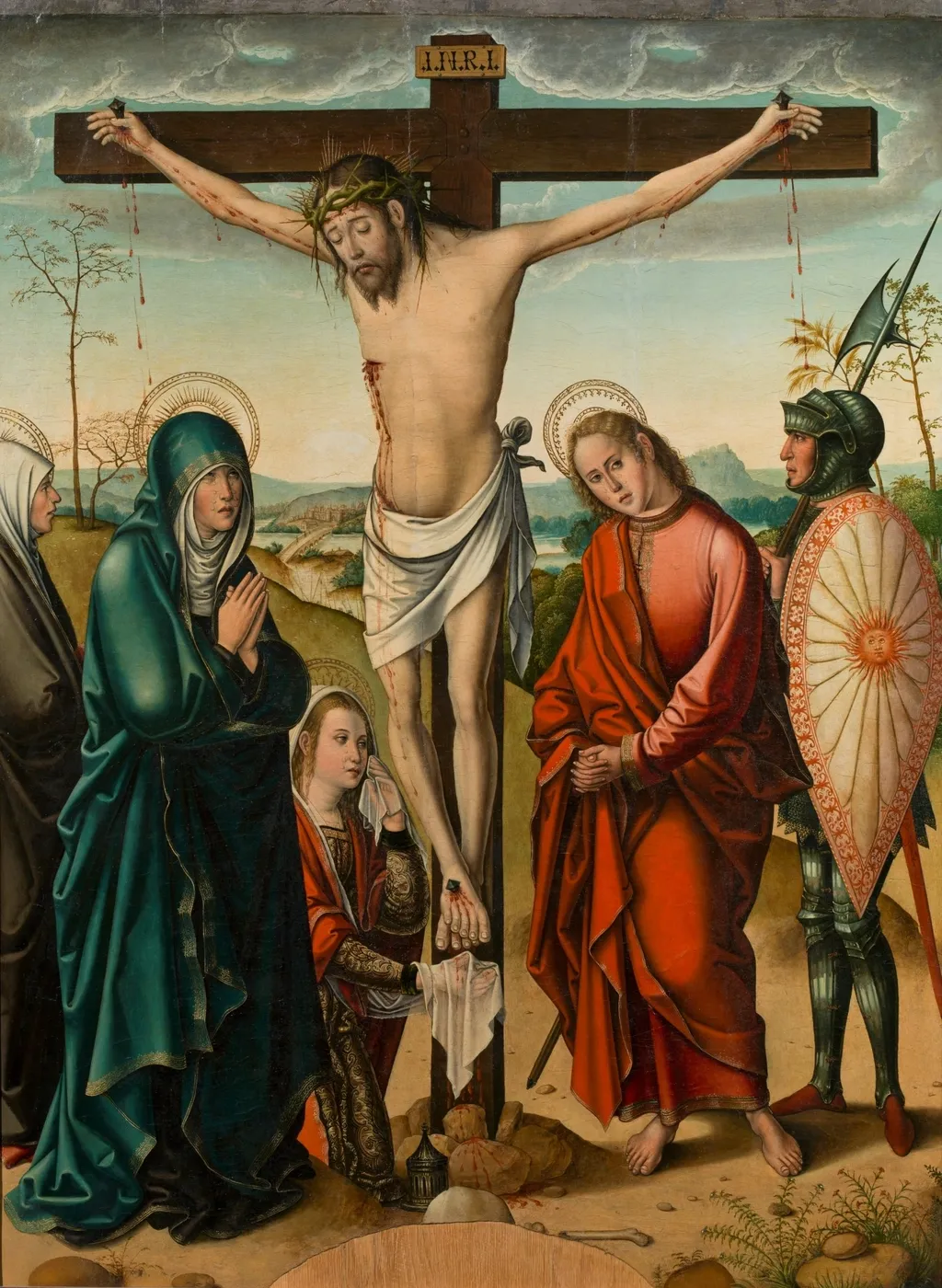
Crucifixión is an oil painting by the Northern Renaissance artist Master of Astorga. It dates from 1501 and is held in the collection of the Museo del Prado.
About this work
Subject & Meaning
The subject matter aligns with the genre of religious painting, emphasizing the narrative of the Passion through the visual representation of the main event.
The painting depicts the crucifixion of Jesus Christ, presenting the central figure of Christ upon the cross. As a work of religious art created in 1501 by the Master of Astorga, the composition focuses exclusively on this pivotal moment of Christian theology. The subject matter aligns with the genre of religious painting, emphasizing the narrative of the Passion through the visual representation of the main event.
The work serves as a devotional object, illustrating the sacrifice of Jesus as the core theme of the piece.
Technique & Style
The Crucifixión was executed in oil on wood panel by the Master of Astorga circa 1501. The work measures 133 cm in height by 100 cm in width and depicts the crucifixion of Jesus Christ. Its formal qualities include a somber palette and stark compositional balance characteristic of early Spanish religious painting.
History & Provenance
The painting Crucifixión is held in the collection of the Museo del Prado in Madrid. Created in 1501 by the Master of Astorga, the work is executed in oil on panel and measures 133 cm in height by 100 cm in width. The piece depicts the crucifixion of Jesus Christ and is classified as religious art within the museum's holdings.
No specific inventory number or detailed exhibition history for this work is provided in the available sources.
Overview
‘Crucifixión’ is an oil painting executed in 1501 by the anonymous artist known as the Master of Astorga. The work measures roughly a typical devotional panel and is part of the collection of the Museo del Prado in Madrid. It presents a conventional depiction of the crucifixion, arranged within a modestly detailed landscape that frames the central figure.
Context
The painting reflects the devotional trends of late Gothic and early Renaissance Spain, where the crucifixion motif served both liturgical and didactic purposes. The inclusion of a soldier in armor alongside mourners aligns with contemporary iconography that juxtaposes earthly power with divine suffering, a theme common in Spanish religious art of the period.
Own this work as a print
Artist & collection
Artist
This anonymous 16th-century Spanish painter created vivid, gold-backed religious scenes.

- Kreuzigung Christi
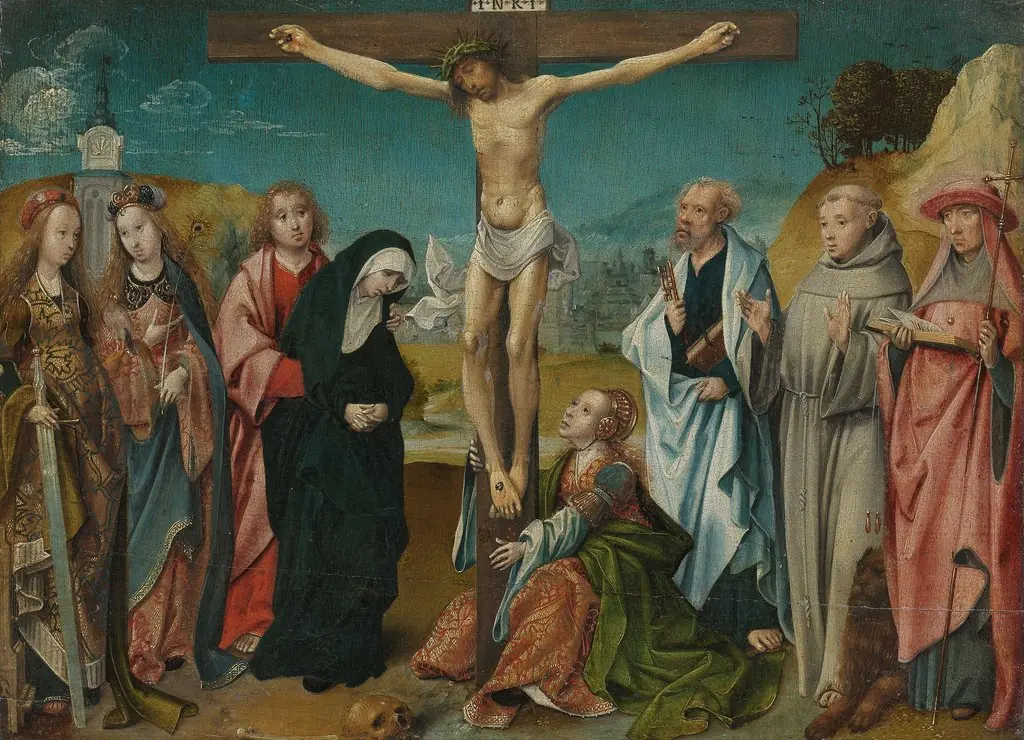 Christ on the cross with the Virgin, St John the Evangelist, Mary Magdalen, and Sts Cecilia and Barbara (left), and Sts Peter, Francis and Jerome (right)
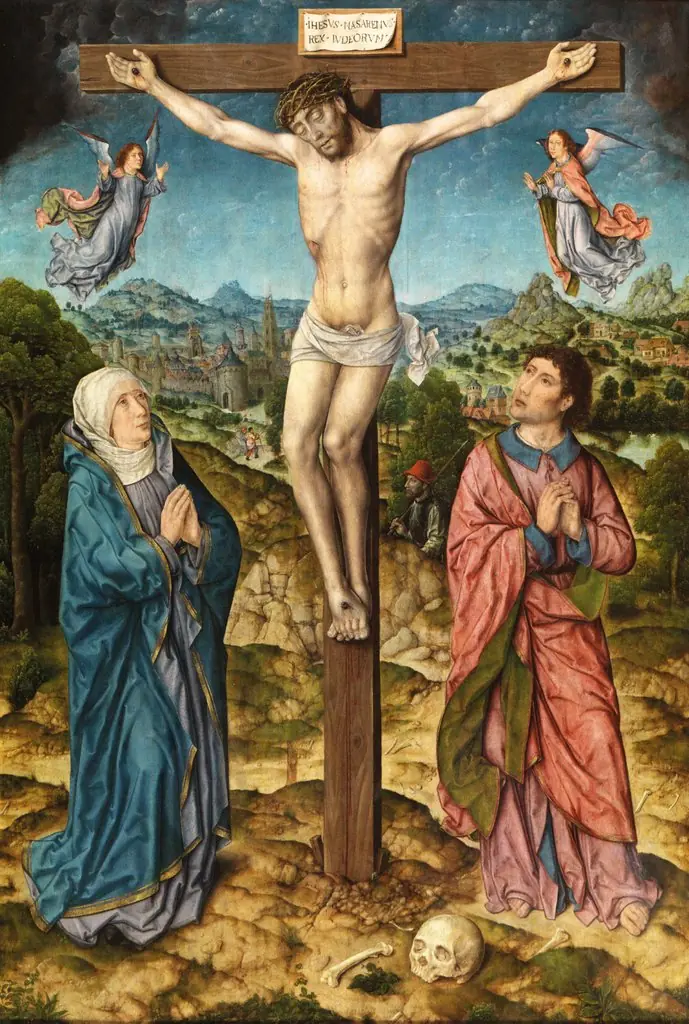 The Crucifixion
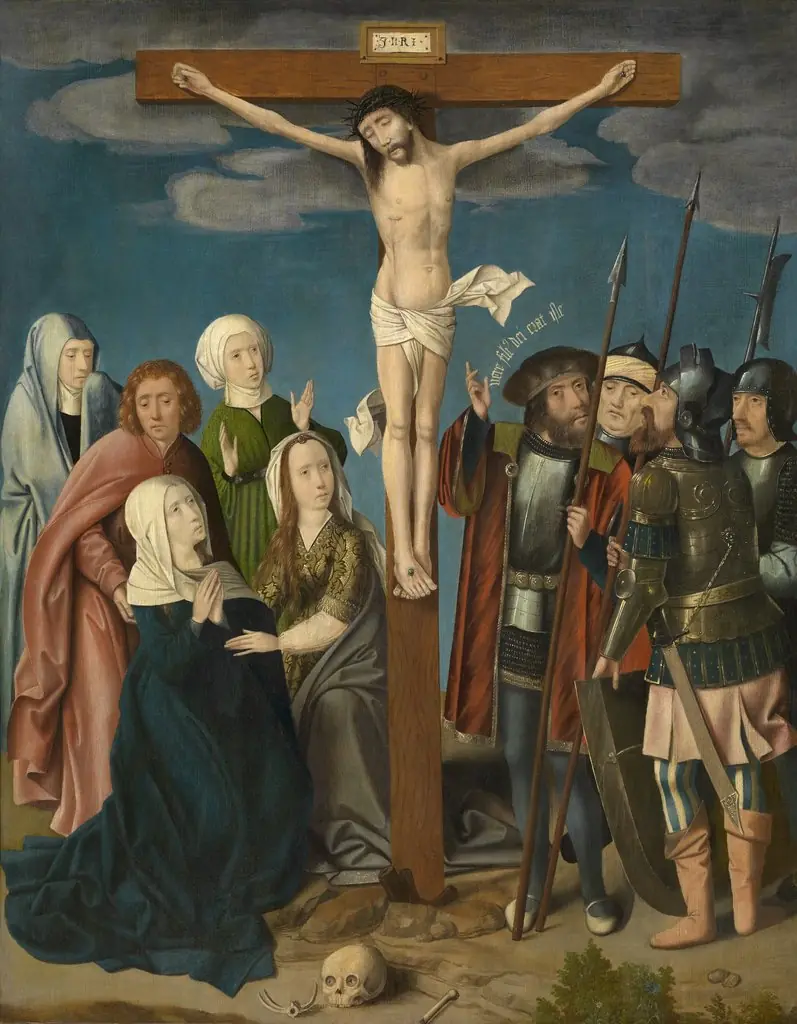 Calvary
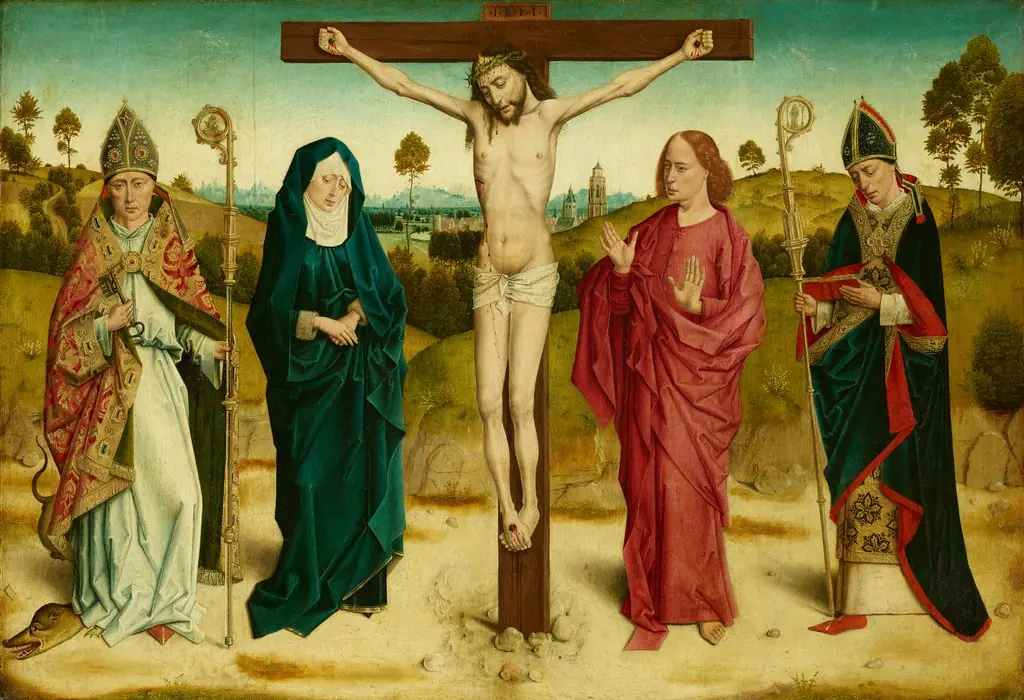 Christ crucified between Mary and John the Evangelist and the saints Adolphus and Ambrosius
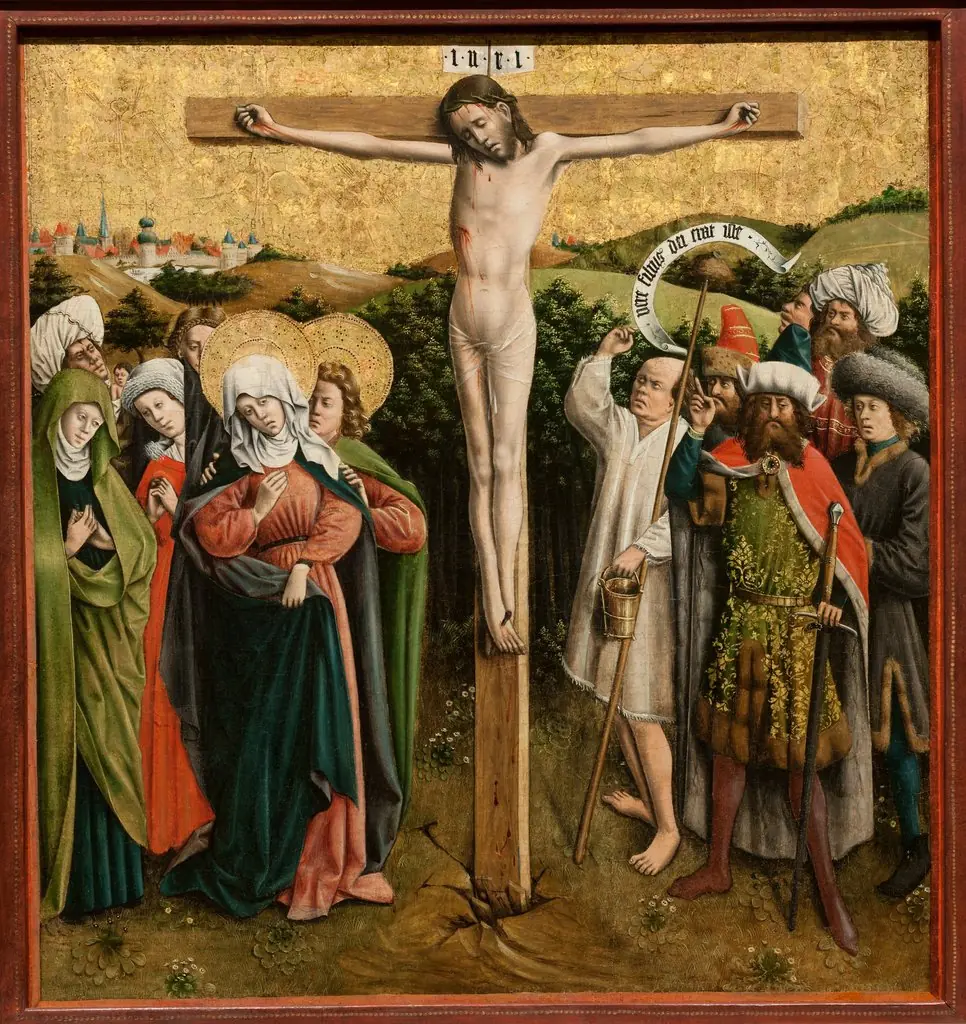 Altarpiece with The Passion of Christ
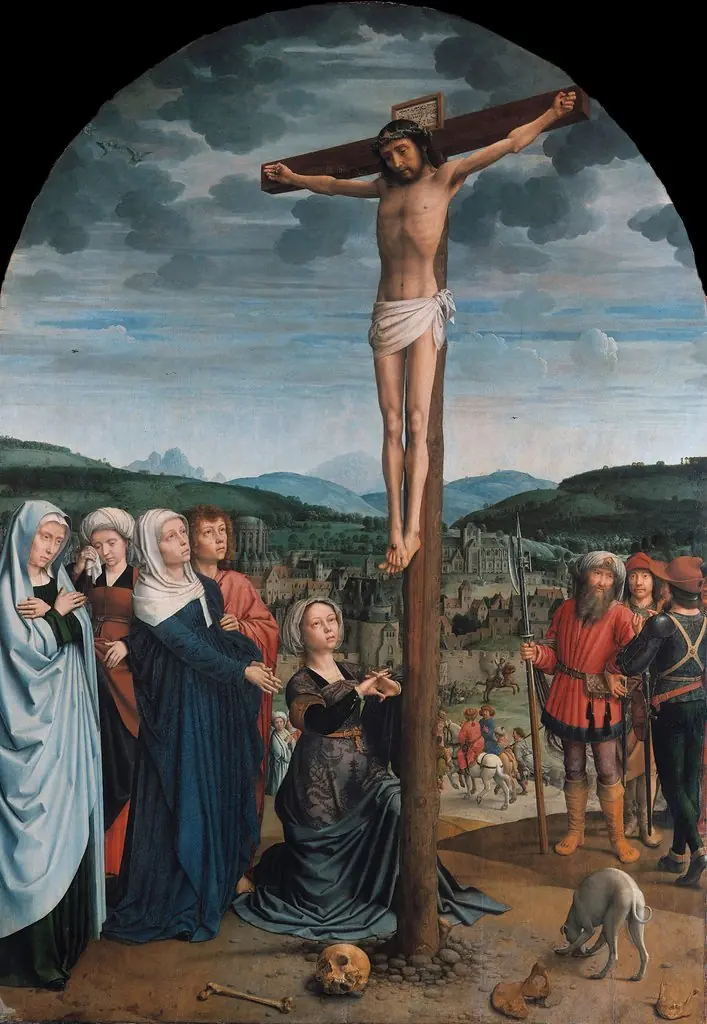 Christ on the Cross
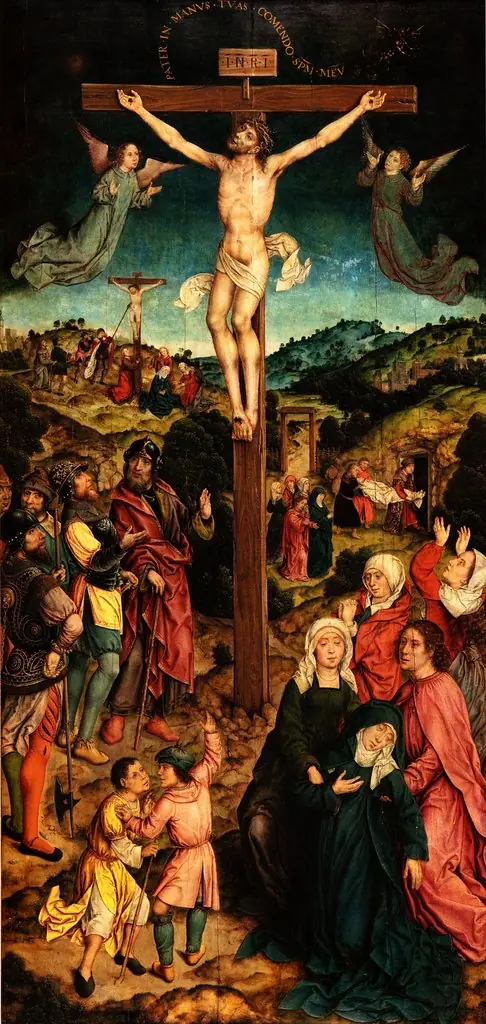 Crucifixion
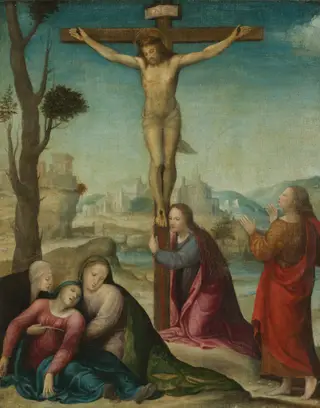 The Crucifixion
 Crucifixion of Christ
 Crucifixion
 The Crucifixion