Artwork
The Triumph of Camillus
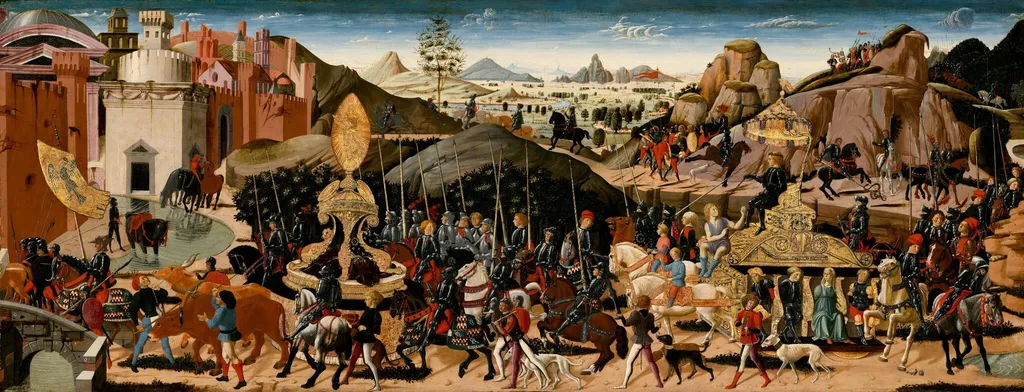
The Triumph of Camillus is a tempera painting by the Early Renaissance artist Biagio d'Antonio. It dates from 1472 and is held in the collection of the National Gallery of Art.
- Inscription
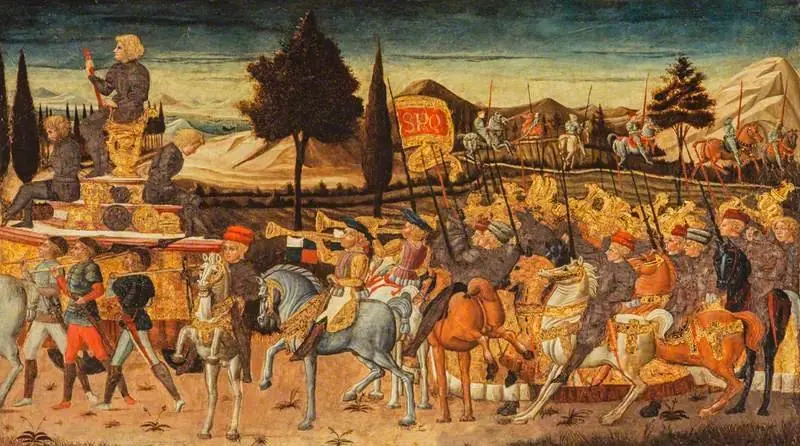
- Inscribed:center right on the armor of a soldier: SPQR (the Senate and People of Rome)
About this work
Technique & Style
The painting is executed in tempera on panel, a technique typical of early Renaissance panels. Its surface shows careful modeling of figures, with delicate shading and crisp outlines that define the narrative scene. The composition emphasizes balanced arrangement and clear spatial depth, reflecting the stylistic conventions of 15th-century history painting.
History & Provenance
The provenance chain traces from its original ownership in Milan to the Contini Bonacossi family, then to Kress, and finally to the National Gallery of Art.
The painting was created in 1472 by Biagio d'Antonio as a tempera work on panel, originally part of the Visconti collection in Milan. It entered the market through Count Alessandro Contini Bonacossi of Florence and was sold on 27 December 1934 to the Samuel H. Kress Foundation. The foundation later gifted the work to the National Gallery of Art in 1939.
The provenance chain traces from its original ownership in Milan to the Contini Bonacossi family, then to Kress, and finally to the National Gallery of Art.
The Triumph of Camillus is catalogued in the National Gallery of Art's collection as part of the Samuel H. Kress Collection, documented in curatorial files and the Kress Collection Digital Archive.
The painting is held by the National Gallery of Art, Washington, D.C., where it entered as part of the Samuel H. Kress Collection and is accessioned as 1939.1.153.
It has not been recorded in any loan or special exhibition listings in the Kress Collection Digital Archive or the Gallery’s collections database.
Overview
Biagio d’Antonio’s tempera on panel, dated to around 1472, presents a bustling ceremonial scene titled The Triumph of Camillus. The composition centers on a golden chariot surrounded by a multitude of riders and pedestrians, set against a backdrop that includes architectural forms and distant mountains. The work exemplifies a narrative approach typical of late‑15th‑century Italian history painting.
Subject & Meaning
The painting illustrates the legendary triumph of the Roman hero Camillus, celebrating his victorious return after a military campaign. By gathering a diverse crowd of on‑foot participants and mounted figures, the artist emphasizes communal rejoicing and the civic pride associated with such a procession, reflecting contemporary Renaissance interest in classical antiquity and moral exempla.
Artist & collection


 The Taking of Pisa
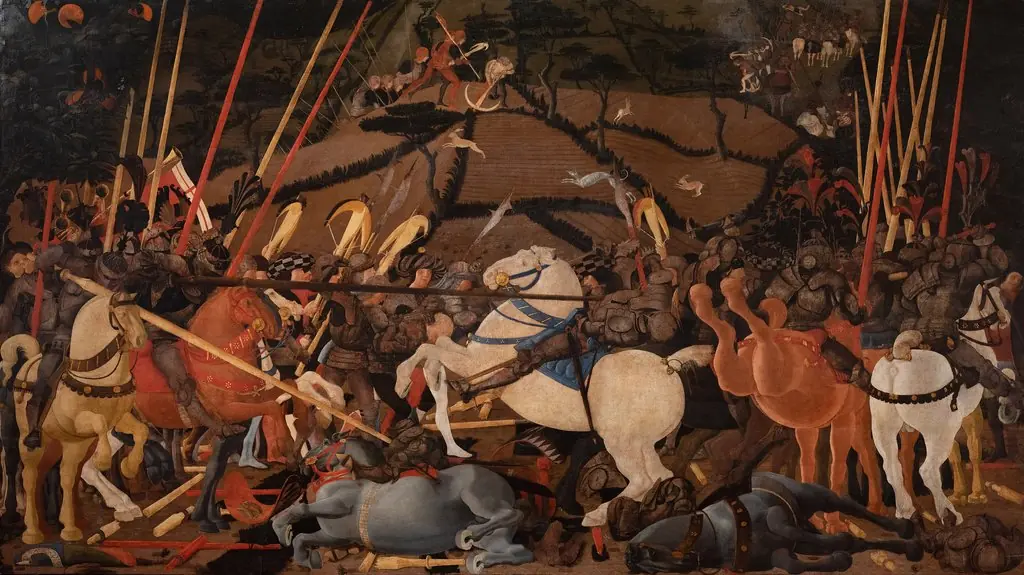 Niccolò Mauruzi da Tolentino unseats Bernardino della Ciarda at the Battle of San Romano
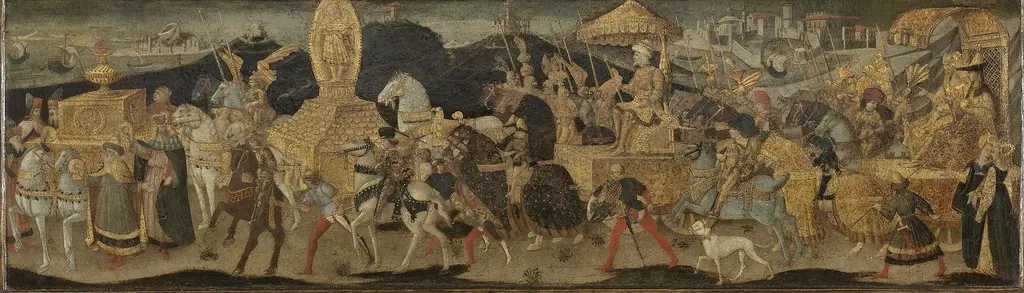 Darius Marching to the Battle of Issus
 Horatius Cocles Defending the Sublician Bridge
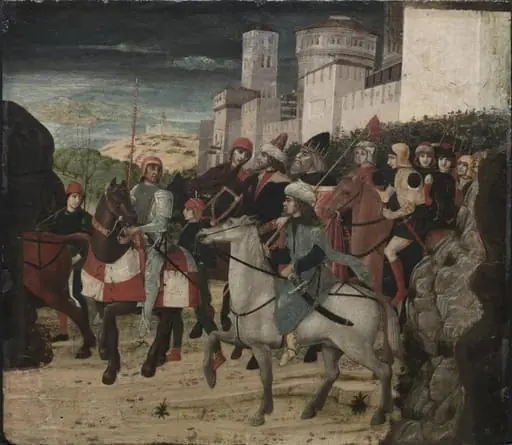 Procession of the Magi
 The Battle of Anghiari
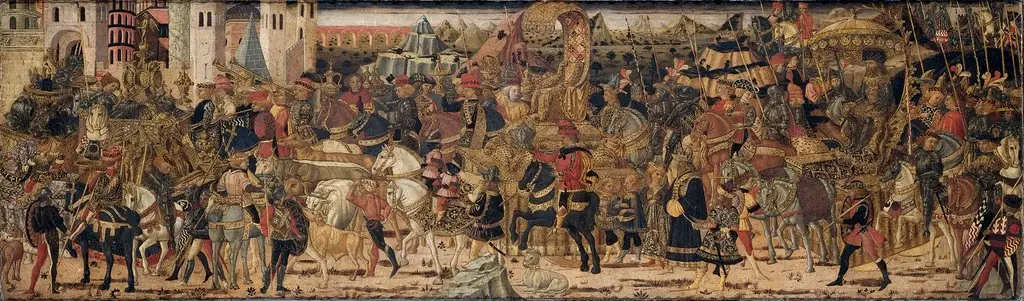 The Triumph of Aemilius Paulus after the Battle of Pydna
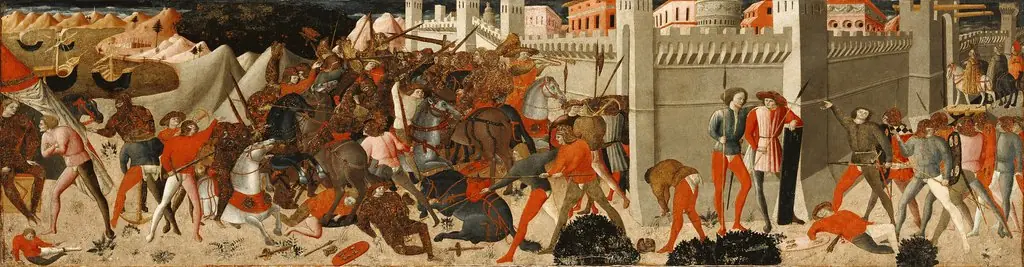 Battle Before a Walled City
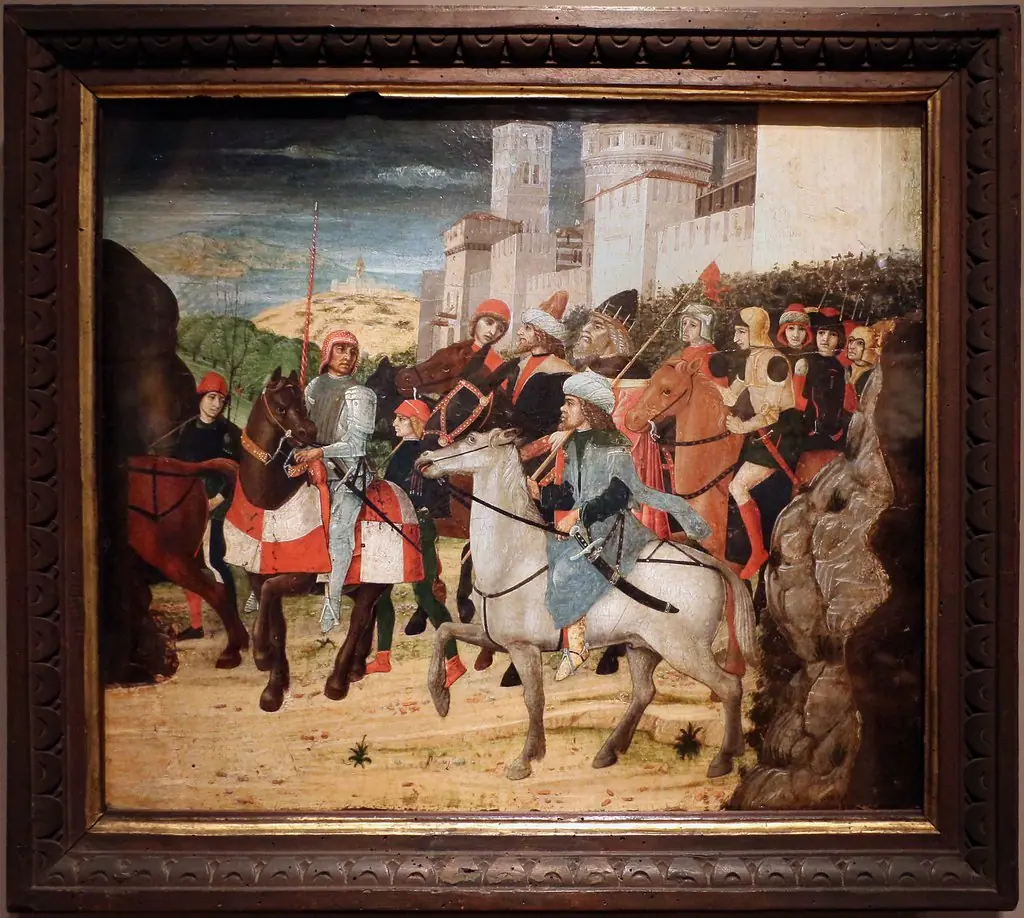 processione dei magi
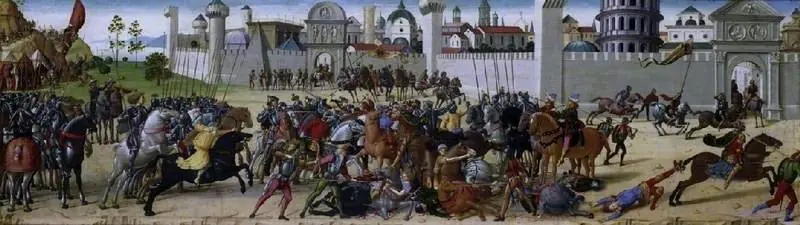 The Siege of Troy - The Death of Hector