Artwork
The Crucifixion
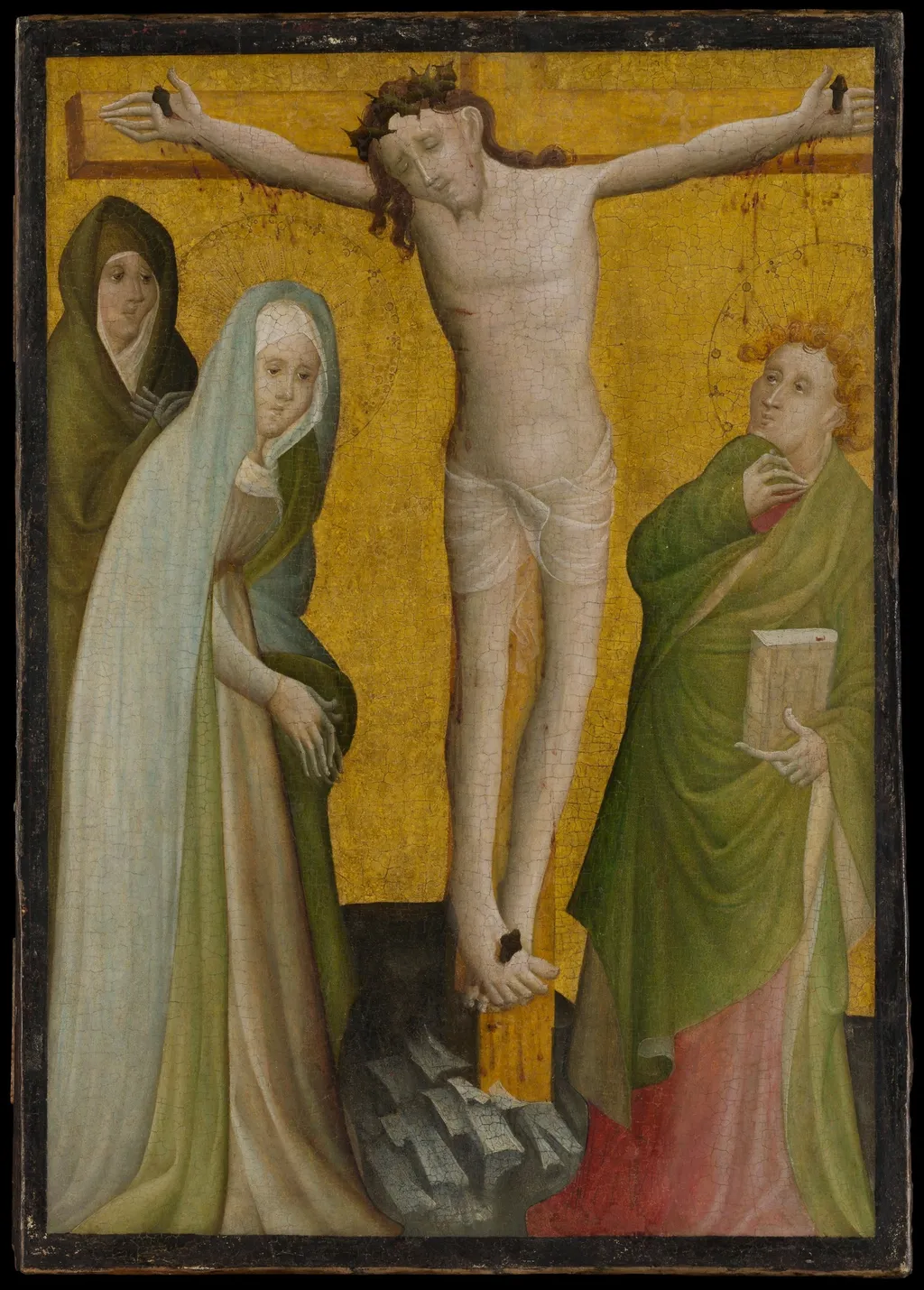
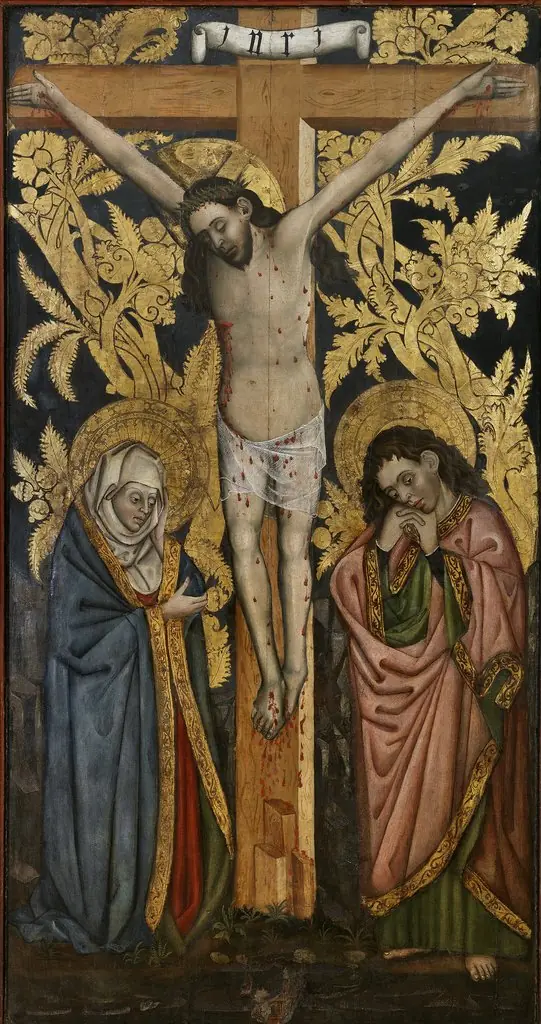
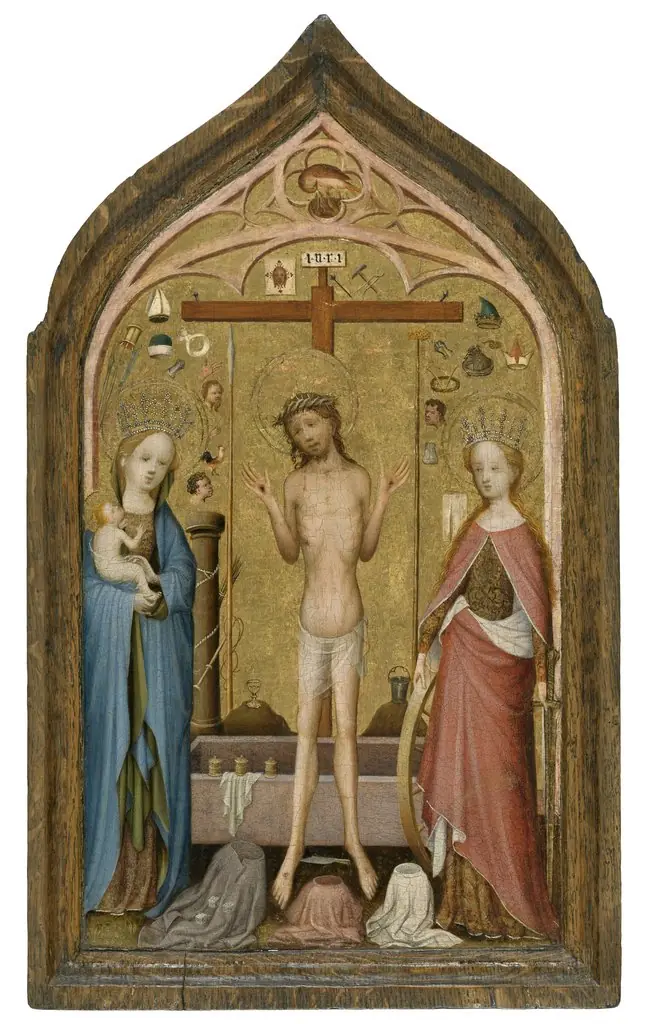
The Crucifixion is an oil painting by Master of the Berswordt Altar. It dates from 1400 and is held in the collection of the Metropolitan Museum of Art.
About this work
Subject & Meaning
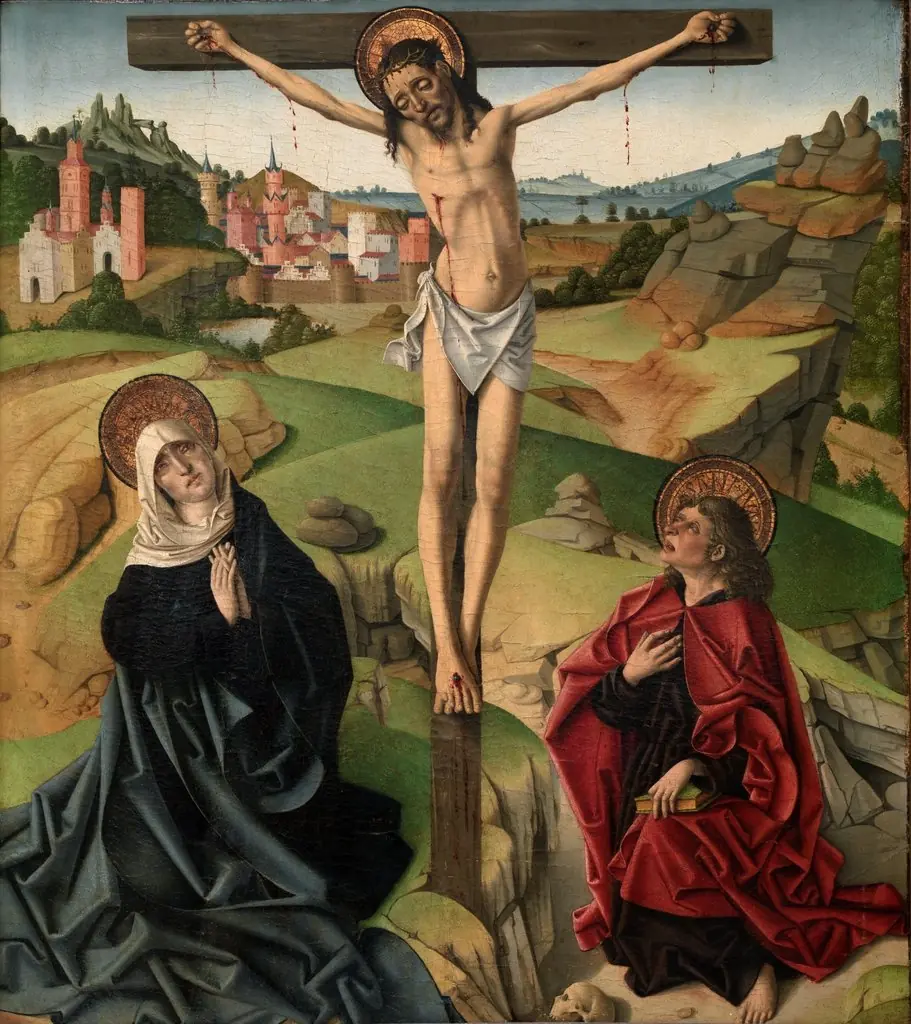
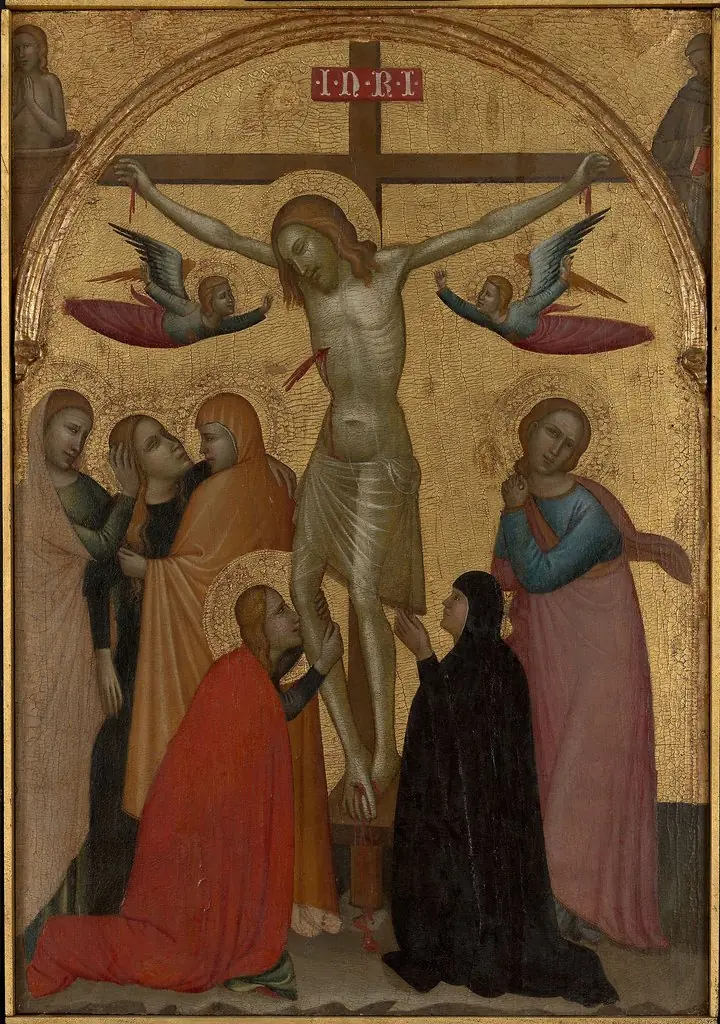
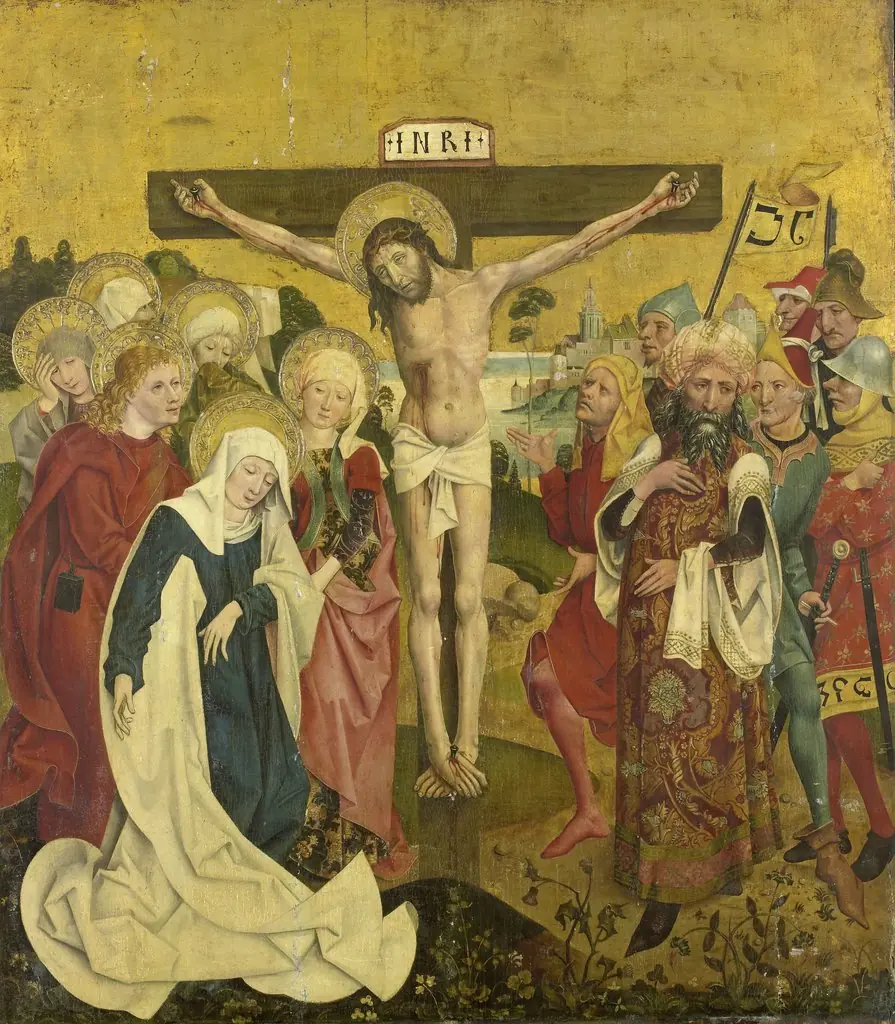
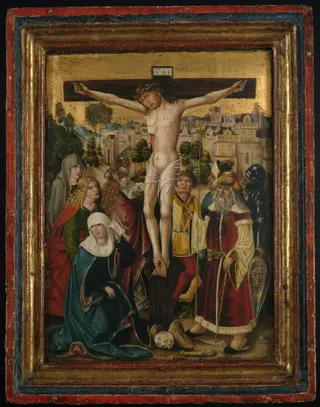
It belongs to the religious genre and depicts Jesus Christ alongside a woman, likely the Virgin Mary or one of the holy women present at Calvary.
The painting's main subject is the crucifixion of Jesus, the central event of Christian salvation history. It belongs to the religious genre and depicts Jesus Christ alongside a woman, likely the Virgin Mary or one of the holy women present at Calvary. The use of gold leaf and tempera is consistent with devotional panels of the period, in which luminous gilded grounds signify divine presence and frame the sacred narrative.
As a work of late medieval Christian art, the image would have served a devotional function, inviting contemplation of Christ's sacrifice and the sorrow of those who witnessed it.
The work is held by the Metropolitan Museum of Art and has been displayed in exhibitions including "Masterpieces of Art" and "Westphalian Painting of the 14th Century," situating it within the broader tradition of Westphalian religious painting.
Technique & Style
Created around 1400 by the Master of the Berswordt Altar, this religious painting depicts the Crucifixion of Jesus Christ. The work is executed in tempera and oil paint, incorporating gold leaf as a decorative element. Unusually for its period, the support consists of plywood.
The panel measures 59.7 cm in height and 43.2 cm in width. Stylistically, the composition focuses on the central figure of Jesus alongside a female figure, adhering to the iconographic conventions of Gothic religious art.
History & Provenance
Created around 1400 by the Master of the Berswordt Altar, this tempera painting depicting the Crucifixion was originally associated with the Neustädter Marienkirche. The work subsequently entered the collection of Carl Wilhelm August Krüger before passing to the National Gallery. It is currently held by the Metropolitan Museum of Art, where it has been featured in exhibitions such as "Masterpieces of Art" and "Westphalian Painting of the 14th Century."
The panel, measuring approximately 59.7 by 43.2 units, utilizes tempera, oil paint, and gold leaf on a plywood support.
The Crucifixion is held by the Metropolitan Museum of Art. Its provenance includes the Neustädter Marienkirche and Carl Wilhelm August Krüger before entering the collection.
The work has been exhibited in several notable shows: "Masterpieces of Art," "The Metropolitan Museum of Art Loan Exhibit" at the Georgia Museum of Art, "Westphalian Painting of the 14th Century," and "Gothic Art in Bielefeld."
Context
Created around 1400, The Crucifixion is attributed to the Master of the Berswordt Altar, an anonymous painter active in Westphalia. The work exemplifies the region's late Gothic religious art, utilizing tempera and oil on plywood with gold leaf to depict the suffering of Jesus Christ. Its historical significance is underscored by its inclusion in major exhibitions such as "Westphalian Painting of the 14th Century" and "Gothic Art in Bielefeld," which have helped define the artist's contribution to the movement.
The painting's presence in diverse collections, including the Metropolitan Museum of Art and the National Gallery, further highlights its enduring scholarly interest as a representative piece of early 15th-century German devotional imagery.
Overview
The Crucifixion, a tempera painting from approximately 1400, is attributed to the Master of the Berswordt Altar, a German artist active in Westphalia. This religious work, now housed at The Metropolitan Museum of Art, depicts a somber scene centered on Jesus Christ on the cross. It exemplifies the devotional art prevalent in late medieval Europe, offering a poignant visual narrative of a pivotal biblical event.
Own this work as a print
Artist & collection
Artist
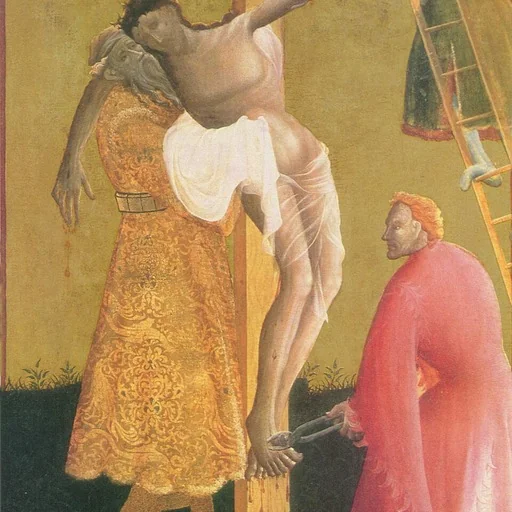
The Master of the Berswordt Altar (sometimes called the Master of the Crucifixion in the Marienkirche at Dortmund) was a German painter active in the area around Dortmund during the 14th and 15th centuries.