Artwork
The Marriage Feast at Cana
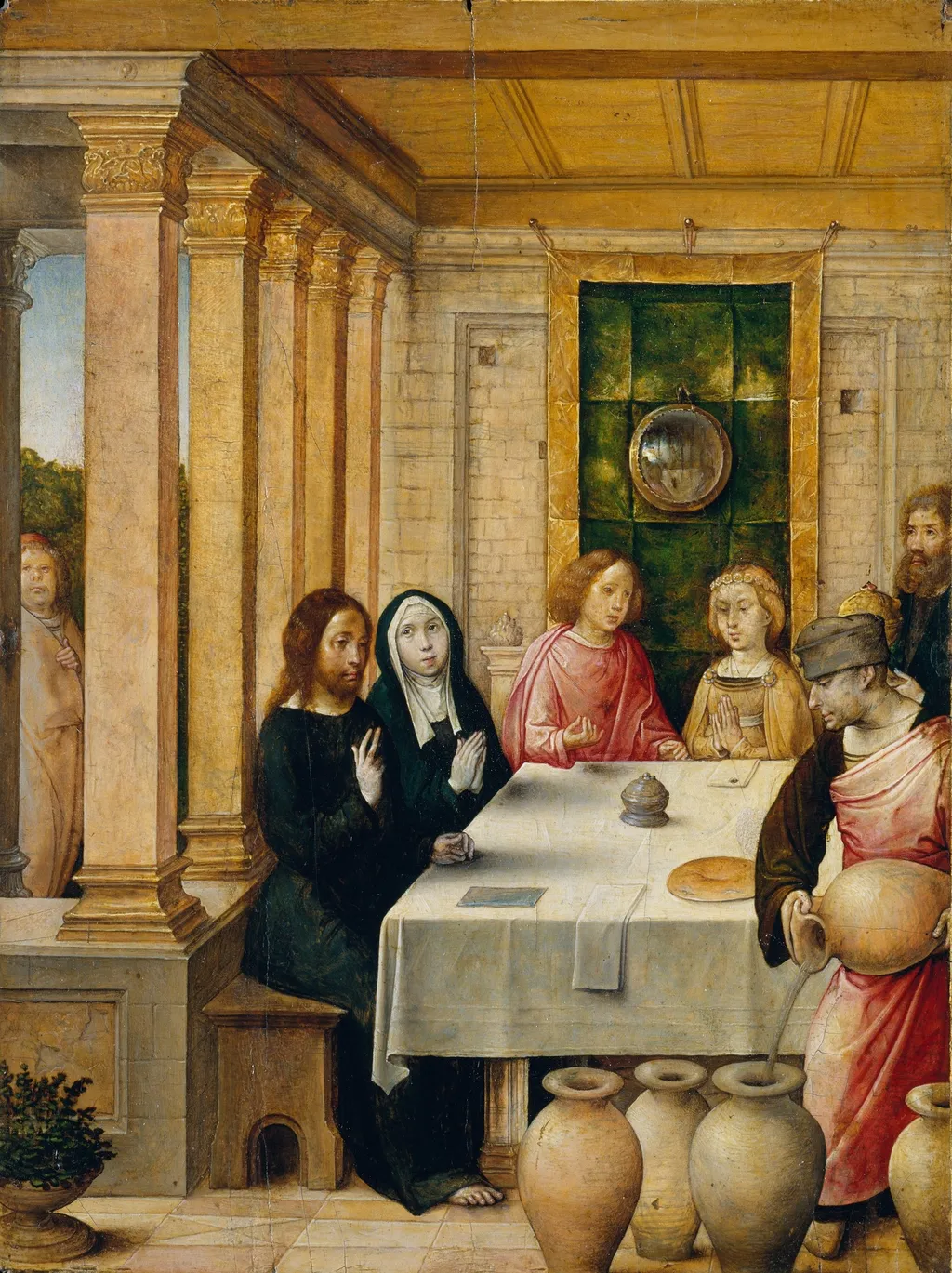
The Marriage Feast at Cana is an oil painting by the Northern Renaissance artist Juan de Flandes. It dates from 1500 and is held in the collection of the Metropolitan Museum of Art.
About this work
History & Provenance
The painting is held at the Metropolitan Museum of Art in New York, where it is catalogued as part of the museum’s collection with the accession number 1975.
Created around 1500, The Marriage Feast at Cana is an oil-on-panel painting attributed to the artist Juan de Flandes. The work depicts the biblical scene of the Marriage at Cana, featuring figures such as Jesus Christ and Mary within an interior setting. While the specific commission details and original patron are not recorded in the available data, the piece was produced during the early 16th century.
Currently, the painting is held in the collection of the Metropolitan Museum of Art, where it is identified as a significant example of religious art from this period. The physical dimensions of the panel are noted as 20 units in height and 15 units in width.
The painting is held at the Metropolitan Museum of Art in New York, where it is catalogued as part of the museum’s collection with the accession number 1975.1.160. It was first recorded there as a work by Juan de Flandes, dated to the year 1500. The museum’s records list the painting’s dimensions as 20 cm in height and 15 cm in width, consistent with its small panel support.
Overview
This oil painting, titled The Marriage Feast at Cana, presents a communal gathering centered around a table. The composition features numerous figures, including a prominent couple, within an architectural setting. The artist employs a diverse color palette, contributing to an atmosphere that suggests either a moment of quiet reflection or a celebratory occasion. The work is executed in oil paint.
Subject & Meaning
The painting illustrates a pivotal moment from the biblical account of the Marriage at Cana. At the heart of the scene, a man in a red robe stands alongside a woman in dark attire and a white head covering, likely representing the central figures of the narrative. To their right, another individual, also in red, is depicted pouring liquid from a jug into a vessel, alluding to the miraculous transformation of water into wine.
Technique & Style
The artist constructs the scene with a blend of earthy tones, such as browns and beiges, juxtaposed with more vibrant reds and greens. Architectural elements, including stone columns, define the background, complemented by a green banner. This color scheme and setting contribute to the painting's overall mood, which evokes a sense of solemnity or festivity. The careful arrangement of figures within this defined space suggests a deliberate compositional approach.
Own this work as a print
Artist & collection


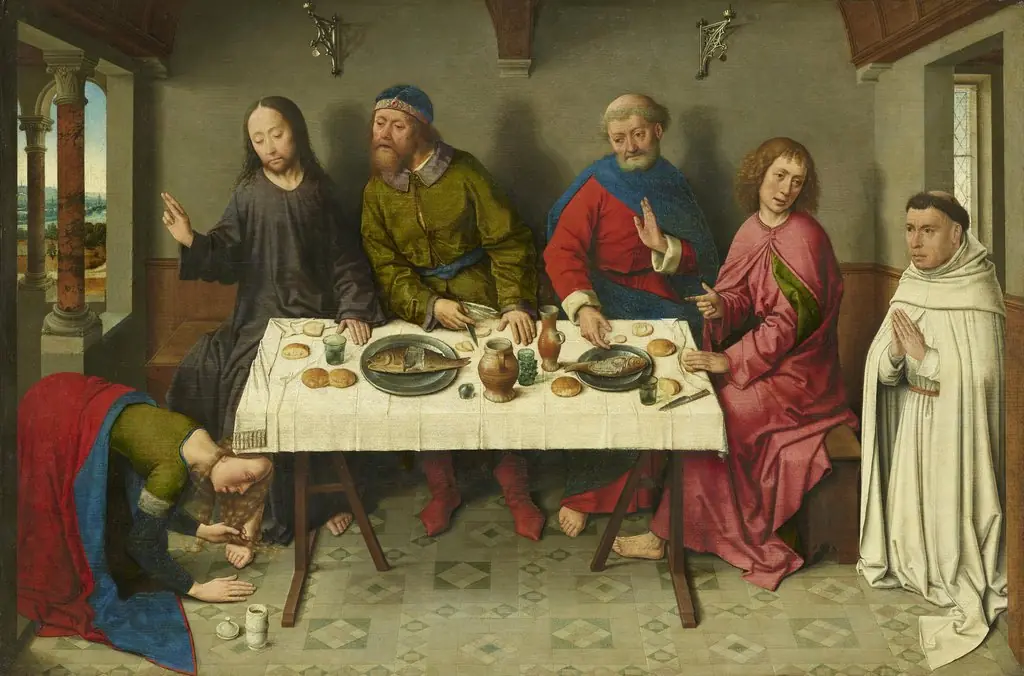 Christ in the house of the Pharisee Simon
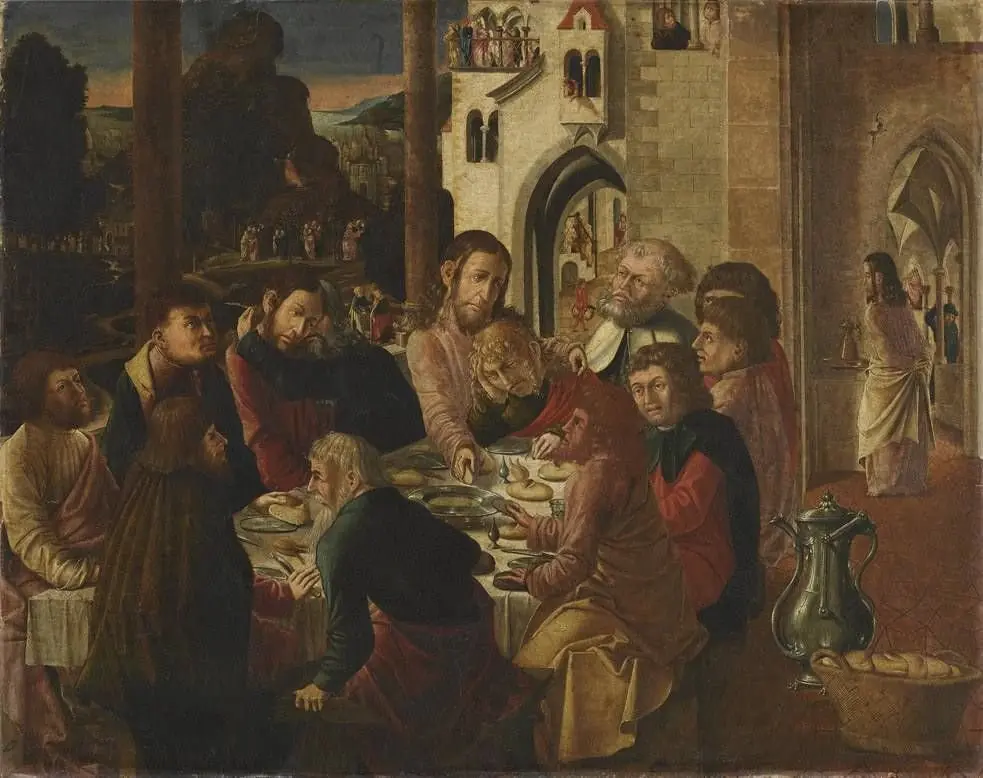 Jacob-Stephen (?): the Last Supper
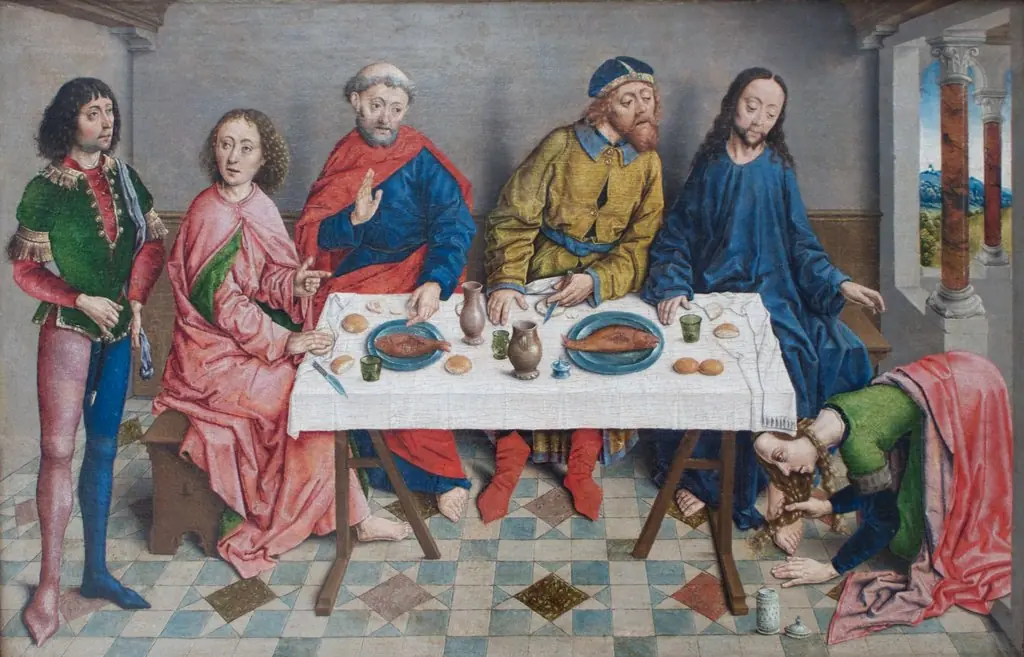 Jesus at Simon's by Aelbrecht Bouts
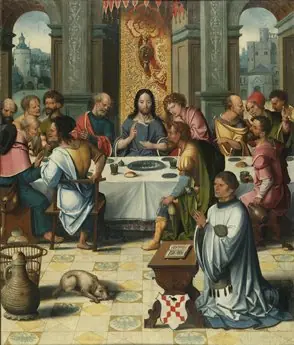 Het Laatste Avondmaal met de stichter
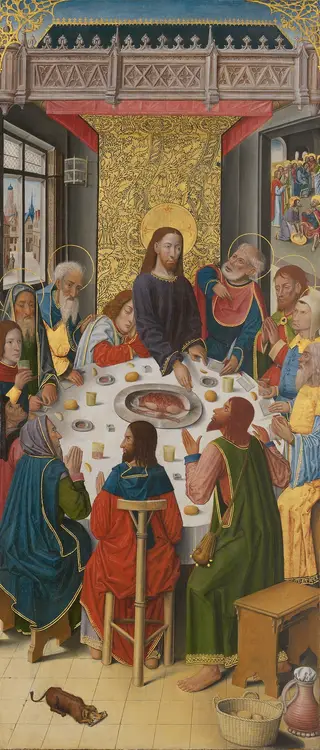 Panels from the High Altar of the Charterhouse of Saint-Honoré, Thuison-les-Abbeville: The Last Supper
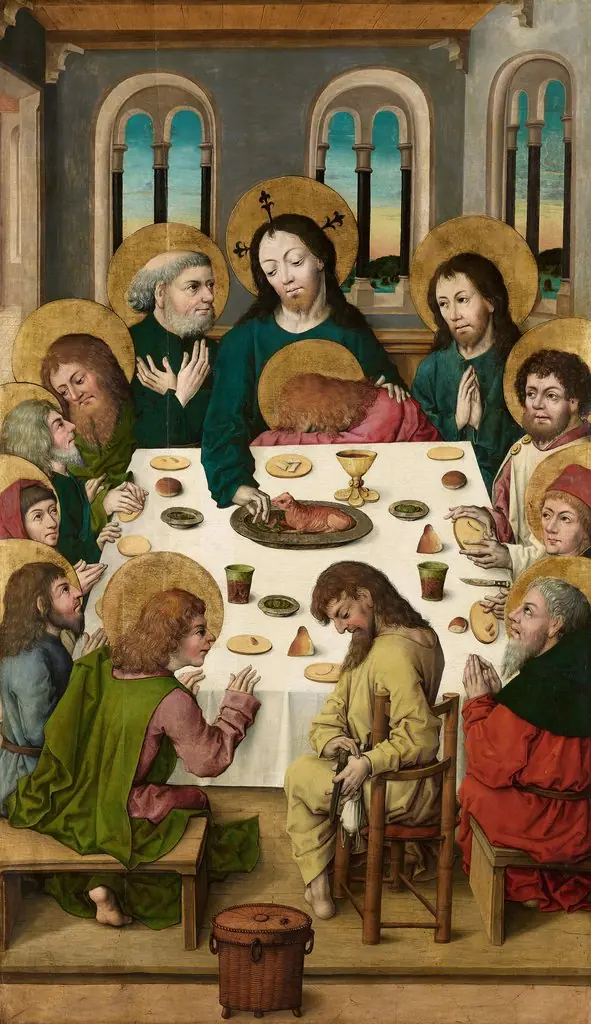 The Last Supper
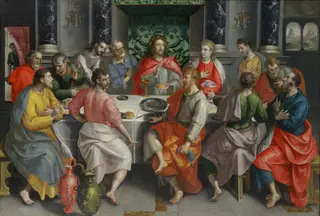 The Last Supper
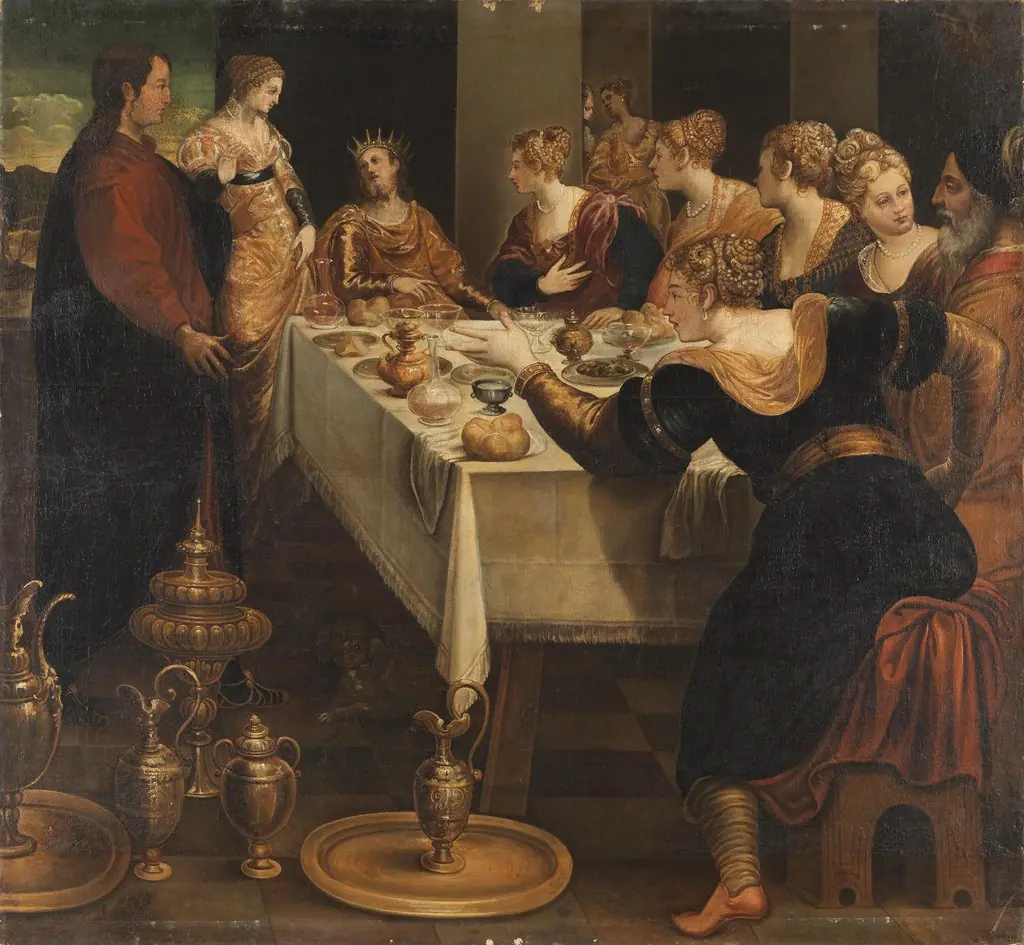 Daniel kündet Belsazar das Ende seines Reiches an (Nachahmer)
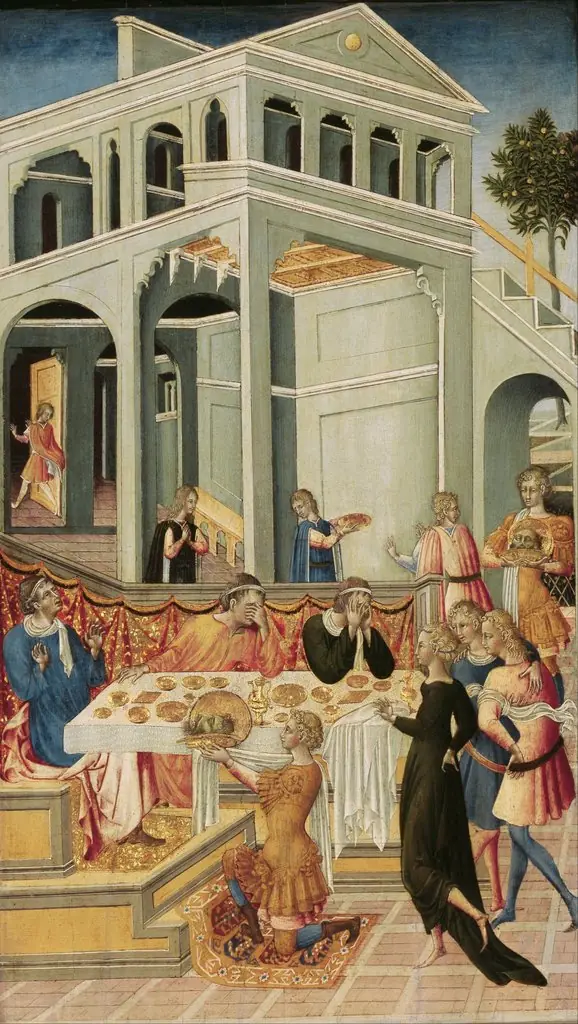 The Head of Saint John the Baptist Brought before Herod