Artwork
Mary Magdalen
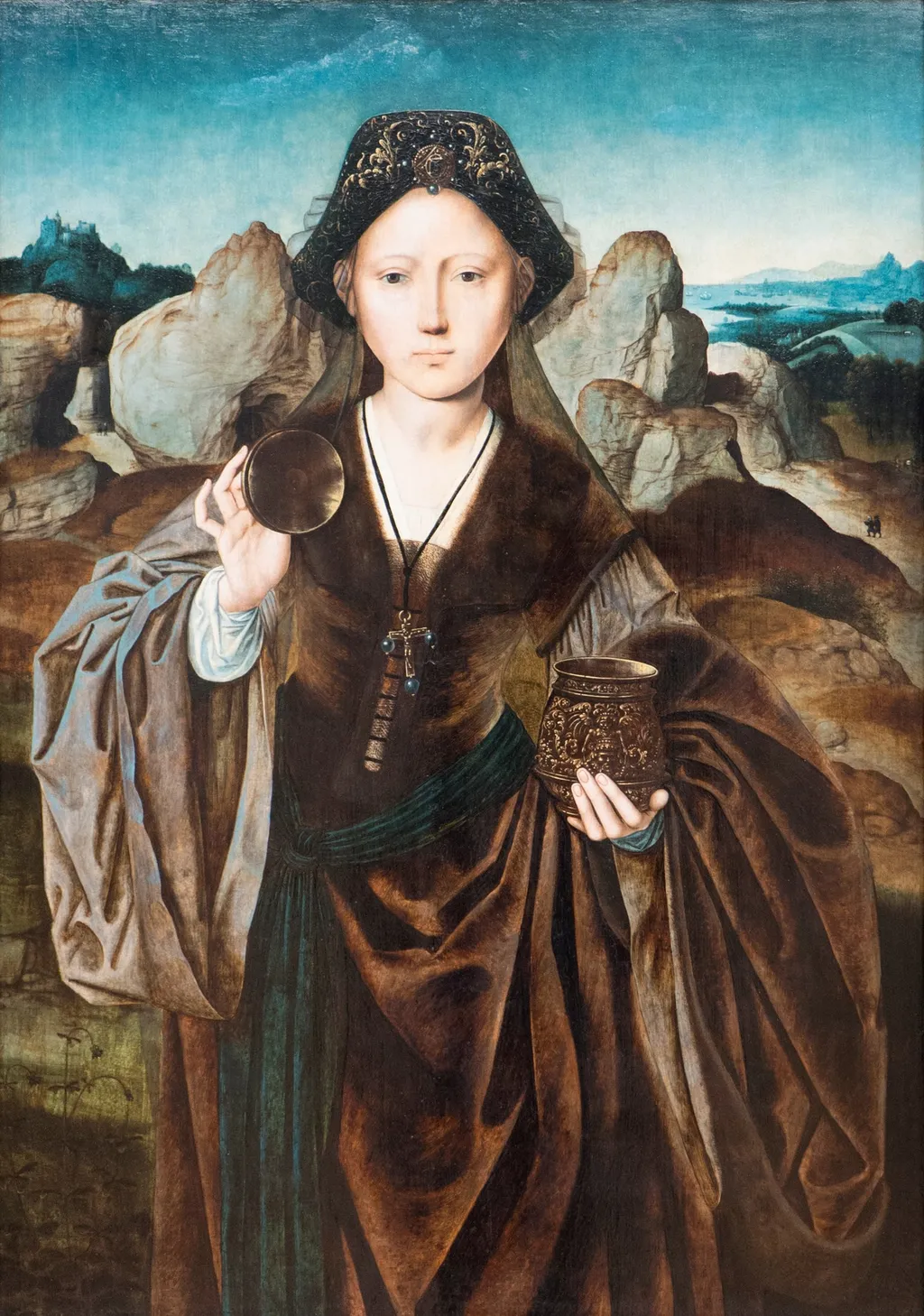
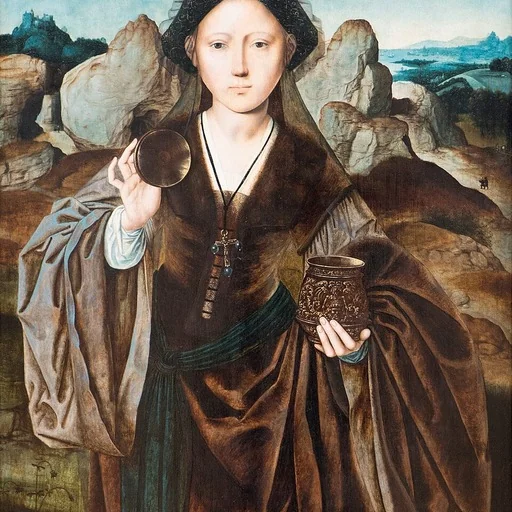
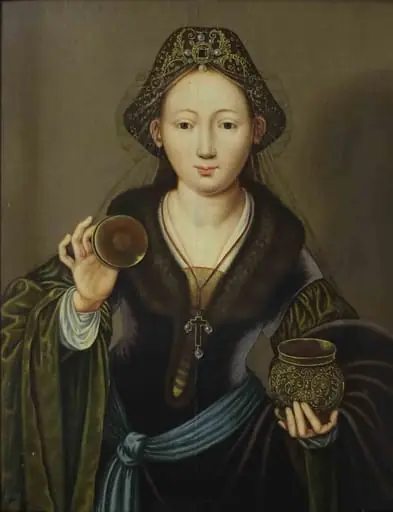
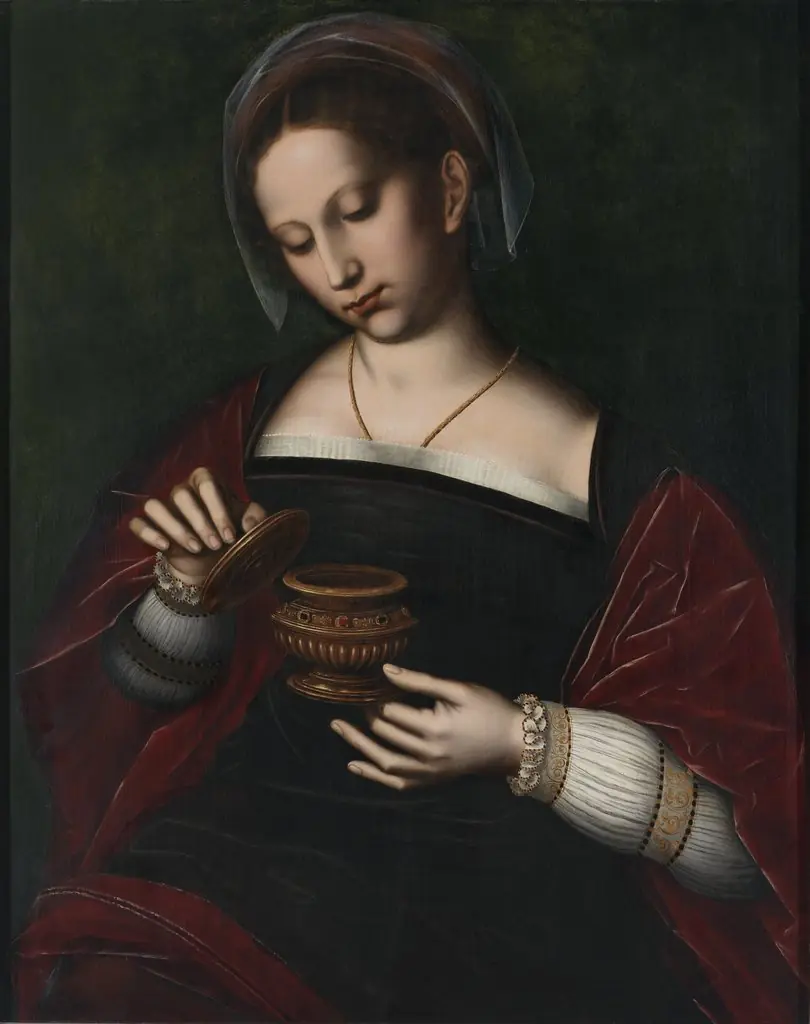
Mary Magdalen is an oil painting by the Mannerist artist Master of the Mansi Magdalen. It dates from 1530 and is held in the collection of the Gemäldegalerie Berlin.
About this work
Overview
Mary Magdalen is an oil painting on panel by the Master of the Mansi Magdalen, an anonymous Early Netherlandish painter active in Antwerp during the first quarter of the sixteenth century. Dated to 1530, the work measures 81.5 by 57.5 centimetres and is held in the collection of the Gemäldegalerie, Staatliche Museen zu Berlin, having been acquired by the Kaiser-Friedrich-Museums-Verein in 1897. The painting is the namesake of its creator, whose artistic identity was established through this panel, and it exemplifies the devotional imagery produced in Antwerp's flourishing art market during a transitional period between late Gothic traditions and Renaissance influences.
Subject & Meaning
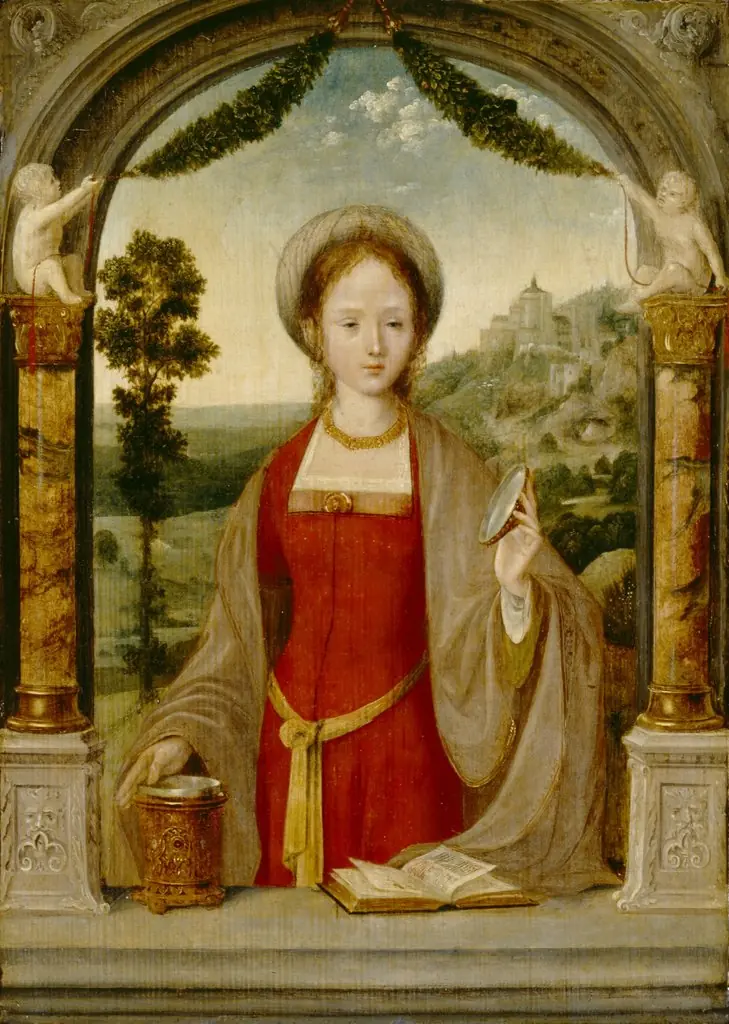
The mirror, a traditional attribute, alludes to the vanitas theme and the saint's contemplative penitence.
The painting depicts Saint Mary Magdalene in a three-quarter length pose, holding a small round mirror in her raised right hand and an ornate covered jar in her left hand at waist level. These attributes carry layered iconographic significance. The ointment jar refers to the anointing of Christ's feet, a devotional act that became associated with Mary Magdalene through the theological merging of biblical figures initiated by Pope Gregory I in 591, which conflated her with the unnamed sinful woman and with Mary of Bethany. The mirror, a traditional attribute, alludes to the vanitas theme and the saint's contemplative penitence. She wears a dark brown gown with a green sash, voluminous gray sleeves, and a black headdress with gold patterning and a trailing veil, with a rosary of blue beads and a cross hanging at her chest. The frontal, symmetrical composition focuses attention on the figure and her symbolic objects, while the background of pale rocky outcrops, a distant castle, hazy mountains, and water situates her within a landscape that suggests both wilderness retreat and the wider world.
Technique & Style
The work is executed in oil paint on panel, the characteristic medium of Early Netherlandish painting that had evolved from Jan van Eyck's innovations in layered glazes over underdrawings. The handling displays smooth, almost invisible brushwork with a refined finish, and careful attention to the textures of cloth, metal, and skin. Light falls evenly across the figure, modelling the heavy folds of fabric with subtle gradations. The palette is dominated by browns, muted greens, and cool blues. The artist's technique reflects the influence of his probable teacher Quentin Matsys, as well as borrowings from engravings by Albrecht Dürer, which were common sources for Antwerp painters of this generation. The integration of a detailed figure with landscape elements and the polished illusionism align with Antwerp Mannerism, blending Northern Renaissance naturalism with symbolic depth.
History & Provenance
The painting was formerly in the collection of the Marchese Battista Mansi in Lucca, from which the artist derives his conventional name. It was acquired by the Kaiser-Friedrich-Museums-Verein in 1897 for the Berlin Gemäldegalerie, where it remains today. The panel's provenance before the Mansi collection is not documented in the available sources. The work has served as the touchstone for attributing other paintings to this anonymous master, including a copy of the figure of the Magdalene in a three-quarter length format against a plain background that appeared at auction in 2023, notable for its altered decoration on the ointment jar.
Context
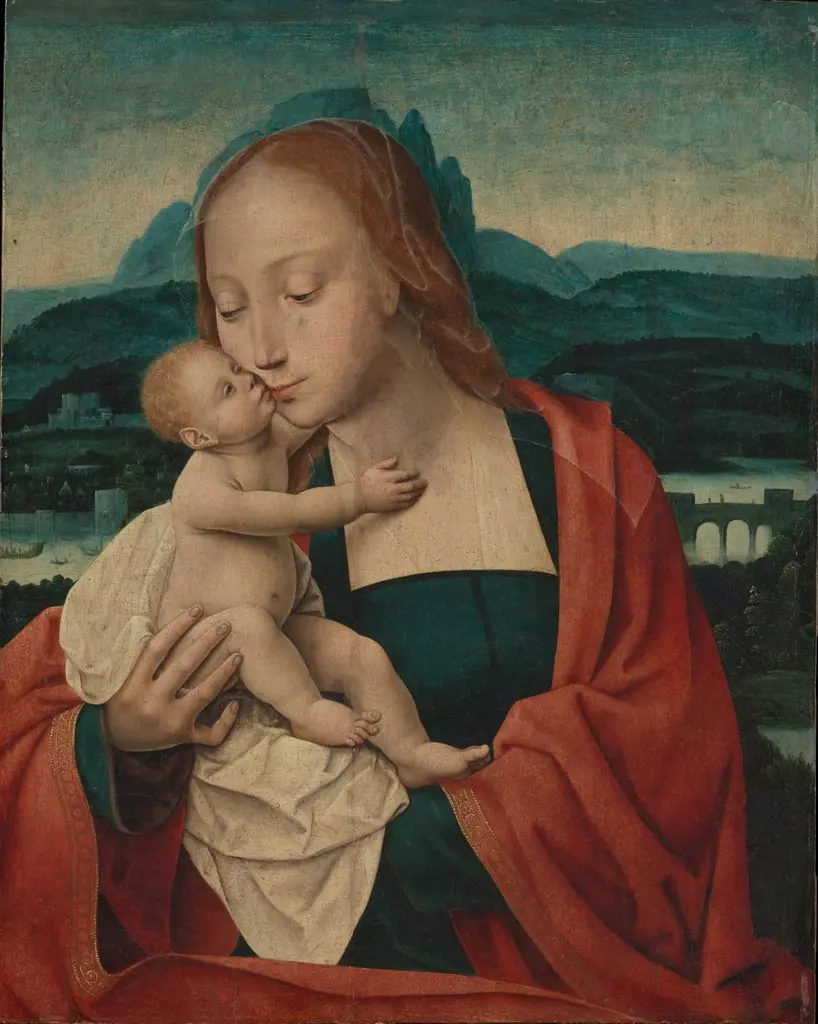
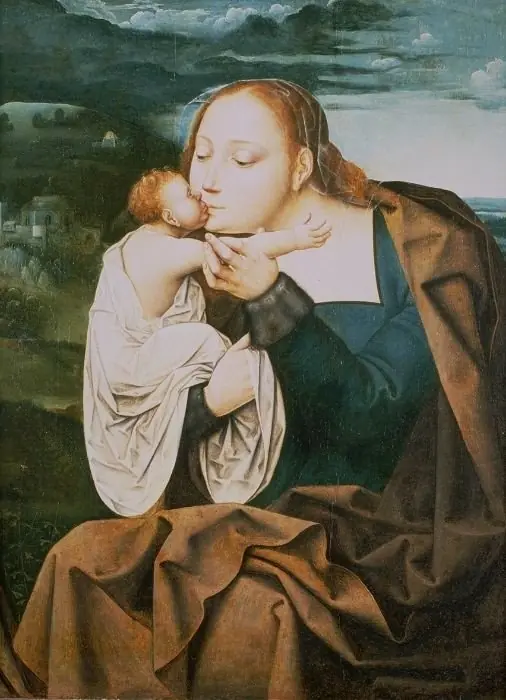
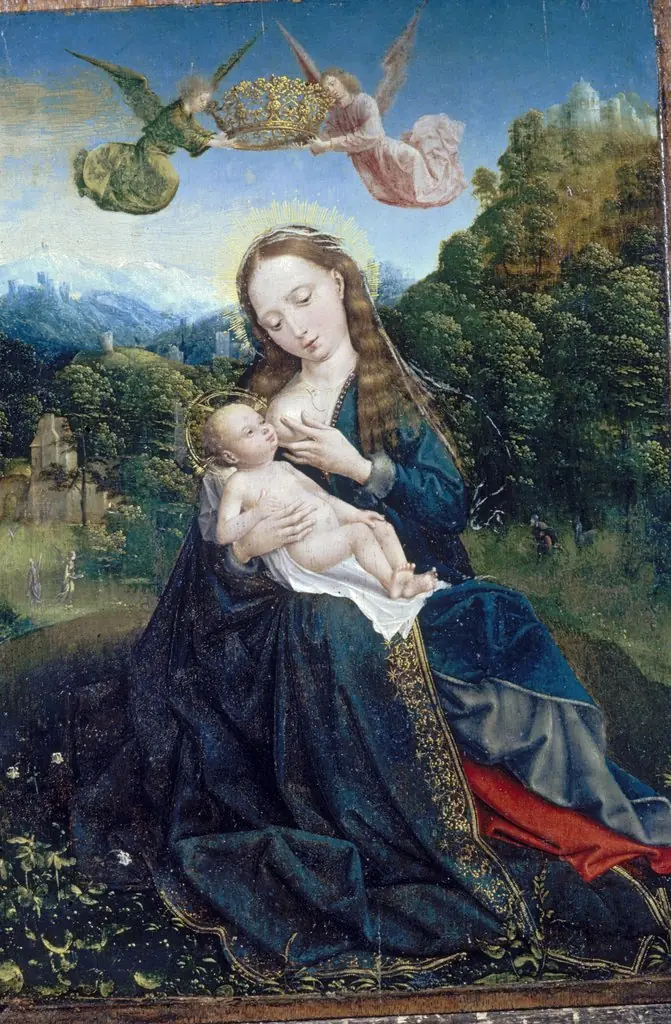
The Master of the Mansi Magdalen is tentatively identified with Willem Muelenbroec, who registered as an apprentice of Quentin Matsys in the Antwerp Guild of Saint Luke in 1501, a hypothesis first proposed by Max J. Friedländer. The artist's documented activity spans approximately 1515 to 1525, though the Magdalen panel is dated 1530, suggesting either a late work or a slightly extended career. His oeuvre reflects the competitive environment of early sixteenth-century Antwerp, where the twice-yearly fairs from 1490 onward fostered an expanding art market with international reach, particularly to the Iberian Peninsula. The Master produced devotional and narrative panels for bourgeois patrons, specialising in intimate images for private domestic devotion. His style sits within the immediate succession of Quentin Matsys, with whom he shares broad heads and elongated figures, and he also demonstrates familiarity with graphic works by Albrecht Dürer and Marcantonio Raimondi. The scholarly attribution of works to his hand remains debated, with some proposed attributions, such as a Virgo Lactans/Madonna and Child panel, considered unsustainable upon closer examination.
Legacy
The painting's legacy rests primarily on its role as the eponymous work that defines the artistic identity of the Master of the Mansi Magdalen. Without this panel, the attribution of the broader corpus of Antwerp devotional painting from the early sixteenth century would lack its central anchor. The work has also become a reference point for understanding workshop practice in early Netherlandish painting, as demonstrated by the 2023 conservation treatment of a copy that revealed how apprentices and workshop assistants adapted compositions while adjusting details for their own purposes. The panel continues to exemplify the rich tradition of Antwerp religious art during the transitional phase toward High Renaissance influences, and its acquisition by the Berlin museum in 1897 secured its place in one of Europe's major public collections. The ongoing debates about attributions to this master underscore the challenges of identifying anonymous painters in the highly productive and commercially driven Antwerp art market.
Own this work as a print
Artist & collection