Artwork
Romance of the Three Kingdoms
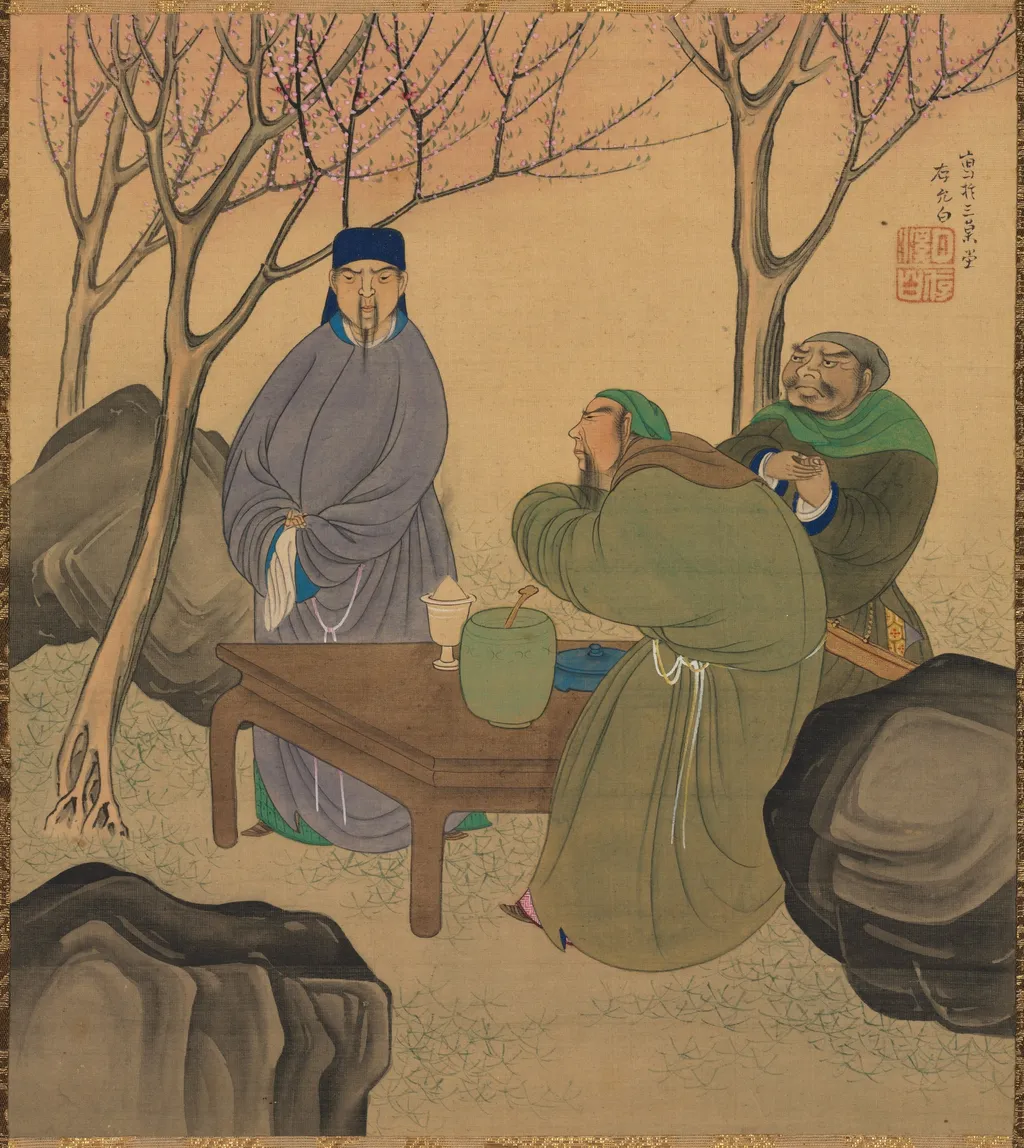
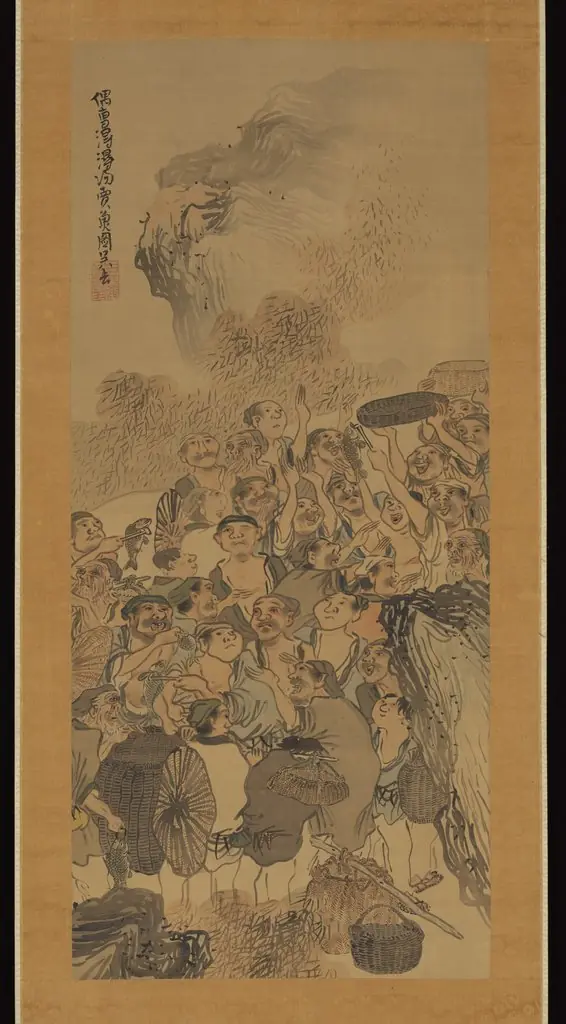
Romance of the Three Kingdoms is an unspecified painting by the Maruyama Shijo artist Matsumura Goshun. It is held in the collection of the Cleveland Museum of Art.
About this work
Overview
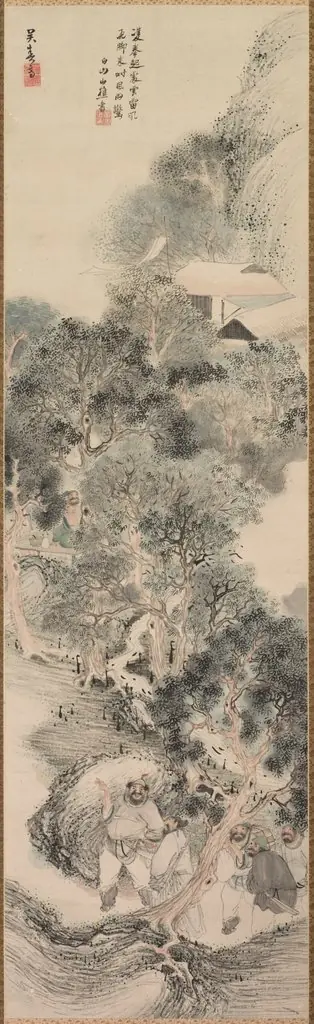
"Romance of the Three Kingdoms" is a mid‑nineteenth‑century painting by Japanese artist Matsumura Goshun, dated 1849. The work is part of the collection of the Cleveland Museum of Art. It presents a quiet interior scene framed by a bare tree whose pink buds spread across the upper edge of the picture plane.
Subject & Meaning
Opposite him, a man in a green garment with a hood slumps on a low stool, his body leaning toward a small table, conveying fatigue or inebriation.
The composition shows two male figures seated beneath the tree. The standing figure, dressed in a blue robe and dark hat, adopts a rigid, cross‑armed posture, suggesting authority or contemplation. Opposite him, a man in a green garment with a hood slumps on a low stool, his body leaning toward a small table, conveying fatigue or inebriation.
The juxtaposition may allude to the contrasting characters found in the historical novel after which the painting is named.
Technique & Style
Executed in the nanga (literati) tradition, Goshun combines ink wash with subtle color washes, employing delicate brushwork to render the tree’s branches and the patterned mat. The muted palette, blues, greens, and soft pinks, creates a restrained atmosphere, while the careful rendering of objects such as the jar, bowl, and cup demonstrates the artist’s attention to everyday detail.
History & Provenance
Created in 1849, the painting entered the Cleveland Museum of Art’s collection through acquisition in the twentieth century, though the precise path from Goshun’s studio to the museum remains undocumented in public records. Its presence in an American institution reflects the broader interest in Japanese nanga works that grew after the opening of Japan.
Context
Matsumura Goshun (1752–1811) was a leading figure of the Japanese literati school, which sought to emulate Chinese scholar‑painter ideals. Although the painting’s date post‑dates Goshun’s lifetime, it follows his stylistic legacy, emphasizing personal expression over formal realism, and often incorporates literary references, as suggested by the title’s connection to the classic Chinese novel.
Own this work as a print
Artist & collection


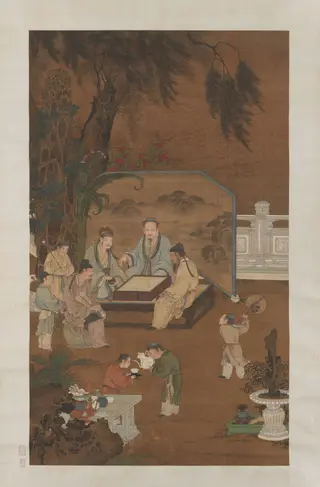 The Eighteen Scholars
 Paintings after Ancient Masters: Scholar with Staff and Brush
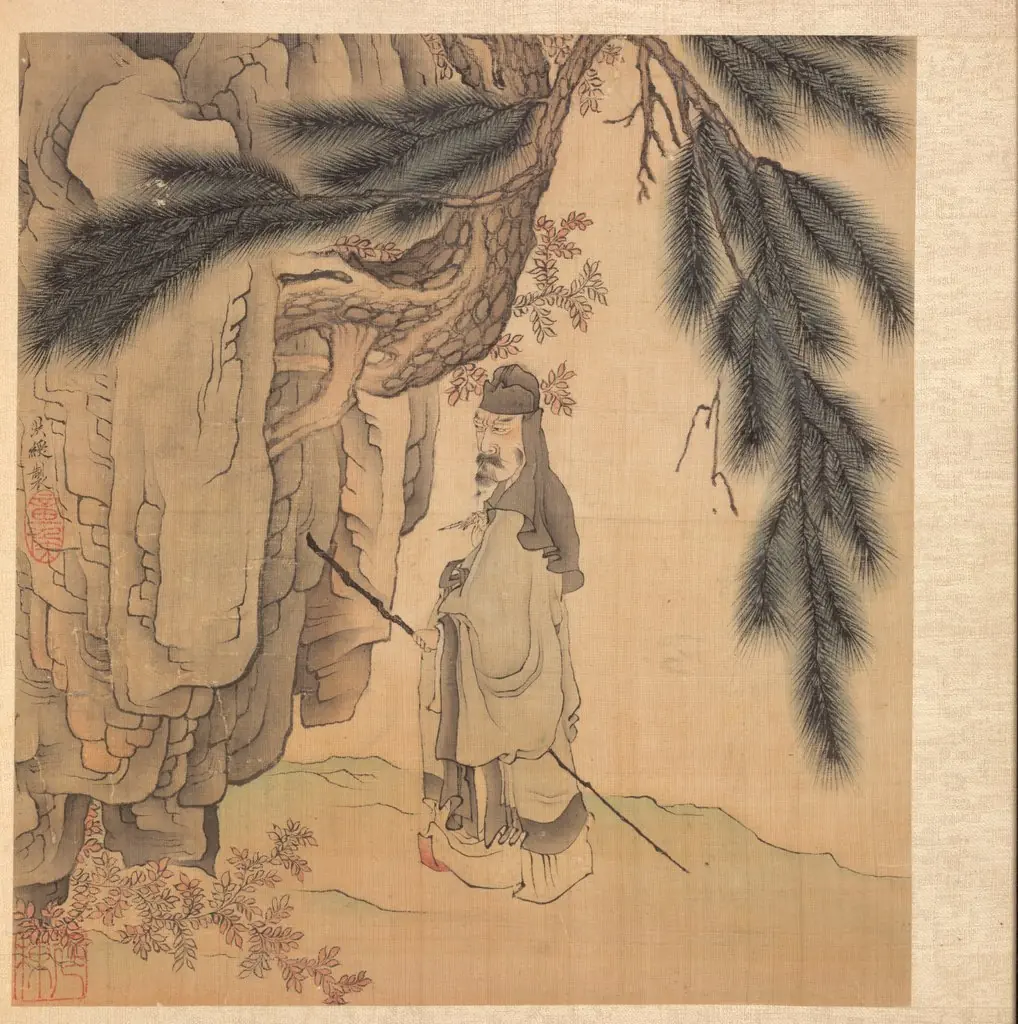 Paintings after Ancient Masters: Scholar with Staff and Brush
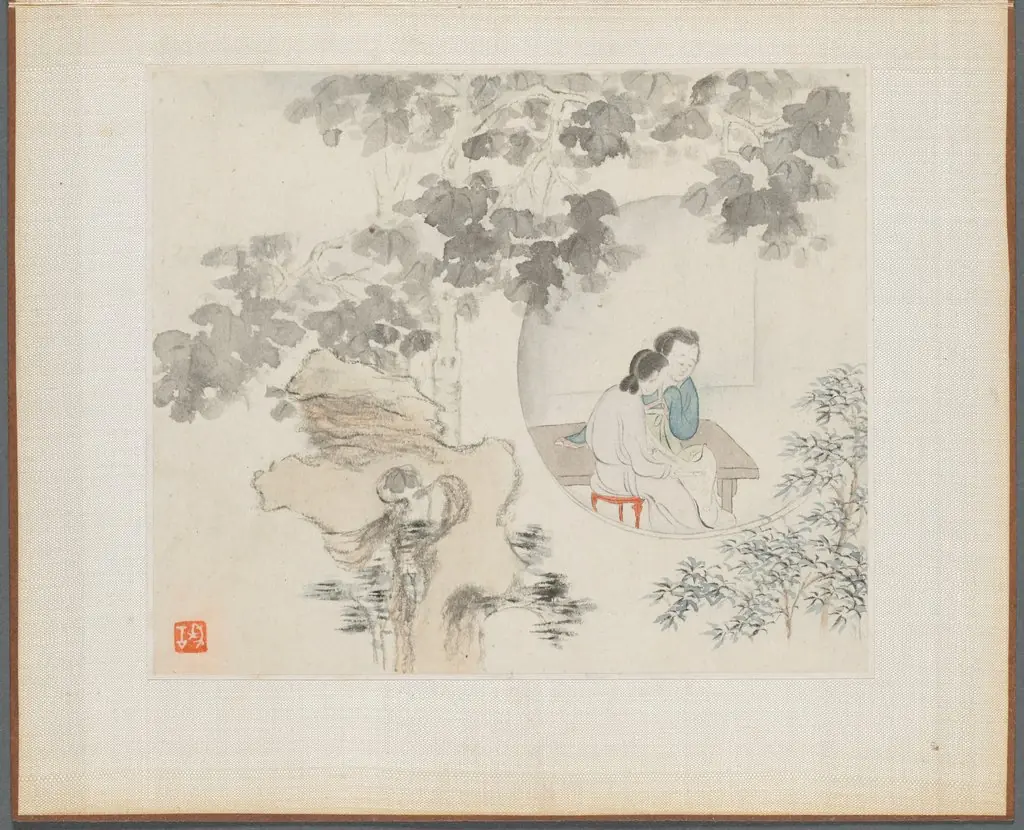 Album of Landscape Paintings Illustrating Old Poems: Two Women with Needlework in a Garden
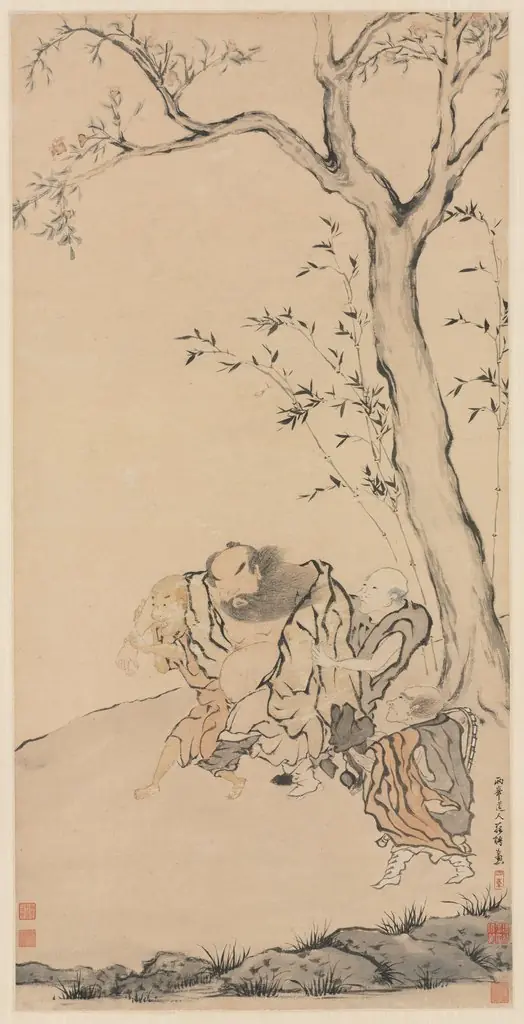 Zhong Kui Supported by Ghosts
 元人夏景戲嬰 軸
 Album of Landscape Paintings Illustrating Old Poems: Two Women with Needlework in a Garden
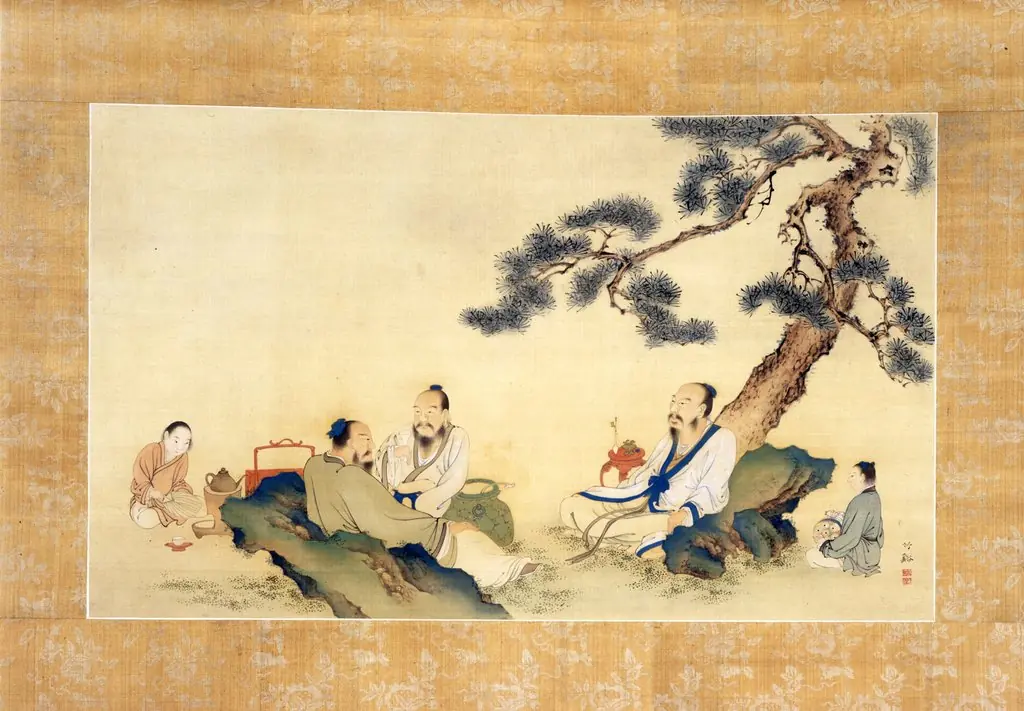 Scholars Enjoying Tea
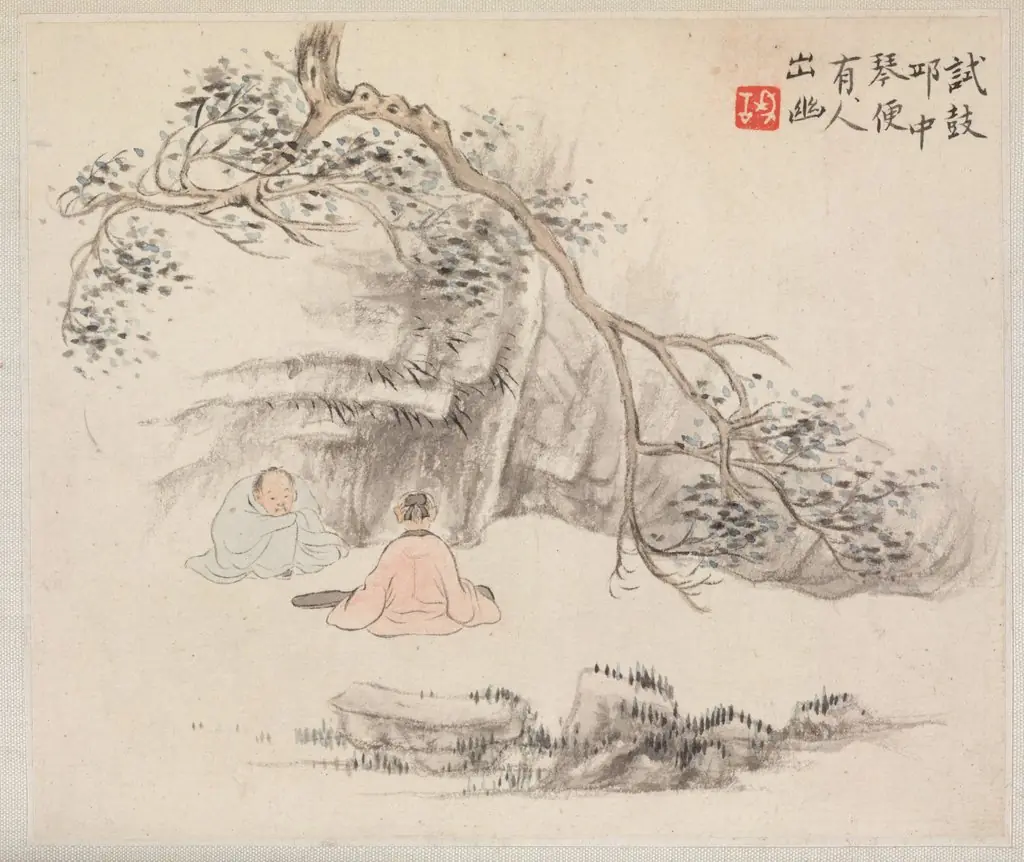 Album of Landscape Paintings Illustrating Old Poems: Listening to the Qin
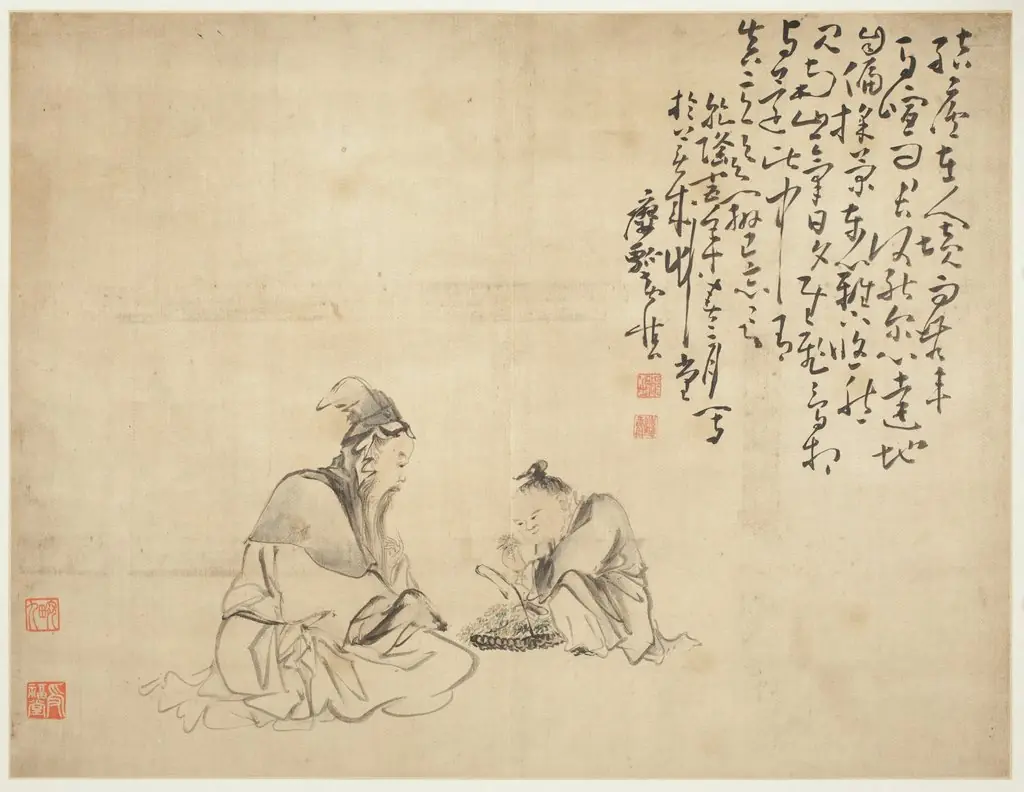 Landscapes and Figures: Figures
 Two Scholar-Musicians in a Landscape
- Oath of the Peach Garden, from Romance of the Three Kingdoms