Artwork
Water Margin Bandits
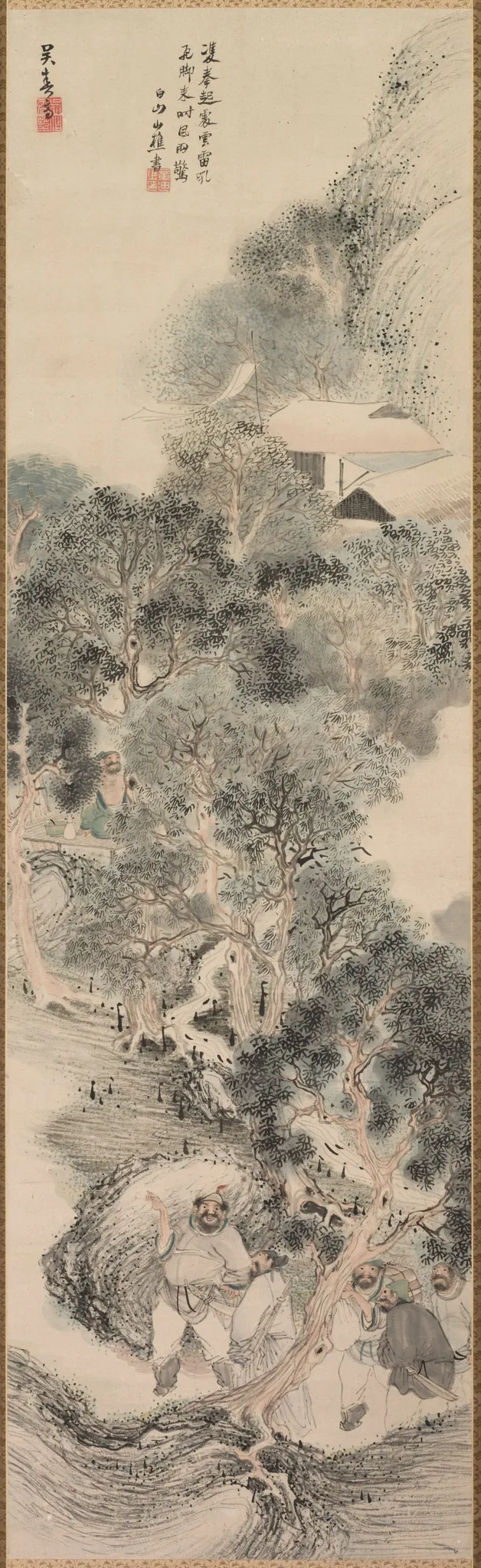
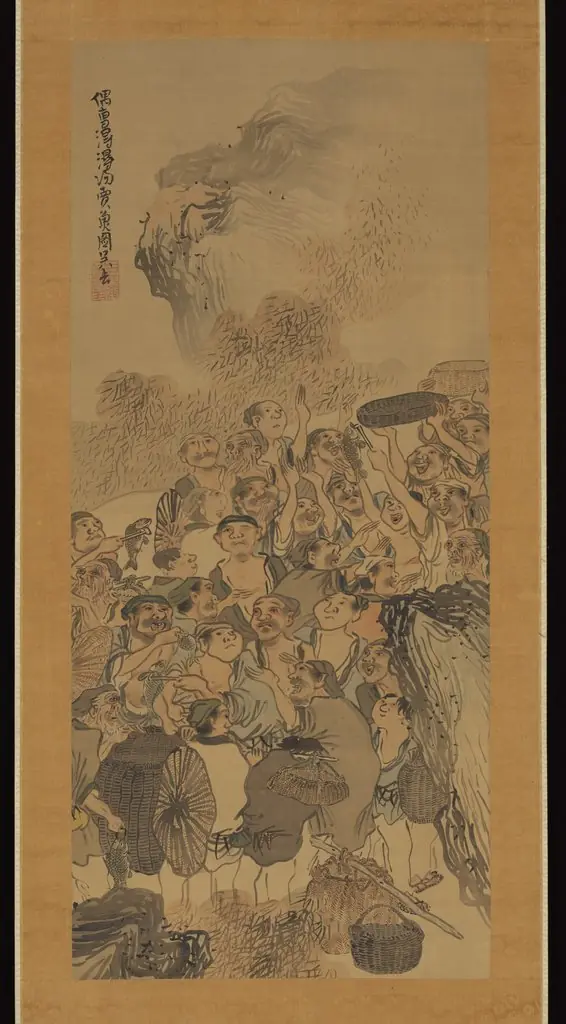
Water Margin Bandits is an unspecified painting by the Maruyama Shijo artist Matsumura Goshun. It dates from 1797 and is held in the collection of the Cleveland Museum of Art.
About this work
Overview
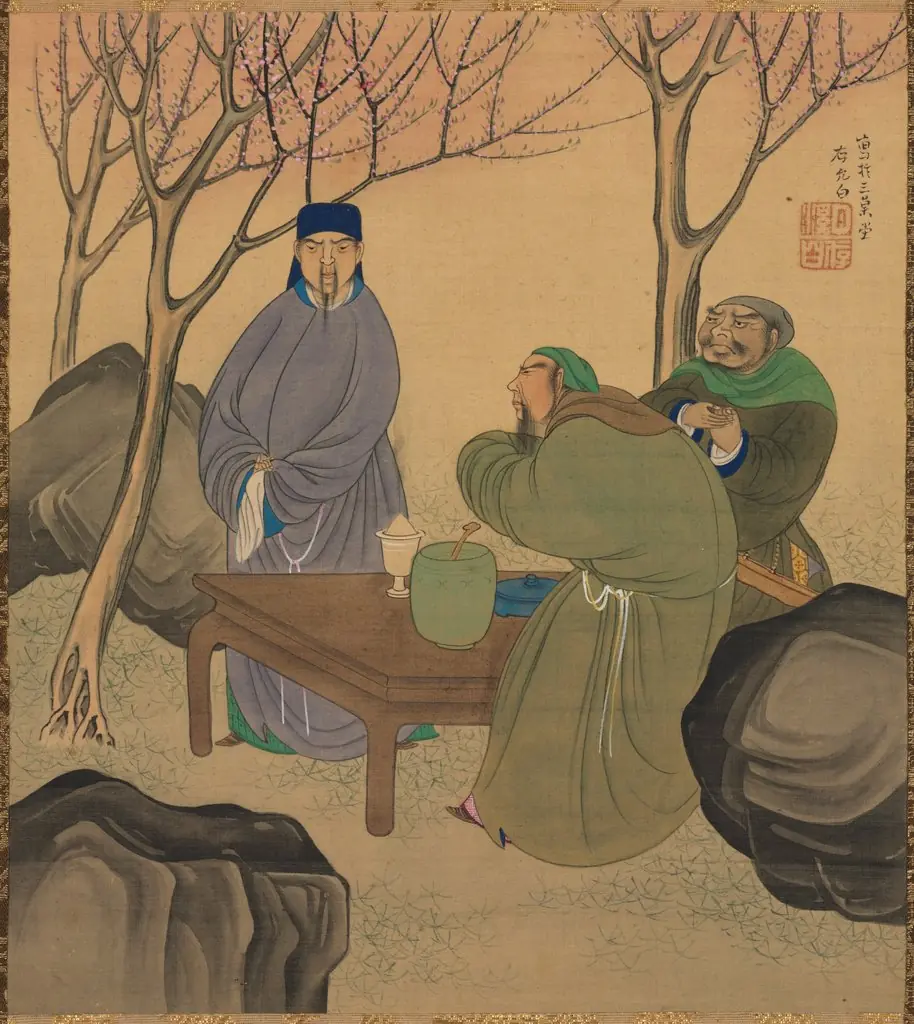
Painted in 1797 by Matsumura Goshun, Water Margin Bandits is a hanging scroll that illustrates a scene from the Chinese novel Shui Hu Zhuan (The Water Margin).
Painted in 1797 by Matsumura Goshun, Water Margin Bandits is a hanging scroll that illustrates a scene from the Chinese novel Shui Hu Zhuan (The Water Margin). The composition depicts three outlaws navigating a dense, mist-laden forest, rendered in Goshun's signature fusion of the Nanga literati style and the decorative Kyoto school. The artist employs vigorous, calligraphic brushwork to define the gnarled, twisted trunks of ancient trees, creating a sense of wild, untamed nature.
Three figures are strategically placed to guide the viewer's eye: one sits isolated on a rock draped in a dark cloak, another strides forward with a staff, and a third crouches near a tree, peering into the shadows. This work exemplifies Goshun's mature period, following his departure from the Maruyama-Shijo school to develop a more personal, expressive approach. The painting reflects the Edo period's fascination with Chinese literary heroes and the moral ambiguity of banditry, translating the narrative tension of the source text into a visual landscape of atmospheric depth and dynamic movement.
Subject & Meaning
The painting presents three individuals, a cloaked figure seated on a rock, a standing figure grasping a staff, and a crouching figure peering from behind a tree, set against a wild, fog‑filled woodland. Their isolated stances and the oppressive atmosphere imply a narrative of concealment or pursuit, evoking themes of danger and the unknown that are common in depictions of bandits or outlaws.
Technique & Style
Goshun employs rapid, sketch‑like brushwork to render the gnarled trees and swirling mist, creating a sense of immediacy and movement. The contrast between the dark silhouettes of the figures and the lighter, diffused background enhances depth, while the loose handling of foliage reflects a transitional approach between traditional ink painting and emerging Western influences of chiaroscuro.
History & Provenance
Water Margin Bandits was painted toward the end of the Edo period, a time when Japanese artists increasingly explored narrative subjects drawn from literature and folklore. The work entered the Cleveland Museum of Art’s collection through a 20th‑century acquisition, though earlier ownership records remain limited, reflecting the typical path of many Japanese paintings that entered Western collections during that era.
Artist & collection


- Happy Forest, from Water Margin
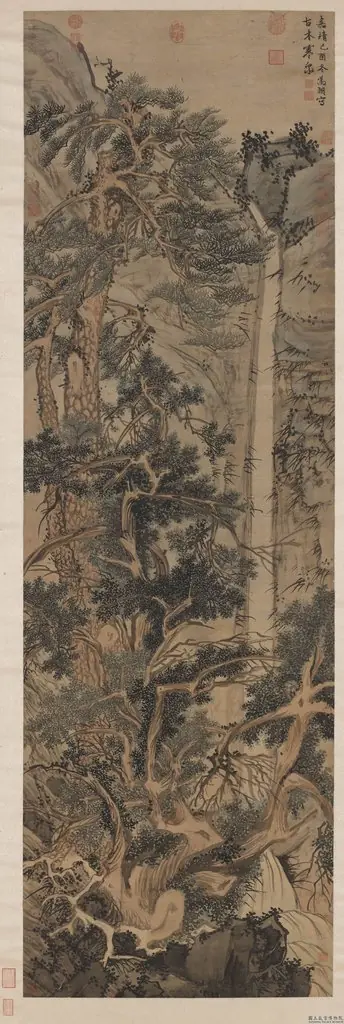 Old Trees by a Cold Waterfall
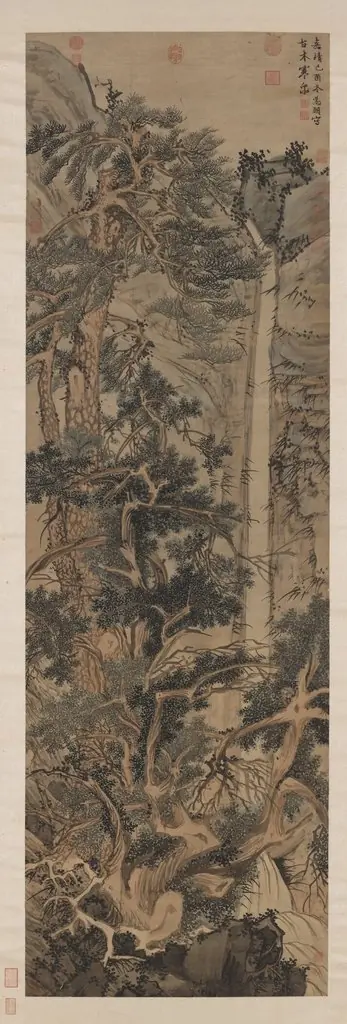 明文徵明古木寒泉 軸
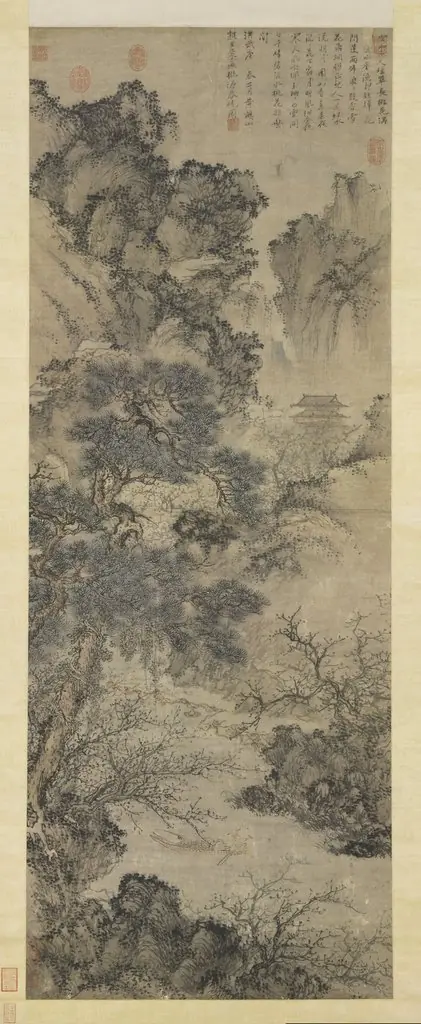 Vernal Dawn at the Peach Blossom Spring
 明 佚名 琴鶴圖 軸|Playing the zither for a crane
 Solitary Colors of the Autumn Woods
 Landscape
 Clouds and Waves at the Wu Gorge
 明 文嘉 為項元汴作山水圖 軸|Landscape dedicated to Xiang Yuanbian
 Album of Seasonal Landscapes, Leaf A (previous leaf 4)
 Landscape
 Pulling Oars under Clearing Autumn Skies (Distant Mountains)