Artwork
松村呉春筆 葡萄図|Grapevine
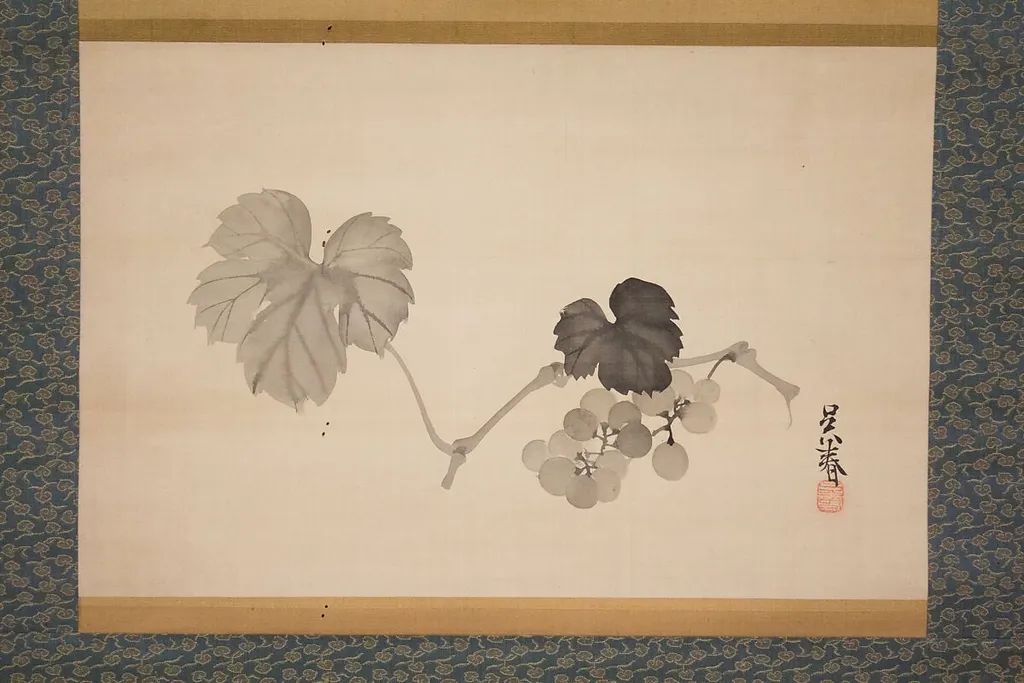
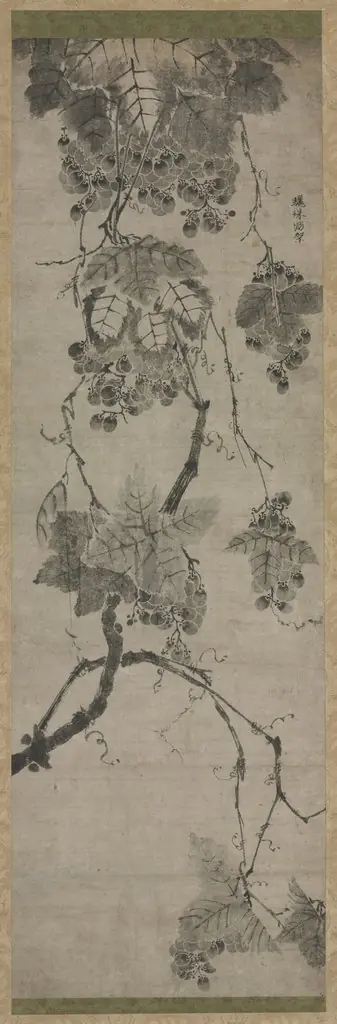
松村呉春筆 葡萄図|Grapevine is an ink painting by the Romanticist artist Matsumura Goshun. It dates from 1790 and is held in the collection of the Metropolitan Museum of Art.
About this work
Subject & Meaning
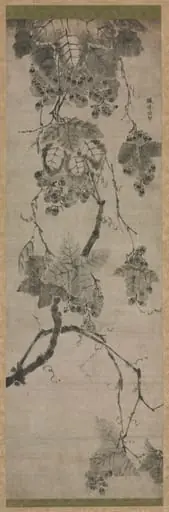
Created in 1790 by Matsumura Goshun, this hanging scroll executed in ink on silk presents a still-life composition focused entirely on a grapevine.
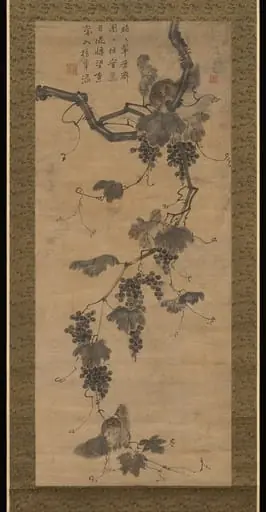
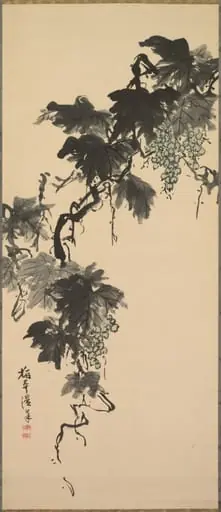
Created in 1790 by Matsumura Goshun, this hanging scroll executed in ink on silk presents a still-life composition focused entirely on a grapevine. The work depicts clusters of grapes, utilizing the monochromatic medium to render the form and texture of the fruit and its supporting vines. As a representative example of Japanese nature painting from the Edo period, the piece isolates this botanical subject for aesthetic contemplation.
Technique & Style
Created in 1790, Grapevine by Matsumura Goshun is a hanging scroll executed in ink on silk. The composition is rendered with fluid brushwork that captures the organic forms of the fruit and foliage against the silk support, characteristic of the Maruyama-Shijō school tradition with which Goshun is associated. The painting measures 41.0 cm in height and 26.4 cm in width, reflecting the intimate scale typical of such hanging scrolls. The medium of ink on silk allows for subtle tonal variations and delicate line work.
History & Provenance
The hanging scroll titled Grapevine was created by Matsumura Goshun in 1790. Executed in ink on silk, the work depicts a grapevine and is classified as a still-life painting. It originated in Japan and is currently held in the collection of the Metropolitan Museum of Art.
The artwork measures 41.0 cm in height and 26.4 cm in width. No specific commission details or earlier ownership records are provided in the available sources.
Overview
Created in 1790, this hanging scroll by Matsumura Goshun presents a solitary grapevine branch rendered in ink on silk. The composition is minimal, focusing on the twisting stem, dark leaves, and clusters of grapes that appear as dense drops against a muted gray background. The work exemplifies the artist’s interest in quiet, contemplative still‑life subjects.
Context
During the late 18th century, Japanese art saw a shift from the bold, decorative prints of the ukiyo-e tradition toward more understated ink works. Goshun’s grapevine reflects this transition, aligning with the literati aesthetic that favored simplicity, personal expression, and the study of natural subjects as a means of scholarly contemplation.
Artist & collection