Artwork
Seventy-two Peaks Against the Blue Sky
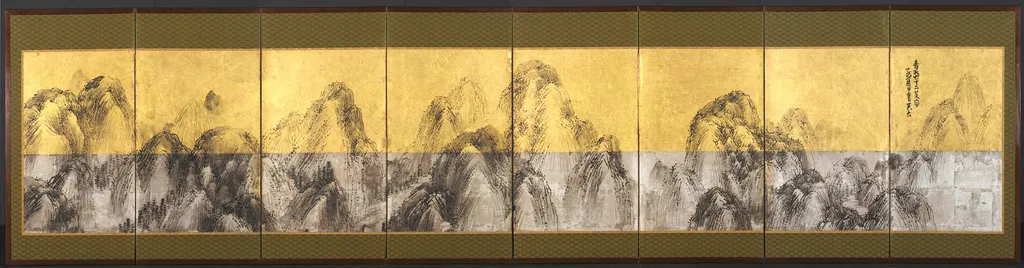
Seventy-two Peaks Against the Blue Sky is an unspecified painting by the Nanga artist Matsumura Goshun. It dates from 1793 and is held in the collection of the Cleveland Museum of Art.
About this work
Technique & Style
The work is an ink-on-paper painting created in Japan in 1785. It depicts seventy-two mountain peaks against a blue sky, rendered with delicate line work and subtle tonal gradations characteristic of the artist's style. The composition employs negative space to emphasize atmospheric perspective, while the brushwork shows controlled variation in density to suggest depth and contour in the terrain.
History & Provenance
Seventy-two Peaks Against the Blue Sky is a painting created in 1785 by Matsumura Goshun, a Japanese artist active during the Edo period.
Seventy-two Peaks Against the Blue Sky is a painting created in 1785 by Matsumura Goshun, a Japanese artist active during the Edo period. The work is part of the Cleveland Museum of Art's collection and was acquired through a donation recorded in 1980, reflecting its established presence in the museum's holdings.
The painting was made in Japan and reflects the artistic traditions of late 18th-century Japanese landscape painting. Its creation date of 1785 aligns with Goshun's active years as documented in art historical records.
Overview
Seventy‑two Peaks Against the Blue Sky, painted by Matsumura Goshun in 1793, is a six‑panel folding screen now in the collection of the Cleveland Museum of Art. The work presents a stylised mountain landscape rendered in monochrome against a uniform yellow field, creating a stark visual contrast that emphasizes the composition’s rhythmic arrangement.
Subject & Meaning
The screen depicts a sweeping range of seventy‑two stylised peaks, punctuated by sparse trees that suggest a distant, idealised landscape. The minimal narrative focus invites contemplation of nature’s vastness and the subtle interplay between emptiness and form, reflecting Edo‑period aesthetic values that prized suggestion over literal representation.
Context
Matsumura Goshun, a prominent figure in the nanga movement, blended Chinese literati painting principles with Japanese sensibilities. This work exemplifies the period’s fascination with landscape as a vehicle for scholarly expression, aligning with contemporary practices that favored monochrome ink studies on decorative formats such as folding screens.
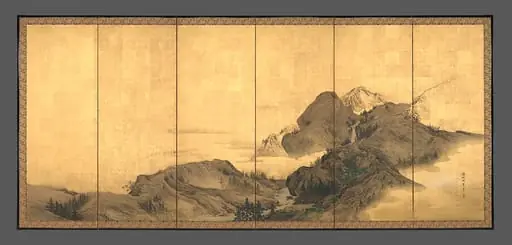
Artist & collection


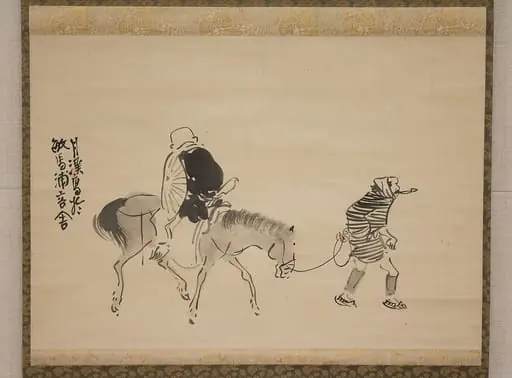
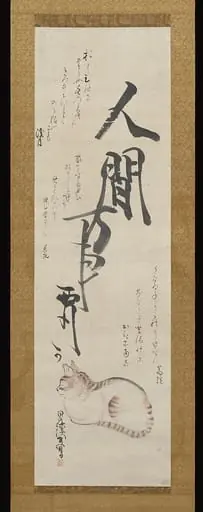
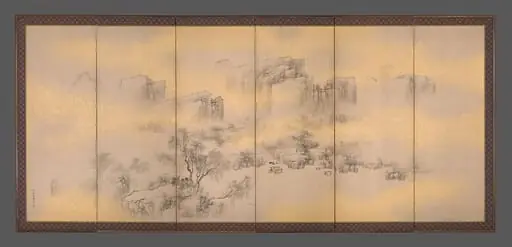
- 森周峰筆 楼閣山水図屏風|Landscape with Pavilion
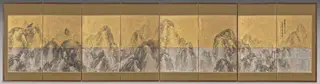 Seventy-Two Peaks Under the Blue Sky with Mount Furong
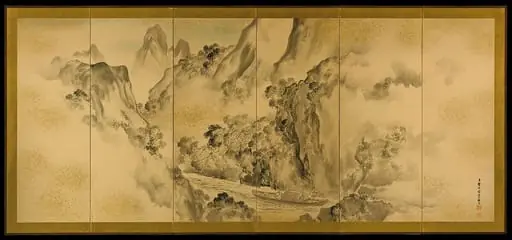 塩川文麟筆 登峨眉山図屏風|The Poet Li Bo's Visit to Mount Emei
 中林竹渓筆 夏秋山水図屏風|Summer and Autumn Landscapes
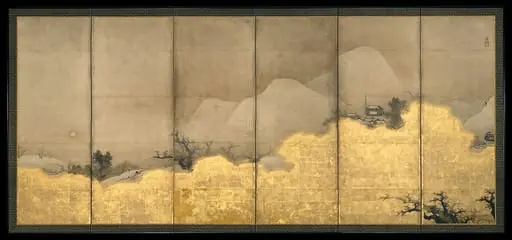 Untitled
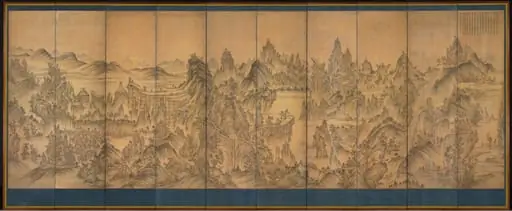 Seven Jeweled Mountain
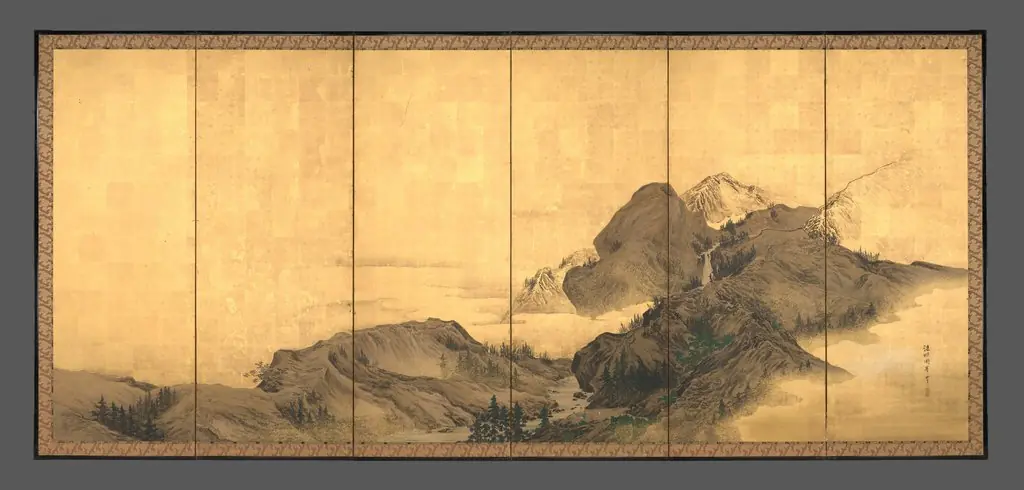 Landscape with Pavilion
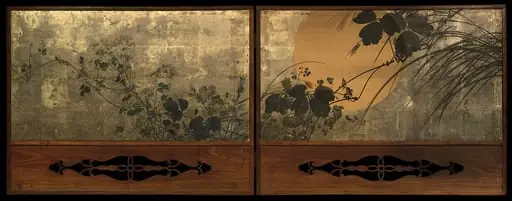 月に秋草図屏風|Autumn Grasses in Moonlight
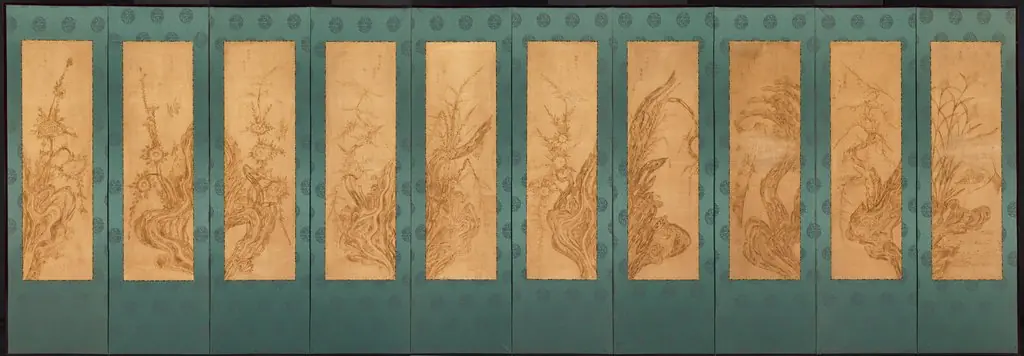 Birds and Flowers
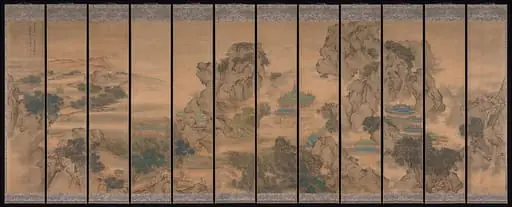 清 袁江 九成宮圖 屏|The Palace of Nine Perfections
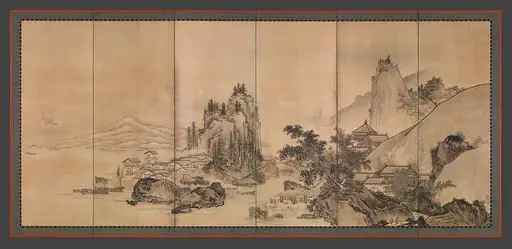 雲谷等顔筆 四季山水図屏風|Landscape of the Four Seasons
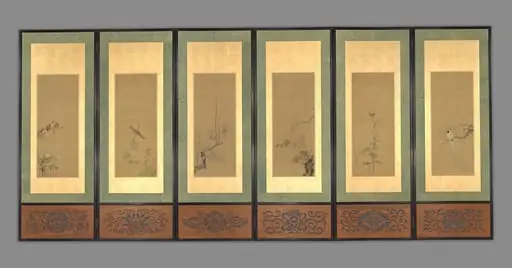 狩野探幽・狩野尚信・清原雪信 花鳥図屏風|Birds and Flowers