Artwork
Oath of the Peach Garden, from Romance of the Three Kingdoms
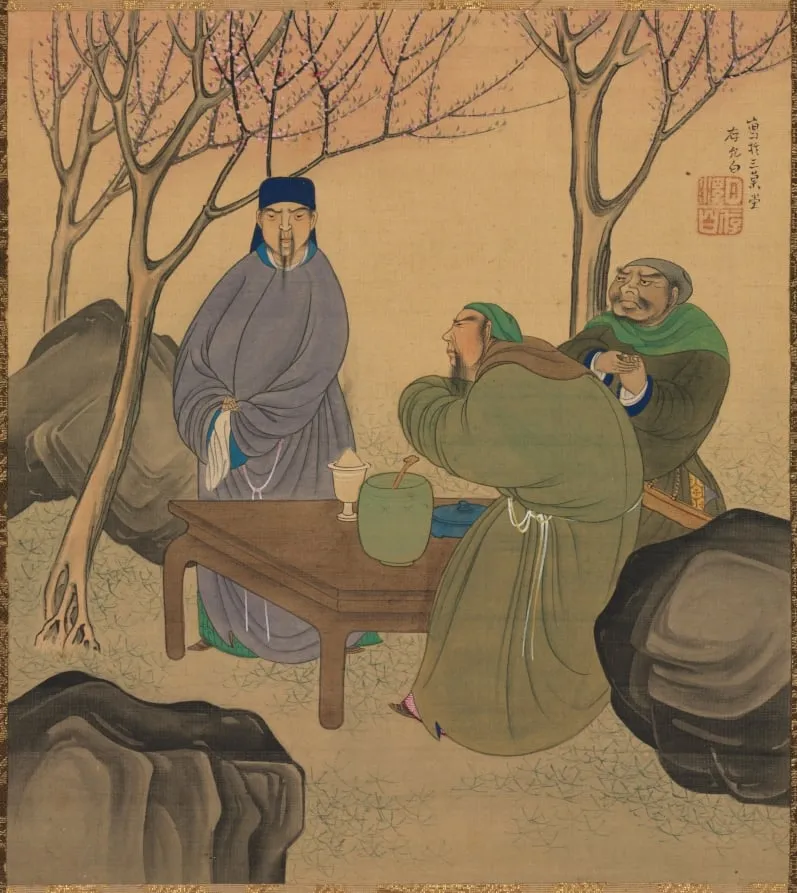
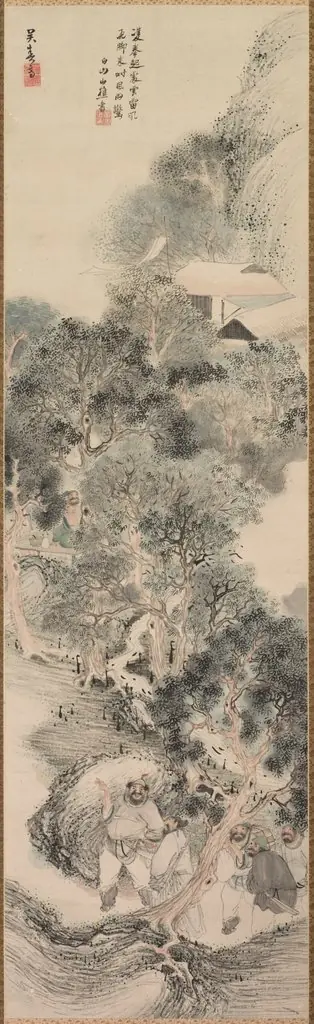
Oath of the Peach Garden, from Romance of the Three Kingdoms is an unspecified painting by the Nanga artist Matsumura Goshun. It dates from 1780 and is held in the collection of the Cleveland Museum of Art. The work portrays the famed oath of brotherhood taken by Liu Bei, Guan Yu and Zhang Fei beneath a canopy of pink peach blossoms.
- Accession no.
- 1987.35
- Credit line
- John L. Severance Fund
About this work
This scene comes from a 14th-century Chinese novel, but the artist painted it in Japan during the Edo period.
Three men stand under pink peach blossoms, raising their hands in a promise. One wears blue, the others red and green. A small stream winds between them.
This scene comes from a 14th-century Chinese novel, but the artist painted it in Japan during the Edo period. The story was so popular in Japan that people knew the characters by heart, like a favorite TV show today.
To see more art from this time, look up japan, edo period (1615–1868).
Overview
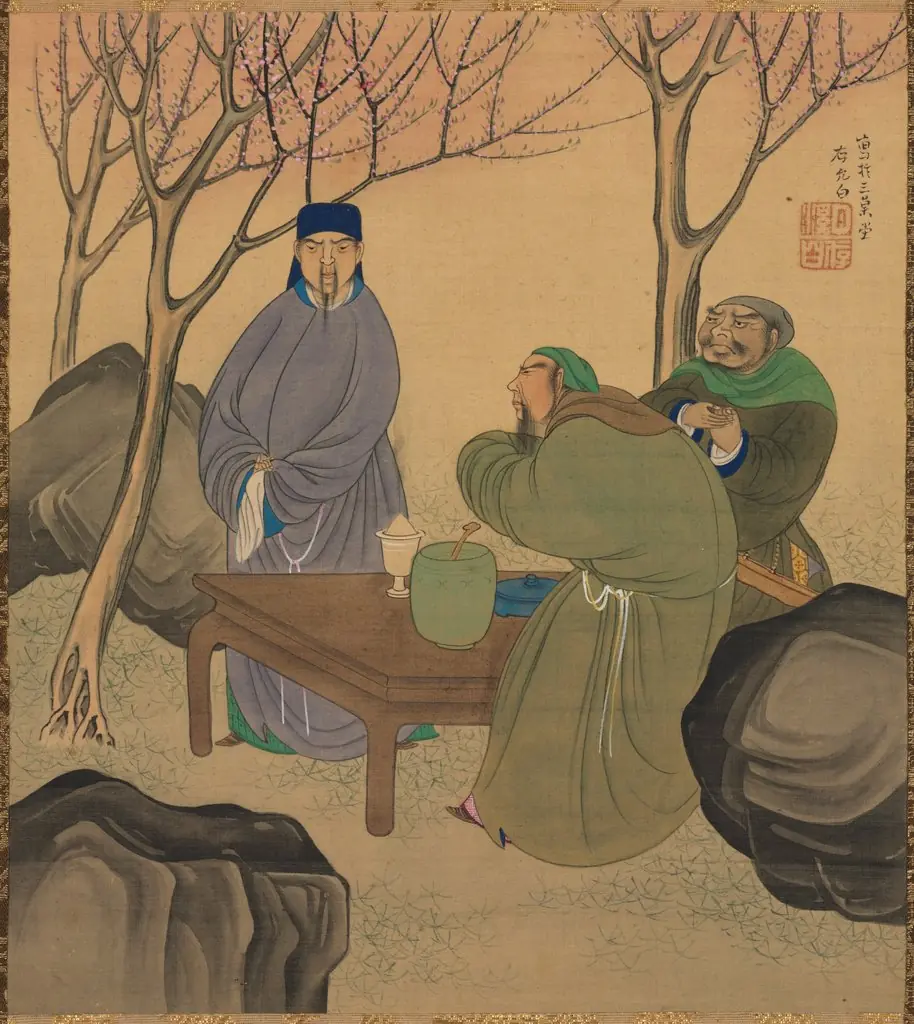
The work portrays the famed oath of brotherhood taken by Liu Bei, Guan Yu and Zhang Fei beneath a canopy of pink peach blossoms. The three figures stand together, hands raised in a solemn pledge, while a gentle stream winds at their feet. Their garments, blue, red and green, contrast with the delicate blossoms, emphasizing the moment’s emotional gravity.
Subject & Meaning
Taken from the 14th‑century Chinese novel Romance of the Three Kingdoms, the scene captures the protagonists’ declaration that they will share life and death. The inscription associated with the episode, “We seek not to be born on the same day but hope that we may die on the same day,” underscores themes of loyalty, camaraderie and collective destiny that resonated deeply in later Japanese culture.
Technique & Style
Executed in the Edo period, the painting employs ink and color on silk, a medium favored for narrative scenes. Fine brushwork renders the peach blossoms with a soft, almost ethereal quality, while the figures are delineated with bolder strokes that highlight their distinct robes. The composition balances a horizontal landscape with a vertical focus on the central oath.
History & Provenance
Although the narrative originates in a Chinese historical novel, the canvas was created by a Japanese artist during the Edo era (1615–1868). The story’s translation into Japanese in the late 17th century sparked widespread fascination, leading to frequent visual adaptations such as this one, which likely circulated among literate samurai and merchant audiences.
Context
The painting reflects the Edo period’s appetite for Chinese literary classics, which were read and performed as popular entertainment. The oath of the peach garden became a cultural touchstone, comparable to a recurring television drama, and its visual representations reinforced moral ideals of fidelity and collective sacrifice within Japanese society.
Artist & collection


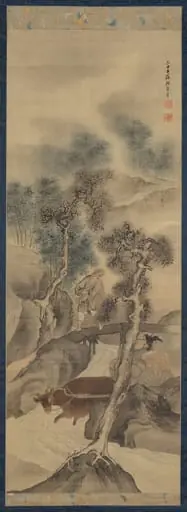 Farmer Returning Home in Autumn
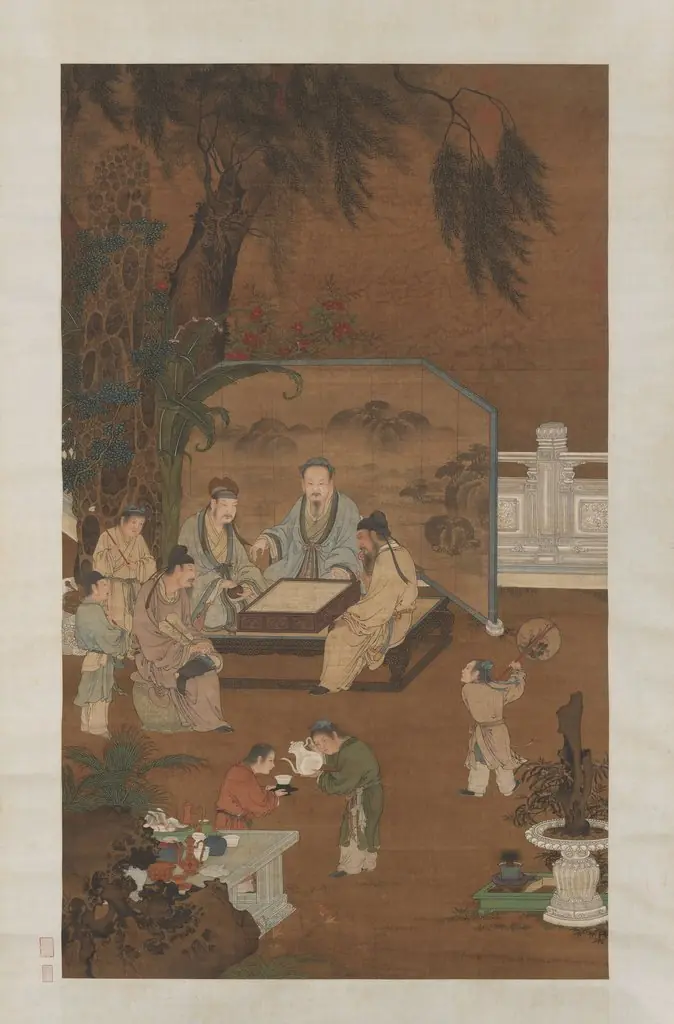 The Eighteen Scholars
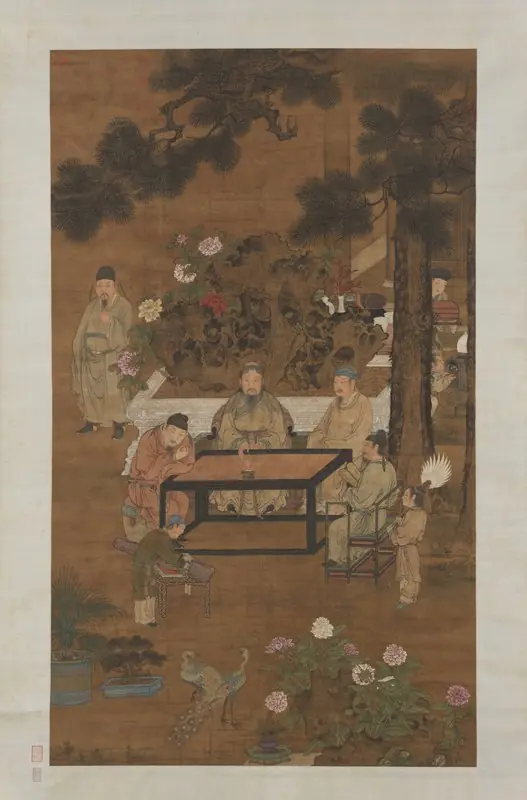 The Eighteen Scholars (zither)
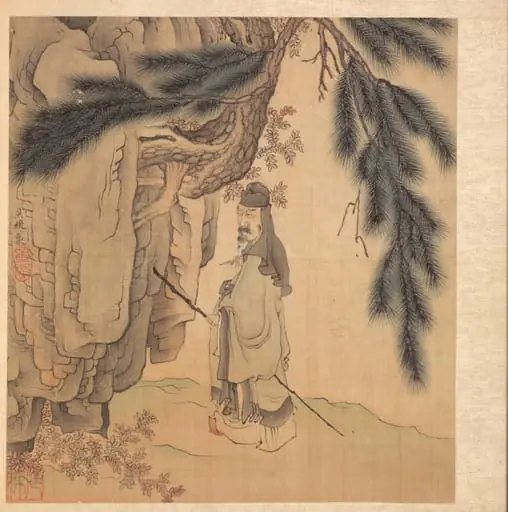 Paintings after Ancient Masters: Scholar with Staff and Brush
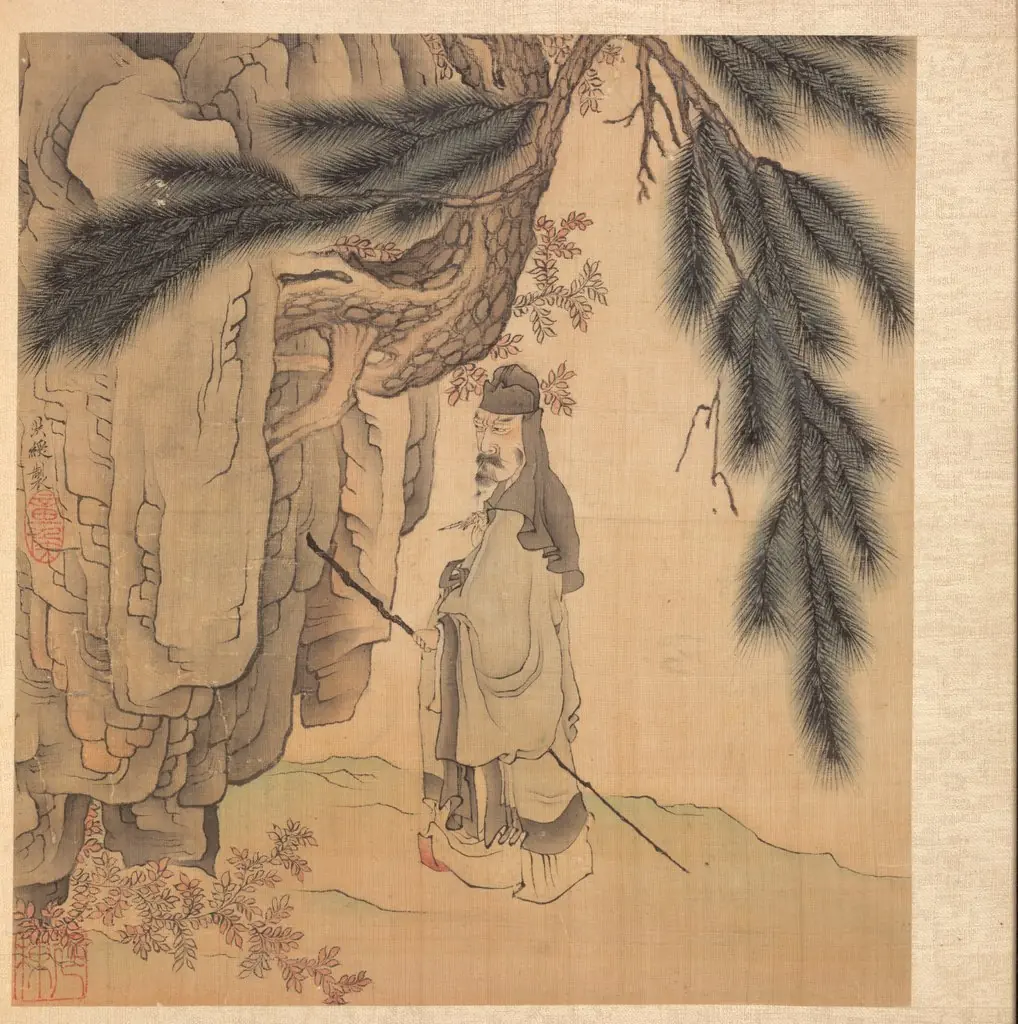 Paintings after Ancient Masters: Scholar with Staff and Brush
 Untitled
 明顧正誼開春報喜 軸
 明 錢榖 蘭亭修禊圖 卷|Gathering at the Orchid Pavilion
 Zhong Kui Supported by Ghosts
 Scholars Enjoying Tea
 明 郭詡 稱書圖 軸|Weighing Books