Artwork
John Harrisson
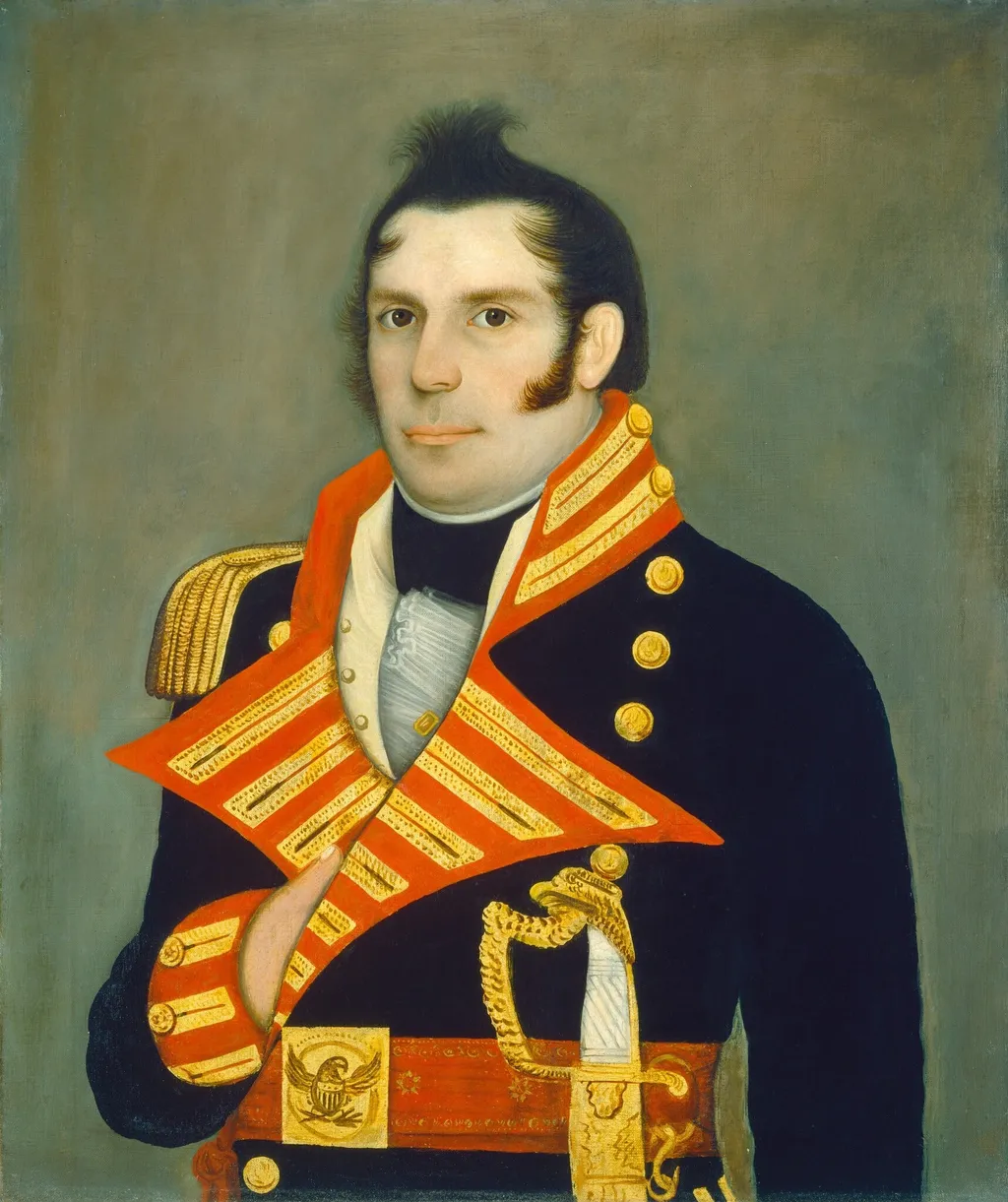
John Harrisson is an oil painting by the Romanticist artist Frederick W. Mayhew. It dates from 1823 and is held in the collection of the National Gallery of Art. Frederick W.
About this work
Overview
The portrait exemplifies early nineteenth-century American portraiture, combining formal military iconography with individual character study.
John Harrisson is an oil-on-canvas portrait painted in 1823 by Frederick W. Mayhew, an American artist associated with Martha's Vineyard. The painting measures 76 by 63.4 centimeters (29 15/16 by 24 15/16 inches) and depicts a half-length male figure in military dress. Now held by the National Gallery of Art in Washington, D.C., the work entered the museum in 1980 as a bequest from Edgar William and Bernice Chrysler Garbisch. The portrait exemplifies early nineteenth-century American portraiture, combining formal military iconography with individual character study. It occupies a significant place in Mayhew's small but notable body of work and in the broader context of American naive painting.
Subject & Meaning
The subject, John Harrisson, is identified through Smithsonian records as both a military officer and a merchant, suggesting a figure of civic standing who moved between martial and commercial spheres. Mayhew presents him in a dark navy military coat with bright red collar and lapels trimmed with gold braid, gold buttons, and a gold epaulette on the right shoulder. His left hand, gloved in white, grips the ornate gold hilt of a sword, with the scabbard and belt visible across his lower torso; the belt bears a rectangular gold buckle with an eagle emblem, signaling American military affiliation. Beneath the coat, a white waistcoat and ruffled cravat appear, while his dark hair is swept upward with sideburns. The visual rhetoric of the portrait communicates rank, duty, and national service, yet the even lighting and direct presentation also convey personal presence. The eagle buckle specifically encodes patriotic identity, while the overall composition balances institutional representation with individual likeness.
Technique & Style
Mayhew executed the portrait in oil on canvas with smooth, precise brushwork that pays particular attention to the metallic sheen of gold accents and the crisp folds of fabric. Light falls evenly across the figure with minimal shadow, creating a flattened, frontal presentation characteristic of certain strains of early American portraiture. The muted olive-gray background provides cool contrast that enhances the saturation of the red and gold military details. The handling of textures, particularly the juxtaposition of smooth skin against woolen coat and polished metal, demonstrates Mayhew's controlled technique. The painting is not signed. The work's formal qualities, including its even illumination, precise detail, and somewhat rigid symmetry, align it with academic conventions of the period, though scholars have also situated Mayhew within the American naive or folk art tradition. The stretcher dimensions of 76 by 63.3 centimeters confirm a standard portrait format of the era.
History & Provenance
The painting was recorded as being from South Carolina in the mid-twentieth century. W. Holsclaw of Charleston, South Carolina, owned the work in 1954 and that December requested information about the painting and artist from William Tripp, curator of the Whaling Museum in New Bedford, Massachusetts. Tripp replied on December 24, 1954. Holsclaw likely sold the work to Eunice Chambers of Hartsville, South Carolina, shortly thereafter, as she sold it to Edgar William and Bernice Chrysler Garbisch as early as February 23, 1955, per Garbisch records in National Gallery of Art curatorial files. The Garbisches bequeathed the painting to the National Gallery of Art in 1980. The work has been cited in scholarly literature, including Deborah Chotner's 1992 American Naive Paintings in the Collections of the National Gallery of Art Systematic Catalogue, and in articles by Joyce Hill (1984) and Doris C. Stoddard (1986).
Context
Frederick W. Mayhew remains a somewhat elusive figure in American art history, though scholarship has established his connection to Martha's Vineyard and his activity as a limner, or itinerant portrait painter, in the early nineteenth century. Doris C. Stoddard's 1986 article, "Frederick Mayhew, Limner: Chilmark's Little Known Artist," brought significant attention to his career, while Joyce Hill's 1984 essay on cross-currents in American face and figurehead painting situated his work within broader decorative traditions. Deborah Chotner's 1992 catalogue entry for the National Gallery of Art provided formal scholarly documentation of the Harrisson portrait. Mayhew's practice has been associated with the American naive painting tradition, characterized by directness of presentation, flattened spatial effects, and a certain disregard for conventional academic proportion. The Harrisson portrait, with its precise yet formally restrained execution, offers insight into how regional American painters engaged with conventions of military and civic portraiture during the early republic.
Legacy
The portrait of John Harrisson has become a key work in the small known corpus of Frederick W. Mayhew, serving as a benchmark for understanding his artistic practice. Its presence in the National Gallery of Art, one of the premier American collections, has ensured its visibility to scholars and the public. The painting has been reproduced in commercial contexts, including fine art print editions, indicating its continued resonance beyond the museum walls. In curatorial interpretation, the work has prompted reflection on the tension between formal military representation and individual psychological presence in early American portraiture. The portrait also contributes to ongoing interest in American naive and folk art, where Mayhew's precise yet unacademic manner offers a distinctive case study. The work's documented provenance, from South Carolina private hands through the notable Garbisch collection to the national museum, traces the evolving fortunes of American regional painting across the twentieth century.
Own this work as a print
Artist & collection


- Portrait of Colonel Alexander Smith (1790-1858)
 Tilanomistaja, tuomari Albert Johan Lignell
 Portrait of Vasily V. Yeshin (1771-1825)
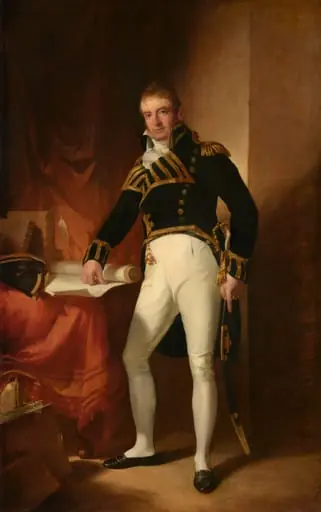 Captain Charles Stewart
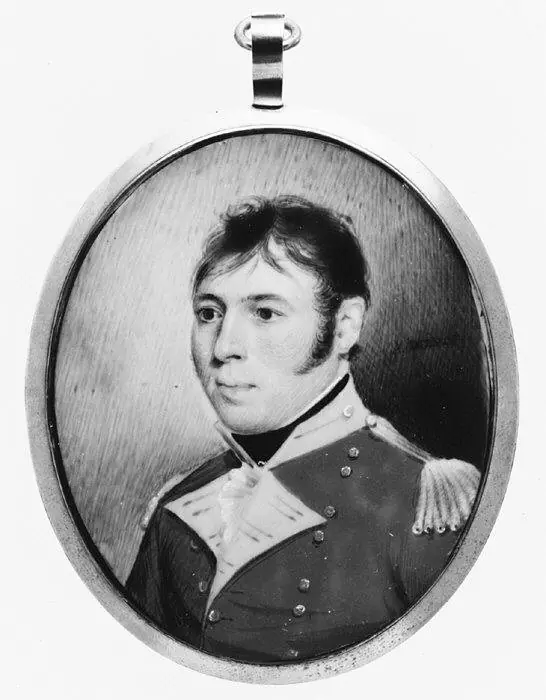 Portrait of an Officer
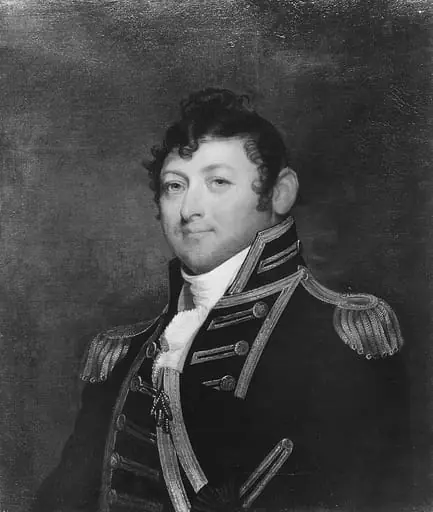 Commodore Isaac Hull
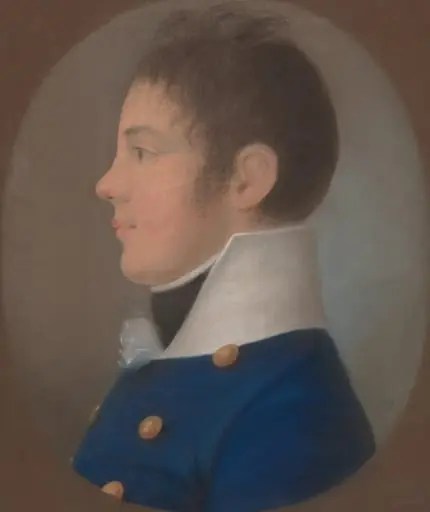 Portrait of a Young Man in Profile
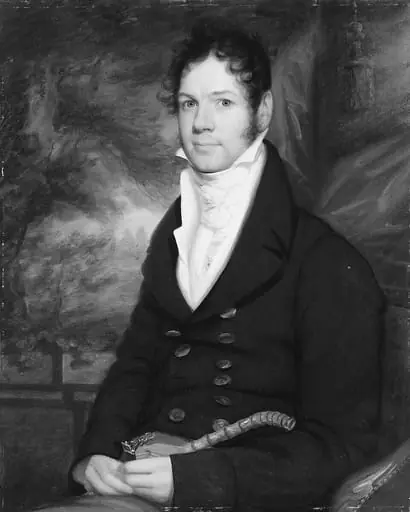 Robert Dickey
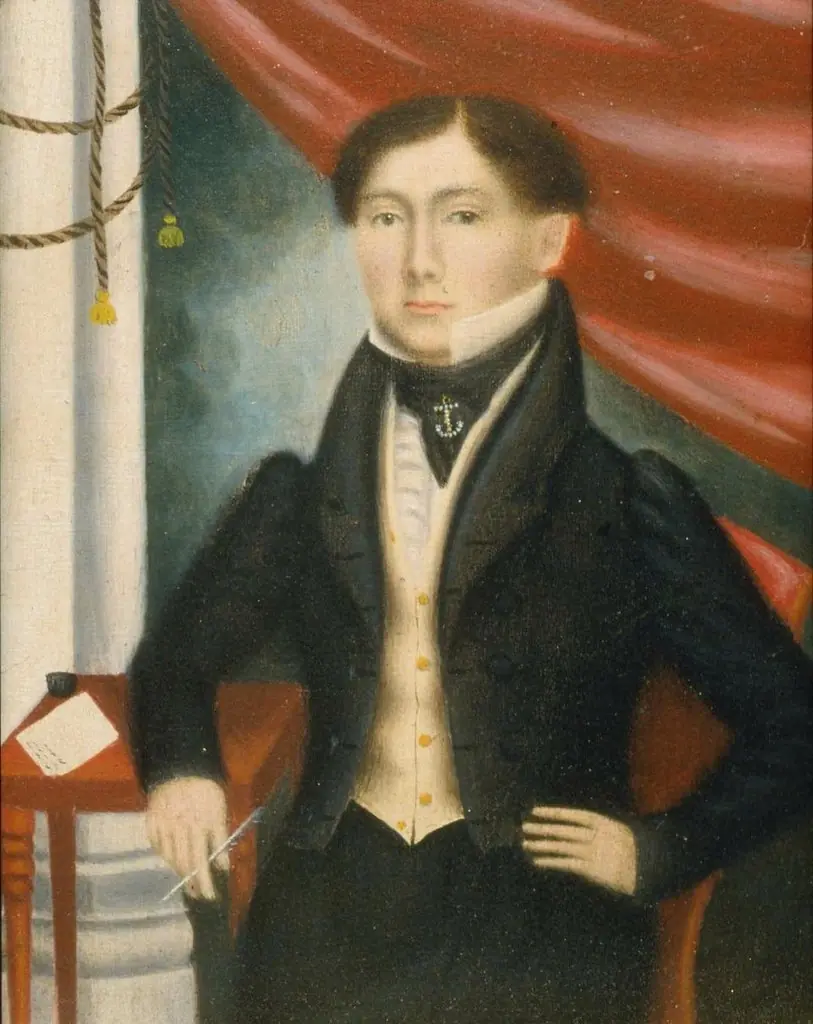 Man at Desk
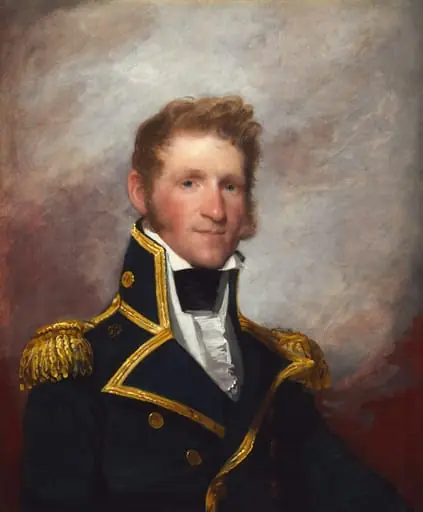 Commodore Thomas Macdonough
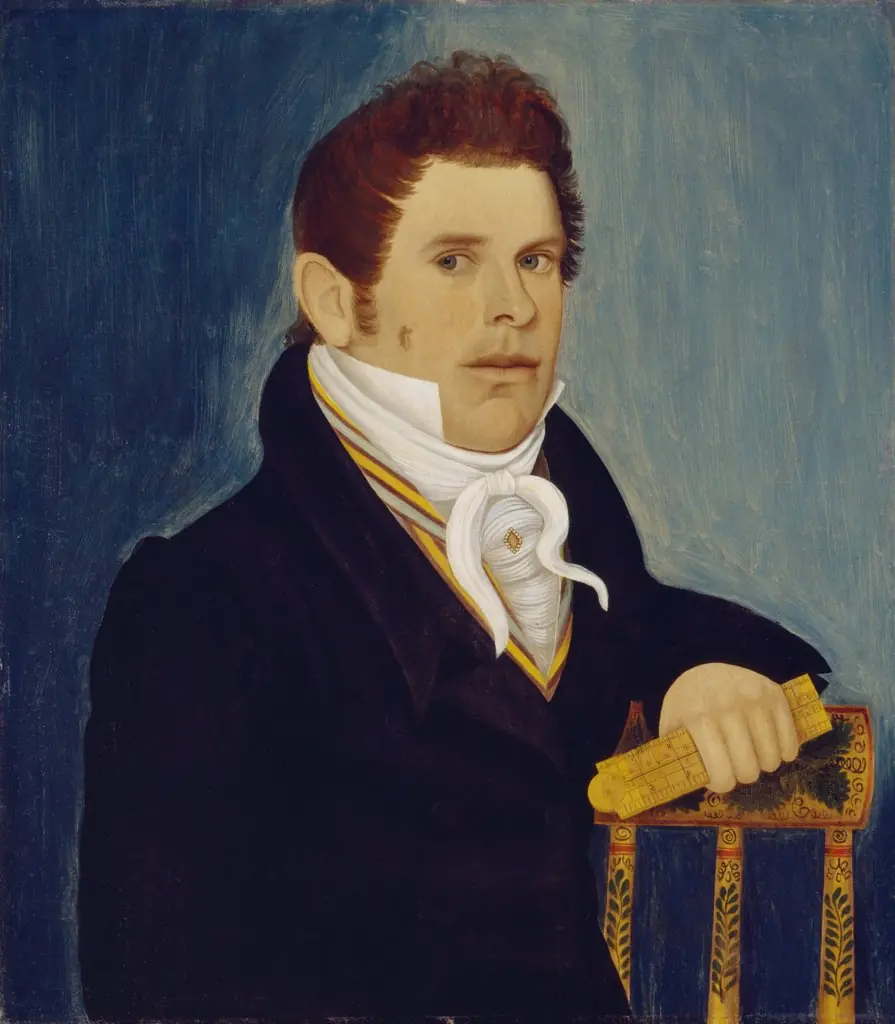 Man with Folding Rule
 Portrait of an Officer