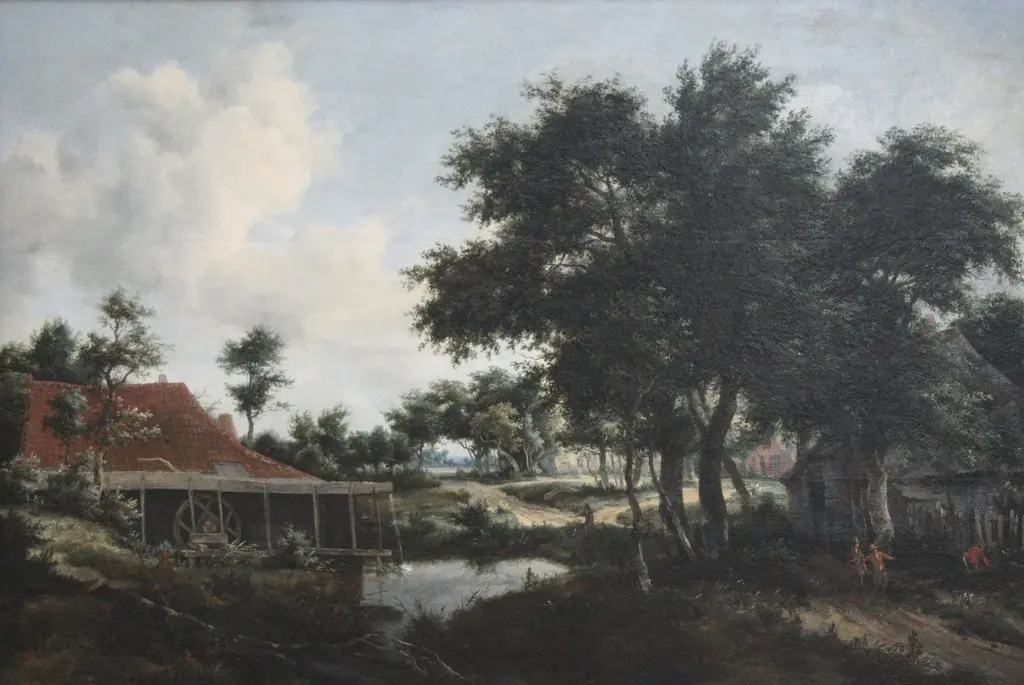
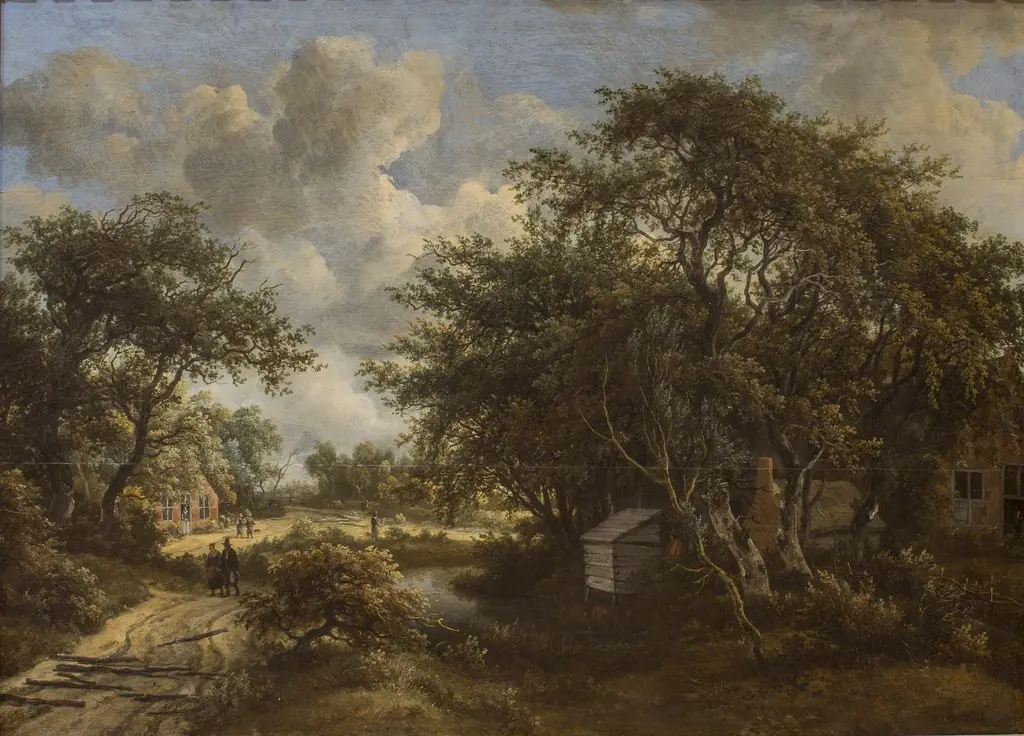
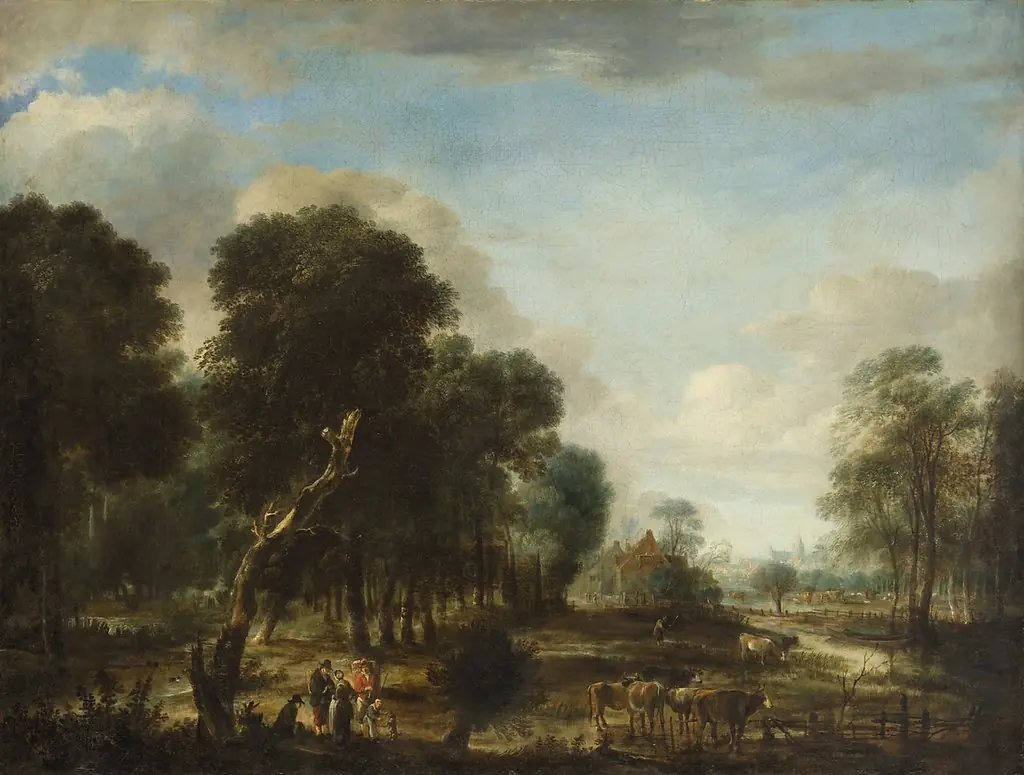
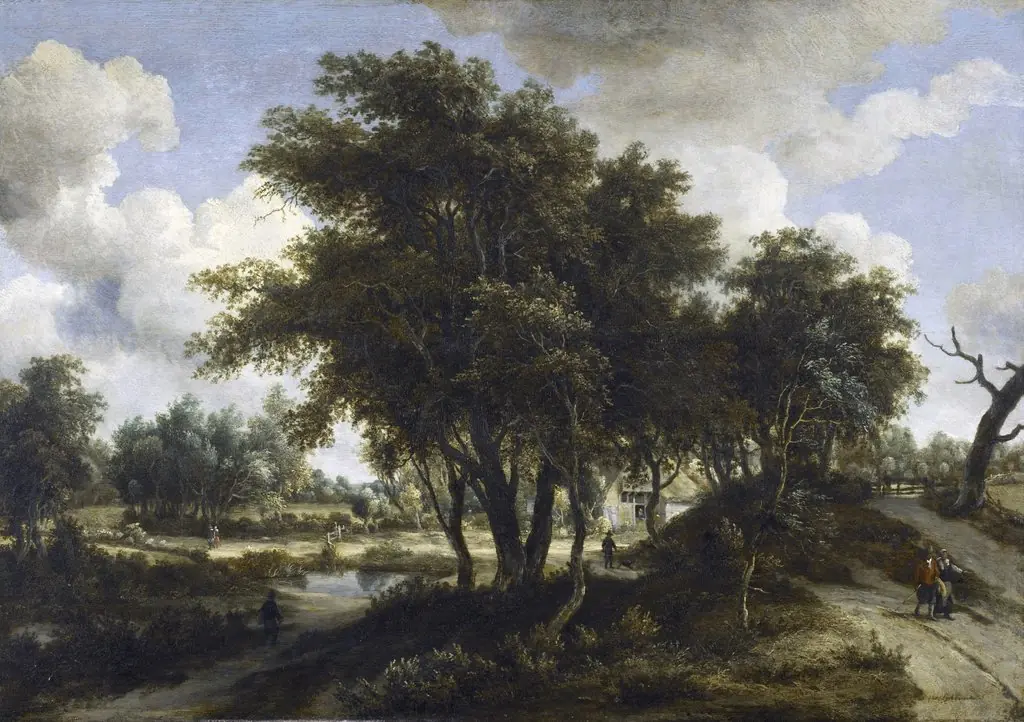
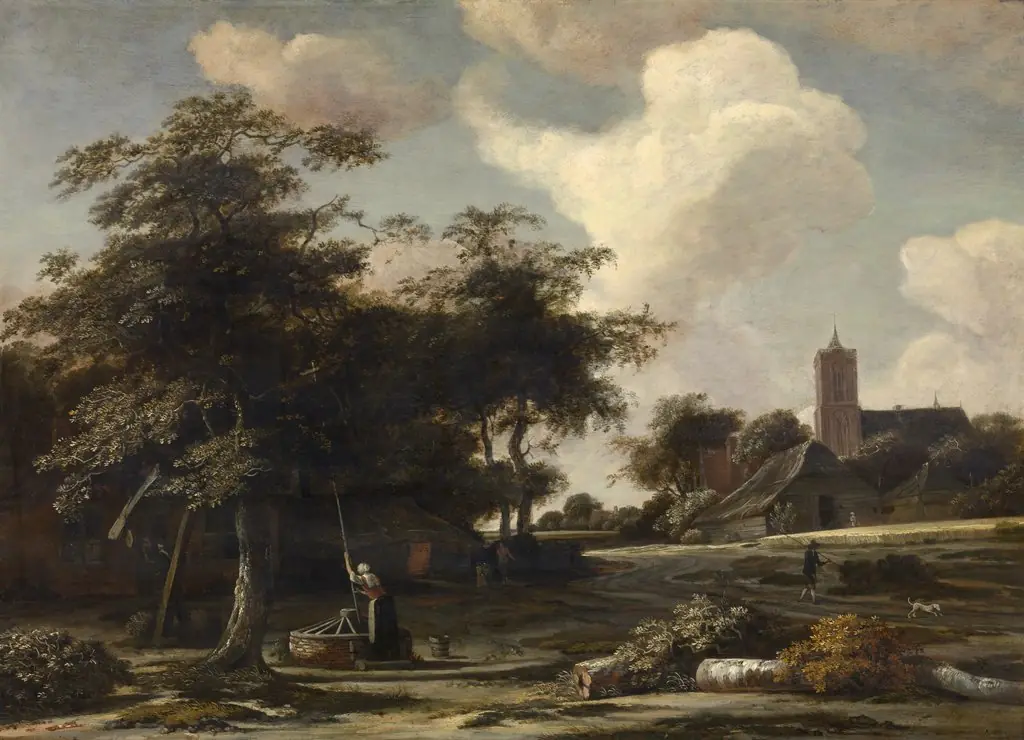
Artwork
A Farm in the Sunlight
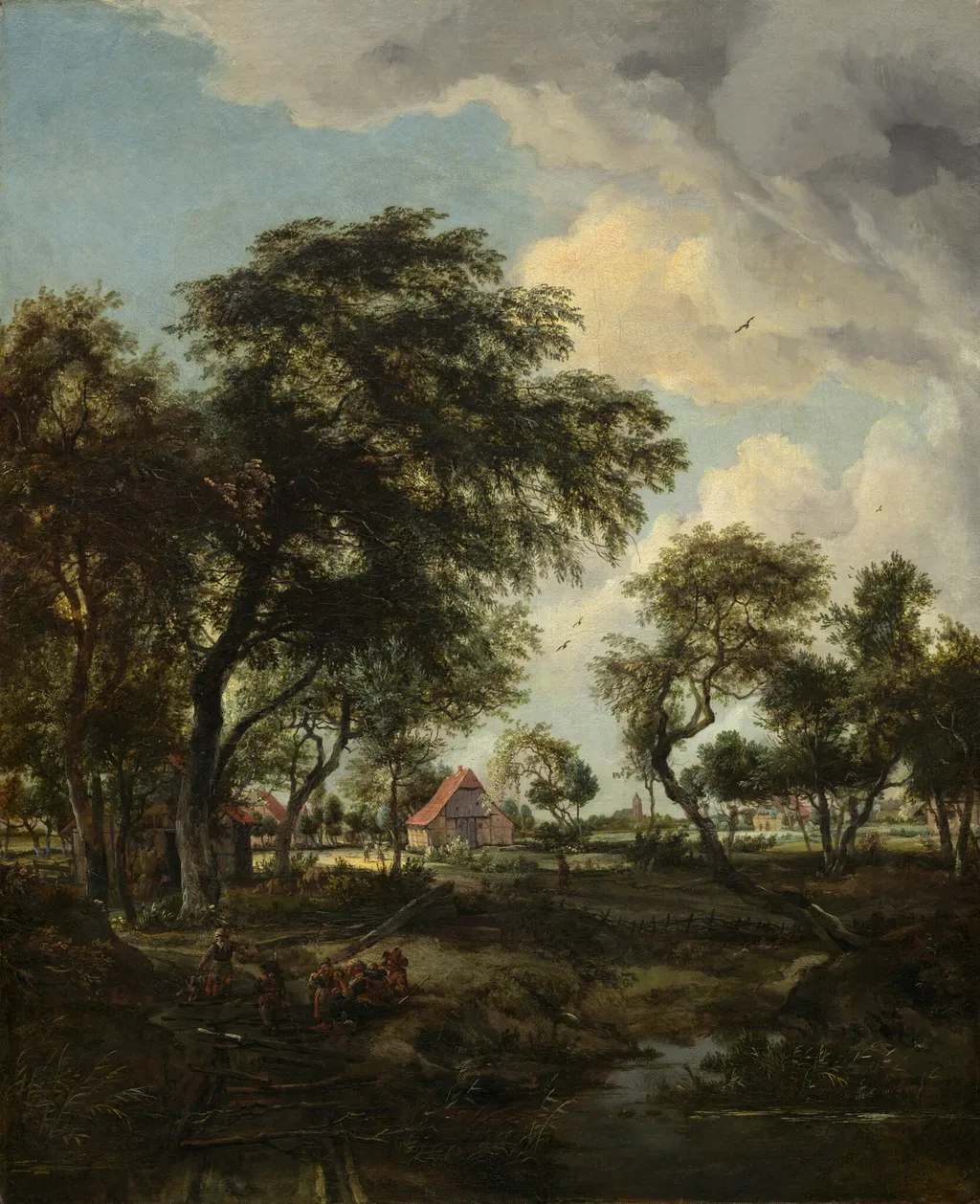
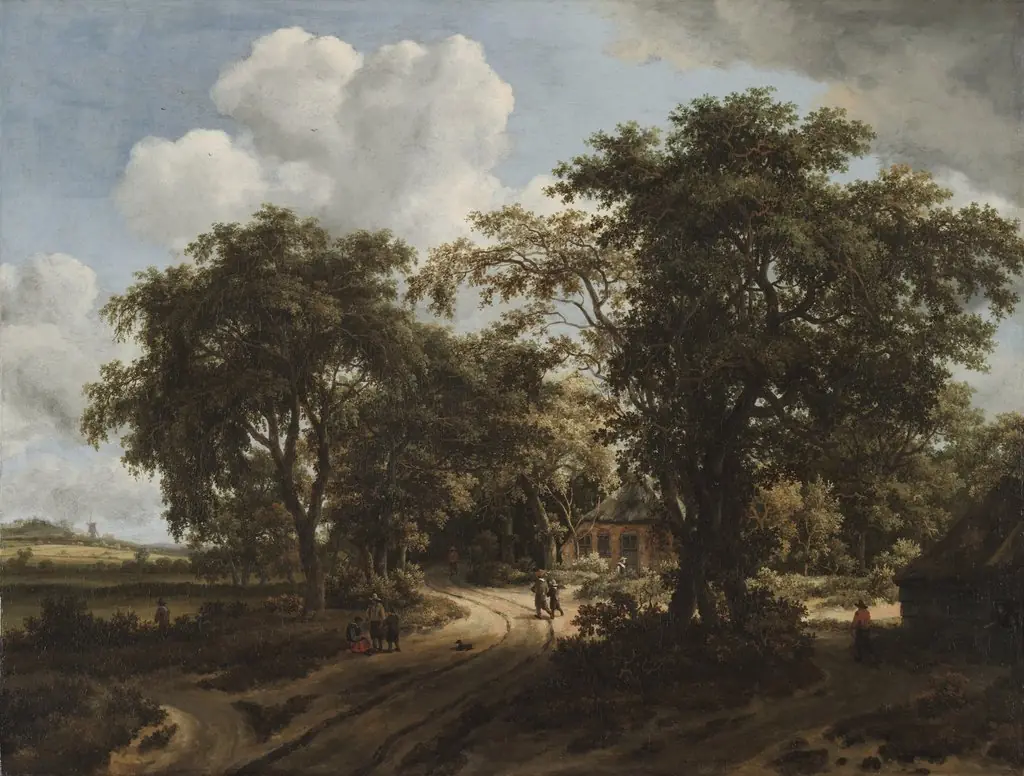
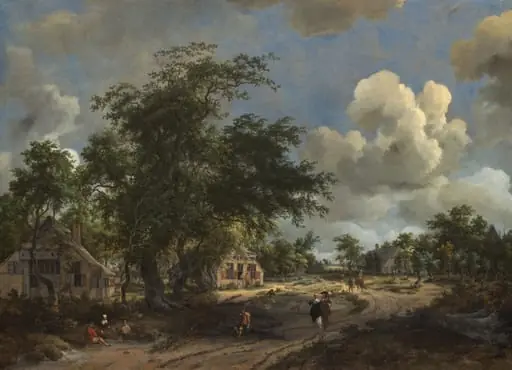
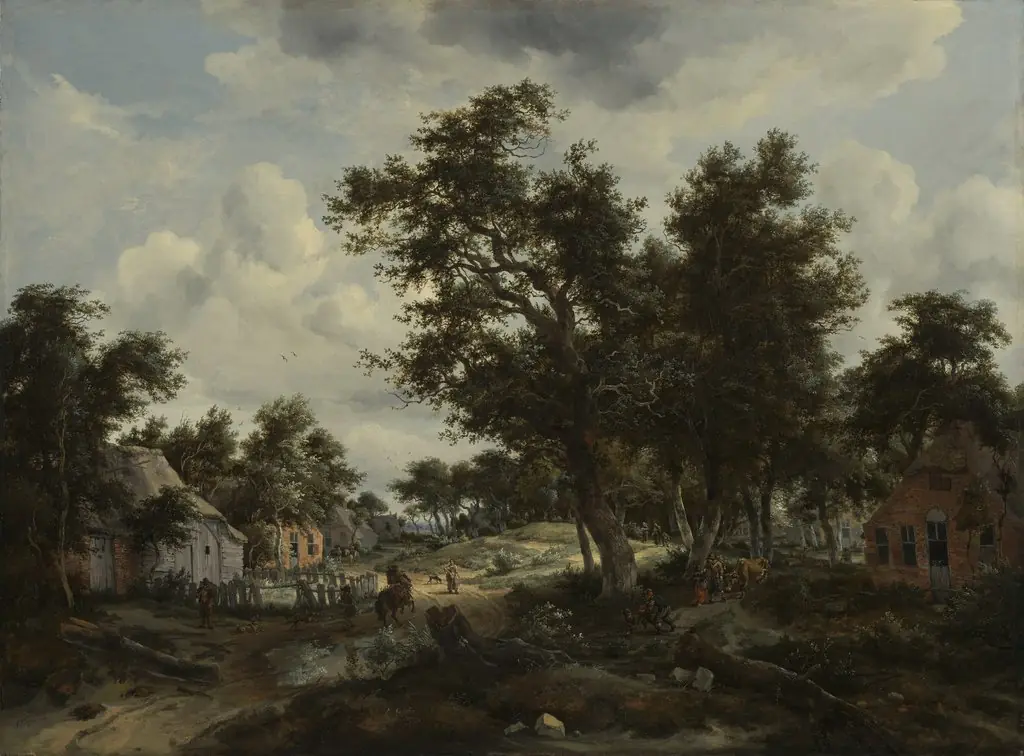
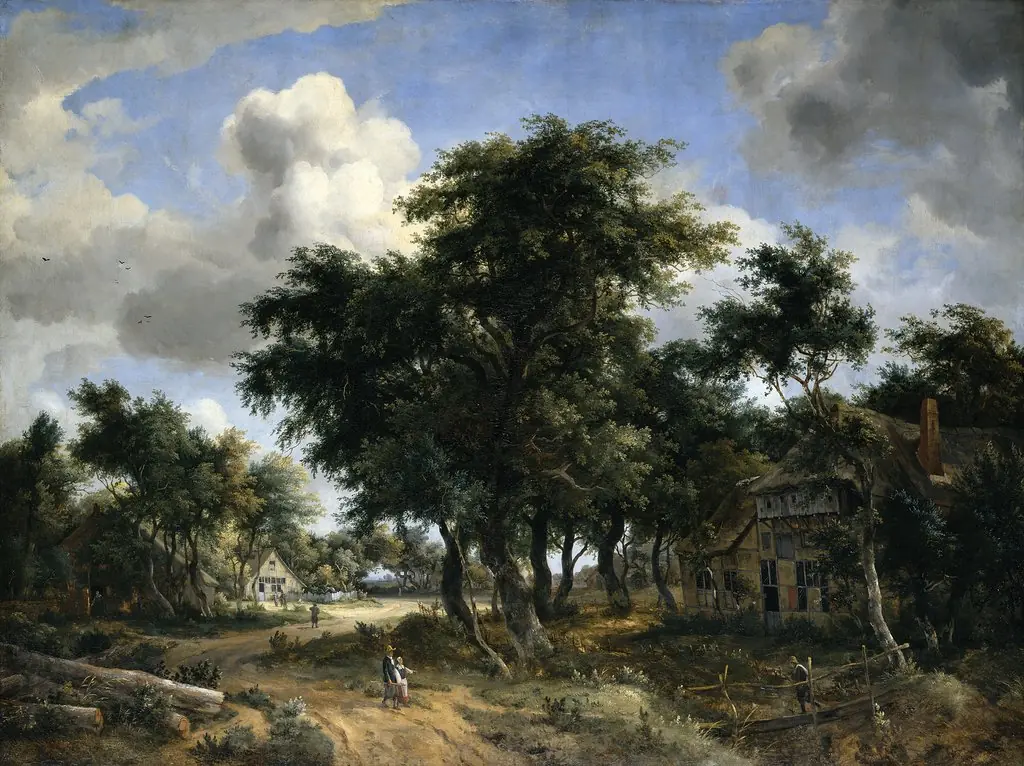
A Farm in the Sunlight is an oil painting by the Baroque artist Meindert Hobbema. It dates from 1668 and is held in the collection of the National Gallery of Art.
- Inscription
- Inscribed:lower right, remnants of a signature and date: ..bbema .668
About this work
Subject & Meaning
The subject thus serves as a visual record of a sun‑lit farm, underscoring the aesthetic interest in rural tranquility and the everyday countryside.
The painting titled "A Farm in the Sunlight" depicts a rural farmstead bathed in daylight, presenting a typical Dutch landscape scene of a modest agricultural setting. As a work classified as a landscape, it emphasizes natural terrain and countryside elements rather than portraiture or narrative figuration. The composition reflects the tradition of rendering idyllic agrarian environments, a genre favored in 17th‑century Dutch art.
The subject thus serves as a visual record of a sun‑lit farm, underscoring the aesthetic interest in rural tranquility and the everyday countryside.
Technique & Style
A Farm in the Sunlight is executed in oil on canvas, a standard support for seventeenth-century Dutch landscape painting. The work measures 81.9 cm in height by 66.4 cm in width. Its landscape genre places it within Hobbema's characteristic body of work, in which rural farmsteads, woodland edges, and sunlit open country are rendered with careful attention to atmospheric light and naturalistic detail.
The canvas format and modest scale are typical of the cabinet-sized landscapes produced for the Dutch market in the 1660s.
No specific information regarding the painting's current condition, conservation history, or particular handling of paint and brushwork is documented in the available sources.
History & Provenance
A Farm in the Sunlight was painted in 1668 by Meindert Hobbema as an oil on canvas landscape. The work entered the record with R. van Smidt of Brussels, then passed to Corneille Louis Reijnders, who possibly owned it by 1788 before selling it to William Buchanan in London. George Watson Taylor acquired it in 1817; after his 1823 and 1832 sales it went through Charles J. Nieuwenhuys and Henri Héris, entering the Belgian royal collection when Leopold I obtained it by 1839.
It descended to Leopold II, was sold by F. Kleinberger & Co. to August de Ridder in 1909, appeared at the 1924 Petit gallery auction, was bought by M. Knoedler & Co., and purchased by Andrew W. Mellon in December 1924. Mellon’s trust deeded the painting to the National Gallery of Art in 1934, and it was gifted to the museum in 1937.
A Farm in the Sunlight has been held by the National Gallery of Art in Washington, D.C., since 1937, when it was given by The A.W. Mellon Educational and Charitable Trust, which had received it by deed on 28 December 1934. Andrew W. Mellon had purchased the painting in December 1924 from M. Knoedler & Co., New York, after it appeared at the estate sale of August de Ridder at Galerie Georges Petit, Paris, on 2 June 1924 (lot 26). Earlier, in May 1909, it had been acquired from the Belgian royal collection by F. Kleinberger & Co., passing to de Ridder in 1910. The work is part of the Andrew W. Mellon Collection at the NGA.
Notable earlier sale appearances include the 1832 Taylor sale at Erlestoke Park (lot 69, 24 July), the 1833 Nieuwenhuys sale at Christie & Manson (lot 128), and the 1823 Christie's sale of the George Watson Taylor collection (lot 56, bought in).
Overview
Meindert Hobbema's A Farm in the Sunlight, an oil on canvas from 1668, is a notable example of Dutch Golden Age landscape painting. The work captures a serene rural farmstead bathed in warm light, framed by trees and open terrain. It embodies the artist's characteristic focus on woodland scenes and sunlit natural environments, reflecting the period's appreciation for detailed and evocative depictions of the Dutch countryside.
Context
Created during the Dutch Golden Age, a period of flourishing landscape art, A Farm in the Sunlight aligns with the era's artistic sensibilities. Hobbema trained under Jacob van Ruisdael, a leading master of the genre, and his mature works frequently feature sunlit forest paths and ponds. This painting exemplifies his contribution to the landscape tradition, emphasizing natural light and the peaceful beauty of the rural environment.
Own this work as a print
Artist & collection
Artist
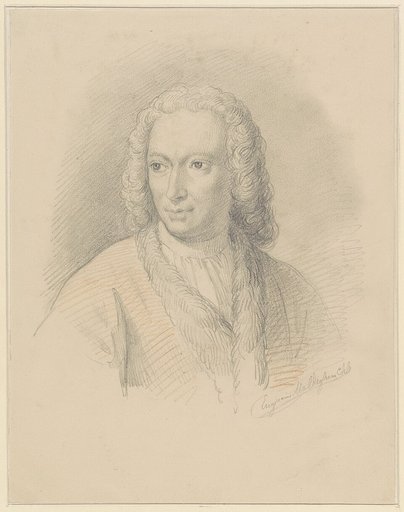
Meindert Lubbertszoon Hobbema (bapt. 31 October 1638 – 7 December 1709) was a Dutch Golden Age painter of landscapes, specializing in views of woodland, although his most famous painting, The Avenue at Middelharnis…