Artwork
Village near a Pool
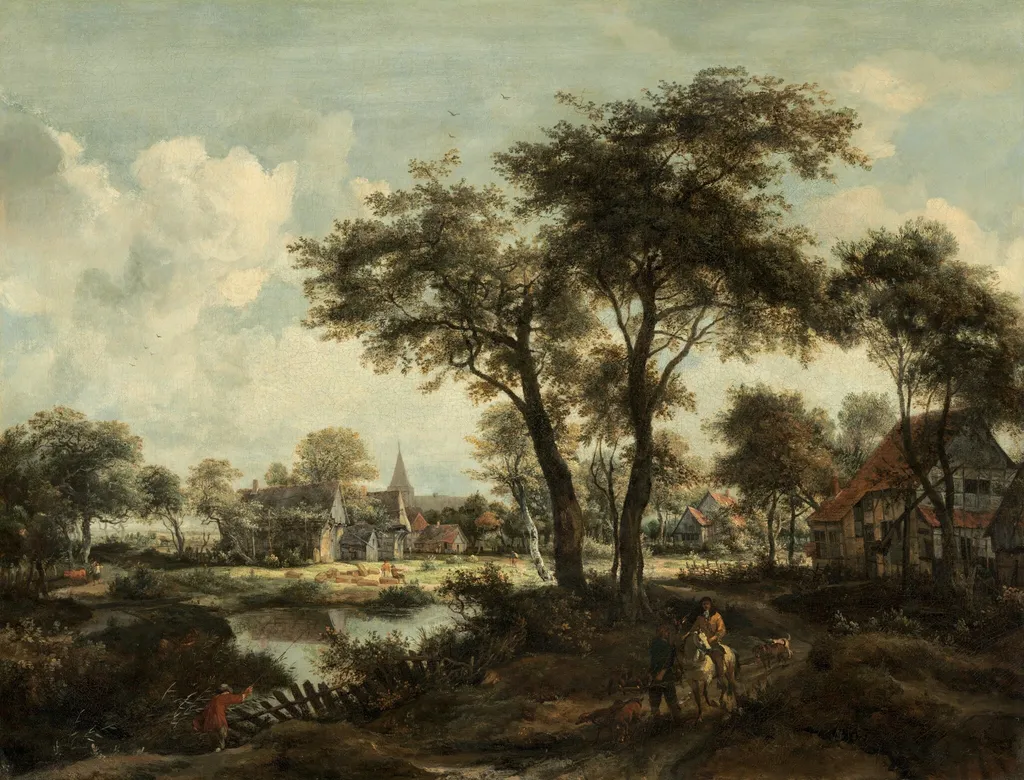
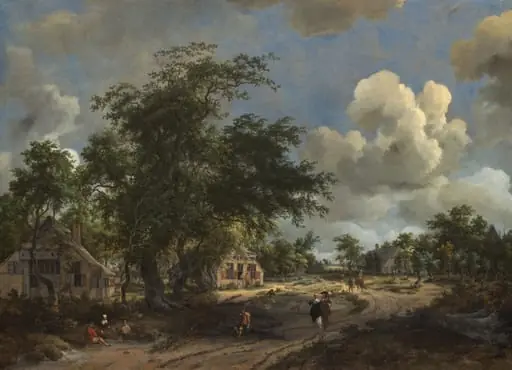
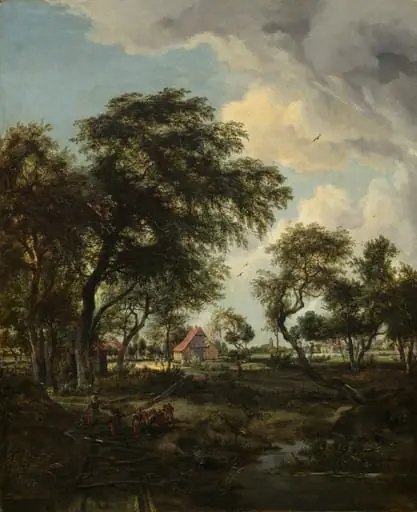
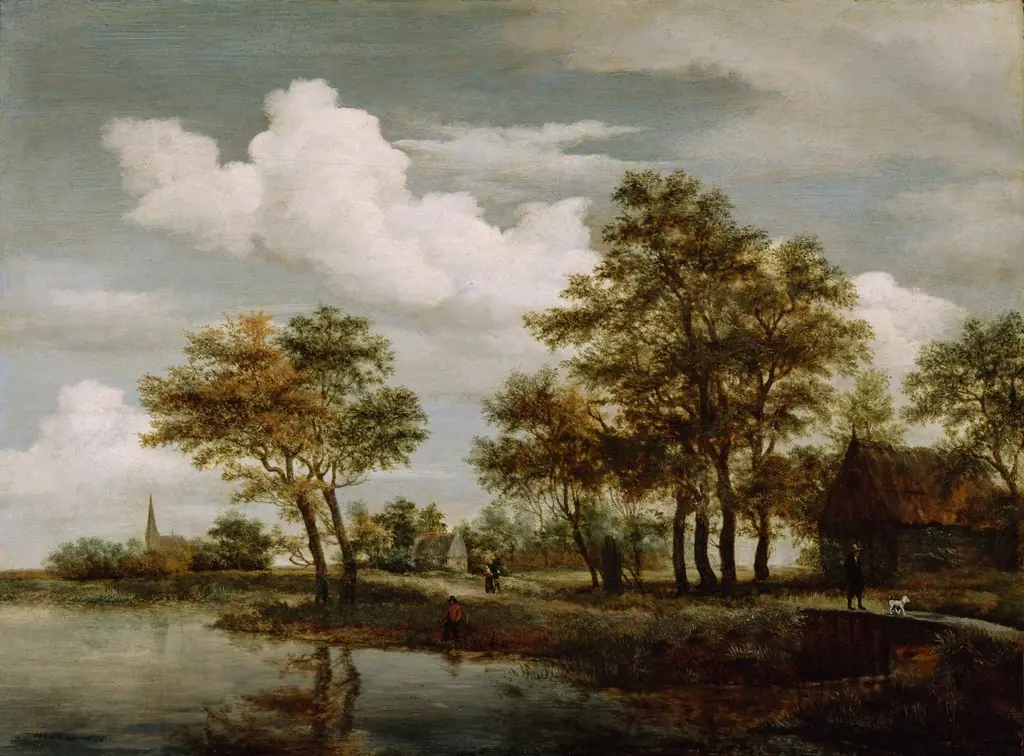
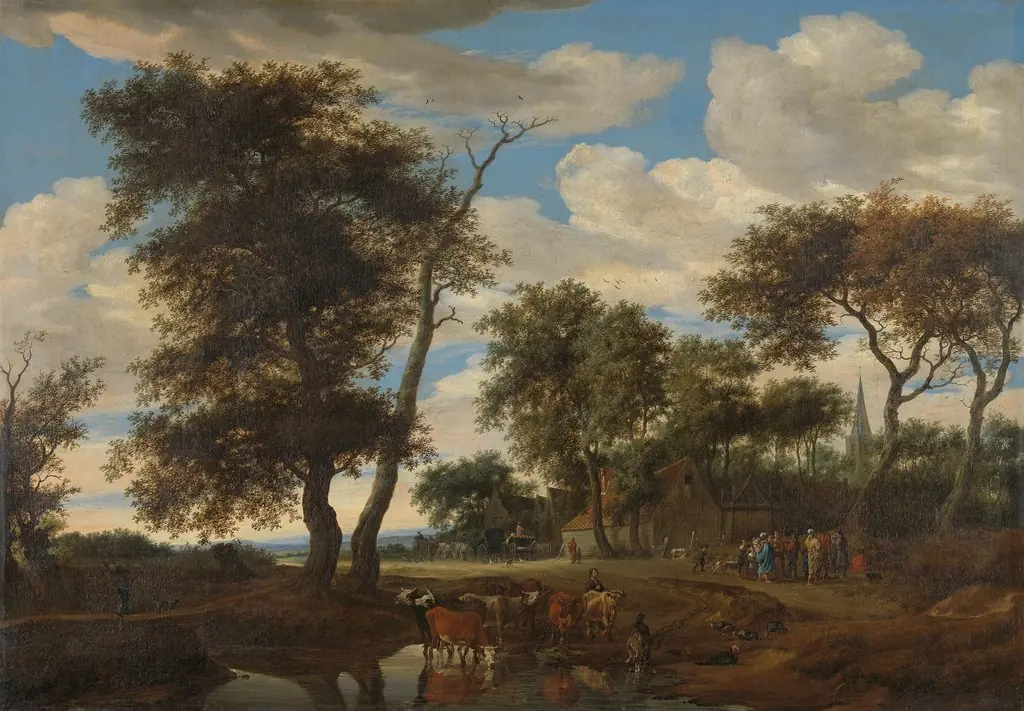
Village near a Pool is an oil painting by the Baroque artist Meindert Hobbema. It dates from 1670 and is held in the collection of the National Gallery of Art.
About this work
Subject & Meaning
As a genre landscape, it exemplifies the 17th-century Dutch interest in rural tranquility and the orderly arrangement of architecture within nature.
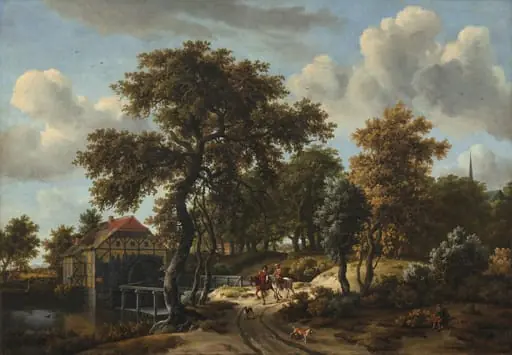
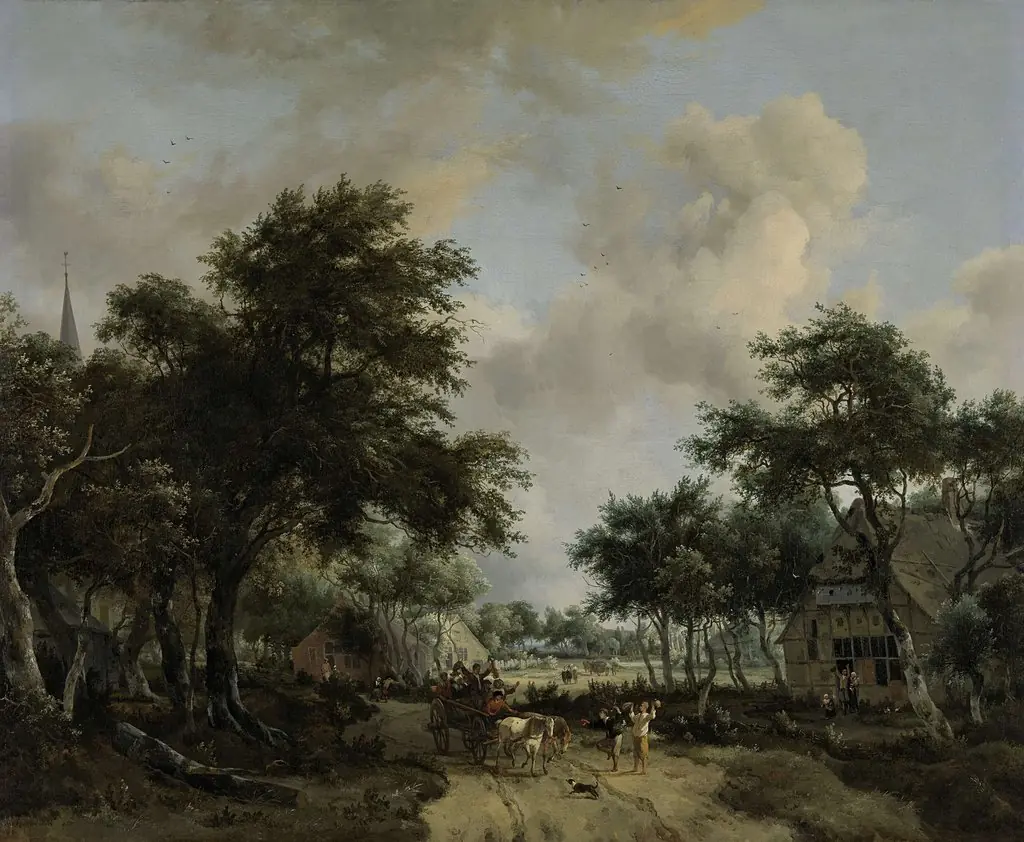
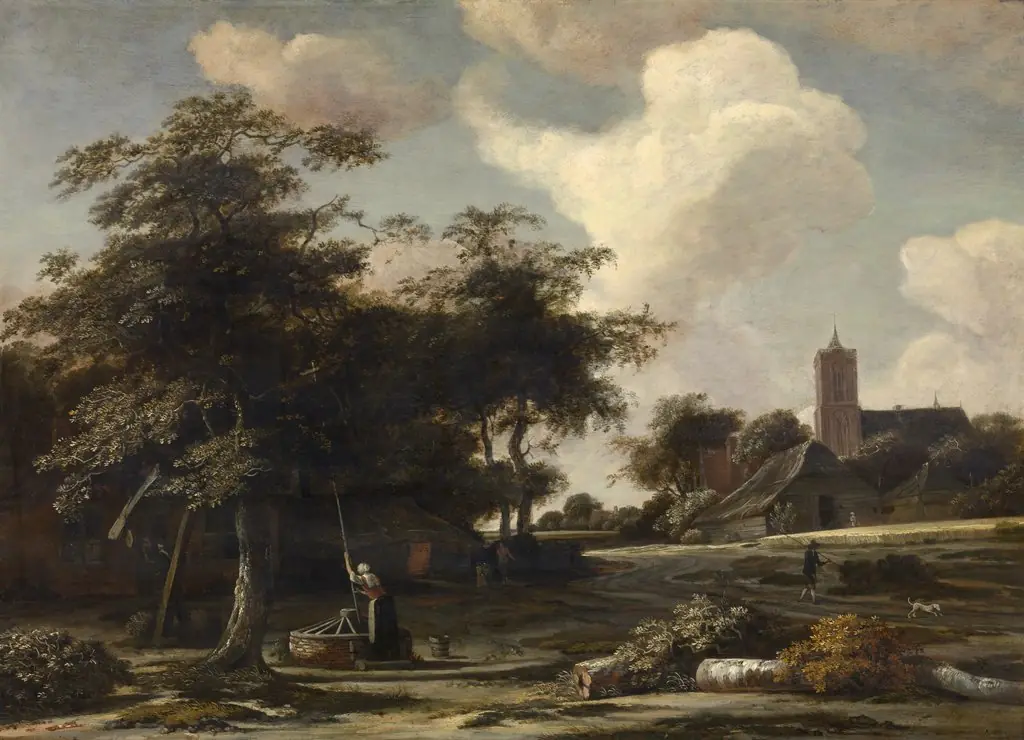
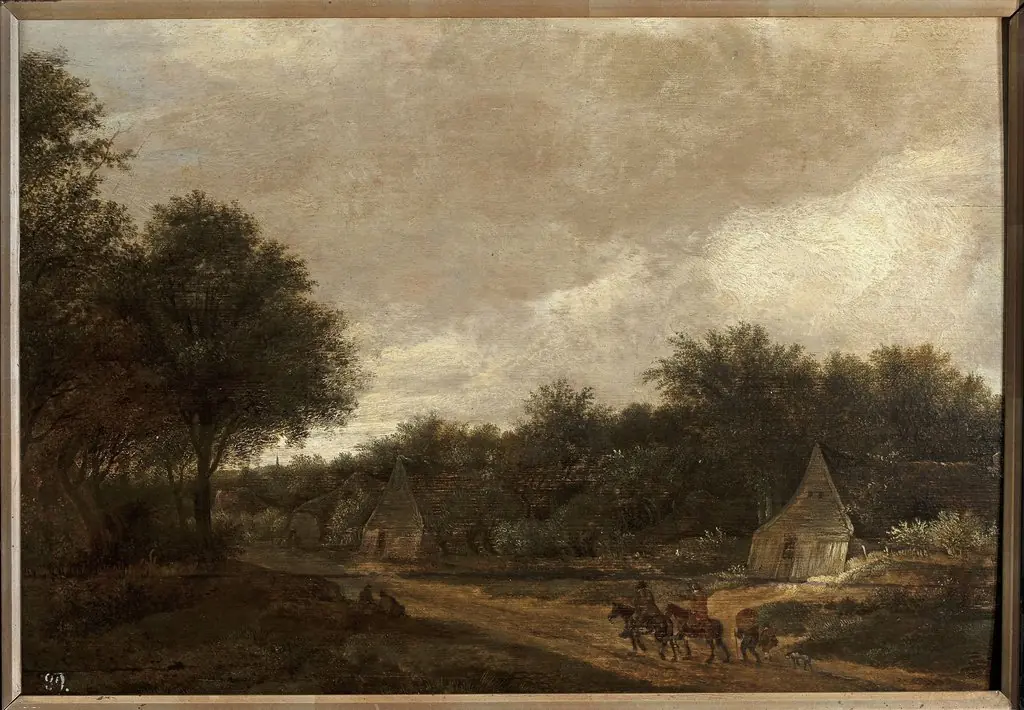
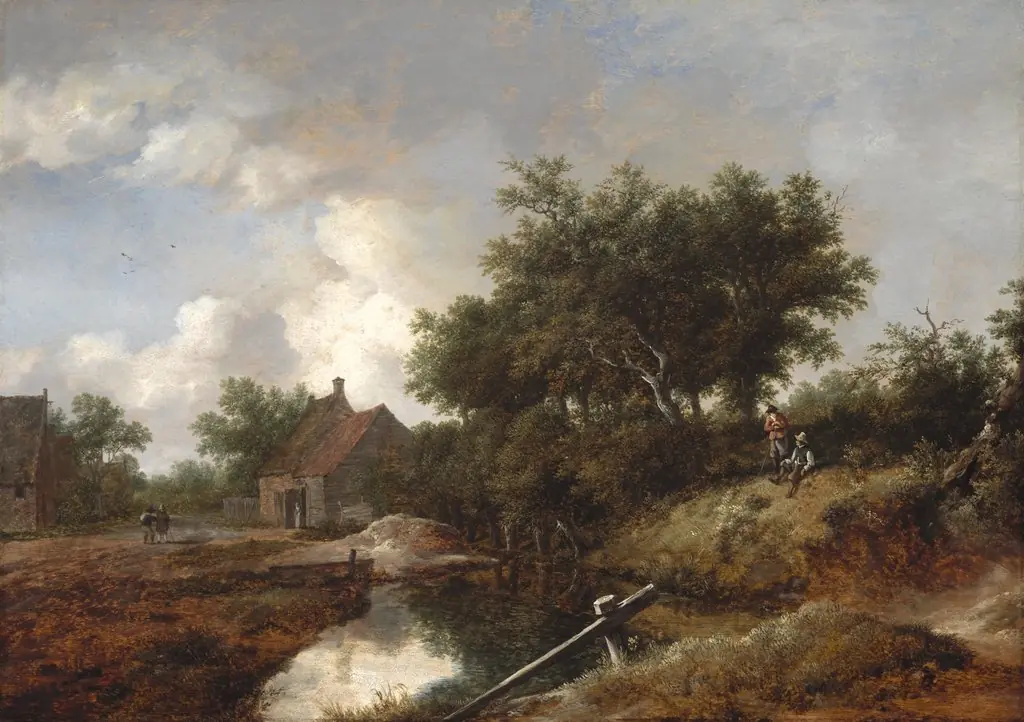
The painting titled Village near a Pool, executed by Meindert Hobbema in 1670, portrays a modest Dutch countryside scene centered on a small pool surrounded by thatched houses and figures engaged in daily activity. As a genre landscape, it exemplifies the 17th-century Dutch interest in rural tranquility and the orderly arrangement of architecture within nature. The work was later owned by Count Santar in Lisbon, passed to Peter A. B. Widener in 1909, and donated to the National Gallery of Art in 1942. Its composition reflects the pastoral ideal that dominated Dutch painting of the period.
Technique & Style
Village near a Pool is executed in oil on canvas, a standard support for seventeenth-century Dutch landscape painting. The work measures 81 by 107 centimeters, an orientation and proportion suited to a panoramic rural vista. Hobbema's handling reflects the tonal landscape tradition associated with his milieu, organizing the composition around a pool with the village grouped along its edge and trees framing the scene.
The painting is held in the collection of the National Gallery of Art in Washington, D.C., having entered the institution in 1942 as a gift from Joseph E. Widener.
History & Provenance
Village near a Pool was painted in 1670 by Meindert Hobbema as an oil on canvas landscape. The work first appears in the collection of a Portuguese count in Lisbon and was later recorded in London around 1850. In 1909 it was sold to Peter A. B. Widener, whose estate transferred the painting to his son Joseph E. Widener in 1942; the latter gifted it to the National Gallery of Art, where it remains. The painting entered the museum's collection with documented dimensions of 81 × 107 cm.
Village near a Pool is held by the National Gallery of Art in Washington, D.C. It entered the National Gallery of Art in 1942 as a gift, having passed through the Estate of Peter A. B. Widener by gift through power of appointment of Joseph E. Widener of Elkins Park, Pennsylvania. Prior to that, the painting was acquired in 1909 by Peter A. B. Widener from the Hamburger gallery in Paris. Earlier provenance traces the work to Count Santar in Lisbon, and by around 1850 it was in London.
The painting is documented in Cornelis Hofstede de Groot's catalogue raisonné of Dutch seventeenth-century painters as no. 47 in volume 4.
Overview
Meindert Hobbema, a prominent landscape painter of the Dutch Golden Age, created Village near a Pool around 1670. Executed in oil on canvas, this work exemplifies his characteristic focus on tranquil, wooded rural scenes. The painting captures a serene moment in the Dutch countryside, featuring a quiet settlement alongside a body of water, and reflects the artistic trends of its era.
Context
This painting belongs to the Dutch Golden Age, a period from the 17th century characterized by a flourishing of art, science, and commerce in the Netherlands. Landscape painting, often depicting local scenery, gained significant popularity during this time. Hobbema's detailed and atmospheric portrayals of the Dutch countryside resonated with contemporary tastes, celebrating the nation's distinctive natural beauty.
Own this work as a print
Artist & collection
Artist
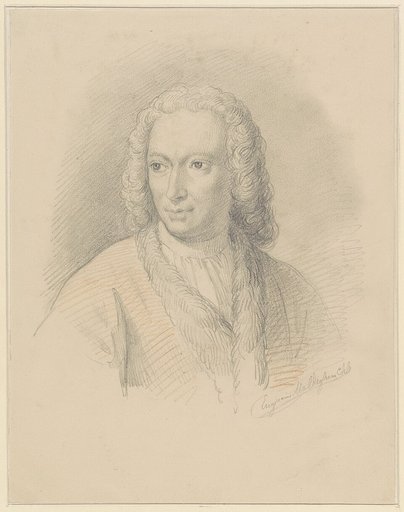
Meindert Lubbertszoon Hobbema (bapt. 31 October 1638 – 7 December 1709) was a Dutch Golden Age painter of landscapes, specializing in views of woodland, although his most famous painting, The Avenue at Middelharnis…