Artwork
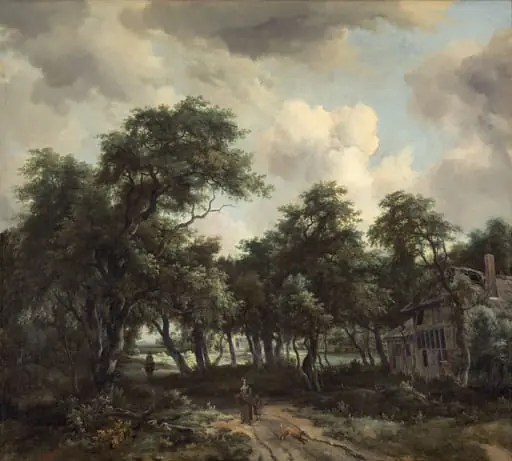
Wooded Landscape with Merrymakers in a Cart
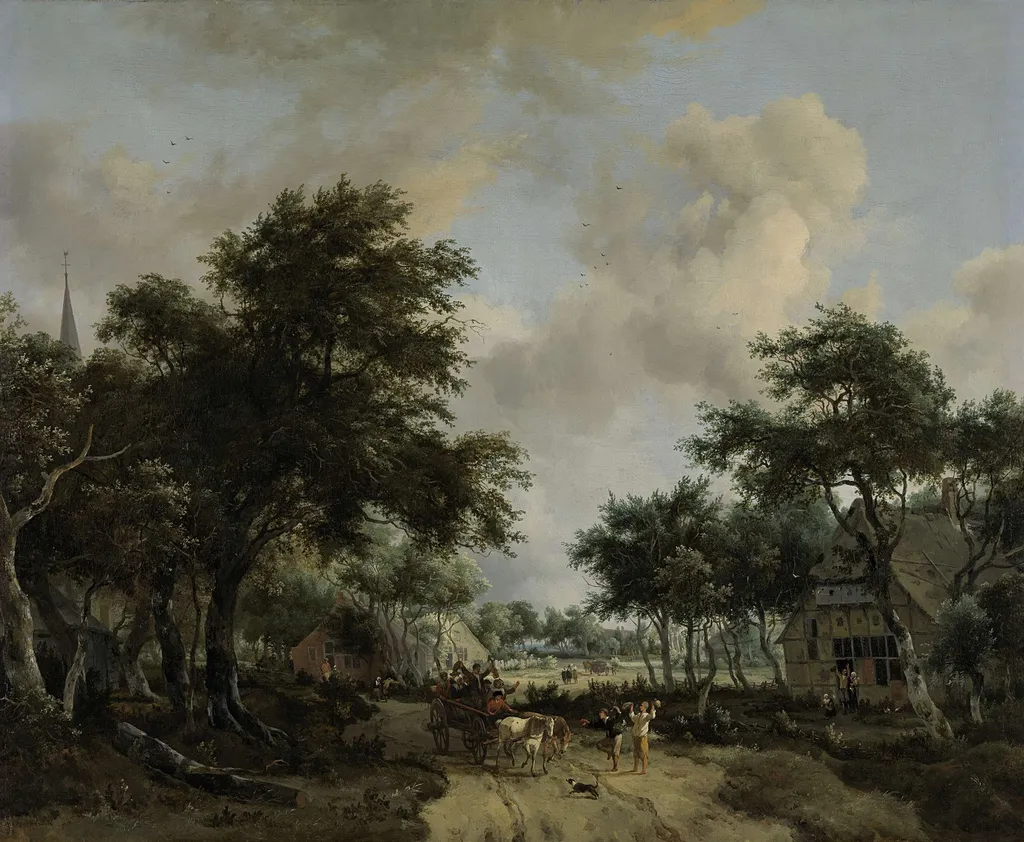
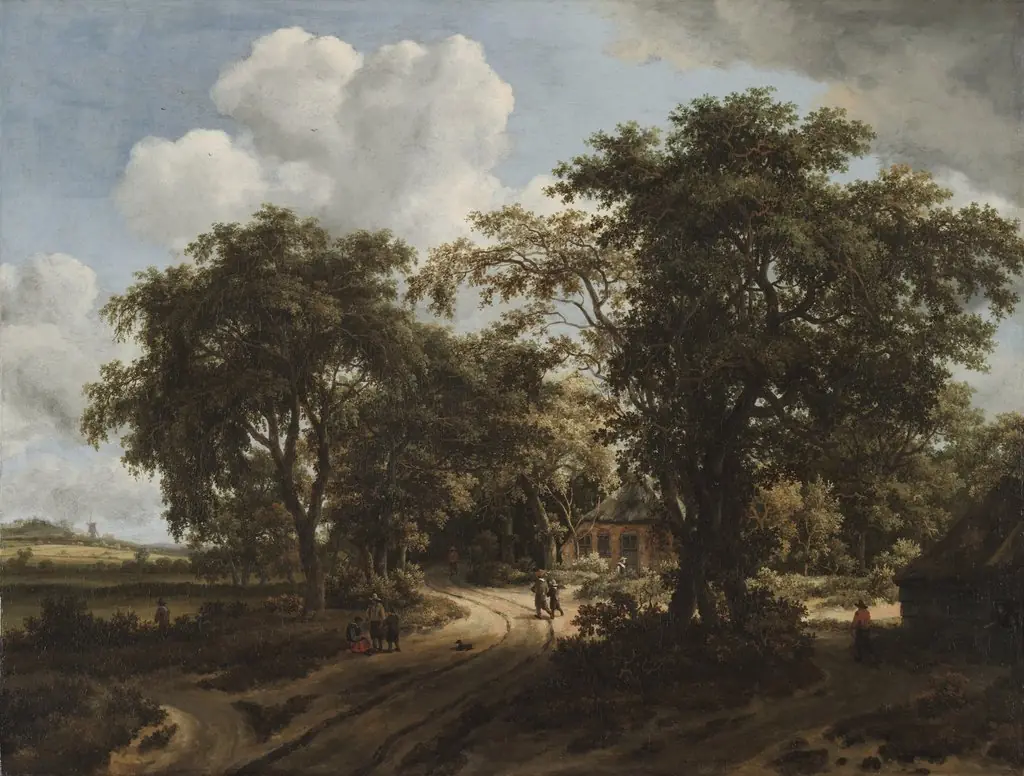
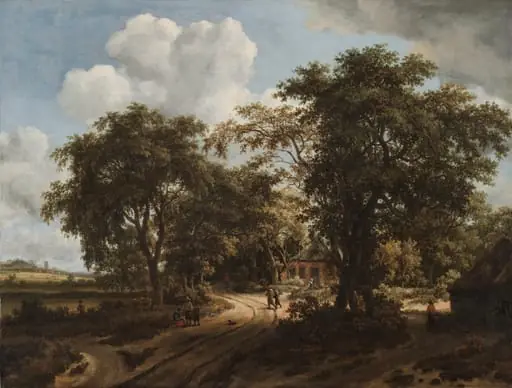
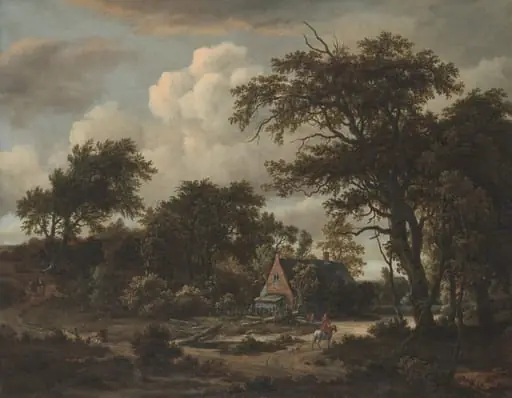
Wooded Landscape with Merrymakers in a Cart is an oil painting by the Dutch Golden Age artist Meindert Hobbema. It dates from 1665 and is held in the collection of the Rijksmuseum.
About this work
Technique & Style
Meindert Hobbema painted Wooded Landscape with Merrymakers in a Cart in 1665 using oil paint on canvas, a standard support for Dutch Golden Age works.
Meindert Hobbema painted Wooded Landscape with Merrymakers in a Cart in 1665 using oil paint on canvas, a standard support for Dutch Golden Age works. The composition features a lively gathering within a dense woodland scene, rendered with characteristic Baroque brushwork that emphasizes atmospheric depth and textural variation in foliage and terrain. The painting measures 90.5 cm in height and 109.8 cm in width, reflecting the modest yet detailed scale typical of 17th‑century landscape canvases.
Its handling conveys a sense of movement through loose, expressive strokes that blend figures with natural surroundings, while stylistically it exemplifies Hobbema’s mature approach to light and spatial recession within a wooded setting.
History & Provenance
The work was created in Amsterdam in 1665 by Meindert Hobbema as an oil paint landscape, commissioned by an unknown patron and first recorded in the artist’s oeuvre. It entered the collection of the Rijksmuseum, where it remains on display.
The painting measures 90.5 cm in height and 109.8 cm in width, and its creation date is documented as 1665‑01‑01.
Overview
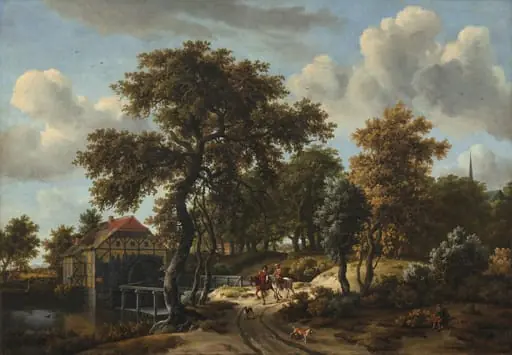
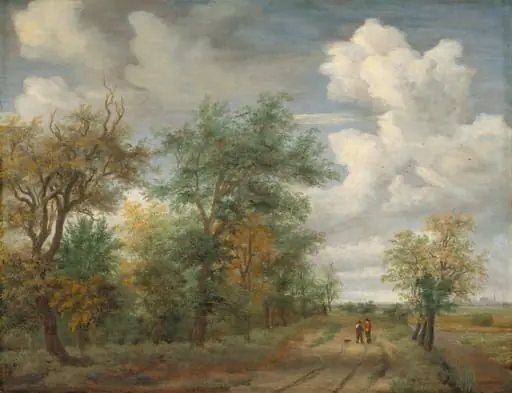
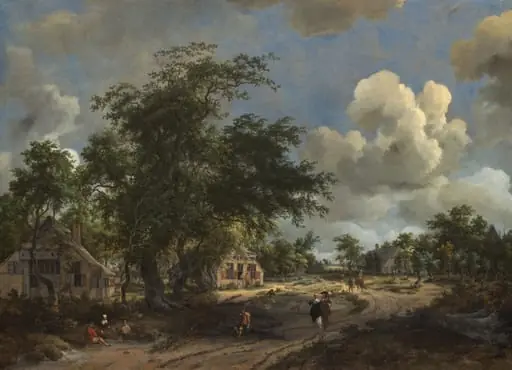
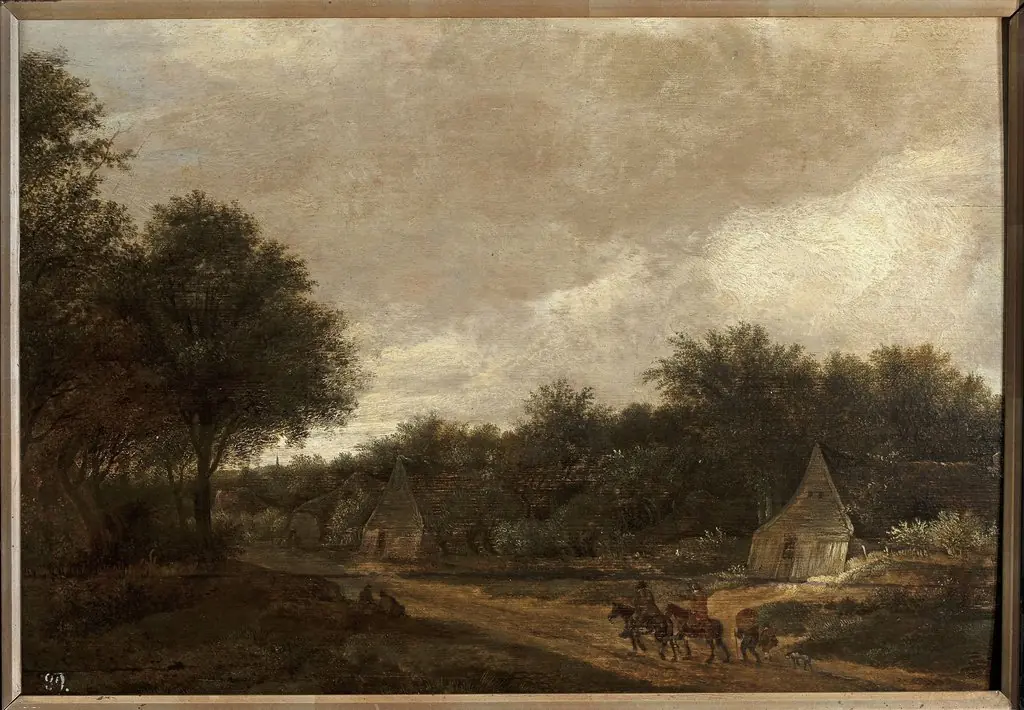
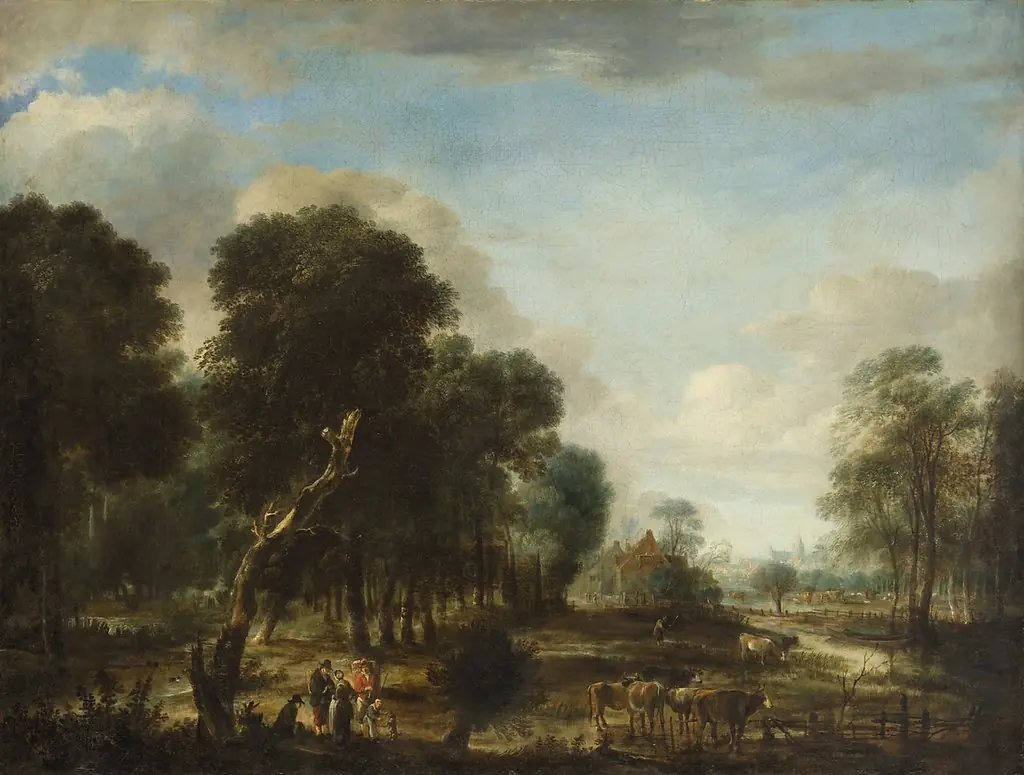
Meindert Hobbema’s 1665 oil painting presents a tranquil rural tableau framed by a dense stand of dark trees. In the middle of the composition a cart drawn by two cows carries a group of travelers, while pedestrians linger nearby. A modest cluster of houses and a distant church spire emerge through the foliage, all set beneath a cloudy sky that hints at shifting light.
Subject & Meaning
The work captures everyday activity within a wooded landscape, emphasizing the harmony between human movement and the natural environment. By placing the cart and its occupants within a secluded forest clearing, Hobbema suggests a leisurely journey, while the modest architecture and church point to a settled community rooted in the countryside.
Context
Hobbema’s focus on woodland scenes aligns with a broader 17th‑century Dutch interest in depicting the countryside’s natural beauty. Influenced by his teacher Ruisdael, he often highlighted the interplay of light and foliage, a motif that resonated with contemporary viewers who valued both realism and the moral undertones of harmonious rural life.
Own this work as a print
Artist & collection
Artist
Meindert Lubbertszoon Hobbema (bapt. 31 October 1638 – 7 December 1709) was a Dutch Golden Age painter of landscapes, specializing in views of woodland, although his most famous painting, The Avenue at Middelharnis…