Artwork
Jean Besly
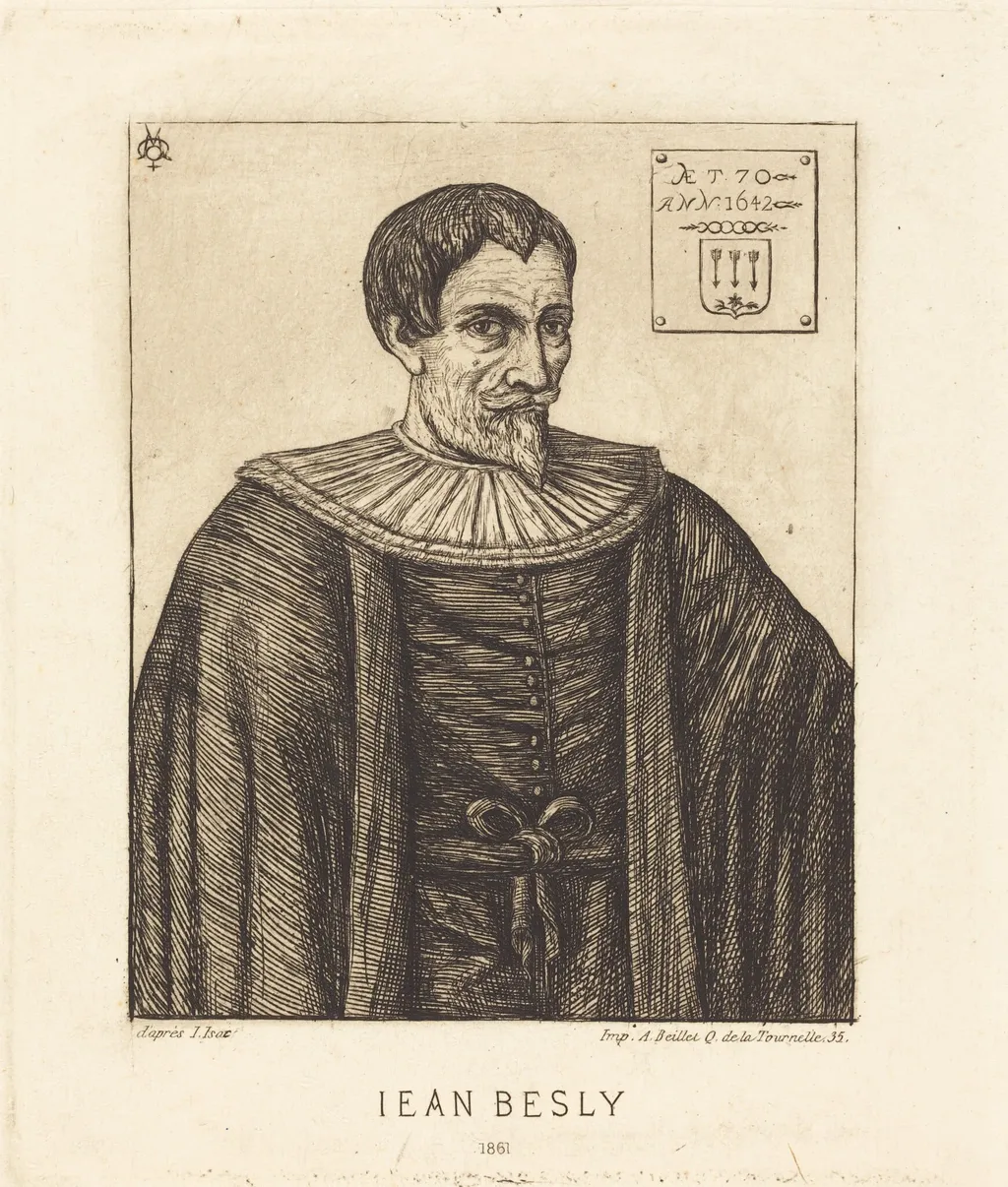
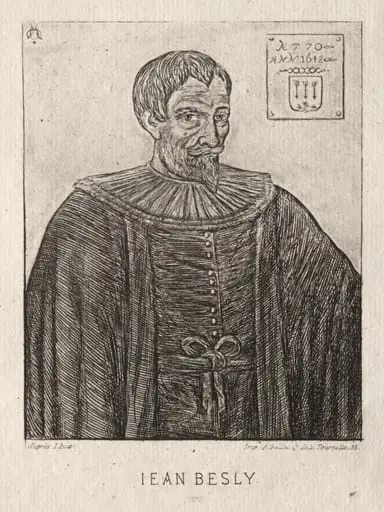
Jean Besly is an ink print by the Impressionist artist Charles Meryon. It dates from 1861 and is held in the collection of the National Gallery of Art.
- Inscription
- Inscribed:(Charles Meryon's monogram) upper right composition, in plate, artist's hand. "IEAN BESLY / 1861" lower center margin, in plate. "d'après I. ISAC" lower left margin, in plate. "Imp. A Beillet Q. de la Tournelle, 35." lower right margin, in plate. "176" upper left margin, graphite, unknown hand. "L.D. 82 / IV" upper right margin, graphite, unknown hand. "(EE2540)" lower right margin, graphite, unknown hand. Verso: none.
- Markings
- Marked:"LRJ" verso, black stamped ink, stamped twice, (Lugt 1760b). "National Gallery of Art" verso, black stamped ink, (Lugt 1932d). "HSL" (Jean-Louis-Henri Le Secq collector's tamp) verso, blue stamped ink, (Lugt 1336).
About this work
This print uses etching, a technique where artists scratch into metal plates to create detailed images.
This is a black-and-white portrait of a bearded man in a long robe with a high collar. His hair is short and curly, and he’s looking straight ahead with a serious expression. The robe has fine lines and a bow tied at the front, and the background is plain.
The top-right corner shows a small shield with a coat of arms and the year 1642. The name "Jean Besly" is printed at the bottom, along with the year 1861.
This print uses etching, a technique where artists scratch into metal plates to create detailed images.
Overview
Jean Besly is a black-and-white etching on laid paper created by Charles Meryon in 1861. The print depicts a portrait of a bearded man in a long robe.
Subject & Meaning
The portrait shows a serious, curly-haired man in a robe with a high collar and a bow at the front. A coat of arms and the year 1642 are displayed in the top-right corner, while the name 'Jean Besly' and the date 1861 are printed at the bottom.
Technique & Style
Meryon used etching, a technique involving scratching into metal plates, to create the detailed image. The work reflects Meryon's skill as an etcher, a medium in which he worked almost exclusively.
History & Provenance
Meryon, known for his etched views of Paris, created Jean Besly in 1861. Although not widely recognized in English-speaking regions, he is considered a significant figure in 19th-century French etching.
Own this work as a print
Artist & collection
Artist
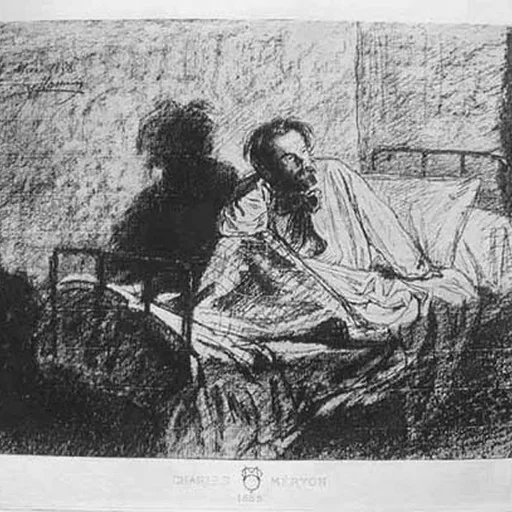
Charles Meryon (sometimes Méryon, 23 November 1821 – 14 February 1868) was a French artist who worked almost entirely in etching, as he had colour blindness.