Artwork
Thalia
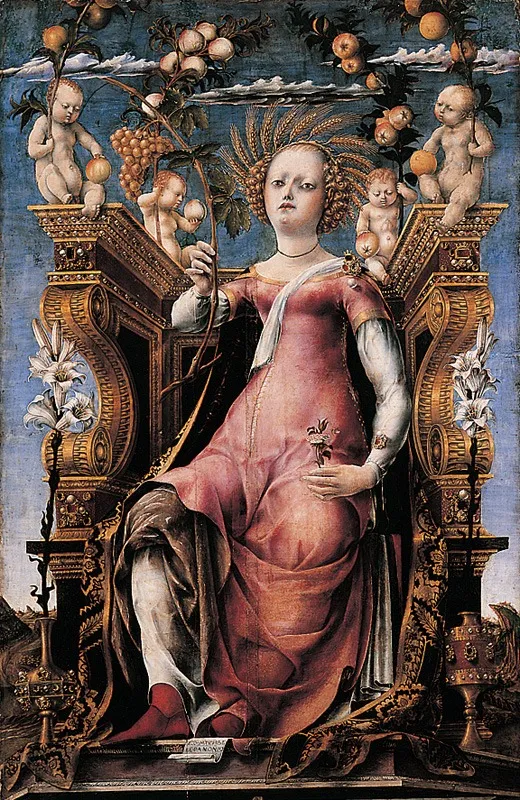
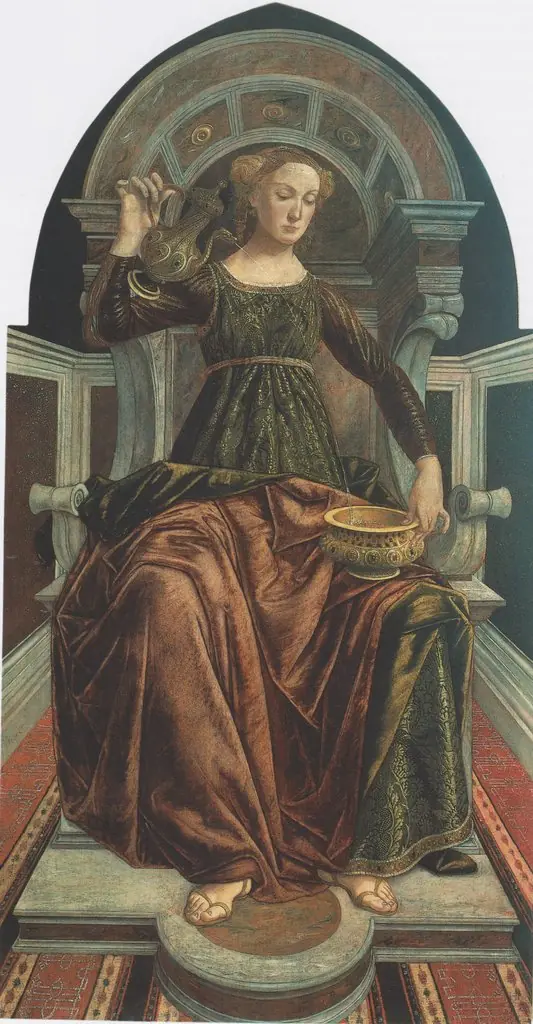
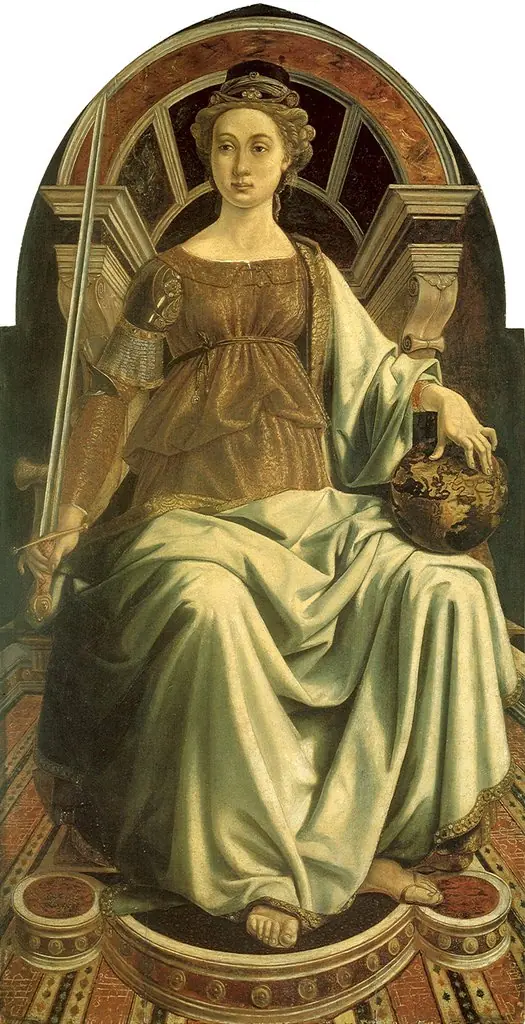
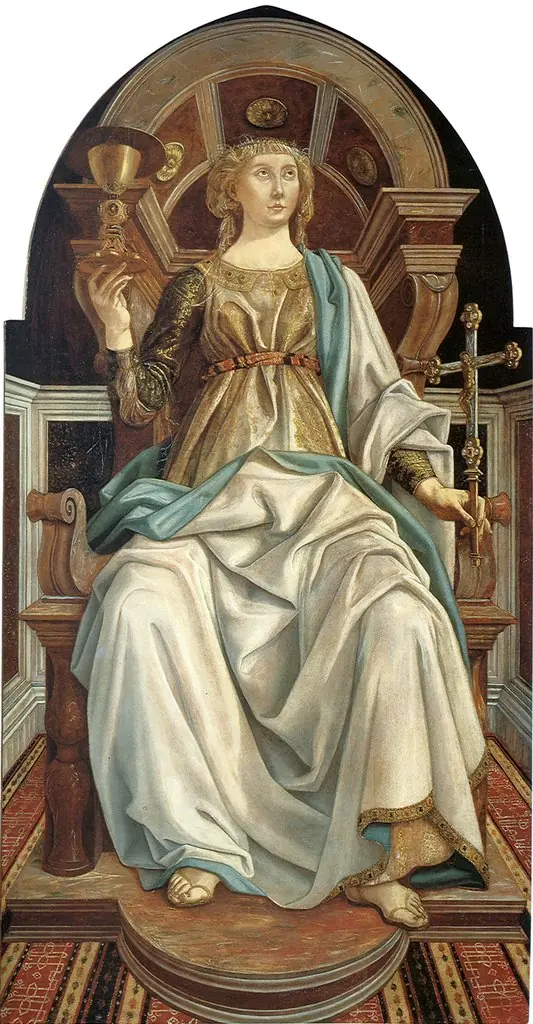
Thalia is an oil painting by the Early Renaissance artist Michele Pannonio. It dates from 1456 and is held in the collection of the Museum of Fine Arts, Budapest.
About this work
Overview
Thalia, painted around 1546 by Michele Pannonio, is an oil-on-panel portrait of a female figure identified as the muse of comedy.
Thalia, painted around 1546 by Michele Pannonio, is an oil-on-panel portrait of a female figure identified as the muse of comedy. Created for the studiolo of the Este court in Belfiore, it reflects the humanist ideals of Renaissance courtly culture. The work survived the 1632 fire that destroyed the palace and is now held in the Museum of Fine Arts in Budapest, where it remains one of the few securely attributed pieces by the artist.
Subject & Meaning
The figure represents Thalia, one of the nine Muses, traditionally associated with comedy and idyllic poetry. She is depicted seated with a flower in hand, her direct gaze engaging the viewer. The elaborate chair and ornate details suggest a symbolic connection to artistic inspiration and courtly refinement.
Once misidentified as Ceres, the correct attribution emerged through scholarly analysis of iconographic conventions and historical records tied to the Este collection.
Technique & Style
Pannonio employed oil paint to achieve subtle gradations of light and rich surface texture, particularly in the folds of the pink dress and the carved wood of the chair. The luminous skin tones and delicate rendering of the updo reflect northern Italian influences, while the decorative motifs, cherubs, fruit, and intricate carving, echo the ornamental language of Ferrarese court art. The composition balances naturalism with symbolic formality, typical of mid-16th-century portraiture.
History & Provenance
Commissioned for the studiolo of Belfiore, initiated by Lionello d'Este and completed under Borso, the painting was part of a cycle of allegorical figures. After the palace burned in 1632, its contents were scattered. Thalia entered private collections before being acquired by the Museum of Fine Arts in Budapest, where it has been since the 19th century. Its survival is rare among the studiolo’s artworks, most of which were lost or destroyed.
Context
Pannonio, a Hungarian-born painter active in Ferrara, worked within a network of artists serving the Este court, which valued classical learning and mythological themes. The studiolo was designed as a private intellectual retreat, where allegorical figures like Thalia reinforced the patron’s cultural authority. This painting aligns with broader Renaissance trends of blending humanist symbolism with aristocratic display, though few works by Pannonio survive to document his role in this milieu.
Legacy
Thalia stands as a rare testament to Michele Pannonio’s skill and the Este court’s artistic patronage. Its accurate identification corrected a centuries-long misattribution, highlighting the importance of iconographic research. As one of the few surviving works from the Belfiore studiolo, it offers insight into the visual culture of mid-16th-century northern Italy and the transmission of classical themes in courtly settings.
Artist & collection
Artist
Michele Pannonio, in Hungarian language Pannóniai Mihály, also known as Michele Ongaro or Michele Dai Ungheria (born before 1415 – Ferrara, before 1464) was a Hungarian-Italian painter, active in Ferrara, Italy.