Artwork
Temperance
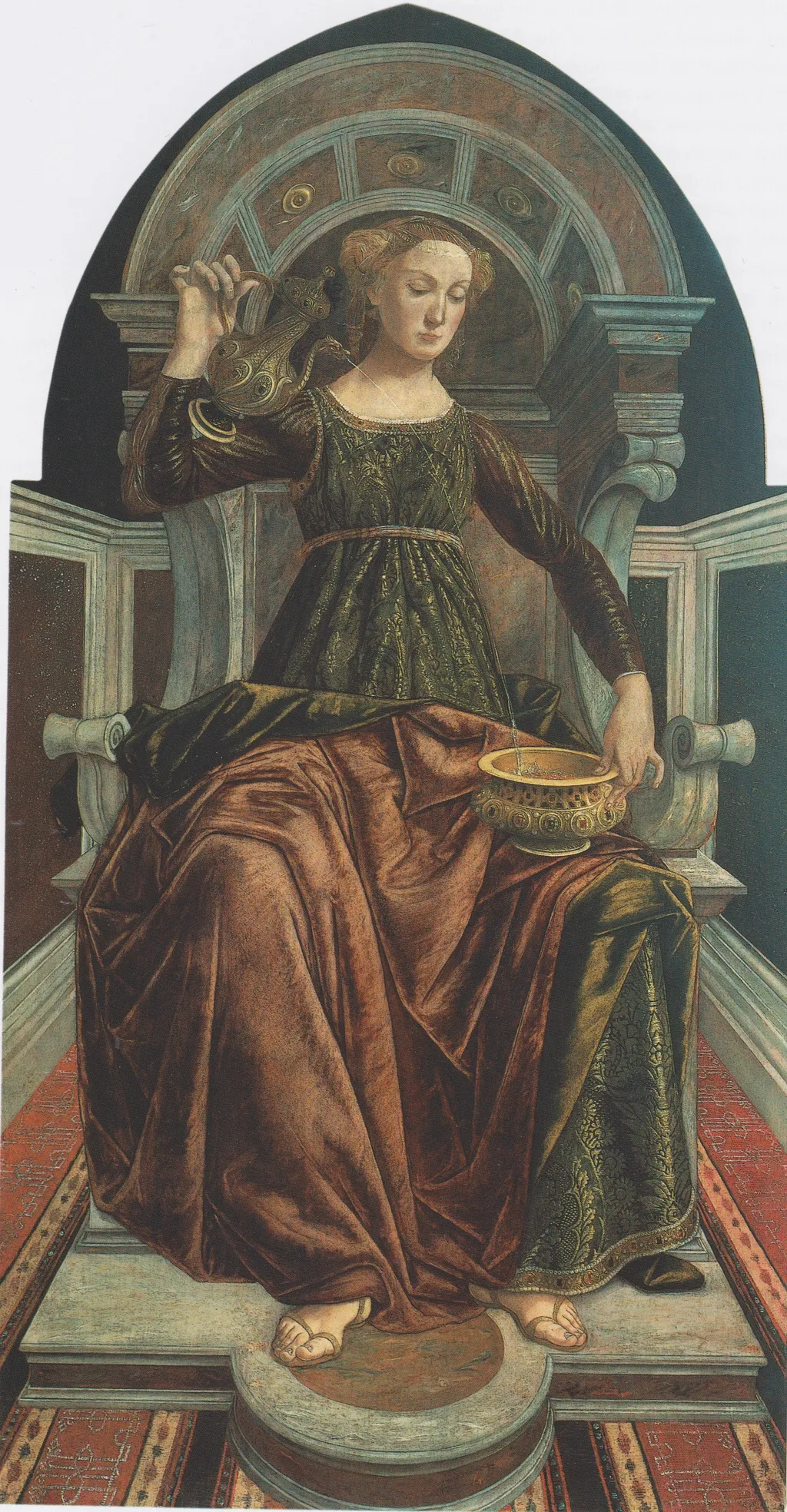
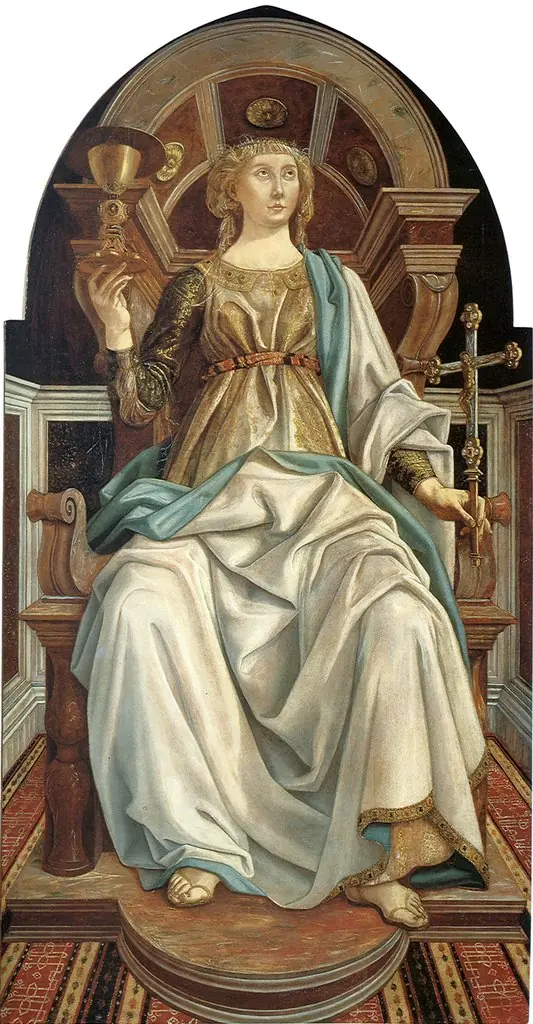
Temperance is a tempera painting by the Early Renaissance artist Piero del Pollaiuolo. It dates from 1470 and is held in the collection of the Uffizi Gallery.
About this work
Subject & Meaning
The painting allegorizes Temperance, one of the seven Catholic virtues, depicted as a seated woman engaged in the act of mixing hot and cold water.
The painting allegorizes Temperance, one of the seven Catholic virtues, depicted as a seated woman engaged in the act of mixing hot and cold water. She is shown on an ornate marble throne with a pitcher, washbasin, and sandal, wearing a flowing dress that emphasizes the virtue of moderation, or the 'just middle'. The composition reflects the moral concept of balance and self-restraint associated with Temperance, rendered with intricate drapery and decorative details influenced by Northern European styles.
The work was part of a series of seven virtue paintings commissioned by Florence's Tribunale della Mercanzia in 1469, intended for display in their audience hall. Although initially assigned to Botticelli due to delays, the commission was ultimately completed by Piero del Pollaiuolo, with scholarly debate over the extent of Antonio Pollaiuolo's contribution. The painting entered the Uffizi Gallery in 1717 after the tribunal's dissolution and remained there, despite deterioration in the 19th century limiting public display.
Symbolic elements include the mixing of waters to signify equilibrium and the richly detailed objects such as the pitcher and basin, underscoring the virtue's association with moderation and order. The work's style features exaggerated proportions to enhance visibility from below, characteristic of high placements in civic spaces.
Technique & Style
The work is an oil painting on panel, measuring 168 cm in height and 90.5 cm in width, created in 1470 for the Tribunale della Mercanzia in Florence. It depicts the allegorical figure of Temperance, seated and pouring water from a pitcher into a basin, rendered with detailed drapery and decorative elements such as a marble seat and an oriental-patterned floor, reflecting the influence of Northern European art. The composition emphasizes a dramatic low-angle perspective, with exaggerated lower limbs and a slender upper torso to convey a sense of grandeur, characteristic of Early Renaissance stylistic choices.
The painting is part of a series of seven virtues commissioned in 1469, originally intended for display in the audience hall of the Tribunale, and later relocated to the Uffizi Gallery after the institution's suppression, where it remains conserved today.
History & Provenance
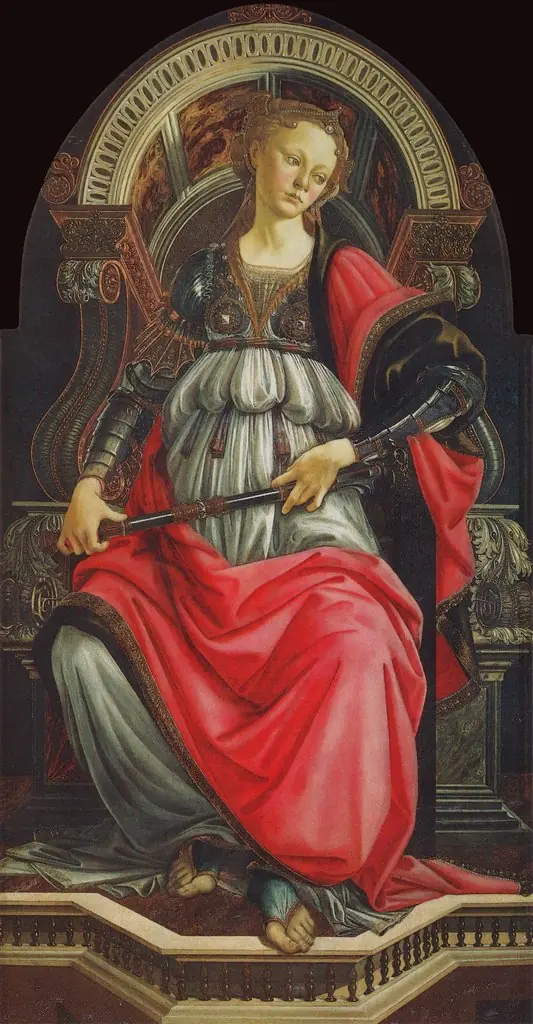
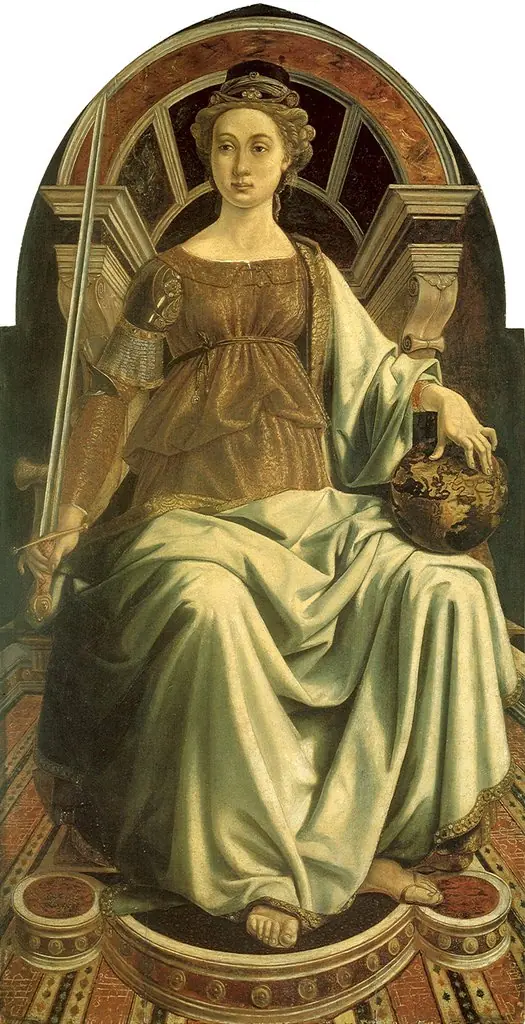
Temperance is one of seven allegorical paintings commissioned by Florence’s Tribunale della Mercanzia in a contract dated 18 August 1469 to decorate the seat-backs in its audience hall on piazza della Signoria. The magistracy’s original order specified seven cardinal and theological virtues; Charity was delivered first, in December 1469, but production delays led the commission to be temporarily reassigned, resulting in Botticelli painting Fortitude. After protests from Piero and Antonio del Pollaiuolo, a second contract returned the remaining six works to Piero’s workshop, though attributions within the cycle remain contested.
The panel entered the Uffizi Gallery in 1717 after the Tribunale was suppressed and its holdings transferred. By the nineteenth century the series had deteriorated, and only Prudence was exhibited before later conservation restored display of the full set.
The painting is held in the Galleria degli Uffizi, Florence, as part of the former Tribunale della Mercanzia series of seven virtues.
It entered the Uffizi in 1717 after the magistracy was suppressed and has been exhibited there continuously since that date.
Context
The painting forms part of a seminal cycle commissioned in 1469 by Florence's Tribunale della Mercanzia to decorate the audience hall's seat-backs, representing a key moment in Early Renaissance civic allegory. The work's creation is central to a longstanding scholarly debate regarding the division of labor between Piero del Pollaiuolo and his brother Antonio. While documentary evidence led historians like Billi, Albertini, and Cruttwell to attribute the entire series to Piero, others such as Ullman argue for Antonio's authorship based on stylistic comparisons with his signed prints. A prevailing compromise suggests Antonio designed the compositions while Piero executed the paint.
Art historically, the figure demonstrates a sophisticated understanding of optical perspective, with proportions deliberately distorted to appear correct when viewed from below. The vigorous drapery and intricate details, including jewels and Oriental carpet patterns, reflect the significant influence of Flemish painting on Florentine art during this period. Following the suppression of the Tribunal, the series entered the Uffizi Gallery in 1717, though poor conservation limits historically restricted public display.
Legacy
The painting's legacy is tied to its role in the series of allegorical virtues commissioned by Florence's Tribunale della Mercanzia in 1469, with the work later entering the Uffizi Gallery's collection after the institution's suppression and being exhibited from 1717 onward. Its attribution within the series remains contested, with scholars divided between Piero del Pollaiuolo and his brother Antonio, though the broader debate reflects the complex collaborative nature of their workshop. The painting's condition deteriorated significantly by the 19th century, leading to limited display of only Prudence among the series.
The work's composition, noted for its dynamic drapery and detailed decorative elements influenced by Northern European styles, continues to be studied as part of Renaissance allegory and the evolution of virtuous personification in art.
Overview
Created around 1470, this tempera panel by the Florentine artist Piero del Pollaiuolo is part of the Uffizi’s collection. It depicts the allegorical figure of Temperance, one of the traditional seven virtues upheld by the Catholic Church, and serves as a visual embodiment of moderation and self‑control.
Artist & collection
Artist
Piero del Pollaiuolo (UK: POL-eye-WOH-loh, US: POHL-, Italian:; also spelled Pollaiolo; c.