Artwork
Fortitude
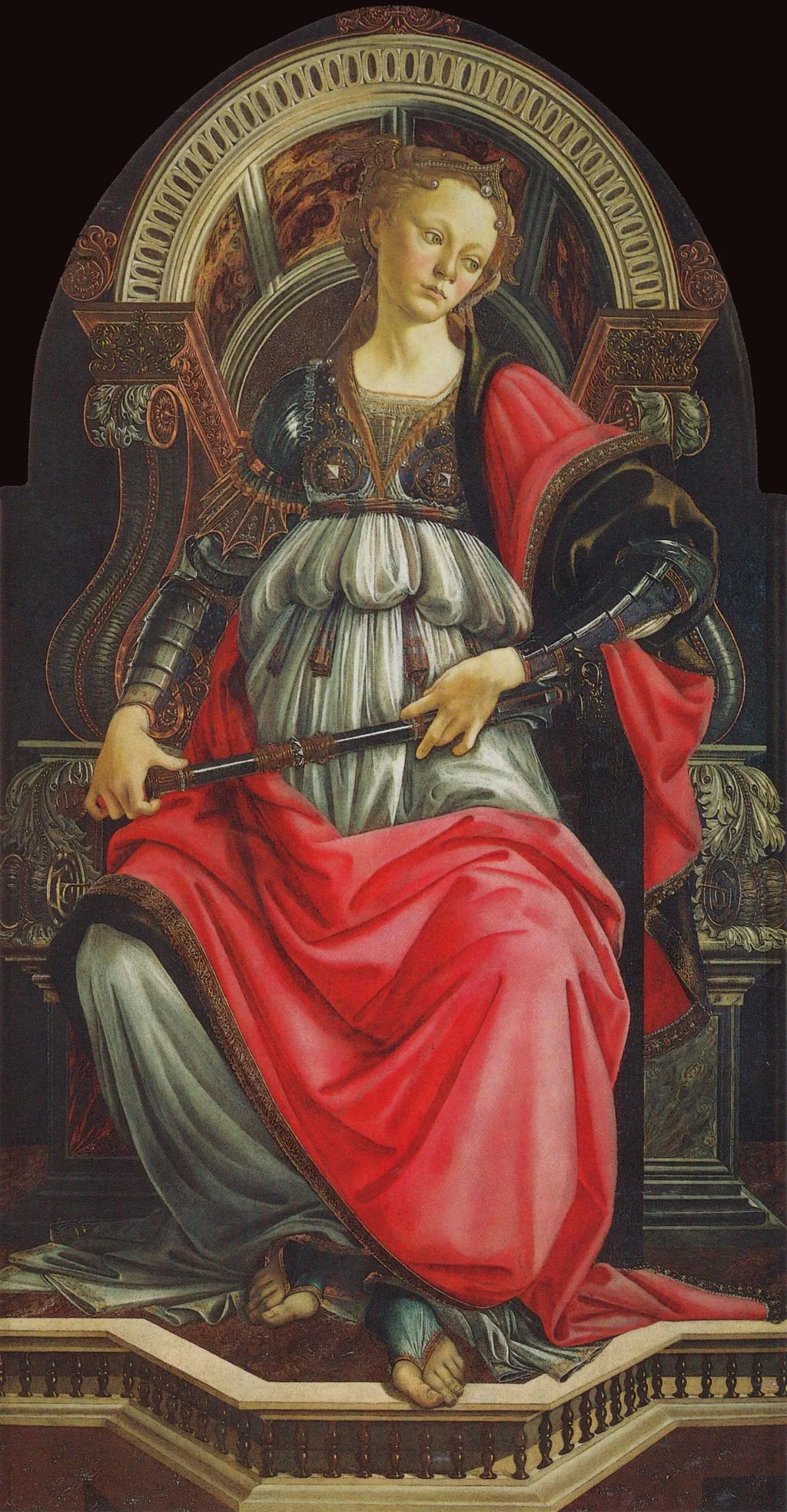
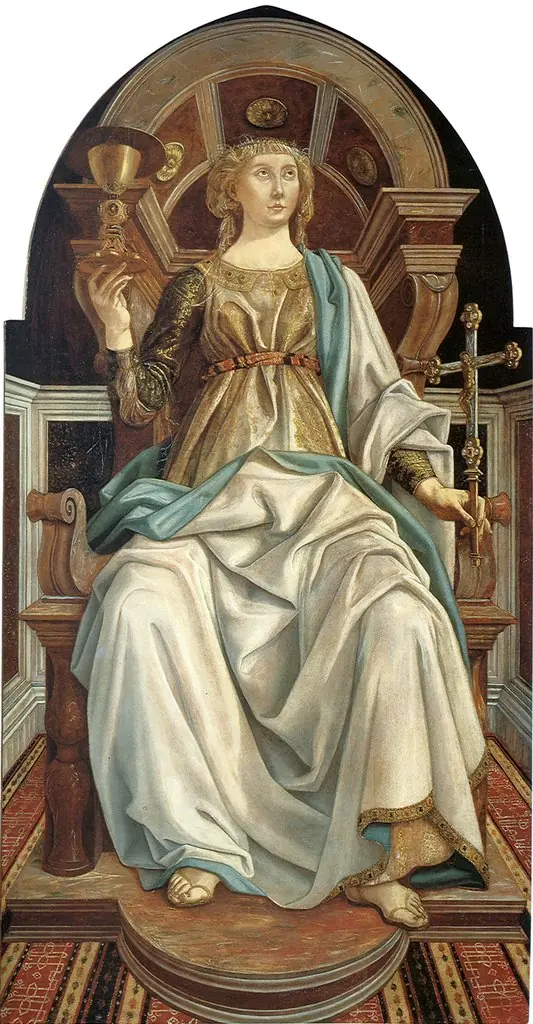
Fortitude is a tempera painting by the Early Renaissance artist Sandro Botticelli. It dates from 1470 and is held in the collection of the Uffizi Gallery.
About this work
Subject & Meaning
The figure’s distant gaze and faint under-eye discoloration introduce a quiet melancholy, suggesting endurance through hardship rather than overt heroism.
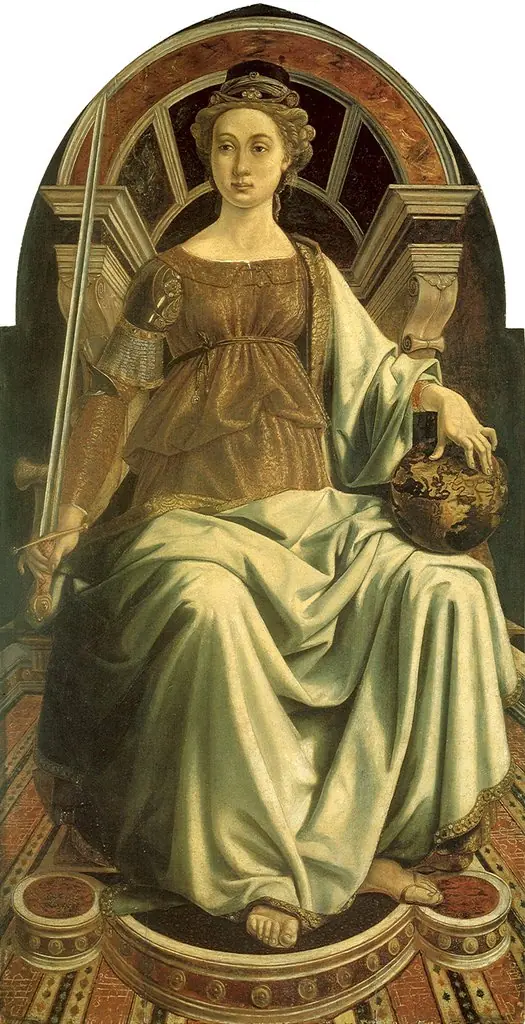
Fortitude depicts a seated female figure personifying the cardinal virtue of strength, rendered with classical attributes: a plumed helmet, a cuirass adorned with jewels, and a scepter-like club. Behind her, a column further signals steadfastness, while her flowing red mantle and white undergarment contrast with the rigid armor, visually reconciling vigor and composure. The figure’s distant gaze and faint under-eye discoloration introduce a quiet melancholy, suggesting endurance through hardship rather than overt heroism.
In the context of the seven-part civic Virtues commissioned for Florence’s Mercanzia tribunal, Fortitude embodies the moral foundation required to uphold justice among Florentine guilds. Her elevated placement and centralized composition assert authority over the viewer, reinforcing the civic ideal that steadfast resolve underpins communal order. The work’s restrained palette and measured contrapposto align with contemporary humanist ideals, translating antique virtues into a modern, contemplative image of inner resilience.
Technique & Style
Fortitude is executed in tempera on a poplar wood panel, measuring 167 by 87 centimeters. Unlike the other six panels in the original cycle, which were painted on cypress, Botticelli utilized poplar, a support more common in Tuscan panel painting. The artist applied dry powdered pigments mixed with egg yolk and slightly thinned with water or acetic acid over a gesso ground.
This medium prevents the hard edges characteristic of oil painting, resulting in the comparative transparency of the colors and the soft, flowing folds of the figure's red robe.
The work displays a sophisticated handling of light and texture, particularly in the depiction of the diamond-studded plate armor and the ornate marble throne, reflecting Botticelli's training as a goldsmith. The drapery appears heavy and wet, defining the body's structure while simultaneously dematerializing it through an emphasis on linear contours. Infrared reflectography conducted during restoration revealed a highly elaborate preparatory drawing containing numerous corrections.
While a 1990s restoration recovered the plastic force of the figure and the luminosity of the armor, the freshness of the face remains somewhat compromised by earlier cleaning interventions.
History & Provenance
The painting Fortitude by Sandro Botticelli was commissioned by the Tribunale della Mercanzia, a Florentine merchant court, to decorate the Tribunal Hall of Palazzo della Signoria. A contract dated 18 August 1469 was made with Piero del Pollaiuolo for seven panels representing the Virtues, and a second deliberation confirmed the commission, involving the six judges and a consul. In July 1470, Botticelli was chosen on the recommendation of magistrate Tommaso Soderini to execute two virtues, completing only Fortitude after Piero Pollaiuolo complained.
Payment was received by August 1470. The work was later moved to the Uffizi Gallery after the tribunal's abolition in 1777, and underwent restoration in 1997 that revealed preparatory drawings and corrected pentimenti.
Fortitude is held in the Uffizi Gallery in Florence, Italy, with inventory number 1890.
The work was originally commissioned in 1469 by the Tribunale della Mercanzia for the Tribunal Hall of Palazzo della Signoria in Florence, intended as part of a cycle of seven virtue panels. It was executed by Sandro Botticelli in 1470 and delivered on August 18, 1470, as recorded in archival documents.
After the tribunal's dissolution in 1777, the painting was moved to the Uffizi, where it has been displayed since 1861 following restoration efforts. Earlier restorations, including one in 1997, have addressed its condition, though some aspects like the face's freshness remain affected.
The painting measures 167 cm in height and 87 cm in width, executed in tempera on a poplar panel, distinguishing it from other panels in the cycle which were painted on cypress wood.
Context
Completed in 1470, Fortitude stands as the earliest securely dated work by Sandro Botticelli, marking his definitive emergence as an independent master. Originally commissioned for the Tribunale della Mercanzia in Florence, it was the sole panel executed by the young artist within a cycle of seven Virtues, the remaining six being produced by Piero del Pollaiuolo's workshop. The work is historically significant for synthesizing influences from Botticelli's teacher, Fra Filippo Lippi, with the linear tension and anatomical solidity learned from Antonio del Pollaiuolo.
Unlike the austere, perspectively rigid thrones of his contemporaries, Botticelli rendered a richly decorated, fantastical marble seat that highlights the figure's presence in the foreground. This unique approach, combining idealized beauty with a distinct melancholic expression, signaled a departure from Florentine norms and established the stylistic trajectory that would define his later mythological masterpieces.
Legacy
Fortitude became a cornerstone of Renaissance allegorical tradition, shaping how later artists visualized moral strength. Its depiction of courage as a seated woman in armor, blending delicate drapery with martial symbols, influenced subsequent personifications of virtue in European painting. The work’s technical innovation, using tempera on poplar to achieve layered color depth and metallic texture, set a precedent for narrative nuance in panel painting.
Its legacy is underscored by continuous scholarly attention, multiple restorations revealing preparatory drawings, and its status as Botticelli’s earliest securely dated work, cementing its role in narratives of artistic development.
Overview
Completed in 1470, this tempera panel by Sandro Botticelli measures roughly 1.67 by 0.87 metres and is now displayed in Florence’s Galleria degli Uffizi. It represents the virtue of Fortitude and is the earliest documented work attributed to Botticelli.
Artist & collection
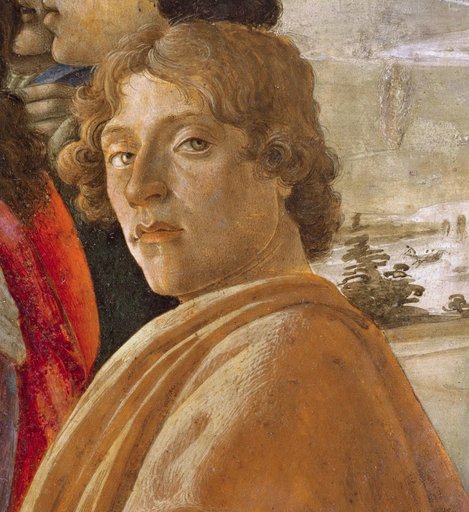
Artist
Alessandro di Mariano di Vanni Filipepi, better known as Sandro Botticelli or simply Botticelli, was an Italian painter of the Early Renaissance.