Artwork
Tuchanka.
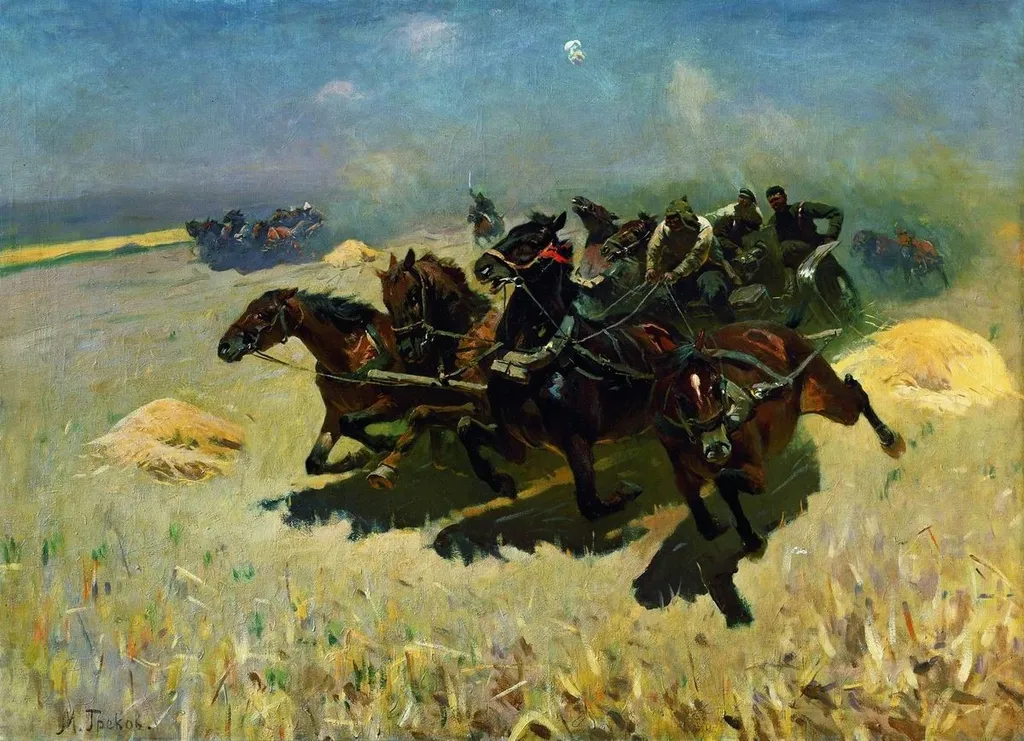
Tuchanka. is an unspecified painting by the Social Realist artist Mitrofan Grekov. It dates from 1925 and is held in the collection of the Tretyakov Gallery.
About this work
Overview
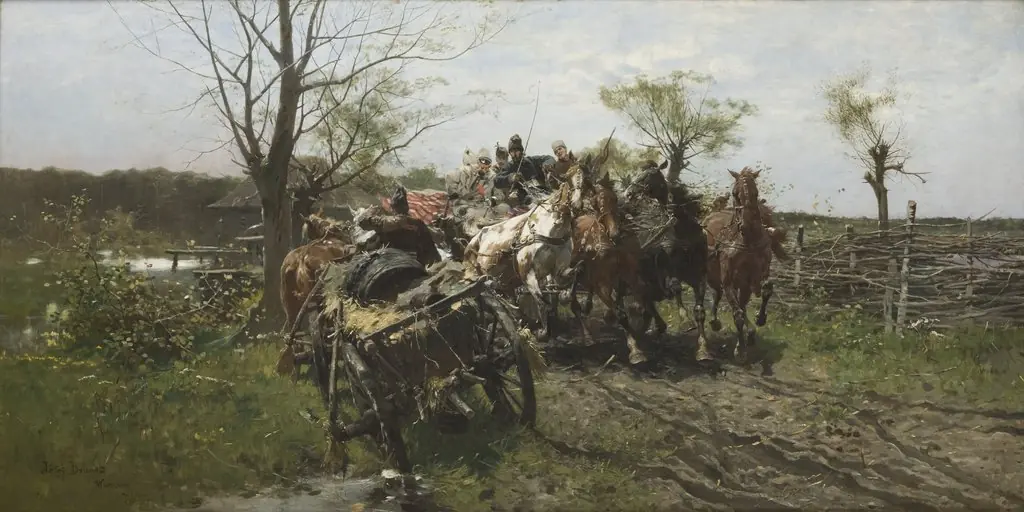
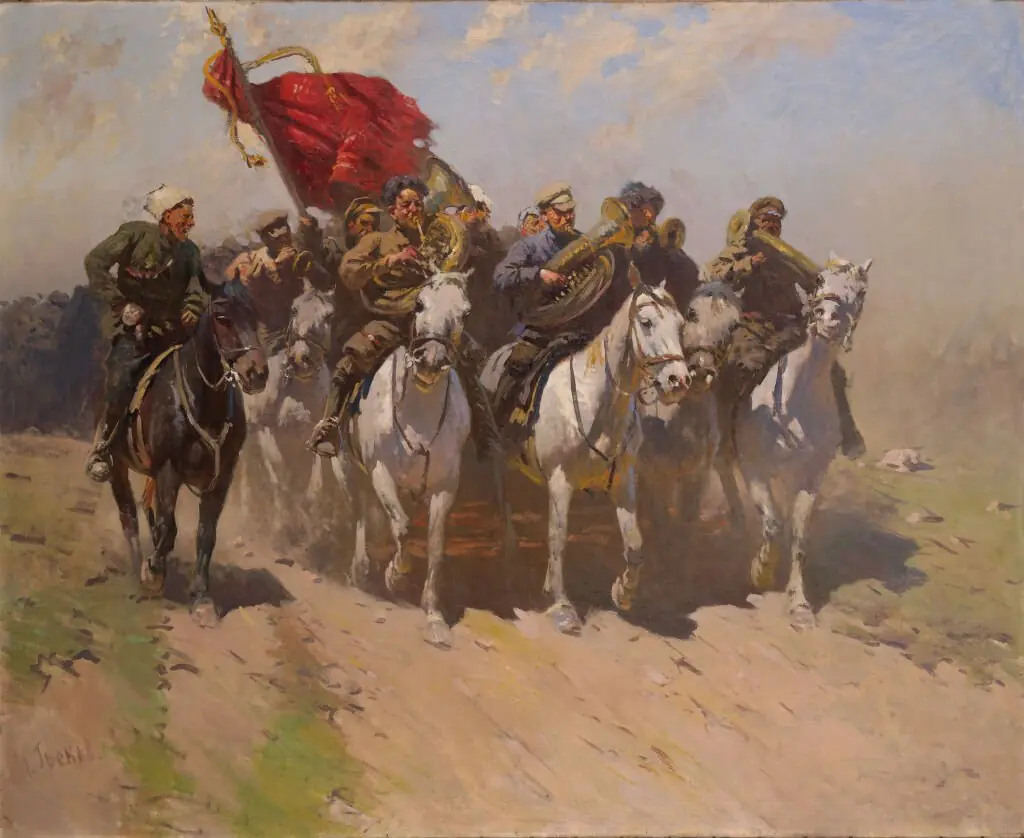
Tuchanka, painted in 1925 by Mitrofan Grekov, is a seminal work of Soviet social realism. Held in the Tretyakov Gallery, it captures a dynamic scene of horse-drawn carts in a field, conveying the energy of everyday life.
Subject & Meaning
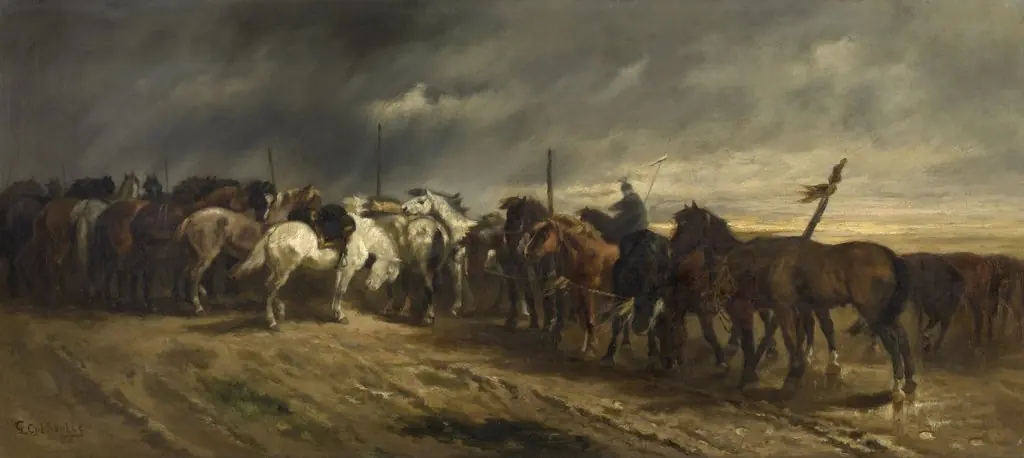
The painting depicts horse-drawn carts laden with traditionally dressed people, set against a field backdrop. The mix of carts in motion and freely running horses suggests a portrayal of communal, possibly migratory, activity, emphasizing the resilience and vitality of rural life.
Technique & Style
Grekov employed vivid detail in the foreground to highlight the textures of horses and carts, contrasting with a softer, less detailed background to achieve depth. The use of chiaroscuro enhances the three-dimensional quality, accentuating the dynamic movement of the scene.
History & Provenance
Created in 1925 during the flourishing of Soviet social realism, Tuchanka is characteristic of Grekov's contributions to the genre, earning him the title 'father of Soviet battle painting.' The work is part of the Tretyakov Gallery's collection.
Context
While primarily categorized under social realism, Tuchanka's focus on everyday rural life and the emphasis on movement and community reflect the artistic shift towards depicting the common man and the beauty of mundane activities during this period.
Legacy
As a key work by Grekov, Tuchanka influences the development of Soviet and social realist art, particularly in its dynamic portrayal of everyday life and the effective use of chiaroscuro to capture movement and depth.
Artist & collection
Artist
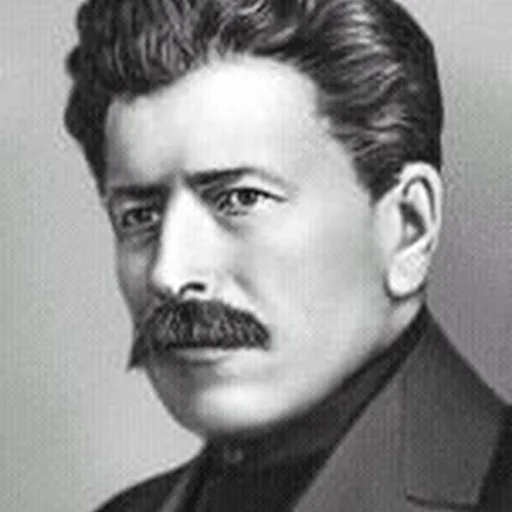
Mitrofan Borisovich Grekov (Russian: Митрофан Борисович Греков; born: Mitrofan Pavlovich Martyshchenko; 15 June, 1882 – November 27, 1934) was a Russian and Soviet painter, considered to be the "father of Soviet battle painting".